
The Short Report: May 27, 2026

 GOVERNMENT FUNDING & NEWS
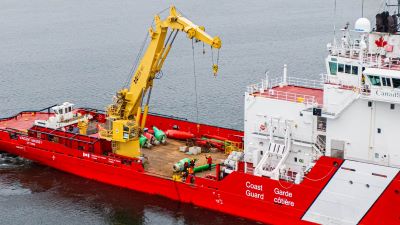
National Defence Minister David J. McGuinty announced a federal investment of $816 million over seven years to strengthen maritime security and expand the Canadian Coast Guard’s role in monitoring Canada’s waters. Key projects that will strengthen the Canadian Coast Guard’s Arctic maritime domain awareness and federal visibility include:
- creation of a year-round Maritime Domain Awareness Hub in Iqaluit, Nunavut, for collecting and analyzing maritime intelligence.
- addition of reconnaissance equipment to helicopters operating across the country, including in the Arctic, to support security patrols.
- establishment of four new Arctic long‑range marine radar sites at strategic points along the Northwest Passage and the Hudson Strait.
- acquisition of short- and medium-range endurance aerial, surface and subsurface drones to extend the reach of the Canadian Coast Guard from land or sea.
The Strengthening Canada’s Immigration Systems and Borders Act gives the Canadian Coast Guard a new security mandate, with authority to conduct security patrols and collect, analyze and disclose information and intelligence to security and enforcement partners. This authority allows valuable information collected by the Canadian Coast Guard to be leveraged to detect and respond to threats in Canadian waters. This change is particularly significant in the Arctic, a region that is rapidly evolving with growing global interests, increased vessel traffic and complex security risks. Strong partnerships with Inuit across Inuit Nunangat remain a priority for the Canadian Coast Guard in alignment with these new investments. Canadian Coast Guard
The Government of Canada’s Budget 2025 invested $316.7 million over five years to establish a new national aerial firefighting surge capacity. With this investment, the Canadian Interagency Forest Fire Centre (CIFFC) leased 10 new aerial firefighting aircraft and two firefighting support assets starting this wildfire season through contracts with Conair Group Inc., Coldstream Helicopters, and VIH Helicopters. Provincial and territorial wildfire agencies can now request access to deploy four aerial firefighting air tankers, one birddog plane, five heavy lift helicopters, and two support assets via CIFFC. These assets will increase national aerial surge capacity by improving provincial and territorial access to aircraft during periods of elevated wildfire activity. As the first national assets, these additional resources mark an important expansion in Canada’s firefighting capacity. Public Safety Canada
Industry Minister Mélanie Joly announced a $76.2-million investment through the Strategic Response Fund in Tenaris’ $305.9-million project to modernize its Sault Ste. Marie Industrial Centre, expanding and upgrading its specialized steel production capacity and increasing its long-term sustainability. The investment will enable Tenaris to acquire new equipment, increase automation and upgrade existing production lines at its Sault Ste. Marie facility. The Government of Ontario is contributing up to another $72 million. Tenaris will expand production of tubular products for oil, gas and industrial markets by improving efficiency, increasing domestic capacity and diversifying products, while bolstering energy sovereignty, strengthening supply chains and building industrial resilience. The company will also introduce advanced technologies and digitalization, enabling the production of high‑spec seamless tubular products designed for complex operating environments. This announcement follows the measures to protect and strengthen Canada’s steel industry announced by Prime Minister Mark Carney on July 16, 2025, and Joly’s announcement on May 4, 2026, of a new $1 billion Business Development Bank of Canada program to support Canadian steel, aluminum and copper businesses affected by U.S. tariffs. Innovation, Science and Economic Development Canada
Women and Gender Equality Canada (WAGE) announced over $77.5 million in funding to extend projects for 395 organizations across Canada. This is the largest WAGE funding announcement ever by number of organizations directly supported. The funding will help organizations advance gender equality, support survivors, strengthen 2SLGBTQI+ communities, and expand participation in Canada’s economy and society. These organizations are helping women enter and stay in the workforce, supporting victims and survivors of violence, creating safer spaces, strengthening community services, and opening more pathways to leadership, economic security, and opportunity. This funding builds on a previous investment of over $167.2 million that has helped community organizations deliver essential services, expand support, and advance gender equality in every region of the country. Women and Gender Equality Canada
Energy and Natural Resources Minister Tim Hodgson announced more than $55 million in federal funding for two projects that will strengthen Arctic infrastructure, support export diversification and help build resilient Canadian minerals supply chains. Through the First and Last Mile Fund, planning and preconstruction work for the West Kitikmeot Resources Corporation’s Grays Bay Road and Port project has been conditionally approved for up to $50 million. This funding will advance the proposed deepwater Arctic port at Grays Bay and a 230‑kilometre all‑season road, following the project’s referral to the Major Projects Office by Prime Minister Mark Carney this March. The road would link the proposed deepwater Arctic port at Grays Bay and unlock future project development in zinc and copper. Hodgson also announced a $5-million investment in Glacies Technologies Inc. This investment will support a low‑emissions alternative to diesel for mine heating and ventilation, which could reduce emissions and cut costs at Northern mines. The project will pilot at B2Gold, a gold mine in the western Kitikmeot Region of Nunavut. Natural Resources Canada
Natural Resources Minister Tom Hodgson said Alberta oilsands producers can absorb the cost of a major carbon capture project despite industry concerns that the country’s climate policies are undermining competitiveness. Hodgson said he is “highly confident” the oilsands sector can support development of the proposed $ Pathways carbon capture project, expected to cost at least $16.5 billion, following a recent agreement between the federal government and Alberta on industrial carbon pricing. The project, backed by major oilsands producers including Cenovus Energy, Imperial Oil and Suncor Energy, would capture carbon dioxide emissions from multiple oilsands facilities and transport them by pipeline to a storage hub in eastern Alberta. The agreement between Ottawa and Alberta outlines a phased emissions-reduction plan targeting 16 million tonnes annually over the next two decades. The initial phase, expected by 2035, would target approximately 6 million tonnes per year. Hodgson said advances in carbon capture and related technologies are expected to reduce long-term costs and create additional options for emissions reductions. Kendall Dilling, president of the Oil Sands Alliance, said the carbon price remains a “competitive disadvantage” for Canadian producers, though additional export capacity to Asian markets could improve the economics for the sector. Bloomberg
Canadian Imperial Bank of Commerce chief executive officer Harry Culham said Canada needs to move faster on major energy and infrastructure projects, warning that years of delays have weakened the country’s export capacity, reduced pricing power and damaged its reputation for getting big things built. Speaking at The Globe and Mail’s Intersect event in Calgary, Culham said Canada has a major opportunity to attract investment and expand its role as a supplier of energy, food, uranium, potash and other critical resources – but only if governments, business and Indigenous communities can align on faster project approvals and execution. Culham said the debate over Canadian energy infrastructure has produced “more headlines than pipelines” over the past 13 years, leaving the country with constrained export options and less leverage in global markets. He said Canada must improve domestic and continental pipeline capacity, expand LNG exports to Asia and other markets, and “stake our rightful claim as a natural resource superpower.” The Globe and Mail
Canada’s Commissioner of Competition filed an application with the Competition Tribunal requesting an order directing Plains Midstream Canada, Plains Midstream Luxembourg S.A.R.L. and Keyera Corp. not to proceed with their proposed merger. In the alternative, the commissioner requests an order directing Keyera not to proceed with the acquisition of Plains Midstream Canada’s fractionation and storage business at Plains Fort Saskatchewan in Alberta, and all associated infrastructure required to preserve the level of competition that would prevail but for the proposed merger. The commissioner also asks for an order requiring Plains Midstream Canada, Plains Midstream Luxembourg, Plains All American Pipeline, and Keyera to pay the costs of this proceeding. Despite the Competition Bureau’s challenge of the acquisition, Keyera has officially closed the $5.15-billlion transaction. The Competition Tribunal has the power to reverse or unwind the deal if it determines the merger significantly lessens competition Administrative Tribunals Support Service of Canada
Federal AI Minister Evan Solomon, King Felipe VI of Spain and Carlos Cuerpo, Spanish deputy prime minister and minister of economy, trade and business, signed a memorandum of understanding at MaRS Discovery District in Toronto, aimed at advancing Canada-Spain cooperation in artificial intelligence. The MOU establishes a framework for Canada and Spain to advance cooperation in AI, including opportunities to enable access to compute capacity, foster AI and technology adoption, and deepen connections across government, industry and other stakeholders. It also supports the safe and responsible development and use of AI technologies that enhance productivity and drive economic growth across key sectors of the economy. Innovation, Science and Economic Development Canada
The U.S.-based Motion Picture Association (MPA) said it “strong condemns” the Canadian Radio-television and Telecommunications Commission’s (CRTC) decision to impose “unprecedented, unnecessary and discriminatory investment obligations on American streaming services operating in Canada.” The MPA, which represents streaming giants like Netflix, Amazon Prime and Disney, said the CRTC asking platforms to put 15 percent of their Canadian profits toward producing Canadian content will triple the cost of doing business in Canada and make it less attractive for them to invest in Canada. This burdensome framework unfairly targets global streamers with requirements that directly violate Canada’s obligations under the United States-Mexico-Canada Agreement, MPA said in a statement. The decision also undermines the open, market-based system that has helped fuel investment, job creation and creative partnerships across North America, MPA said. American studios and streaming services are already the top foreign investors in Canada’s film and TV ecosystem – delivering content to Canadian audiences and sharing Canadian stories with the world, the association said. For years, the MPA has consistently made clear that Canada’s Online Streaming Act is an unfair trade practice. “We urge the Canadian government to reconsider this approach.” Several streamers had already launched a court challenge against the CRTC’s original 2024 decision to impose a five-percent levy.
The proposed law should be changed to forbid government orders requiring any changes to products or services, Google said in a brief submitted to the House of Commons’ public safety committee. Google also wants language explicitly protecting encryption and to kill a provision that would let the public safety minister order particular electronic providers to enable online surveillance. MPA
The Government of Canada needs to narrow Bill C-22 aimed at electronic service providers, said Michel Liboiron, Shopify’s head of public policy for Canada. Language in Bill C-22 that would let federal authorities require that any “electronic service provider” assist with police and security investigations would put “a dragnet on our country,” he said in a LinkedIn post. Liboiron said Bill C-22 defines “electronic service provider” so broadly that it could capture almost any company with a digital presence: software-as-a-service companies, commerce platforms, cloud hosts, online marketplaces, medical clinics with patient portals, accounting firms with client upload tools, and even small businesses with booking forms. “These are not communications providers, telecos, or messaging apps. And they should not be treated like the intended targets of a lawful access regime,” he said. The government has a legitimate interest in investigating serious crime. But that does not justify writing a bill so broad that ordinary digital tools and businesses get swept in, Liboiron said. He urged Public Safety Minister Gary Anandasangaree to narrow the bill’s scope. Apple and Meta have urged the government to amend the bill, while some Canadian companies like Signal and NordVPN warn if the bill passes, they’ll leave the country. More than a dozen civil liberties groups have signed an open letter calling for the bill to be withdrawn. Michel Liboiron on LinkedIn
Prime Minister Mark Carney said that his meeting last week with B.C. Premier David Eby would include the first of his planned consultations with provinces and territories on lowering the federal carbon pricing standard in line with the carbon price Ottawa negotiated with Alberta. Carney was in Vancouver to meet with Eby and B.C. business leaders and show his commitment to working collaboratively with the province, after Eby cried foul over the federal-Alberta energy agreement that also sets a pathway for a new oilsands bitumen pipeline to the West Coast. Carney and Alberta Premier Danielle Smith signed an agreement last week to bring Alberta’s effective carbon price – the market price for carbon credits – to $130 per tonne by 2040. Carney told the Greater Vancouver Board of Trade that the new pipeline will only be approved if British Columbians “share substantial economic and financial benefits” and First Nations are fully consulted, which includes “ensuring Indigenous economic benefits, partnerships and opportunities for co-ownership.” Global News
The Federal Economic Development Agency for Southern Ontario (FedDev Ontario) announced a combined investment of nearly $16.5 million for 13 businesses and organizations across the Greater Toronto Area to facilitate AI adoption and bring new AI technologies to market faster: The projects are funded through the Regional Artificial Intelligence Initiative. The Vector Institute is receiving the largest amount of funding – $4 million – to launch and deliver a Data Readiness, Model Development, and Deployment program that helps startups turn AI ideas into real products by improving data, building models and deploying solutions. FedDev Ontario
The Government of Alberta is investing $10 million over three years to advance the integration of AI into provincial health care. The funding was announced during a fireside chat between Alberta Machine Intelligence Institute (Amii) CEO Cam Linke and Alberta Minister of Technology and Innovation Nate Glubish at the Upper Bound AI conference in Edmonton. Glubish said the funding will support the Health Innovation Lab, a new partnership between the government and Amii to use AI to “accelerate the development and adoption of new technologies” aimed at expanding health care capacity, patient outcomes, and system efficiency at Alberta Health Services. Under the funding framework, the Health Innovation Lab will be able to pursue between 10 and 12 pilot projects each year. Those projects will be selected through proposals submitted to Amii, which will also issue calls for specific types of projects based on priorities established by the provincial government. The Health Innovation Lab will collaborate with the provincial ministries of primary and preventative health services, as well as hospitals and surgical services, to scrutinize and develop a framework for how anonymized medical data is used and when. BetaKit
Prairies Economic Development Canada (PrairiesCan) announced over $8.1 million in funding under the Regional Tariff Response Initiative (RTRI) to enhance trade and steel manufacturing capacity in Saskatchewan. This includes a $5.1-million investment in the Saskatchewan Trade & Export Partnership, a non-profit that helps Saskatchewan businesses increase export opportunities. STEP is helping build domestic trade and diversify international markets for small and medium enterprises across Saskatchewan, Alberta and Manitoba. The investment also includes support for three steel manufacturing companies in and around Regina. Investments of $1 million each in DynaIndustrial GP Inc., Dutch Industries Ltd. and Hi-Tec Profiles Inc. will help these companies enhance steel manufacturing capacity, boost productivity and diversify their export markets. PrairiesCan
Canada Economic Development for Quebec Regions (CED) announced a total of more than $6.8 million for six manufacturing businesses and one not-for-profit organization in the aluminum industry impacted by tariffs. This support is being granted under the Government of Canada’s Regional Tariff Response Initiative. The recipients are the businesses Les Industries G.R.C., Fjordal Aluminium, Sotrem, PCP Aluminium, Groupe Métal-Baie and Dynamic Concept, as well as the organization Réseau Trans-Al. Through this action, CED is helping businesses that process aluminum to diversify their markets and improve their productivity in order to remain competitive in the long term. Les Industries is receiving a repayable contribution of over $2 million – the highest amount of funding. In a separate announcement, CED said it’s providing a non-repayable contribution of more than $1.4 million to Quebec aluminum cluster AluQuébec, to strengthen the organization’s role as a catalyst offering businesses specialized guidance and improved access to strategic knowledge and market diversification opportunities. CED
The Federal Economic Development Agency of Southern Ontario (FedDev Ontario) announced an investment of $5 million to expand the capabilities of Ontario Tech University’s Automotive Centre of Excellence facility into a leading Canadian defence technology hub aligned with Canadian and allied military standards. Through this project, the university will help strengthen Canadian sovereign capabilities for advanced vehicles, aerospace systems, drones and other emerging defence related technologies, helping manufacturers and innovators commercialize products domestically. As a result, companies will have access to expertise and strategic infrastructure locally to help them compete in domestic and allied markets, while strengthening supply chain resilience, boosting Canada’s defence industrial base, enhancing innovation and supporting high-skilled jobs. FedDev Ontario
Prairies Economic Development Canada (PrairiesCan) announced over $2.3 million in funding for two Saskatchewan-based organizations to deliver training, mentorship and business development services to help Black entrepreneurs start businesses, scale up and succeed. The Black Professionals and Entrepreneurs of Saskatchewan Inc. (BPES) will receive nearly $1.4 million to expand access to entrepreneurship training, procurement opportunities and advanced digital skills for Black entrepreneurs across Saskatchewan, helping them start and grow successful businesses. BPES’s new Procurement Readiness Program, and a new AI and Digital Innovation Program, along with other programs and services provided through the BPES Community Hub in Saskatoon, will increase access to services for Black founders in cities and bring new services to rural and remote areas. The Coalition of Black Small & Medium Enterprises (CoBSMEs) will receive more than $925,000 to provide Black entrepreneurs with targeted training, mentorship and networking opportunities to help them build strong foundations and scale their businesses up through technology. Through business planning and financial literacy workshops, technology-focused training, a pitch competition and its annual Black Business Networking Event, CoBSMEs will help increase visibility for Black-owned businesses and open doors to new markets and partnerships. PrairiesCan
The Government of Nova Scotia granted an environmental approval assessment to the Sugar Maple Wind Energy Project, being developed by Glooscap First Nation and SWEB Development Ltd. in Pictou County. Construction of the 16-turbine wind farm, expected to begin in 2027, will create about 150 jobs. Once operational in 2028, Sugar Maple is expected to employ about seven people full- and part-time for about 25 years and generate $1.2 million in municipal tax revenue each year. The project will generate about 112 megawatts of clean electricity, enough to power the equivalent of about 35,000 homes and reduce Nova Scotia's annual greenhouse gas emissions by about 234,905 tonnes – the equivalent of taking about 51,000 gas-powered cars off the road. The project must comply with 56 terms and conditions designed to protect the environment and human health. Government of Nova Scotia
The Government of Canada issued a request for proposals from partners committed to cleaning up lost, abandoned and discarded fishing equipment, otherwise known as “ghost gear.” Federal Fisheries Minister Joanne Thompson made the announcement in Yarmouth, N.S., saying Ottawa has already set aside $15 million for project funding over the next three years. The lost and discarded equipment can harm marine mammals, fisheries and habitats, Thompson said in a statement. She said that since the fund was launched in 2020, more than 2,500 tonnes of ghost gear have been removed from Canada's waters. The fund has been used to support 144 projects worth more than $58.4 million. The closing date for new proposals is June 29. The Canadian Press
The Government of Canada recently launched a call for expressions of interest under the Northern Regulatory Initiative to further strengthen Indigenous and system readiness across northern regulatory regimes. This call directly complements investments in initiatives like the recently launched Regional Database and Major Project Review Tool, developed by the Mackenzie Valley Environmental Impact Review Board with federal support. This innovative platform will improve access to environmental, socio-economic and project information, helping regulators, Indigenous governments, communities and project proponents make more informed and coordinated decisions. Through this initiative, Indigenous governments and organizations in Yukon, the Northwest Territories, and Nunavut are invited to submit expressions of interest for actions that:
- deliver timely, relevant data to support project applications, regulatory reviews and decisions.
- strengthen Indigenous readiness to participate in regulatory processes.
Successful applicants may receive up to $500,000 over three years to support Indigenous‑led initiatives that inform decision‑making and advance nation‑building and major projects in Canada’s North. By bringing together publicly available data into one accessible system, the tool strengthens transparency and supports a better understanding of cumulative effects across the Slave Geological Province. It is designed to enhance the efficiency, predictability and integrity of environmental assessment processes for major projects in the Northwest Territories. Crown-Indigenous Relations and Northern Affairs Canada
On Parliament Hill, the Canadian Truck Dealers (CTD) called on the federal government to take practical but necessary steps to protect consumer affordability and ensure the stability of Canada’s supply chain for essential goods. The association highlighted the importance of ensuring Canada has the right regulations in place to allow continued access to trucks and transportation equipment across North America. The CTD represents heavy and medium-duty truck dealers across Canada. CTD leadership warned that growing divergence between Canadian and U.S. on specific regulations could create major disruptions in truck availability beginning as early as January 2027. “Manufacturers are already preparing their next generation of trucks around evolving U.S. environmental and emission regulations, but Canada has not yet provided a clear and aligned regulatory pathway that would allow these trucks to continue being imported into Canada,” said Kevin Disher, CTD executive director. Each year, approximately 29,000 Class 8 trucks are sold in Canada, representing more than $8 billion in economic activity, making policy stability essential to continued investment in the sector. CTD is encouraging the federal government to work collaboratively with industry to ensure Canada puts practical regulations in place that protects supply chains, supports investment, and preserves access to commercial vehicles across the country. CTD
RESEARCH, TECHNOLOGY & INNOVATION
The Government of Canada and CIFAR (Canadian Institute for Advanced Research) announced the appointment 42 Canada CIFAR AI Chairs, both new and renewed. Backed by a $24-million investment, this announcement reinforces Canada’s position as a global leader in artificial intelligence by securing the world’s top AI researchers to drive innovation and train the next generation of domestic AI talent. A pillar of the Pan-Canadian AI Strategy, the Canada CIFAR AI Chairs program secures the researchers necessary to drive domestic innovation, bridges the gap between lab and industry and trains the next generation of Canadian scientists and AI professionals. The program provides long-term funding flexibility, supports the training of graduate students and postdoctoral fellows, and enhances opportunities for researchers to collaborate across the country. With these new appointments and renewals, the program now supports 143 Chairs at universities across the country, all affiliated with one of Canada’s national AI institutes: Amii, Mila and Vector Institute. These researchers are conducting transformative work across critical sectors, including health care and biotech, sustainable energy and safe and trustworthy AI applications. Established in 2017 as part of the world’s first national AI strategy, the Chairs program – which has five-year terms – has earned a prestigious global reputation. Collectively, the Canada CIFAR AI Chairs are the third-highest impact AI research cluster in the world. CIFAR
The Social Sciences and Humanities Research Council of Canada (SSHRC) announced a $12.7-million investment for Indigenous-focused research initiatives. Led by Canada’s three federal research funding agencies – the Canadian Institutes of Health Research (CIHR), the Natural Sciences and Engineering Research Council of Canada (NSERC) and SSHRC – this investment will support 42 Indigenous-led research projects, which also prioritize Indigenous leadership. These projects are supported by three funding opportunities, originally announced in Budget 2024:
- Indigenous Capacity and Leadership in Research Connection Grants (recipients).
- Indigenous Innovation and Leadership in Research Network Grants – Stage 1 (recipients).
- an expansion of the Inuit Research Network Grant (Phase 3). SSHRC
The Public Health Agency of Canada (PHAC) announced the two Grand Prize Winners of the Type 2 Diabetes Prevention Challenge: Kinvia and the Black Creek Community Health Centre. Both projects demonstrated innovation and long-term potential to support people at risk of developing Type 2 diabetes. Each winner received $1.25 million in funding to continue scaling up their innovative concept. Kinvia deployed the “Creating a Sustainable Mechanism for Nutritious Food to Combat Type 2 Diabetes in Indigenous Communities” project in collaboration with six Indigenous communities across Saskatchewan, Manitoba, Ontario and New Brunswick. The project aims to reduce the incidence of Type 2 diabetes and improve overall health of Indigenous youth in the community by increasing accessibility to fresh produce via 365-day greenhouses. The Black Creek Community Health Centre’s “Digital Health Coaching Delivered by Community to Help Prevent Type 2 Diabetes” project formed a community/corporate partnership to co-design and train community health workers with lived-experience to deliver health coaching through a digital health platform. The project’s focus is to improve the sustained adoption of health behaviours across this Black and high-risk community in northwest Toronto. PHAC
CIFAR (Canadian Institute for Advanced Research) announced 15 early-career researchers named CIFAR Global Scholars for 2026-2028. As the newest members of CIFAR’s global research community, they will join leading researchers from around the world to advance ambitious ideas across disciplines. Now in its eleventh year, the CIFAR Global Scholars Program has empowered early-career researchers to strive for global impact by supporting opportunities for leadership development and championing bold ideas through global, interdisciplinary collaboration. This Next-Generation Initiative enables early-career researchers to expand their professional networks and pursue cutting-edge ideas with $100,000 of unrestricted research funding. The researchers also become full members of a CIFAR research program, gaining access to international networks, mentorship and opportunities for deep interdisciplinary collaboration. Following a competitive recruitment process that generated over 450 applications from 41 countries across the globe – the highest number of applicants in the program’s history – the new cohort features top early-career researchers based at institutions in Canada, the United States, Switzerland, South Africa and the United Kingdom, to name a few. Their geographic diversity is further enriched by additional countries of citizenship, including Benin, China, Germany and India. CIFAR
Environment and Climate Change Canada (ECCC) has quietly disbanded the team behind the country’s upgraded weather radar network and disconnected some radio programming, changes that critics say could affect storm forecasting and emergency communications. Experts and advocates are warning that the ECCC’s reductions to weather-related services could hamper Canada’s ability to track, forecast and warn the public about severe weather events. In 2016, the federal government invested $180 million to install 33 weather radars across the country; installation concluded in 2024. ECCC’s radar research team was “reorganized out of existence,” earlier this year said David Sills, deputy director of the Canadian Severe Storms Lab and director of Western University’s Northern Tornadoes Project. When asked about the disbandment, ECCC spokesperson Brandon Clim said in an e-mailed statement that while changes have been made to areas of applied research for the radar technology, the department will keep working to maintain the existing radar network. But Sills said that while the department will continue to have staff dedicated to radar maintenance, there will no longer be a team focused on advancing the technology. These radars are used to track severe weather events such as tornadoes and hurricanes, and provide meteorologists with more precise and timely weather warnings. The Globe and Mail
The Prairies-based, federally supported Protein Industries Canada (PICs) innovation cluster announced a new project in partnership with NS/TX Industries, New Protein International (NPI) and Infusd Nutrition. A total of $15.1 million has been invested in the project, with PICs committing $4.9 million and the industry partners together providing the remainder. The project will introduce automation of NS/TX’s assembly line and expand their offerings to introduce whole-cut beef and pork alternatives, using value-added Canadian-sourced ingredients to improve nutritional profiles. NS/TX’s expanded manufacturing capabilities will feature support for improved nutritional profiles and a broader range of proteins, including Canadian pea, fava and, most notably, NPI’s soy varieties. Their work involves refining their first-of-its-kind, hexane-free soy production and supplying NS/TX with NPI’s clean-label soy proteins. NS/TX is the company and manufacturer behind the NEW/SCHOOL FOODSTM brand, which launched the world’s first plant-based salmon filet that looks, cooks, tastes and flakes like ordinary salmon. The company is scaling its proprietary manufacturing technology platform to increase output, decrease unit costs, and support B2B manufacturing across a range of product applications. The project will result in higher quality meat and fish alternatives for Canadian consumers, food-service operators and white-label brands. Infusd is developing at pilot scale and validating the world's first water-stable creatine ingredient, applying their nutritional processing knowledge into the nutraceutical and functional ingredient market. Protein Industries Canada
The Canadian Army, with support from the Innovation for Defence Excellence and Security (IDEaS) program, announced the launch of the first innovation challenge under the MINERVA Initiative – “True north precision: Low-cost drones with laser ranging.” This inaugural challenge seeks to advance the development of innovative and affordable general purpose uncrewed aerial systems capable of providing accurate range, target cueing and impact adjustment information. These capabilities will support indirect fire missions and enhance battlefield awareness for the Canadian Army by improving:
- situational awareness and decision-making.
- soldier safety and survivability.
- sensor-to-shooter integration for indirect fire.
- operational resilience in harsh environmental conditions.
Development funding, up to $2.1 million in total, will be available to innovators to develop low-cost solutions for targeting and range finding using small drones. A series of challenges under the MINERVA Initiative will bring together defence and security partners from government, industry and the Canadian Army to collaboratively develop, test and mature emerging technologies to support military operations. National Defence
The Government of Ontario is bringing in new restrictions on the use and purchase of Chinese-made drones by the government and the Ontario Provincial Police (OPP), beginning with an immediate ban on the use of Chinese drones for highly sensitive OPP operations. As part of this initiative, work is also underway to phase out broader government use of Chinese-made drones and replace them with those manufactured in Canada and other approved jurisdictions, consistent with the provincial Buy Ontario policy, while ensuring critical frontline operations continue without interruption. Under current Chinese law, companies incorporated in China may be required to disclose data, even if that data is stored outside the country. This raises security concerns about Chinese-made drones, which could possibly access or store sensitive information. To address these risks, the province is taking action to ban the future procurement of Chinese-made drones by the government and the OPP and begin phasing out those currently in use without interrupting or compromising any critical frontline service work. Govt. of Ontario
Mississauga-based Bird Construction, recently named the lead construction partner for a $1.7-billion data centre in Saskatchewan, is looking to sell bonds for the first time and aims to raise around $250 million. The debt could have a five- to seven-year term, and executives are due to meet potential investors in Toronto and Montreal, sources told Bloomberg. BCE Inc., the parent of Canadian telecom company Bell Canada, said it had formalized a long-term partnership with Bird to build data centers over multiple years. It also said Bird was the lead construction partner for its 300-megawatt data center in Saskatchewan, whose backers also include New Jersey-based CoreWeave Inc. RWATimes.io
San Francisco-headquartered HIVE Digital Technologies Ltd. a Vancouver-founded bitcoin miner turned data centre operator, plans to spend $3.5 billion building a 320-megawatt data centre on land between Toronto and Waterloo, Ont. to provide “sovereign AI infrastructure that turns Canadian intelligence into Canadian dominance” by the end of 2027. HIVE’s subsidiary BUZZ High Performance Computing Inc. has spent $58 million assembling about 10 hectares of land for the data centre. The project is designed to place massive industrial-scale compute directly inside Canada’s largest metropolitan economy and one of North America’s most important hubs for technology, financial services and artificial intelligence. HIVE Digital Technologies
Canada’s Big Six banks disclosed at least US$37 billion in holdings of U.S.-listed data centre and digital infrastructure companies, up from US$7.5 billion at the end of 2022. The Big Six have said little publicly about their role in financing data centre infrastructure in Canada, despite involvement in projects including QScale, Cologix and eStruxture. As lending to the sector grows, banks globally are also increasingly exploring new ways to offload risk, including through significant risk transfer (SRT) transactions – financial tools that let banks transfer a loan portfolio’s credit risk to non-bank financial institutions, like private credit funds. As of the first quarter of this year, the Big Five banks used SRTs to transfer or hedge risk on nearly $79 billion in wholesale loans, up from $65 billion in early 2023, according to a Morningstar analysis and company filings. While the U.S. remains the dominant data centre market globally, Canada already hosts more than 300 facilities, clustered in major hubs such as Alberta, Ontario and Quebec. Demand for data centres in Canada is expected to outstrip available domestic capital, said Jason Kroft, partner and head of structured finance and securitization group at Gowling WLG, with the sector requiring a mix of financing sources – including banks, private equity, private credit, government support and capital markets solutions – to close the gap. The Logic
The Bank of Canada said there is no clear evidence to date that artificial intelligence has led to widespread job losses, but that further adoption of the technology could lead to permanent changes in the economy, including the replacement of certain roles by AI and benefits from productivity gains. Michelle Alexopoulos, external deputy governor at the central bank, told a business audience in Ottawa that as AI continues to improve and more companies implement it, there could be wholesale changes to how the economy works. “By lowering costs for businesses and improving efficiencies, AI could support higher wages, reduce prices for consumers and spur new investment,” she said, noting that the central bank has already seen evidence of “small productivity gains” from AI. A Statistics Canada study published in June, 2025, and cited by Alexopoulos in her speech, showed that almost 90 per cent of businesses that have adopted AI reported no effect on staffing levels. Roughly four percent said that AI had in fact led to job creation, and approximately six percent said they had decreased staffing levels because of AI. The Globe and Mail
Toronto-based 1Password, a leader in identity security, announced an expanded collaboration with OpenAI to secure Codex access to credentials. With the new 1Password Environments MCP Server for Codex, developers can grant Codex access to credentials directly inside their coding workflows while keeping secrets out of prompts, code and model context. Codex is helping developers write, execute and prepare code for production. As AI agents play a larger role in the development process, they require access to credentials for databases, application programming interfaces and deployment pipelines. Today, that access is often managed by copying credentials into local files, passing them through prompts, or hardcoding them into repositories where they can be easily exfiltrated. The 1Password Environments MCP Server for Codex ensures secrets never leave 1Password. Instead, secrets are injected at runtime into an authorized process (after user authentication or approval), and aren’t written to disk; they’re only available for the duration of that execution or session. Business Wire
Toronto-based AI developer Cohere announced two memorandums of understanding, one with Spain-based Indra Group, which focuses on defence and advanced digitation, and one with Multiverse Computing, a Spain-based pioneer in quantum and AI software. The partnership with IndraMind will be focused on deploying sovereign intelligence for the protection of critical assets. The MOU forms part of a cooperation framework promoted by the Government of Canada and Government of Spain to promote bilateral agreements in technology and sovereign AI and boost economic activity involving the two countries. Cohere will work together with IndraMind and leading local companies to promote a unique ecosystem of collaboration and innovation. IndraMind will contribute sovereign computing and data management capabilities, while Cohere will provide sovereign large language models. The partnership with Multiverse Computing will explore and pursue commercial collaboration opportunities in Europe and Canada, including projects that may be supported by the Canada-Spain bilateral cooperation framework. Cohere
Montreal startup BrainBox AI and its Ireland-based parent company Trane Technologies opened the BrainBox AI Trane Technologies AI Lab and showroom in Montreal. The opening marks the latest milestone in Trane Technologies’ strategy to accelerate the development of next-generation, AI-driven solutions that dramatically reduce energy consumption and carbon emissions in the built environment. Located in one of the world’s leading AI innovation hubs, the Montreal-based facility brings together top researchers, software engineers, data scientists and technologists to shape the future of autonomous heating, ventilation, air conditioning and transport refrigeration. The AI Lab, first introduced in August 2025, builds on Trane Technologies’ acquisition of BrainBox AI at the start of 2025. Harnessing the power of collaboration and rigorous real-world testing and validation, the AI Lab will help accelerate the pace at which breakthrough discoveries move from concept to actionable, customer-ready solutions, while supporting responsible and ethical AI innovation. Trane Technologies
San Francisco-based firm Sierra opened an office in Toronto with about a dozen staff. The firm – co-founded by OpenAI chair Bret Taylor, a former Shopify board member – has raised US$1.58 billion, according to PitchBook, for AI customer service tools. Agents built on Sierra now serve over 40 percent of the Fortune 50, handling billions of customer interactions – from replacing legacy IVRs and refinancing homes to processing insurance claims, returning orders, and helping people raise millions in fundraisers. Sierra
Florida-headquartered and Vancouver-founded D-Wave Quantum Inc. and California-based Rigetti Computing each signed letters of intent with the U.S. Commerce Department for up to US$100 million in funding each, to help pay for research and development of their quantum computing technology. In return, D-Wave would issue $100 million in shares of its common stock to the Department of Commerce. Similarly, the Department of Commerce will receive an equity stake in Rigetti. The US$2-billion federal program will support nine firms in total, with US$1 billion of it going to IBM to build a quantum-chip factory. U.S. Department of Commerce
Montreal-based Marconi Technologies launched as a standalone, Canadian majority-owned, and veteran-run dual-use communications technology company. This announcement marks the culmination of a transaction in which a Canadian investor group led by Louis Vachon, former CEO of National Bank, acquired the tactical communications division of Ultra I&C from Cobham Ultra. Headquartered in Montreal and operating across the United States, the United Kingdom, and other allied markets, Marconi Technologies is globally recognized for developing and manufacturing advanced, dual-use communications systems across the full tactical spectrum. The company is already one of Canada's leading exporters of defence technology. The launch serves as a springboard to CANSEC, Canada's leading defense and security conference, in Ottawa on May 27-28, where Marconi Technologies will debut as a fully independent Canadian defence prime contractor. Marconi Technologies
Physicians, environmental advocates and community members in Alberta are calling for more definitive monitoring and investigations into the health and environmental effects of Alberta’s oil and gas industry, not just in Fort Chipewyan near the oilsands where there are longstanding health concerns, but across the province. They said that this kind of research is long overdue and should be initiated now, as Danielle Smith’s government weighs its next steps with what to do with Alberta’s aging oil and gas infrastructure – the old wells, pipes and other dated infrastructure, often referred to as mature assets. The Government of Alberta published a report last year with recommendations about what to do with the province’s mature assets. But the report doesn’t call for closer monitoring of non-producing wells – a gap that has industry watchers and community advocates worried. Amanda Bryant, a climate policy expert and manager of the Pembina Institute’s oil and gas program, said the province should be collecting in-depth health and environmental data from all areas with non-producing wells. She wants that information to be collected and made available for analysis. “The research that there is shows that there is cause for concern, that there are potential health impacts,” she said. Alberta is home to 275,000 marginal, inactive or decommissioned but un-reclaimed well bores or surface locations, according to the government’s mature-asset strategy report. In one of the most significant studies to date in Canada, a 2021 report published in the journal Frontiers in Oncology showed a significant correlation between living in an area of dense oil and gas infrastructure in Alberta and the incidence of solid tumour cancers. In another study published last year in the International Journal of Environmental Research and Public Health, investigators found that 13 percent of Albertans live within 1.5 kilometres of an active well and three within 1.3 kilometres of a flare – and they have a nine percent to 21 percent higher risk of experiencing cardiovascular or respiratory issues than people in the rest of the province. The closer a person lived to an oil or gas well, the greater their risk of these conditions. Christina Frangou in Corporate Knights
A class-action lawsuit over the noise, dust and risk to public health from a cement plant at the foot of the Rocky Mountains will go ahead, an Alberta judge ruled. Justice C. D. Simard of the Alberta Court of King’s Bench approved the application made by Sarah Furlonger, a former resident of the hamlet of Exshaw who lived just 500 metres away from the Lafarge Canada Inc. plant. While Furlonger, the proposed plaintiff representative of the lawsuit, no longer lives in the community, her daughter and grandson now reside in her former home. According to the court’s decision, Furlonger said Lafarge (now called Amirize Canada Inc.) expanded the facility in 2016. Now the largest cement plant in Canada, the Exshaw facility emits “huge quantities of harmful and destructive fine powder, including particles of bottom and fly ash, dolomite, granite, gravel, gypsum, limestone, Portland cement, sandstone and shale (collectively dust),” the lawsuit alleges. Furlonger claims the dust, along with the rest of the issues associated with the plant, “caused significant damage to the real and personal property of the proposed class members, who are identified as the individuals who owned or occupied residential property in Exshaw or Lac des Arcs from September 12, 2016, to the date of certification.” Lafarge, according to the court document, claims it “acted reasonably at all times” and there is no evidence that its conduct created the damages claimed by the plaintiffs. Both parties are scheduled to appear in court later this summer to determine the next steps in the lawsuit. CTV News
The U.K.-based charity Science Based Targets initiative (SBTi), one of the key organizations focused on aligning corporate environmental sustainability action with the global goals of limiting climate change, announced the launch of its new five-year strategy, marking a significant expansion in focus for the organization from target-setting and validation to supporting companies in the implementation of their climate goals. Key elements of the SBTi’s new 2026-2030 strategy include moving towards a more tailored target-setting approaches with a focus on what companies can influence, a new “pivot toward implementation,” addressing fragmentation in the climate standards ecosystem, and expanding its coverage in high-emitting sectors and regions. The more tailored standards recognize the “commercial realities” of companies that face challenges in reducing their carbon footprint. ESGtoday
Canada’s psychiatrists are being encouraged to screen people for “high-risk human-AI engagement,” including “chatbot psychosis” and other AI-amplified delusions. The new guidance for identifying patients, particularly teens and young adults at risk of developing troublesome attachments to AI companion bots, comes amid rising wrongful death allegations against AI companies. “While most users engage harmlessly, a clinically significant subset may develop high-risk problematic human-AI relationships,” according to the primer for psychiatrists published in the Canadian Journal of Psychiatry. “This spectrum of risk can vary from reinforcing insecurity, anxiety and ideas of self-harm to a phenomenon dubbed ‘Chatbot Psychosis,’” the authors wrote – delusional thinking that worsens, or appears suddenly, following intense chats with a conversational bot. People who are lonely, bored, emotionally isolated and psychologically distressed, and those at high risk for psychosis (delusions, hallucinations and paranoid ideas) should be asked about their AI-chatbot engagement in nonjudgmental ways to avoid “positively reinforcing the human-AI bond at the cost of human-to-human bonds,” the advice reads. National Post
Social media companies including Meta settled the first of many lawsuits brought by hundreds of school districts seeking compensation for costs they say they incurred dealing with harms to children’s mental health from social media addiction. The lawsuit brought by a small, rural Kentucky school district was set to go to trial next month in federal court in Oakland, California. The judge and the parties selected it as a bellwether case – essentially a test for both sides to see how their arguments play out before a jury – out of 1,200 similar cases. The settlement only applies to the Breathitt County School District. Meta reached a settlement with the district following settlements last week with the other defendants in the case – TikTok, Snap and Google’s YouTube. The financial terms of the settlements were not disclosed. The school district had sought more than US$60 million to create a 15-year program it said would help counteract mental health and learning issues caused by social media. The settlement follows court losses earlier this year for Meta and YouTube in social media harms lawsuits in California and New Mexico. Global News
VC, PRIVATE INVESTMENT & ACQUISITIONS
Montreal-based financial services conglomerate Power Corporation of Canada is spinning up a new AI fund through its alternative asset management business, Sagard. Power Corp and two of its operating companies, Great‑West Lifeco and IGM Financial, announced a combined US$150-million investment into a new Sagard AI Fund. The fund will invest globally in companies facilitating AI adoption in financial services and other sectors. The fund is meant to provide Power Corp with access to global AI market intelligence, commercial partnerships, pilot projects and application opportunities across its group of companies. To lead the effort, Sagard brought in former Georgian lead investor Evan Kerr as general partner of the AI fund. Kerr wrote in a LinkedIn post that the AI fund will remain stage- and sector-agnostic as it invests globally across the AI technology stack and helps founders leverage Power Corp’s network. BetaKit
Toronto-based fintech startup Relay Financial Technologies Inc. announced a $50-million growth investment by General Catalyst. The financing marks a growth inflection point for Relay. The company now oversees more than $1.3 billion in managed customer deposits through Thread Bank, Member FDIC, and is trusted by more than 150,000 small businesses to deliver cash flow clarity at a moment when it matters for main street. Relay reimagines business banking and money management with a unified financial platform enabling cash flow control, and faster, more confident decisions. Most recently, the company launched Relay Capital term loans, giving small businesses frictionless access to capital all within Relay. Relay Financial Inc.
Toronto-based N49P announced a US$25 million first close of its fourth fund. The pre-seed venture firm has a target size of US$70 million for N49P Fund IV (nearly twice the size of its prior fund) and plans to continue backing early-stage founders building globally ambitious companies with Canadian ties. Limited partners in the new fund include global private markets investment firm Northleaf Capital Partners, ultra-high-net-worth individuals, family offices and prominent Canadian technology founders. N49P also announced that Prem Kalevar has rejoined the firm as venture partner and will focus his investments on technology for the physical world and reindustrialization. He will also help deepen N49P’s presence in the Toronto-Waterloo corridor. N49P
Toronto-based Radical Ventures used its near-US$800 million growth fund to lead a $300-million investment in San Fransico-based startup Decart’s Series B round. Other investors in the round include Nvidia, Silicon Valley funds Sequoia Capital and Benchmark, the venture arms of Adobe and Toyota, and Canadian AI researcher Karpathy. According to PitchBook data, this is the second-largest round of investment Radical has led or co-led – after it co-led Cohere’s $600- million financing last September – and the largest it has led by itself. Decart is building world models, a new kind of AI system designed to produce more realistic video and virtual environments, and to help control “In Real Life” applications like robots and autonomous vehicles. The company also sells optimization tools to route the work of training and running AI tools across chips from different hardware providers. Decart
Quebec-based La Caisse global investment group invested an undisclosed amount in Novisto, a Montreal-based ESG (environmental, social and governance) and sustainability reporting firm. This transaction aims to accelerate Novisto’s growth and strengthen organizations' access to technological solutions that facilitate the management of sustainability-related information within the context of the transition to a low-carbon economy. Novisto said this collaboration will support the continued evolution of the company’s platform and its offerings. Several of La Caisse’s portfolio companies – including CAE, Boralex et Couche‑Tard – already utilize the Novisto platform. La Caisse
Toronto-based photonic quantum computing company Xanadu Quantum Technologies announced that it has entered into a equity facility for up to $300 million with New Jersey-based Yorkville Advisors. The agreement provides Xanadu with the ability, but not the obligation, to issue and sell to Yorkville Advisors up to $300 million of its Class B subordinate voting shares in private placements over a term of three years, at around the price the stock is trading at the time. Xanadu said it will use the money for working capital to fund its development and operations. Xanadu is working towards building a quantum data centre it plans to open in Toronto by 2029, which it expects will cost about US$1 billion. Xanadu
Toronto-based Quantum Bridge Technologies raised US$8 million in a Series A funding round led by Primo Capital SGR, to accelerate the global transition to quantum-safe cybersecurity infrastructure. The investment supports Quantum Bridge Technologies’ scale-up as financial institutions, telecommunications networks, governments and defence sectors worldwide seek to protect critical data from emerging quantum threats. The funding round was supported by a global syndicate of investors, including Wayra (Telefónica), Cadenza VC, Club degli Investitori angels, HPE, and Bacchus Venture Capital. Quantum Bridge addresses the systemic threat posed by quantum computing to current cryptographic infrastructure. The company’s patented Distributed Symmetric Key Establishment protocol allows organizations to add quantum-safe protection from optical encryptors to application-level systems without disrupting existing operations. Quantum Bridge
Angel Investors Ontario (AIO) joined a new investor advocacy organization as it looks to secure more government funding amid an uncertain future. AIO, which represents 21 angel groups and 2,300 angel investors who have collectively deployed more than $800 million into startups to date, is a not-for-profit organization created in 2007 to support the growth of angel investing in Ontario. AIO announced that it has joined the Canadian Startup Capital Association (CSCA), a new advocacy organization that launched last month with the goal of connecting Canada’s “fragmented” early-stage investment ecosystem and shaping public policy, and laid out a new mission. AIO said it is reorienting itself around the idea that “early-stage capital is infrastructure, and infrastructure has to be built and led.” AIO relies heavily on provincial and federal governments to support its operations. However, since 2019 it has not received any money from the Ontario government aside from a small grant from the Ontario Securities Commission. As of last October, its latest federal financing (through FedDev Ontario) has also dried up. This has left the long-term future of the organization uncertain. AIO executive chair Mark Lawrence said AIO joined the CSCA – instead of more established national investor advocacy organizations like the National Angel Capital Organization or the Canadian Venture Capital & Private Equity Association – because it liked the idea of working with a new organization focused on the “need for local delivery capacity.” BetaKit
The Prairies-based, federally funded Protein Industries Canada global innovation cluster is providing seed capital to launch a new project with Indigenous communities across the Prairies aimed at addressing the capital gap in Canada’s food production and value-added agriculture sector. The work brings together Alexander First Nation, Saskatoon Tribal Council, Whitecap Dakota First Nation and File Hills Qu’Appelle Tribal Council, who will combine knowledge and resources to set up an Indigenous investment group. The group will establish a fund focused on investing directly into Canadian food and ingredient processors. As demand for made-in-Canada food and ingredients grows, this fund will help the food production and value-added agriculture sector develop and commercialize innovative new products. Its focus on involving Indigenous communities will also help to expand access to traditional knowledge and practices, access to land and resources, meaningful employment, cultural diversity and inclusivity, and a commitment to reconciliation and social responsibility. Protein Industries Canada
Regina, Sask.-based Information Services Corporation (ISC) announced an agreement to be acquired by a wholly owned subsidiary of Plenary Americas – an infrastructure investment firm principally owned by La Caisse. ISC would be taken private in a $1.2-billion purchase of ISC shares for $51 per share in cash. ISC is an IT firm that manages public data and records. ISC’s sale marks a successful campaign by former Dye & Durham chief executive Matt Proud, whose activist investment firm, Plantro, pushed ISC to consider selling itself if it would not overhaul its board. ISC has said its strategic review process was not a reaction to Plantro. A former Saskatchewan Crown corporation, ISC entered the private sector through a 2013 initial public offering and has since expanded its database services, implementing its technology on national databases in Ireland as well as state databases in the U.S. ISC
Two Canadian pension funds have shelved efforts to sell private equity fund stakes after valuations missed expectations, according to people familiar with the matter. Canada Pension Plan Investment Board halted a process it began earlier this year to sell fund stakes anticipated to be worth about US$1.5 billion, the people said, asking not to be identified because the matter is private. Additionally, Caisse de Depot et Placement du Quebec suspended an undertaking it started in February to sell an estimated US$1.5 billion of Chinese private equity assets, the people said. The pension funds, which had both been advised by Greenhill & Co. on the potential sales, stopped the processes recently as buyers offered to take the portfolios at discounts deeper than their expectations, the people said. Bloomberg News
Canada Pension Plan Investment Board (CPP Investments), which manages the Canada Pension Plan (CPP), said it generated net income of $56.9 billion in the fiscal year that ended March 31, taking net assets to $793.3 billion. The gain trailed the fund’s benchmark portfolio by 5.4 percent. The fund, composed of the base CPP and additional CPP accounts, generated a 10-year annualized net return of 8.8 percent. For the fiscal year, the fund’s net return was 7.8 percent. As the CPP is designed to serve multiple generations of beneficiaries, evaluating the performance of CPP Investments over extended periods is more suitable than in single years, CPP Investments said. A diverse range of asset classes contributed to the strength of the fiscal year’s performance at CPP Investments. Public equities were a key driver of results, particularly in the U.S., led by information technology and communication services in the first half of the year. Real assets, particularly energy and infrastructure assets, also contributed meaningfully, alongside steady gains in credit. CPP Investments
REPORTS & POLICIES
Canada lacks a governance system and a national strategy for controlling the digital economy: Canadian SHIELD Institute
Canada lacks a governance system for owning and commercializing the intellectual property that Canadians generate, according to report by the Toronto-based Canadian SHIELD Institute, a policy think tank.
“Canada doesn’t have a national strategy for shaping and adopting technical standards that define the landscape of technology systems – often stacking the deck in favour of foreign giants,” said Vass Bednar, managing director of the Canadian SHIELD (Securing Homegrown Innovation, Economic Leadership, and Defence).
Canada has spent decades ceding control of the digital economy to foreign private actors, the report said. “Without a comprehensive governance framework, billions in new public spending on ‘sovereign’ AI infrastructure will fail to deliver real sovereignty – “and the window to act is now.”
“Compute spending without governance is money wasted. Canada must build the policy and institutional foundations first,” the report said.
Key takeaways of the report are:
- Where data is physically stored matters less than who owns the infra structure and what laws they answer to. Under the U.S. CLOUD Act and the Foreign Intelligence Surveillance Act, American cloud providers can be compelled to hand over Canadian data regardless of where it sits.
- Peer nations treat data regulation, IP protection, procurement and technical standards as tools of national industrial policy and global competition. Canada treats them as neutral ground.
- Canada ranks last in the G7 at converting R&D into commercialized products – Canadians’ ideas succeed abroad, not at home.
- A governance-first strategy requires three pillars: stronger legislation, modern public-interest institutions, and sovereign compute infrastructure.
Privacy loss, fraud, low productivity growth, inescapable and compelling propaganda, polarization, child mental illness, cyber-security risks, monopoly power, wealth inequality and even democratic erosion are all downstream outcomes of Canada’s fundamental failure to build institutions and governance structures that assert sovereign control over the digital realm, according to the report.
“What’s more, this developing trend is currently being supercharged by artificial intelligence technology,” the report said.
Canadians are being told that Canada can leverage valuable data sources like public health records and financial data in order to assert a competitive advantage.
But the solutions being put forward generally just amount to further reliance on foreign multinationals, with superficial claims of sovereign control, the report said.
“Without governance frameworks in place, the billions of dollars spent on Canadian-resident
compute capacity will do little to meaningfully strengthen Canadian sovereignty in the ways we care most about – bolstering economic prosperity, protecting privacy and governing society in accordance with Canadian values.”
Investment in more computational capacity must be built on top of the foundation of a
broader sovereignty strategy that affirms, protects and reclaims the value of data and information, the report said.
In the 2024 budget, the federal government allocated $2 billion to the Canadian Sovereign AI Compute Strategy.
Months later, the government announced a $240-million plan to support Cohere, a Toronto-based AI developer. “But in reality, the deal was essentially government money helping Cohere secure computing capacity in a data centre being built in Cambridge, Ont.,” the report said.
However, this data centre was owned and operated by CoreWeave, a New Jersey-based firm.
Even when data centres or AI firms are located in Canada, without clear, democratically-established rules, those firms will default to writing their own, according to the report. “That means operational policy will continue to follow corporate incentives and foreign regulations
rather than the Canadian public interest.”
In order for a country to thrive in the 21st century economy, a robust governance layer must exist over the infrastructure layer of compute, the report said.
In particular, the governance of data is essential to successfully governing compute – both in terms of protecting data from misuse and mobilizing data for use in the public interest.
Other countries have designed new regulatory frameworks to guide investment and
acceptable behaviour by market participants, the report noted. Those same frameworks create the
conditions to help mitigate the downstream harms of digital systems.
“By comparison, Canada has naively assumed that if we simply support research and
development, good things will happen. Sadly, good things have not happened,” the report said.
In many cases in Canada, government-funded research is never even commercialized or turned into IP; novel discoveries are simply published as academic papers, “and then left for any reader anywhere on Earth to discover,” according to the report.
In contrast, Israel recognizes the value of public research and domestically developed IP, to the point that the country imposes export controls and requires repayment when valuable IP is
acquired by foreign companies.
Countries that create the conditions for prosperity and sovereignty tend to look at data regulation, standards development, research and development, government procurement, defence policy, and intellectual property protection as different spheres for competition and control.
Canada often treats these realms as neutral and democratic venues for co-operation, while other countries treat these systems as an opportunity to gain advantage, the report said.
“Without a sharper strategy for governance and control, Canada’s effort to build sovereign compute will fail to capture the economic value that comes from cutting-edge technologies, and we will continue to relinquish sovereign control through our own inattention.”
Government must create the conditions for economic success – commercializing high-quality data and protecting privacy, capturing the intellectual property created by innovation, and embracing standards that advantage Canadian companies, according to the report.
In the European Union, for example, government has passed strong privacy and consumer
protection legislation through the General Data Protection Regulations. These rules
include provisions for greater autonomy over personal data, restrictions on the collection of sensitive data, and interoperability and data portability requirements.
Along with effective protection for data, the EU also has legal frameworks in place to mobilize data for the purposes of research and commercialization for the public good within the bounds of existing protections.
In Sweden, Article 271 of the Swiss Criminal Code includes a blocking statute which in effect blocks the collection of evidence or information by foreign authorities for a foreign proceeding, preventing the circumvention of applicable Swiss rules on criminal, administrative or civil proceedings.
The Canadian SHIELD said subsequent chapters of its report will look at: standards and international frameworks; patents and intellectual property; privacy and data; risks to Canada’s cloud infrastructure; a strategy for growing domestic cloud capacity; governance tools for Canada’s digital sovereignty; and building sovereign compute. Canadian Shield Institute
****************************************************************************************************************************
Canada’s privacy ruling on AI training data establishes a bad precedent
OPINION & ANALYSIS
By Daniel Castro
Daniel Castro is president of the Information Technology & Innovation Foundation (ITIF) based in Washington, D.C. This commentary first appeared here on the ITIF website.
Canada’s privacy regulators are taking a misguided approach to AI training data
In a recent decision, the federal Office of the Privacy Commissioner (OPC) and several provincial authorities concluded that OpenAI violated Canadian privacy law by, among other claims, using publicly accessible internet data and licensed third-party datasets to train ChatGPT.
The OPC acknowledged that OpenAI’s broader purpose – developing and deploying generative AI systems – was appropriate. They also recognized that user interaction data could legitimately be used to improve model performance.
But the OPC concluded that OpenAI’s use of publicly accessible online information was “overbroad” and failed to satisfy Canadian consent requirements because individuals would not have reasonably expected their public data to be used to train AI systems.
British Columbia and Alberta went further, finding the consent problem unresolved regardless of OpenAI's mitigation measures.
That conclusion reflects a flawed understanding of how modern AI systems are developed and risks placing Canada on the wrong side of global AI competition.
Large language models (LLMs) depend on access to large-scale datasets to learn how language, reasoning and information retrieval work. Publicly accessible websites, discussion forums, academic content and licensed datasets are foundational inputs for training these systems. Restricting access to those materials would not only constrain a single company but also undermine the development of advanced AI systems across the broader ecosystem, including by startups, researchers and open-source developers.
The OPC places significant weight on the claim that people did not reasonably expect publicly available information to be used for AI training because the practice was “novel” and “not widely understood” at the time. But novelty alone is not a sound basis for restricting technological development.
Indeed, limiting businesses to using data only in ways consumers already understand would, almost by definition, constrain innovation and the emergence of new technologies. Most transformative technologies initially used data in ways consumers did not fully anticipate, including search engines, translation systems, spam filters and recommendation algorithms.
Over time, societies adapted because the public benefits were substantial, and manageable safeguards could be implemented.
The OPC’s decision also highlights a problematic feature of Canadian privacy law: the narrow regulatory distinction between “publicly accessible” and “publicly available” information. Canadian privacy law contains definitions for when consent exceptions apply to publicly available data, ones that predate modern AI and were not designed with Internet-scale training datasets in mind. The OPC applied them as written, but the result is that AI developers collecting from a diverse range of online sources cannot rely on those exceptions and must instead obtain express consent in many cases.
That standard is unworkable. It is not feasible to obtain express consent from billions of individuals whose publicly viewable information may appear somewhere in Internet-scale training datasets. Requiring that level of consent would effectively prohibit the development of frontier AI systems in Canada while doing little to improve meaningful privacy protections.
More importantly, the regulators largely overlook the marginal privacy risk created by AI training on publicly accessible information. If information is already publicly available online, the relevant policy question is not whether an AI model processed that information during training, but whether doing so materially increases the risk of concrete harm to individuals.
Much of the information at issue was already intentionally shared in public forums, social media posts, websites and online discussions. Someone publicly expressing political views online, for example, necessarily understands that others may access and read that information. The mere fact that an AI system may learn linguistic or statistical patterns from publicly available text does not inherently create a new category of privacy harm.
The regulators place particular emphasis on the possibility that training datasets could include sensitive or inaccurate information. But if that information is already publicly accessible on the internet, then the relevant question is whether AI training meaningfully changes the level of exposure or harm. A search engine can already index that content.
The regulators never clearly establish why AI training should be treated under a fundamentally different standard simply because the processing occurs through an LLM rather than another internet-based system.
Nor does the OPC meaningfully engage with the mitigation measures OpenAI implemented to reduce any incremental risks. According to the findings, the company developed filtering tools to detect and mask personal information in publicly accessible internet data and licensed datasets before training models, reduced the use of sensitive information in fine-tuning, and introduced mechanisms to support correction and deletion requests.
Yet despite acknowledging that these measures significantly reduced residual risks, the regulator still characterized the earlier use of public internet data as inherently problematic.
The OPC also revealed a deeper problem in its reasoning: It concluded that concerns about reasonable expectations were reduced because public awareness of AI systems had increased since the launch of ChatGPT. In other words, the practice became more acceptable once consumers became familiar with it.
If the same underlying practice becomes lawful primarily because the public is now accustomed to it, then the issue is less about concrete privacy harms and more about the OPC reacting to the novelty of the technology itself. Indeed, the decision effectively allows later AI developers to benefit from the public awareness created by early innovators while penalizing the companies that introduced the technology in the first place.
This creates unnecessary regulatory uncertainty, particularly for novel technologies. Companies developing new products cannot reliably predict whether regulators will later determine that consumers did not sufficiently expect or understand a new use of publicly accessible data. That approach risks turning data protection enforcement into a moving target shaped less by measurable harms than by evolving public sentiment toward emerging technologies.
At that point, Canada’s data protection enforcement starts to look less like risk mitigation and more like regulation based on vibes.
Canada should focus on preventing concrete harms, not creating regulatory uncertainty around the use of publicly available information that is foundational to modern AI development. Information Technology & Innovation Foundation
*****************************************************************************************************************************
International AI community proposes a talent hub, co-led by Canada, for AI in science and joint principles for responsible use of AI in research
International artificial intelligence experts and researchers are proposing a Joint Talent Hub for AI in Science co-led by Canada, according to a report by the Research 7+ (R7+) group.
The R7+ also proposed developing join principles for the responsible use of AI in research, and a joint workstream on shared research data standards and federated science data spaces.
The R7+ is an engagement group consisting of the primary research funding and performing organizations of the G7 countries, alongside Spain and the European Union. R7+ operates as an independent body to advise and stimulate official G7 science and technology ministerial meetings.
These three initiatives should be read as practical “plumbing” for trust: lowering the friction of collaboration, raising shared assurance, and anchoring AI in scientific norms of transparency and reproducibility, said Mark Daley, the Natural Sciences and Engineering Research Council of Canada’s (NSERC) Scholar in Residence in AI and chief AI officer at Western University where he is a professor of computer science.
The need for such initiatives is urgent because the pace of change in research is no longer well-modelled as linear, Daley said in the report.
Consider a modest thought experiment: if AI research capability doubles every seven months, then a growing share of the quotidian work of science (search, synthesis, coding, experimental orchestration) becomes, in effect, “rentable by the hour,” he said.
Universities and funding systems, by contrast, are tuned to multi‑year cycles: training pipelines, tenure clocks, infrastructure procurement and evaluation regimes.
“The mismatch matters. Institutions like ours struggle with ‘sudden,’” Daley said.
The Talent Hub/ARC Pilot provides the people and governance layer; the data standards work, rooted in the existing infrastructure of the Data Free Flow with Trust (DFFT), which promotes the free cross-border movement of data for economic prosperity, provides the information layer; and the responsible‑use principles provide the normative layer, according to the report.
Together, they help the R7+ to take a step from a coordination forum into a functioning multilateral research commons, designed to be credible in the Organisation for Economic Development and Co-operation, legible and attractive to Global South partners, and complementary to other G7 and multilateral processes the report said.
The Talent Hub will be co-led by Canada, France, Germany, Italy, Japan, the United Kingdom and Spain, with Canada and Spain indicating possible initial resource availability.
The hub would serve as the operational nucleus of an R7+ AI Research Commons Pilot: a light‑weight, standards‑oriented framework in which people, problems, compute and data can interoperate under common rules.
The hub will broker portable fellowships, co‑supervised PhD and postdoctoral positions, and short “researcher‑in‑residence” stays, supported by a talent‑matching system proposed by Spain, building on the Spanish National Research Council’s experience with large‑scale skills and mobility programs.
Framed in this way, the Talent Hub becomes a prototype multilateral research commons: open by design to partners beyond the G7, including the Global South, through portable fellowships, capacity‑building, and preferential access to shared resources.
The AI‑for‑science Research Commons (ARC) Pilot would be designed to:
- Accelerate scientific discovery by connecting talent and research initiatives across borders and disciplines.
- Reduce duplication of infrastructure and program spending, by making better use of existing investments in training, data and compute.
- Provide a credible, non‑extractive on‑ramp for partners beyond the R7+, including Global South institutions, through portable fellowships and capacity‑building rather than one‑way talent drains.
Among the deliverables the Talent Hub/ARC Pilot aims to deliver within 12 months are a Spain‑led talent‑matching system to connect researchers, engineers and institutions around problem‑led cohorts (for example, AI for climate modelling, materials discovery, health), co‑funded by participating agencies and governed by a shared code of conduct and streamlined ethics and security clearances.
In addition, two flagship ARC-branded workshops will be offered in 2026 by France and Italy, under the Talent Hub umbrella. Themes of the workshops are subject to final confirmation.
The second initiative, the joint workstream on shared research data standards and federated science data spaces, will be co-led by Canada, Italy, the United States and Germany, with France, the U.S. and Italy identifying this as a priority area, and the U.S. indicating possible resource availability to support coordination.
This initiative is linked to the DFFT principles. Coined by Japan and elevated at G20 Osaka (2019), then picked up by G7 roadmaps/action plans, DFFT promotes cross‑border data use while safeguarding privacy, security and IP. It is not a single set of treaty obligations, but an interoperable toolkit (principles, standards, certifications, governance).
The workstream proposes to map and align existing national and regional data spaces, then launch a pilot R7+ “Science Data Mesh” in selected domains (e.g. health, materials, etc.) that includes catalogue‑based metadata, tiered access and interoperability mechanisms (legal, organizational and technical),.
The pilot also would offer “federated computation,” in which models or analyses are run close to where the data reside and only aggregated updates, parameters or proofs are exchanged.
“In short, data remain governed where they live; queries, models and proofs travel,” the report said.
This second initiative addresses concerns relating to shared research data standards, with the explicit aim of making Data Free Flow with Trust a lived reality in scientific collaboration.
The third initiative, joint principles for the responsible use of AI in research, will be co-led by Germany and the United Kingdom, with Canada, Spain and the European Union signaling strong interest and the U.K. and Germany indicating possible resource availability.
Leaders propose to develop an R7+ statement of principles on responsible AI in research that:
- Builds on existing frameworks but focuses specifically on research settings, from AI‑assisted data analysis to AI‑enabled experimentation, simulation and research management.
- Sets expectations for disclosure, documentation and “safety cases” when AI tools influence research outputs, including guidance on when AI use is inappropriate or prohibited.
- Lays the foundation for future work on shared assurance methods, evaluation suites and lab audit practices for AI‑intensive science.
The objectives include providing practical, discipline‑sensitive guidance on how AI may appropriately be used at each stage of the research lifecycle (from data collection and analysis to writing, peer review and research management), and when its use is inappropriate or prohibited (for example, in certain forms of high‑stakes inference without human oversight).
The R7+ meeting in Ottawa in November last year focused on three disciplinary categories:
- AI for Health and Life Sciences.
- AI for Earth and Environmental Sciences.
- AI for Physical and Materials Sciences.
“Across disciplines and sectors, the general conclusion was consistent: the central challenge is not whether AI will transform research, but who will shape that transformation, to what ends, and under what norms.”
The outcomes of the discussions highlighted the need to build cultures, incentives and infrastructures that strengthen scientific judgement, interdisciplinarity and public trust, and emphasized that the highest priority and the highest return on investment in AI for science lies in people rather than hardware or individual models.
Six main themes emerged among the participants’ proposed actions:
- Increase AI literacy and maintain the human edge.
- Anchor investments on impact and clearly articulated problems and communities.
- Support team science and interdisciplinarity.
- Ensure access to shared and trusted infrastructure.
- Ensure energy sustainability and transparency.
- Strengthen data access and standards.
Among the suggestions made across the six themes were:
- Establish education and training practices that teach skepticism, debugging and responsible verification. This is important for all domains, but particularly so in programs that train future clinicians, engineer, and policymakers.
- Promote a research culture in which AI generated ideas are subjected to the same, or higher, levels of scrutiny as human generated ones, particularly in safety critical domains.
- In professional domains, favour system designs that periodically exercise human skills, rather than relegating humans to passive oversight of inscrutable systems.
“Current training still overemphasizes technical skills and underweights the sociotechnical aspects of AI: how systems interact with institutions, policy, incentives and human psychology,” the report noted.
- Support interdisciplinary work by creating environments where interdisciplinarity is not a career risk. These efforts could include, for instance, developing criteria that make it possible to judge the quality of difficult-to-classify work that exists between disciplines.
AI experts emphasized the need for public funders to also prioritize impact over novelty of models: A focus on the actual field impact, including applications where the problems being addressed and the users are clear and concrete, should be prioritized over the funding of larger novel models.
Areas relating to health applications in prevention and primary care have received less attention than areas considered like drug discovery, despite their potential for population level impact, the experts noted.
Across different disciplines, including environmental science, health, and physical sciences, participants emphasized that the limiting factor for the implementation of AI innovations is often not a missing algorithm but the lack of trusted, usable, shared infrastructure – including data, software and compute infrastructure.
The experts advised approaching AI infrastructure with sociotechnical considerations in mind. Technical considerations such as funding, storage, compute infrastructure and tools are necessary, but not sufficient.
Consideration of the social systems in which AI models will operate, including considerations such as governance, documentation, maintenance commitments and participation from affected communities, is equally important for a comprehensive understanding, the report said.
The environmental implications of AI were also widely discussed, particularly in the environmental and earth sciences break-out groups.
Participants noted that the energy usage of large-scale AI is already comparable to that of certain countries. Training and serving frontier scale models draw on vast computational resources, often powered by electrical grids heavily reliant on fossil fuels.
Three main concerns relating to data sharing were highlighted within the context of AI for science and research:
- Data fragmentation and incompatibility: Different institutions, sectors and countries use multiple schemas, formats and standards. Even when there is willingness to share, there exist practical barriers that impede open sharing of data.
- Governance uncertainty: Institutions are frequently unsure what they are legally allowed to share, under what conditions, and with which safeguards. This uncertainty, due in part to a lack of clear guidance, can lead to fears of being blamed for data misuse and subsequently foster risk‑aversion which can impede progress in sharing of data.
- Misaligned incentives: Competing priorities in relation to enhancing data privacy, security, and maintaining a competitive advantage can further discourage proactive data sharing, even when there are significant benefits to be gained.
Experts also focused on the need to clearly communicate the benefits of data sharing with relevant stakeholders. It was noted that communities that contribute data, whether patients, local communities, or companies, should see tangible benefits from responsible reuse, rather than feeling that value is being extracted and used elsewhere. NSERC
*****************************************************************************************************************************
Canada’s space sector is growing but can’t find enough qualified people to fill the jobs
The space sector contributed $3.8 billion to Canada's GDP in 2024, a growth of six percent compared with the previous year when adjusting for inflation, and a 15-percent increase since 2019, according to a report by the Canadian Space Agency (CSA).
This means that the sector is making an increasingly important impact on the economy at large, the CSA said.
The sector supported a total of 14,622 direct jobs across Canada, a new all-time high.
This workforce is considered as one of the most educated in the country, with 74 percent having at least a bachelor's degree, and the leading occupation being engineers and scientists (41percent).
The space sector supported a total of 28,171 direct, indirect and induced jobs in the Canadian economy in 2024. Every job in the space sector supports an additional 0.93 jobs in the broader economy.
The increase in the workforce has also resulted in changes to organizational composition, with some companies transitioning from medium-sized to large-sized. “This is an important sign of growth in the sector and demonstrates that organizations can scale-up in the current environment,” the report said.
But when it comes to labour force needs, approximately 43 percent of Canadian space companies faced hiring difficulties to the extent that positions went unfilled in 2024, according to the report.
Professions with hiring difficulties continue to be engineers, scientists, technicians and marketing and sales.
The main reasons highlighted for hiring difficulties were applicants lacking the skills required for the position, followed by competition from other industrial sectors for the same talent, and a lack of relevant experience.
Over the next five years, Canadian space companies will be looking for employees with sought-after skills related to software development, business development, applications of artificial intelligence, and electrical engineering systems, the report noted.
Revenues for Canada’s space sector reached $5 billion, dropping one percent since the previous year.
Despite this, growth was evident in several segments. Non-broadcasting revenues were $3.6 billion, the highest the Canadian space sector has ever achieved, increasing over four percent since the previous year.
Broadcasting revenues have declined by $1.2 billion, or 46 percent, over the last decade. The satellite communication sector has been consistently shrinking and this can be directly attributed to broadcasting services, which include direct-to-home television and radio services delivered by satellite.
Revenues in Canada's upstream segment have shown impressive growth, reaching $1.48 billion, driven by a 172-percent increase in space systems manufacturing since 2019.
Of the sector’s total revenues of $5 billion, 57 percent ($2.9 billion) were from domestic sources, and 43 percent ($2.2 billion) were from exports. Domestic revenues decreased by 1.9 percent, or 55 million, while exports increased by 0.4 percent, or $8 million.
Business expenditures in research and development (BERD) reached a new peak of $962 million – a 156-percent increase since 2019.
R&D intensity for space manufacturing was 17 times higher than the average for manufacturing in Canada.
The space sector also generated 413 inventions and 113 patents.
CSA’s analysis shows that for every dollar invested, $3.30 is returned through follow-on revenues five years after a project has completed. “This means we are building critical capacity in key areas that have future benefit to the broader sector,” the report said.
In the national economy, every dollar that the space sector contributed to GDP resulted in an additional 90 cents in GDP contributions for the broader economy.
Based on survey responses, Canada’s space sector is made up of 75 percent companies (nine percent large, 66 percent SME), 20 percent universities and research centres, and five percent federal government.
Large companies continue to make the biggest economic impact in the sector, accounting for the largest share of revenues (79 percent), workforce (47 percent), BERD (89 percent), and exports (79 percent).
There has been a decline in the impact of SMEs in revenues and workforce due to changes of organization size classification; however, SMEs are a major source of innovation, as they are responsible for 55 percent of inventions.
University and research centres have lower revenues (three percent) by nature but have the most educated workforce, consisting primarily of highly qualified personnel and STEM employees.
Canada’s top 30 space organizations based on revenues consisted of 27 companies and three universities. The top 30 accounted for 94 percent of the revenues, 62 percent of the workforce, 45 percent of inventions, 78 percent of patents, 90 percent of BERD, and 94 percent of exports.
“The Canadian space sector showed lots of signs of economic strength in 2024,” the CSA’s report said.
“Growing and diversifying Canada's space sector will help meet the country's needs and respond to increasing global demand for space solutions and services.”
The report’s findings are based on a survey of over 200 organizations involved in space activities across Canada, including companies of all sizes, universities and research centres, as well as federal government.
To align with international practices, the publication is identified by the year in which the survey took place (2025) but reports on data covering the year 2024. Canadian Space Agency
******************************************************************************************************************************
Clean, abundant naturally occurring hydrogen gas offers a new source of energy to power Canada
Hydrogen gas steadily building up naturally within the billion-year-old Canadian Shield could provide Canada with a new source of energy, according to a study by the University of Toronto and University of Ottawa.
According to geochemists’ assessment of its presence, concentration and long-term accumulation, existing boreholes at an operating mine near Timmins, Ont. are likely discharging more than 140 tonnes of natural, or white, hydrogen every year.
That’s enough to provide 4.7 million kilowatts of energy per year, which could power more than 400 households, accelerate greenhouse gas reductions, and expand hydrogen’s role in clean energy transition.
The study was published in the Proceedings of the National Academic of Sciences.
Using data from an operating mine near Timmins, the researchers show that boreholes at the site release an average of 0.008 tonnes of hydrogen per year – approximately eight kilograms, which is the weight of an average-sized car battery – and can continue to do so for 10 years or more.
Extrapolating to the site’s nearly 15,000 boreholes results in a total discharge of more than 140 tonnes of hydrogen per year. Such discharges could provide 4.7 million kilowatts of energy per year from a single location – enough to support the annual energy needs of over 400 households.
“The data from this study suggests there are critical untapped opportunities to access a domestic source of cost-effective energy produced from the rocks beneath our feet,” said professor Barbara Sherwood Lollar in the Department of Earth Sciences in the Faculty of Arts & Science at University of Toronto, the lead author of the study.
“What’s more, this provides a ‘made in Canada’ resource that might be able to support local and regional industry hubs and reduce their dependence on importing hydrocarbon-based fuels,” she said.
The existing global hydrogen economy is a $135-billion industry. Major uses are in methanol and steel production, though the single largest use of hydrogen is fertilizer production, making it a fundamental component in agriculture and critically tied to global food security.
Currently, hydrogen used in these ways is produced by energy-intensive industrial processes that typically convert hydrocarbons found in fossil fuels such as petroleum, natural gas and coal, while releasing carbon monoxide and carbon dioxide in the process.
Even hydrogen generated from renewable energy sources – often described as green hydrogen – is energy intensive, costly to produce and requires long distance transport and storage.
To date, white hydrogen as a source for energy and manufacturing has largely flown under the radar, investigated almost exclusively by microbiologists seeking to understand the subsurface biosphere and to inform astrobiology and space exploration.
The potential contribution of natural hydrogen in Earth’s crust to the current global economy has until now been largely speculative, based on models and theoretically available amounts, rather than on measured data.
The University of Toronto-led study is the first to document large volumes of hydrogen, and most importantly, discharges that are sustained for years.
“Natural hydrogen is produced over time through underground chemical reactions between rocks and the groundwaters in those rocks,” Sherwood Lollar said.
“Canada is blessed that vast amounts of its territories, especially on the Canadian Shield, contain the right rocks and minerals to create this natural hydrogen,” she added.
The researchers say Canada has the potential to provide an alternative to industrially produced hydrogen, using natural hydrogen to provide cheaper and cleaner sources of the resource and without the need for hydrocarbons.
Such innovative hydrogen resource development can then be extended worldwide to other nations where hydrogen-producing rocks also commonly exist.
The researchers noted that natural hydrogen is found in the greatest volumes in the same geologic settings that have historically been the focus of Canada’s mining industry – locations that include Northern Ontario and Quebec, as well as Nunavut and the Northwest Territories.
“The common link is the rock,” said study co-author Oliver Warr, an assistant professor in the Department of Earth and Environmental Sciences at University of Ottawa.
“Natural hydrogen is produced in the same rocks where Canada’s nickel, copper and diamond deposits are found, and that are currently under exploration for critical minerals such as lithium, helium, chromium and cobalt,” he said.
“The co-location of mining resources and hydrogen production and use mitigates the need for long transportation routes to market, for hydrogen storage and major hydrogen infrastructure development,” Warr said.
The authors suggest this untapped resource could reduce costs and carbon footprints for mines within Canada and provide a source of local clean energy for northern communities.
Such a resource development model could not only offset carbon emissions for mining industries, but also potentially contribute to a meaningful reduction in the high costs of transporting fuel to communities in northern locations.
Meanwhile, a potential white hydrogen rush in Nova Scotia has attracted the attention of a clean fuel startup backed by Bill Gates and Jeff Bezos and has swayed a Halifax company to refocus its exploration activities toward the green energy source.
Mongoose Mining Ltd. has pivoted from its primary exploration of iron oxide, copper and gold mineral systems to focus on white hydrogen within its Nova Scotia properties, particularly those along the Cobequid-Chedabucto fault in the northern part of the province.
Kavenex Energy Inc., a Canadian hydrogen explorer and a partner with the Gates- and Bezos-funded Koloma Inc., has staked roughly 7,000 claims in Nova Scotia searching for the natural gas.
Quebec Innovative Materials Corp. has been actively exploring natural hydrogen on the Cobequid fault. In March, the company confirmed it had identified its deepest and widest hydrogen-bearing zone at its West Advocate project.
Last month, the Nova Scotia government passed Bill 193, the Powering the Economy Act, as part of a legislative push to significantly accelerate the development of, and establish a regulatory framework for, natural hydrogen, among other clean energy projects. EurekaAlert!, The Chronicle Herald
*****************************************************************************************************************************
Alberta government’s restrictions could effectively halt renewable energy development while not protecting sensitive lands threatened by other industries
The Alberta government’s current and proposed restrictions on renewable energy development in the province serve only to slow Alberta’s energy transition, with little impact on protecting sensitive lands still threatened by other industries, according to a report by the Alberta Wilderness Association (AWA).
Based on the AWA’s analysis, renewable energy development could be prohibited from 36 percent to 39 percent of the province, with restrictions heavily focused in the prairie region, where sun and wind resources are particularly concentrated.
“These restrictions are proposed solely for renewable energy and would not impact the fossil fuel industry or other developments, such as urban expansion,” the AWA said.
Oil and gas production is the largest emitting sector of Alberta, responsible for 59 percent of the province’s carbon emissions and totaling 158.3 million tonnes of carbon dioxide equivalents.
“Reducing fossil fuel production and transitioning to renewable energy is the fastest and most effective method of decarbonizing Alberta’s energy system,” the report said.
However, in February this year, the Alberta government imposed 35-kilometre buffers around regions designated “pristine viewscapes” where wind development was forbidden, and solar developments would require a visual impact assessment.
In total, these restrictions covered an area of 149, 831 square kilometres – roughly 22.6 percent of the province.
Additional restrictions on agricultural lands, irrigated lands and native grasslands are a central component of the government’s recent engagement survey.
In the government’s recent Renewable Energy Development on Agricultural Land Presentation webinar, the requirement for “co-existence” with agriculture was suggested as maintaining 80 percent of average agricultural production post-installation as pre-development – a high expectation that would likely prohibit renewable energy on most Class 1 and 2 lands.
The webinar also discussed protection of native grasslands and irrigated lands. One example for protection was to avoid renewable energy development on any quarter-section with at least 30 percent native grassland.
Another proposed policy was to avoid lands currently under irrigation, and require a suitability assessment for irrigation for all other lands, with the possibility of excluding lands appropriate for irrigation.
The AWA calculated the area and percentage of lands in Alberta that these example restrictions would affect.
Based on the examined scenarios for new restrictions on renewable energy developments regarding native grassland, agricultural land and irrigated or irrigable land, it is expected that an additional 12 percent to 17 percent of Alberta would no longer be open to development, the AWA said.
Including the restrictions that have already been applied, and assuming developments will not occur in Parks and Protected Areas, renewable energy development could be barred from 36 percent to 39 percent of the province, according to the AWA’s report.
Additionally, these potential restrictions are largely focused on Alberta’s prairies, consisting of the grassland and parkland ecoregions. These areas are often favoured by renewable energy developers for their abundant sun and wind resources.
“As such, severe restrictions on development in the prairie region could effectively halt new renewable energy development and curtail the energy transition Alberta needs to reach net-zero emissions.”
The AWA noted that it has long advocated for the protection of native prairie – both uplands and wetlands – “and we agree with limiting industrial development on agricultural lands.”
“However, renewable energy is not the greatest threat to these lands,” the AWA pointed out.
Extensive losses in native grassland have been due to settlement and plowing of lands for row crops, with the World Wildlife Fund finding 1.6 million acres of grassland across North America were plowed in 2021, and 32 million acres have been plowed since 2012.
The construction of irrigation infrastructure and reservoirs has caused further loss of native prairie through flooding.
Many other competing land uses threaten the native prairie landscape and the sustainability of agricultural lands, including oil and gas exploration, coal, gravel and other mining operations, and expansion of roads and other infrastructure.
Urban and rural municipalities have also seen extensive growth, with an increase of 43,634 hectares in urban land use and 29,777 hectares in rural residential land use.
Wind and solar developments cover roughly 32 square kilometres, and just over 154 square kilometres would be needed to reach net-zero goals – roughly 0.08 percent of total agricultural land in the province, according to the Pembina Institute clean energy think tank.
For effective protection, restrictions need to be applied equally across all industries, and should use science-based understanding to determine regions and thresholds where development must be limited, the AWA said.
Healthy native prairie ecosystems require large, intact sections of relatively undisturbed land and sufficient connections between habitats. The current restrictions use arbitrary thresholds not supported by science, and there is no indication that these restrictions will be applied to the more destructive oil and gas or mining industries and other environmentally harmful developments, the AWA said.
“As such, they will fail to provide protection for Alberta’s sensitive ecosystems or agricultural lands,” the association said.
Continued fossil fuel extraction extensively harms the environment, through disturbance, pollution and the release of greenhouse gas emissions during use, the AWA noted.
Over $33 billion in liabilities – the amount required to properly abandon, clean up and remediate the land – is estimated for the oil and gas industry.
The AWA said it recognizes a need for a rapid energy transition away from fossil fuel use and it supports responsible and well-sited renewable energy development. “We recognize also a need to balance protection of vital natural regions and biodiversity with development.”
However, the current and proposed regulations are “arbitrary and purposeless,” the AWA said, and will be inadequate to protect sensitive lands while striking at Alberta’s progress towards clean energy. These policies will result in further harm to sensitive habitats, environmental and human health, and economic growth.” Alberta Wilderness Association
THE GRAPEVINE – News about people, institutions and communities
The Government of Canada announced that Jean-Pierre Bourguignon, Martha Piper and Janet Rossant will co-chair the Multidisciplinary Selection Committee responsible for reviewing the Canada Impact+ Research Chairs competition applications. Bourguigon is a mathematician working at the interface with theoretical physics. He has spent his career as a fellow of France’s Centre national de la recherche scientifique. He held a professor position at École polytechnique from 1986 to 2012. Piper is a physical therapist and child development specialist by training. She served as president and vice chancellor of The University of British Columbia (UBC) from 1997 to 2006. She was also interim president and vice chancellor of UBC from 2015 to 2016. Rossant is a developmental and stem cell biologist. She is the chief of research emeritus and senior scientist emeritus at the Hospital for Sick Children (SickKids) in Toronto, university professor emeritus at the University of Toronto, and president and scientific director of the Gairdner Foundation. Launched by Industry Minister Mélanie Joly and Health Minister Marjorie Michel in December 2025, the Canada Impact+ Research Chairs program, part of the Canada Global Impact+ Research Talent Initiative, supports institutions in attracting world-leading researchers whose work will translate breakthrough research into real-world solutions that will help build a stronger, more resilient Canada, complementing the country’s excellent research ecosystem. The Multidisciplinary Selection Committee’s work will support timely funding decisions and enable institutions to begin onboarding successful candidates starting later in 2026. Tri-Agency Institutional Programs Secretariat
Shawn Baxter is taking on the role of interim president and CEO of Innovate Calgary, while continuing as associate vice-president (Strategy, Enterprise and Commercial) at the University of Calgary. Baxter will assume the interim role following the retirement of Dr. John Wilson, PhD, who will conclude his tenure as president and CEO of Innovate Calgary at the end of May. Innovate Calgary plays a vital role as the university’s innovation company, helping move ideas from discovery into real-world use and supporting researchers, students and startups as they bring those ideas to life. In his role as interim president and CEO of Innovate Calgary, Baxter will focus on supporting the team and strengthening trusted relationships with partners. UCalgary
Philanthropist, innovator and tech leader Nicholas Brathwaite was installed as McMaster University’s new chancellor at the spring convocation ceremony. He encouraged new graduates to use the skills they learned at the university to improve the lives of their families, their communities and everyone they meet. “Go out into the world and embody our collective mission: to break barriers, to foster hope, and to set a new standard for what humanity can achieve,” Braitwaite told the audience of new Faculty of Health Sciences graduates, their supporters, and McMaster faculty and staff. Brathwaite, originally from Grenada, graduated from McMaster with a degree in Applied Chemistry in 1982 and received an honorary doctorate from the DeGroote School of Business in 2018. McMaster University
Canadian compute scientist Andrej Karpathy joined Anthropic to build new AI models. “I think the next few years at the frontier of [large language models] will be especially formative,” he said in a post on X. Karpathy studied under giants of the field like Geoffrey Hinton at the University of Toronto, and Fei-Fei Li, Andrew Ng and Sebastian Thrun at Stanford University. Karpathy was a founding researcher at OpenAI, then led computer vision at Tesla as it tried to build self-driving capabilities. At Anthropic, he’ll lead a team using its Claude AI system to train new models. Andrej Karpathy post on X
Rod Russell was named interim associate vice-president (research) at Memorial University, effective June 1, 2026. Russell has been a professor in the Faculty of Medicine since 2008. A well-known expert in virology and immunology, he was vice-dean, research and graduate studies, in the Faculty of Medicine. Tana Allen, vice-president (research and innovation) pro tempore, is leaving Memorial University to assume the role of vice-president, research and innovation, at Trent University. Her last day in the role will be May 31, 2026. Memorial University Gazette
Former executive Tyler Proud is returning to the board of Toronto-based legaltech firm Dye & Durham, less than six months after agreeing to a truce with Dye & Durham in a battle over the firm’s board governance. At least three different activist investors have been fighting for more influence over Dye & Durham’s governance over the past two years: OneMove, where Tyler Proud is CEO; Plantro, led by Tyler’s brother Matt Proud, a former Dye & Durham CEO; and New York-based Engine Capital. Tyler Proud’s return maintains OneMove’s power on the board, replacing Wendy Cheah, who has stepped down from the board. But Proud will not be reinstated as chair. That role will go to Mary Filippelli, who was also elected to the board of Sylogist this month after OneMove’s activist campaign at that company. Eddie Smith resigned from Dye & Durham’s board to facilitate Filippelli’s appointment. Dye & Durham also appointed Steve Waszak as the new interim chief financial officer, replacing Sandra Bell whose term has ended. Dye & Durham
CIBC hired John Lee, most recently global head of digital assets at Accenture. Lee will report to the bank’s head of payments and oversee the development of new crypto products, Bloomberg reported. The announcement is the latest in a series of moves that demonstrate Canada’s big banks are getting serious about crypto. Earlier this month, BMO hired Imran Ibrahim from CIBC to lead the bank’s digital assets work. BMO is also experimenting with Google’s private blockchain for the financial sector to issue tokenized versions of cash and bank deposits. The Logic
Seven entrepreneurs innovating in everything from zero-emission approaches to construction and fertilizer production, and from improved drone technology to cancer screening, are now part of a program that aims to bring their ideas to life. The innovators are the fourth cohort of the Innovation Catalyst Grant – a pan-Alberta entrepreneurial fellowship for STEM master’s and PhD graduates that provides entrepreneurs with two years of support to develop and commercialize science-based products and services that contain a hardware component. It is managed by Innovate Calgary, the University of Calgary’s central innovation hub, with participation and oversight by the Alberta Ministry of Technology and Innovation. The fellowship provides recipients with access to a workspace, mentorship and networking opportunities in UCalgary’s innovation ecosystem. Through institutional support, founders have resources and support they need to generate new jobs, solve complex problems, and uplift the province with their ventures. UCalgary
Student entrepreneurs from across North America gathered at the Fairmont Winnipeg for the 2026 Stu Clark New Venture Championships, bringing bold ideas, breakthrough technologies, and socially driven ventures to one of Canada's largest business plan competitions. Hosted by the Stu Clark Centre for Entrepreneurship at the University of Manitoba, this year's Championships set a record, with more than 150 applications received from universities across North America. Following a highly competitive selection process, only 32 teams, 16 undergraduate and 16 graduate ventures, earned a spot to compete in Winnipeg for more than $72,000 in cash prizes. The graduate track showcased ventures tackling some of the world's most pressing challenges, with first place awarded to NeuroFore from Washington University in St. Louis. Founded by neuroscience PhD student Hamasa Ebadi, NeuroFore has developed a software-as-a-service platform that uses patent-pending machine learning algorithms to detect Parkinson's disease up to 10 years earlier than current diagnostic methods, prioritizing non-motor symptoms often overlooked in traditional screening. In the undergraduate track, top honours went to StableInsights from Western University for its innovative approach to smart horse blanketing. The team's smart horse blanket tracks vital signs, including heart rate and temperature, in real time, helping horse owners identify early warning signs of potentially life-threatening conditions such as colic. University of Manitoba
******************************************************************************************************************************
Playing the entrepreneurial game can turn job loss into opportunity
In a new study, University of Alberta researcher Angelique Slade Shantz, Madeline Toubiana of the University of Ottawa and their team found that when people lost jobs and experienced “occupational disorientation” during the COVID-19 pandemic, some chose to “play” with entrepreneurship, simply to see where it might lead or to explore a new identity.
The qualitative study, published in the Journal of Business Venturing, focused on 47 people who had lost jobs or career paths between 2020 and 2021 – but had a safety net of savings, government benefits or family support, rather than those pursuing an “urgent, compelling, and obvious course of action based on dire need.”
In most cases, survival or wealth generation was not the main driver of becoming an entrepreneur.
Instead of languishing in career paralysis, interview subjects recognized opportunity in crisis and reported satisfaction in taking back a sense of control over their lives.
Even if the business failed, it was still seen as worthwhile if it helped people navigate disorientation and trauma, the researchers said. In those cases, entrepreneurship was considered “scaffolding” to help rebuild identity or clarify the right path.
One crucial finding is that most subjects underwent a psychological process of granting themselves permission to launch a venture, rather than rushing in impulsively. They felt the need to justify their choice, framing it as a now-or-never moment to pursue latent passions, or a temporary pause or time-out allowing for experimentation.
“We noticed cautious, tentative movements through a permission-play cycle,” the researchers said. “This expands our understanding of how to support those for whom entrepreneurship may be a long-standing goal but whose ultimate adoption of an entrepreneurial path is fragile.”
For some, this permission led to an entrepreneurial identity and sticking with their venture. Others returned to a traditional job; those who returned did so with a clearer head and a restored sense of control and professional worth.
“Be they economic, social, environmental or technological, crises are becoming ever more frequent and disruptive,” the researchers said. “Our findings reveal a process whereby individuals try entrepreneurship as a way to envision a possible future in the face of occupational disorientation induced by crisis.” University of Alberta
R$




Events For Leaders in
Science, Tech, Innovation, and Policy
Discuss and learn from those in the know at our virtual and in-person events.
See Upcoming Events
You have 0 free articles remaining.
Don't miss out - start your free trial today.
Start your FREE trial Already a member? Log in
By using this website, you agree to our use of cookies. We use cookies to provide you with a great experience and to help our website run effectively in accordance with our Privacy Policy and Terms of Service.