
The Short Report: July 8, 2026

 GOVERNMENT FUNDING & NEWS
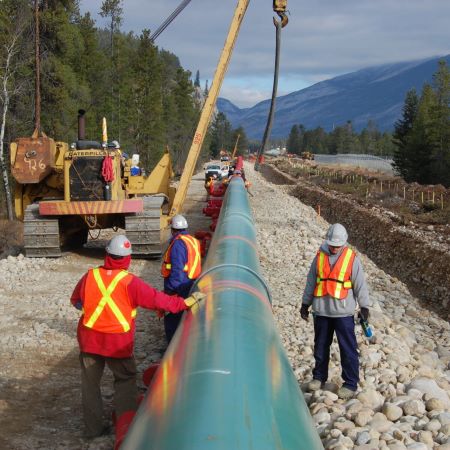
Alberta and federal governments agree on a southern route for a new oil pipeline to B.C.’s coast
Prime Minister Mark Carney and Alberta Premier Danielle Smith reached a deal on a new oil bitumen pipeline to B.C.’s coast, agreeing on a southern corridor rather than a route to B.C.’s northern coast.
The Government of Alberta submitted its application for the West Coast Oil Pipeline to the federal Major Projects Office (MPO) for listing as a project of national interest. The MPO will immediately begin consultations with Indigenous groups, provinces and territories.
To facilitate this project, the Alberta government will enter into a partnership with Trans Mountain Corporation, a federal Crown corporation, and Pembina Pipeline to bring together world-class expertise in pipeline design, construction and operation.
Trans Mountain, the Alberta Petroleum Marketing Commission (APMC) and Pembina Pipeline will form and lead a new jointly owned company. Trans Mountain will be responsible for the development and execution of the project and subsequent operation of the pipeline.
Pembina's economic interest through construction will be 10 percent, with the opportunity for up to an additional 10 percent once the project enters commercial operation. Trans Mountain and APMC will own equal shares of the balance of the project, expected to between $35.2 billion and $43.7 billion to build.
Indigenous equity partnership and consultation will also be an essential part of developing and constructing the project.
Detailed funding and the cost to taxpayers remain to be negotiated, Smith said. Construction of the pipeline would start as early as 2027 and finish by 2034.
 The pipeline would follow a southern route largely along the existing Trans Mountain pipeline corridor to the Royal Banks terminal in Delta on B.C.’s southern coast, not a route to B.C.’s northern coast, which had been opposed by B.C. Premier David Eby and several First Nations.
The agreement maintains the existing federal ban on oil tankers loading up at ports on B.C.’s northern coast.
Ottawa is offering federal guarantees for B.C.’s interests and billions of dollars for major projects in the province, including $3.5 billion for B.C.’s North Coast Transmission Line, a major electricity corridor meant to power mines and natural gas facilities, and up to $3 billion for a new tunnel under the Fraser River south of Vancouver.
In exchange, B.C. “commits to acting in good faith to engage in the necessary routing and permitting discussions, within its jurisdiction.”
The Alberta government said the new pipeline will transport more than one million barrels of oil per day to Canada’s west coast and strengthen access to growing Asian markets, helping meet Alberta’s goal to double its oil production to eight million barrels per day over the next 10 years. After studying both northern and southern route options, Alberta selected a southern corridor from Bruderheim, Alta. to the southwest coast of B.C.
“This offers the fastest, most cost-effective path to expanding Canada's energy exports,” the Alberta government said.
The Alberta and federal governments, along with the Oil Sands Alliance, are finalizing a tripartite agreement that will include a series of regulatory reforms and growth incentives needed to expedite growth in oilsands production necessary to fill the new west coast pipeline and expand the existing Trans Mountain pipeline.
As part of this agreement, the Alberta and federal governments will provide the conditions necessary for Oil Sands Alliance member companies to simultaneously grow production and build Pathways, the world’s largest carbon capture and storage infrastructure project that could cost up to $20 billion.
The Union of BC Indian Chiefs (UBCIC) questioned whether the proposed oil pipeline corridor has the consent of all impacted First Nations.
“Canada, B.C. and Alberta appear to be oblivious to the stark reality that increasing fossil fuel extraction and transmission will result in increasing greenhouse gas emissions, global temperatures, and the resulting climate impacts that we are well aware, of including floods and wildfires,” Grand Chief Stewart Phillip, president of UBCIC, said in a statement.
“We are extremely disappointed that these governments are effectively furthering the climate emergency rather than doing everything they can to stop it,” he said.
Peter Nicholson, a former deputy chief of staff for policy in the Office of the Prime Minister and currently board chair of the Canadian Climate Institute, wrote in an article published by Sage: “Before committing tens of billions of dollars to another west coast pipeline, investors – and ultimately governments – should be able to point to producers prepared to commit very substantial volumes [of oil] under long-term shipping contracts.”
“Without committed production, there is no commercial foundation for the project,” he wrote. “Without commercial foundation the project would depend on potentially massive new subsidies. That’s no way to build a stronger economy.”
In the oilsands industry in Alberta, capital spending has shifted toward improving existing operations, reducing costs, paying down debt, increasing dividends and repurchasing shares, Nicholson noted. “The industry increasingly resembles a mature cash-generating business rather than one preparing for another generation of megaprojects.”
David Climenhaga, writing in The Tyee, said “the realization is yet to set in with the public that 90 per cent of the cost of this multibillion-dollar project – we don’t know how many multiples of billions yet – is going to be paid by Alberta and Canadian taxpayers, just as we were promised would never happen.”
“It is now clear: there is no business case for a new West Coast pipeline in Canada,” Chris Severson-Baker, executive director of the Pembina Institute, said in a news release. “If this was a smart economic venture; if there was any kind of reasonable return on investment to be made, a private company or companies would have put up the cash.” Govt. of Alberta, Govt. of Canada
****************************************************************************************************************************
Ontario and Alberta unveil the Northern Shield Energy Corridor, including a proposed new oil pipeline
Ontario Premier Doug Ford and Alberta Premier Danielle Smith unveiled the proposed route for the Northern Shield Energy Corridor, a proposed crude oil pipeline and energy corridor that would strengthen Canada’s energy security by bringing oil along a 3,300-kilometre primary route from Hardisty, Alta. to Sarnia, Ont.
This nation-building project would be built exclusively through Canada, connecting the country with critical energy infrastructure to reduce Canada’s reliance on foreign markets, provide critical redundancy to existing infrastructure, bring additional capacity to refineries in Sarnia, strengthen national security and domestic supply chains and create new jobs for Canadian workers, the premiers said.
The primary route under review would lead to Sarnia, Ontario, which has refining capacity serving the Ontario market and is directly linked to existing energy and shipping infrastructure. Ontario is also exploring pipeline extensions to new and existing ports, creating new opportunities to bring Canadian oil to new tidewater to reach new markets abroad.
The proposed route would also provide the Government of Manitoba and the Manitoba-Crown Indigenous Corporation with the opportunity to explore the feasibility of a pipeline extension to the Port of Churchill.
The proposed Northern Shield Energy Corridor would move an estimated 500,000 barrels of oil per day for domestic use and export markets and could expand to up to a total of 800,000 barrels per day.
As part of the new pipeline and port opportunities, Ontario is also exploring a potential strategic petroleum reserve.
The pipeline would be built using Canadian steel, supporting Canadian manufacturing and supply chains and creating jobs across the country.
This energy corridor study stems from a Memorandum of Understanding between Ontario, Alberta and Saskatchewan, which commits these provinces to identify areas of collaboration that would protect Canadian workers, including new energy and trade infrastructure, and to continue cooperation in advancing the development of nuclear energy to meet growing energy needs. Ontario is now proceeding to define estimated costs and examine commercial models and related development opportunities for the energy corridor, including grid upgrades and potential strategic petroleum reserves. The feasibility study is expected to be completed by the end of 2026. Govt. of Ontario
**************************************************************************************************************************
Prime Minister Mark Carney announced that the Government of Canada has selected Germany-based Thyssenkrupp Marine Systems (TKMS) as the preferred supplier to begin negotiations for delivering Canada’s next fleet of submarines as a key step in providing the Royal Canadian Navy with the equipment it needs to keep Canadians safe and maintain current and future operational readiness. TKMS beat out rival South Korea’s Hanwha Ocean in the competition, even though TKMS has not completed building its 212CD model. TKMS has 212CD submarines under construction but none in service yet. TKMS will enter negotiations to finalize the contract(s) or other arrangement(s) required to deliver the requirements of the Canadian Patrol Submarine Project (CPSP), which experts anticipate will cost tens of billions of dollars. Canada will conclude contracting no later than the end of 2027, with the first four submarines to be delivered ahead of schedule, in 2034, ahead of the planned retirement of the Victoria-class fleet in the mid-to-late 2030s, helping to prevent a gap in Canada’s submarine capability. The CPSP will deliver up to 12 modern submarines and advances Canada’s broader commitments to sovereignty, continental defence and collective security with allies, including through the North Atlantic Treaty Organization and the North American Aerospace Defense Command. This project also represents a significant contribution toward reaching the NATO Defence Investment Pledge of five percent by 2035. Ottawa said the CPSP represents a long-term partnership between Canada, TKMS and Germany that is expected to include:
- Long-term collaboration on submarine design, construction and sustainment.
- Opportunities for technology transfer and skills development.
- Close cooperation with allied naval programs.
TKMS promises to work with an array of Canadian-based suppliers of raw materials (like Valbruna, whose Canadian branch is meant to supply non-magnetic steel), parts (like Patriot Forge), training tools (like CAE) and AI services (like Cohere). North Vancouver-based Seaspan is in line to lead long-term support and servicing on Canadian soil. Prime Minister of Canada
The trilateral trade deal between Canada, the United States and Mexico, known as CUSMA, will enter an annual review process, as U.S. officials opt not to extend the agreement “in its current form.” July 1 was the deadline for officials in all three countries to say whether they wanted to renew the Canada-U.S.-Mexico Agreement (CUSMA) for a 16-year period. Because the U.S. chose not to renew it, an annual review process kicks in for the next decade. “We agreed on the importance of continuing our discussions and identifying ways to ensure trade and investment frameworks between Canada, the United States and Mexico continue to support North American prosperity and competitiveness,” Canada’s Trade Minister Dominic LeBlanc said in a statement. “For Canada, this includes substantive discussions with the United States on addressing sectoral tariffs on Canadian steel, aluminum, autos and lumber.” Any of the three countries are able to pull out of the deal entirely with six months’ notice. CTV News
Federal Industry Minister Mélanie Joly announced a $688-million contract to Brampton, Ont.-based MDA Space Ltd. to build, test and launch a replenishment satellite for the RADARSAT Constellation Mission (RCM). Canadian industry will be called upon to support design, manufacturing and integration activities, ensuring a diversified supply chain across the country. The RCM supports a wide range of services that Canadians rely on every day. Satellite data from the constellation is used to observe Arctic sea ice, track floods, support maritime safety and study environmental change. With its unique vantage point from space, Canada’s RCM is actively monitoring the Canadian North and providing critical data that helps enhance Arctic monitoring efforts to safeguard Canada’s sovereignty and support intelligence, surveillance and reconnaissance. With this contract, the Canadian Space Agency is bolstering Canada’s capacity of uninterrupted access to this critical data to meet Canada’s evolving security needs. The approach uses an efficient way of acquiring the satellite. It relies on a commercial satellite design from MDA Space based on next-generation MDA CHORUS™ synthetic aperture radar technology and Canada’s previous RADARSAT program heritage. This proven design reduces risks, accelerates delivery and ensures compatibility with the current RADARSAT Constellation Mission infrastructure. Canadian Space Agency
The Government of Canada announced a new set of targeted simplification measures that respond directly to concerns raised by small businesses about the complexity, cost and time required to participate in federal procurement. In launching the first series of measures under the new Small Business Procurement Program (SBPP), the government said it will work to remove long-standing barriers that have made federal contracting difficult for smaller firms, and to ensure they are better positioned to compete for and win government work. These changes will modernize procurement processes, improve access to opportunities for small businesses, and ensure they can play a stronger role in delivering federal priorities while supporting jobs, innovation and a more resilient Canadian economy. In concert with the SBBP, Innovation, Science and Economic Development Canada will leverage the Innovative Solutions Canada (ISC) program, which will help connect federal departments to Canadian firms to develop, test and commercialize their innovative technologies. Bolstered by $79.9 million funding over five years, the ISC will help Canadian innovators develop, test and validate new technologies by providing opportunities to work directly with the federal government as a first customer. It will also expand support for Canadian small businesses to participate in federal procurement, making it easier for them to secure contracts, demonstrate their products at scale and build the track record needed to access new domestic and international markets. “By giving more Canadian small businesses a fair shot at federal contracts, these measures will help unlock growth and create good jobs across the country,” Ottawa said. Glen Lougheed, co-founder and CEO at Vancouver-based tech firm Applied Post, welcomed the renewed investment in ISC, but said the procurement system needs to fix “a massive double standard regarding failure.” The bureaucracy has “built-in immunity for big-name failures, but zero tolerance for small-business hiccups. This fundamental fear is what truly blocks domestic innovation, not a lack of funding,” Lougheed said in a LinkedIn Post. Until public sector buyers are actively retrained to accept that trying something new carries risk and that supporting an emerging Canadian firm is worth that risk, “the default will always be to play it safe,” he said. Public Services and Procurement Canada
Health Canada introduced a new policy allowing drone technology to be used to apply pesticides that are already approved for conventional aerial application. Agriculture and Agri-Food Canada, Health Canada and industry worked collaboratively to gather evidence to inform the development of this policy decision. This policy removes barriers and gives Canadian farmers another way to protect and grow their crops more efficiently. Drone technology offers farmers an innovative, precise and more cost-effective tool for pest management. By helping growers reach fields and areas that may be difficult to access using conventional equipment, it can support timely crop protection, reduce operational challenges and help safeguard crop yields. Health Canada
The Auditor-General of Canada turned down a parliamentary committee’s request to audit the failed $298-million digital prescription program PrescribeIT because Health Canada is planning a separate review of the federally funded non-profit Canada Health Infoway, which ran the program. Auditor-General Karen Hogan wrote to the health committee to say that she has carefully considered the request and at this time believes an audit from her office would be duplicative of the government’s efforts and offer “limited added value for parliamentarians and Canadians.” “Once Health Canada’s review has been completed, we will assess the need for any additional audit work by my office,” Hogan said. The Conservatives said they are disappointed with the decision because they are not sure the government review will be comprehensive enough. Canada Health Infoway launched PrescribeIT in 2017 as part of “axe the fax” initiatives to replace fax machines with digital alternatives for sending prescriptions between doctors and pharmacists. Nearly $300-million in federal funds went into PrescribeIT over the years. But the program was shut down in most of the country in May because fewer than five percent of prescriptions flowed through it. The program has been a subject of hearings at the House of Commons health committee in recent months. The long-time chief executive officer of Infoway, Michael Green, was dismissed by the organization’s board after a troubled appearance at the health committee in April. The Globe and Mail
The Canadian Food Inspection Agency (CFIA) launched a concierge service for small and medium sized businesses to improve interprovincial food trade. The service is designed to provide support for food businesses who are looking to expand their operations across Canada to help navigate understanding and acquire federal licenses, including the Safe Food for Canadians licence. Businesses can schedule one-on-one virtual meetings with CFIA employees to help understand their unique needs and begin the licensing process while identifying gaps between their current practices and regulatory expectations. The meetings can help prepare documentation and offer support as needed. CFIA said they are working with provinces and various food associations and hope this program helps expand awareness of the service and will reach businesses that would benefit from federal licensing. CFIA said this process will also allow them to ensure a company has a food safety culture. Interested parties can begin the process by filling out an intake form on CFIA’s website. Food in Canada
Canada has joined NATO’s more-than-$1.5-billion Innovation Fund, pending approval from the other members of the defence- and security-focused initiative, sources told The Globe and Mail. The move means Canada will finally follow through on a long-held commitment to join the fund, launched in 2022 to invest in technologies being developed by participating North Atlantic Treaty Organization allies. Canada’s membership in the fund is pending approval by the venture capital fund’s participating 24 countries, or limited partners, which could take until the fall, sources said. Canada, alongside its fellow NATO members, signed off on the creation of the fund four years ago, and even set aside $107 million over 20 years in 2024 to participate in it. But it never followed through, making it one of only eight NATO allies not backing the fund. Proponents of the fund say its ability to invest in early-stage companies could be meaningful for Canada, whose defence industry is primarily made up of small to medium-sized enterprises and whose army is rapidly trying to modernize. If approved, Canada’s membership means it will be joining the initiative’s first sub-fund, which was launched in 2023 to invest into early-stage technology startups, as well as other funds that align with its defence, security and resilience mandate. The Globe and Mail
The Government of Canada announced the expansion of the Canada Greener Homes Affordability Program to Quebec, British Columbia, Nova Scotia and Prince Edward Island. This builds on the existing partnership with Manitoba. Retrofits undertaken via the Canada Greener Homes Affordability Program will help participants save between $300 and $1,700 in annual energy costs, and reduce their household’s annual greenhouse gas emissions by about 1.5 tonnes. Over $500 million in funding, $300 million of which is federal, will be directed to help over 35,000 low- and median-income households install heat pumps, better insulation, improved air sealing and other upgrades at no cost, which will reduce their energy bills and lower their household emissions. The program will be delivered in co-ordination with all four provinces, as well as with Hydro-Québec, BC Hydro, Fortis BC and EfficiencyOne. Natural Resources Canada
Natural Resources Canada (NRCan) announced more than $26 million in funding for 17 projects across Alberta and Saskatchewan that will accelerate the deployment of clean technology, modernize energy systems and infrastructure, reduce emissions and build the regulatory, industrial and workforce capacity needed for Canada’s long-term economic growth and energy security. The projects include:
- $14.9 million for 10 projects that will advance energy storage, solar and wind energy development, interprovincial electricity transmission planning, Indigenous-led clean energy projects and workforce development.
- $5.9 million for engineering and design work for two facilities that will convert waste biomass to renewable natural gas with carbon capture.
- $3.5 million for two projects that will reduce methane emissions from upstream oil and gas operations and advance low-emissions cement alternatives that permanently store carbon.
- $2.3 million for three projects that will support higher energy-efficiency building codes. NRCan
Prairies Economic Development Canada (PrairesCan) invested $5.6 million in organizations that support Black entrepreneurship in Alberta. Funding, through PrairiesCan’s Black Entrepreneurship Program (BEP), will go towards three Alberta-based organizations to support training, mentorship and business development programming tailored for Black entrepreneurs. Included in the announcement is $2.6 million for the Council for the Advancement of African Canadians (Africa Centre), $1.5 million for The BIPOC Foundation, and $1.5 million for the Black Canadian Women in Action Society. Prairies Can previously announced $3.2 million through the BEP for Manitoba. BetaKit
The Government of Saskatchewan’s eHealth Saskatchewan will invest $43.6 million in information technology capital and operational purchases in the coming year. This 2026-27 budget funding will allow eHealth to invest in new projects and initiatives that enable connected and accessible health care in the province while maintaining and upgrading existing infrastructure. This investment provides secure and flexible digital health infrastructure that helps enhance service availability and improves communication support for patients and providers. Examples of planned work include:
- Investing in network infrastructure and clinical technology for new facilities currently in construction, including the Prince Albert Victoria Hospital, Saskatoon Urgent Care Centre and La Ronge Long Term Care facility, as well as renovations including technology enhancements at existing health facilities.
- Providing rugged IT devices for emergency responders in ground and air ambulances.
- Maintaining secure and reliable access to information and systems by replacing laptop and desktop computers across the health system on a regular cycle.
- Making ongoing enhancements and expansions to strengthen the IT infrastructure that is the foundation for access to safe and timely care. Govt. of Saskatchewan
The Government of Ontario is investing more than $4 million through the Critical Minerals Innovation Fund (CMIF) to advance new technologies that attract investment and create more good-paying jobs across the province. Businesses can now apply through the CMIF for up to $500,000 per project support initiatives focused on:
- Building a home-grown battery supply chain: to support global electric vehicle markets, energy storage and other advanced technologies.
- Deep exploration and mining: helping companies access mineral resources deeper below the Earth’s surface than previously explored.
- Recovery of minerals: by using advanced technologies to retrieve minerals from tailings produced at mine sites.
- Mining innovation: accelerating projects that create new innovations in the critical minerals sector. Govt. of Ontario
The Government of Nova Scotia issued an environmental assessment approval to the Ocean Lake Wind Project in Guysborough County. Ocean Lake, which will have up to 158 turbines, is the largest wind energy project approved in Nova Scotia to date. Once operational, it will generate about 1,264 megawatts of clean electricity, enough to power the equivalent of about 404,000 homes. It will also reduce Nova Scotia's annual greenhouse gas emissions by about 1.94 million tonnes – the equivalent of taking about 420,000 gas-powered cars off the road. Construction of the wind farm is expected to begin in 2029 and take about five years. The project must comply with 61 terms and conditions designed to protect the environment and human health. Govt. of Nova Scotia
The U.S. Supreme Court sided with Bayer AG, the owner of Monsanto, in the controversial case Monsanto v. Durnell, which pitted individuals who claim using the company’s flagship weedkiller Roundup caused their cancers against the pesticide giant. The ruling will impact thousands of pending claims against Bayer related to glyphosate, the active ingredient in Roundup. But it also has broader implications for individuals’ ability to sue any pesticide company over claims that the company failed to warn them about health risks. While the case has drawn public attention due to its broader health implications, the technical question in front of the court was whether federal law preempts state law and court decisions related to pesticide labeling. In the 7-2 majority opinion, Justice Brett Kavanaugh wrote that the Federal Insecticide, Fungicide, and Rodenticide Act– the federal law that regulates pesticides – “expressly preempts” state labeling requirements. And since the Environmental Protection Agency approved a label without a cancer warning, Bayer could not, by law, add that warning. The Supreme Court’s decision “is harmful to farmers and farmworkers,” Nathan Leys, a staff attorney at FarmSTAND, said in a statement. “Farmers and farmworkers will continue to fight against Monsanto impunity, and for a food system that works for everyone, not just a handful of corporate executives.” Civil Eats
The global transition to cleaner forms of energy has flatlined, driven by a combination of geopolitical uncertainty, supply and price volatility, and governments shifting their priorities, according to a new report from the World Economic Forum. The 16th annual Energy Transition Index tracked energy systems in 120 countries. By assessing current system performance across metrics including security, sustainability and affordability, as well as transition readiness, the report painted a picture of fragmented and increasingly uneven progress toward transition. Only 24 percent of countries improved across their current system performance, the report found. And the conditions that drive future progress, policy, finance, innovation and infrastructure have weakened for the first time in more than a decade. Canada ranked 32nd in the index, standing out for the reliability, resilience and diversity of its energy system, which combines strong supply security with a balanced and dependable mix of fuels. However, the index also pointed to the country’s widening sustainability gap and weaker infrastructure performance, raising questions about its ability to sustain long-term competitiveness amid a global shift toward cleaner fuels. Despite its well-functioning energy system, Canada was among several countries where energy became more expensive – yet it was also among the world’s top 10 energy consumers in 2025, alongside Brazil, China, India, Indonesia, Iran, Japan, South Korea, Saudi Arabia and the United States. While those countries and Canada outperformed the global average on overall system performance, sustainability “remains the weakest dimension, underscoring how the world’s largest energy consumers still carry the hardest decarbonization burden,” the report found. The good news is that these countries’ readiness to transition to cleaner fuels has strengthened steadily over the past year, sitting well above the global average when it comes to regulations, infrastructure and innovation. In all, global energy investment reached a record US$3.3-trillion in 2025. Clean energy attracted roughly twice as much capital as fossil fuels, and renewable electricity capacity increased by nearly 800 gigawatts. The Globe and Mail
RESEARCH, TECHNOLOGY & INNOVATION
Canada, the United Kingdom and the United States announced that a joint research funding opportunity focused on wildfires in the wildland-urban interface, led by the Natural Environment Research Council-UK Research and Innovation, is now accepting applications. This collaborative opportunity seeks to improve understanding of and resilience to wildfire in zones where natural and human environments meet. Innovative research is needed to develop frameworks that better explain current fire behaviour, assess emerging risks and impacts and guide more effective prevention, mitigation and adaptation strategies. In Canada, funding for Canadian researchers exploring this issue will be provided by the Natural Sciences and Engineering Research Council of Canada (NSERC), the Social Sciences and Humanities Research Council, and the Canadian Institutes of Health Research, with NSERC leading Canada’s participation. The Canadian funding available for this call is up to $9 million. This call is open to Canadian university researchers from a broad range of disciplines, including natural sciences, engineering, social sciences, humanities and health. Please refer to the Enhancing Resilience to Wildfires in the Wildland-Urban Interface call for more information. Expressions of interest are due by July 30 at 11 a.m. EDT. NSERC
Indigenous communities and Parks Canada celebrated the completion of the Wood Buffalo National Park Field Station in the Peace-Athabasca Delta. Located 10 kilometers from Fort Chipewyan, Alta., in the Peace-Athabasca Delta, the $10.7-million field station was designed in collaboration with Athabasca Chipewyan First Nation, Fort Chipewyan Métis Nation, and Mikisew Cree First Nation. The Field Station will support community-based monitoring initiatives, such as Muskrat and Fish Camps, land-based programs where community members, researchers and Knowledge Holders observe environmental conditions through traditional practices, which braid Indigenous Knowledge and Western Science to strengthen monitoring and stewardship in the delta. The opening of the Wood Buffalo National Park Field Station represents a key milestone in implementing the Wood Buffalo National Park World Heritage Site Action Plan, responding directly to commitments to strengthen coordinated research, monitoring and community-based stewardship in the Peace-Athabasca Delta. Through its $3.8-billion A Force of Nature strategy announced March 31, 2026, the Government of Canada is investing $90 million over five years to support ecosystem restoration and the recovery of wood bison populations along the Alberta-Northwest Territories border. This investment, delivered in partnership with Indigenous communities and regional governments, will also advance the ongoing implementation of the Wood Buffalo National Park World Heritage Site strategy. Parks Canada
The Vector Institute in Toronto launched UnBias-Plus, a free, open-source AI tool built by Vector’s AI Safety research scientists that helps detect, explain and rewrite biased language in written content and AI training datasets – in seconds. Canada’s National AI Strategy: AI for All explicitly identifies addressing algorithmic bias as a pillar of responsible AI development, recognizing that unchecked bias in AI systems undermines equity, safety and public trust. The scale of the challenge is staggering: bias in AI training data has been measured at rates ranging from 3.4 per cent to 38.5 per cent, and even safety-tuned large language models (LLMs) exhibit implicit racial and gender bias. UnBias-Plus is the first free tool of its kind available to both organizations and the general public. The tool analyzes written text for biased language across dimensions of race, gender, age and political framing, explains precisely why language has been flagged, suggests neutral alternatives, and returns a fully rewritten version of the original content. Rather than simply producing a revised copy, UnBias-Plus shows users why language may be biased, helping build a clearer understanding of how bias appears in everyday communication. The platform is available in two formats:
- A browser-based version for public use, supporting content of up to 750 words – practical for everyday writing and for organizations evaluating the tool before broader adoption.
- A developer installer for integration into company applications, systems and workflows. Vector Institute
Some AI chatbots don’t produce harmful content nearly as much as other chatbots, according to an audit by the Centre for Media, Technology and Democracy at McGill University. The researchers audited four major deployed AI chatbot products – the consumer-facing applications, not just the underlying models – against the harm categories proposed in the federal government’s Bill C-34 (Safe Social Media Act). They used a large language model to simulate a conversation with a user, starting with a benign prompt and escalating to a request for harmful content. They tested four of the most widely used AI chatbot products – OpenAI’s ChatGPT, Google’s Gemini, Anthropic’s Claude and Meta AI – under multiturn adversarial tests. Claude resisted nearly all but two percent of adversarial attempts. Both Claude’s developer system and consumer system are good at refusing harmful requests despite attempts at indirection from the attacker, according to the audit. In comparison, harms were elicited from ChatGPT and Gemini in 62 percent of adversarial attempts. Both chatbots “frequently produced explicit, actionable guidance in response to self-harm requests.” Meta AI blocked harmful requests with a classifier before the model can answer. “Together, these findings suggest that voluntary safety measures are inconsistent and insufficient,” the audit said. Legislation like Bill C-34 that sets minimum standards, and requires companies to demonstrate compliance, “would give regulators and the public a basis for accountability that currently does not exist.” Centre for Media, Technology and Democracy
The City Council of Seattle, home to Amazon and Microsoft, last month passed a one-year moratorium on the construction of data centres, amid growing concerns about their impacts on land, water and local energy consumption. The Google data centre in Papillion, Neb., consumed 1.5 billion litres of water in 2024 to cool its AI activity. That’s the equivalent of more than 600 Olympic swimming pools, and that’s just one location. The United States has thousands of other data centres of various sizes. The national grid operator in Ireland, where data centres consumed more than 20 percent of the country’s total electricity output in 2023, has suspended new approvals in and near Dublin until 2028. A new report by the UN’s University Institute for Water, Environment and Health, whose home is in Richmond Hill, Ont., said that global data centres’ water footprint by 2030 will equal the basic water needs of the 1.3 billion people in sub-Saharan Africa; their land footprint will exceed 14,500 square kilometres, which is roughly twice the size of megacities such as Jakarta. The report said the data centres will consume 945 terawatt-hours of electricity a year – triple the collective consumption of Pakistan, Bangladesh and Nigeria, home to a combined 650 million people. Eric Reguly in The Globe and Mail
Forward-deployed engineering (FDE) – where AI makers embed their developers into clients’ workforces – is skyrocketing in Canada. Major tech companies like Google, Cohere and Thompson Reuters are hiring locally for the role. EY Canada, Bank of Nova Scotia, Ontario Teachers’ Pension Plan, Coveo, Sage Recruiting and others have job postings for “AI enablement” positions. OpenAI purchased a consulting and engineering firm this year and launched a new business called the OpenAI Deployment Company to work with clients on bespoke solutions. Amazon announced it would spend US$1 billion on an FDE unit. Ottawa-based supply chain software company Kinaxis Inc. also is building teams to install with its clients. A KPMG poll last fall of more than 750 executives in Canada found that just two percent said they were seeing results in the form of productivity or cost savings. That’s partly because many companies are still experimenting with AI and have yet to integrate it into core operations. The most intense corporate users of AI tools, about one percent of companies, are spending US$7,450 per employee per month on the technology, according to data from U.S. financial software company Ramp. The Globe and Mail
Edmonton-based Zero Point Cryogenics (ZPC) was awarded a contract through Innovative Solutions Canada, an initiative by Innovation, Science and Economic Development Canada. Researchers at the National Research Council of Canada will test ZPC’s patented Phase Separation Refrigerator (PSR) – the company’s newest cryostat within its Continuous Cold series. ZPC makes refrigeration devices can chill to within a degree of absolute zero, thereby eliminating thermal “noise” that interferes with quantum computers and sensors. PCR provides continuous cooling at 500 millikelvin – a temperature range that was previously difficult to maintain. The PSR exhibits a cooldown time of less than half of that of a dilution refrigerator, requires only a minimal amount of helium-3, and allows for significant cost savings for customer wiring, so users can reach lower temperatures faster for less. ZPC, a University of Alberta spinout, will soon move to much bigger premises in south Edmonton, having outgrown its space in the back corner of a light industrial site. Zero Point Cryogenics
Lee Marten, a sergeant with the Vancouver Police Department who’s currently on leave, became one of the first Canadian ALS patients to receive a Neuralink brain implant, as part of a clinical trial at University Health Network's (UHN) Toronto Western Hospital. Marten is just the 26th person in the world to undergo the procedure, which is being tested on people unable to move because of ALS or spinal injuries. At least two other Canadians, both quadriplegics, are also known to have received the implant in Canada, and a dual American-Canadian citizen with ALS has had the procedure done in the U.S. Neuralink is owned by controversial trillionaire Elon Musk, and the hospital has faced criticism for participating in the trial. But Marten sees the procedure as a chance to improve his quality of life and advance science in a way that could help others. ALS is progressive and there is no cure. Marten is no longer able to walk. He only has limited movement in his hands, which for now allows him to control his electric wheelchair. Eventually, he will be unable to move, speak or breathe on his own. The clinical trial, CAN-PRIME, at Toronto Western Hospital is one of a handful of Neuralink studies taking part across the world, including ones in the U.S., U.K. and Abu Dhabi. The procedure involves implanting more than 1,000 electrodes, each thinner than a human hair, into the brain's motor cortex. Surgeons open the skull and prepare the site, but the electrodes are inserted by a two-metre-tall robot shipped to Toronto from San Francisco. CBC News
Montreal-based carbon removal company Deep Sky and Isometric announced that carbon captured and permanently removed from the atmosphere by Deep Sky Alpha in Alberta has been independently reviewed and registered as the first certified direct air capture (DAC) carbon removal credits in North America. The credits will be delivered to Microsoft and Royal Bank of Canada (RBC). Deep Sky’s pilot facility in Innisfail, Alta., captures about 3,000 tonnes of carbon dioxide annually and the company plans to use the facility to scale multiple DAC technologies before developing a commercial project in Canada. Within 18 months of beginning construction, the facility permanently injected its first tonnes of atmospheric carbon dioxide underground and has now generated North America’s first verified DAC carbon removal credits. The credits were certified under Isometric’s Direct Air Capture Protocol and independently verified. The protocol requires all project emissions to be accounted for when calculating net carbon removal and long-term monitoring to confirm safe and permanent storage. These are the first DAC credits Isometric has issued. They mark the beginning of Deep Sky’s supply to Microsoft and RBC under their carbon removal agreement through 2034. Deep Sky
The Halifax-headquartered Carbon to Sea initiative announced it will be issuing a $5-million request for proposals (RFP) to expand the Global OAE Field Research Network, an international effort to generate the field data needed to evaluate ocean alkalinity enhancement (OAE) as a potentially safe, effective and scalable approach to durable carbon dioxide removal. The Global OAE Field Research Network is designed to connect researchers and field sites around the world into a coordinated ecosystem for evidence creation, knowledge exchange and shared learning. The RFP will be launched in July and will be available at CarbontoSea.org. OAE is a promising approach for mitigating climate change. It transfers excess carbon from the atmosphere into safe and stable forms in the ocean, mimicking a natural process that already absorbs about a third of carbon emissions every year. The National Academy of Sciences in the U.S. has specifically called for more field research, and the recent white paper from the High Level Panel for a Sustainable Ocean Economy also called for more real-world testing of ocean-based carbon removal. Models, laboratory studies and mesocosm research have produced strong evidence that OAE could become an important climate tool. Carbon to Sea
Two of four reactors at Ontario’s Darlington Nuclear Generating Station have been out of service for prolonged outages, after the completion of a 10-year refurbishment that provincial officials have repeatedly characterized as an unqualified success. The station’s reactors were refurbished between October, 2016, and early March, when the final unit returned to service. Ever since, station owner Ontario Power Generation (OPG) and the Government of Ontario have told the public that the project was completed four months ahead of schedule and $150 million under its $12.8-billion budget. Refurbishments of nuclear power stations are complex undertakings, requiring utilities to make crucial judgments about which components can remain fit for continued service for decades to come, and which ones must be replaced. The resulting outages and maintenance costs could significantly increase charges on Ontarians’ power bills. According to data from the Independent Electricity System Operator, Darlington Unit 4 stopped producing electricity on April 11, roughly a month after it returned to service. A report from the Canadian Nuclear Safety Commission, the federal regulator, attributed the shutdown to “indications of a hydrogen leak in the generator stator cooling water (SCW) system on the secondary, non-nuclear side of the station.” Earlier this month, OPG asserted in a final report on the Darlington refurbishment that, as of March 31, there had been “no loss of generation or impact to the schedule due to quality-related issues.” In a recent rate filing, OPG sought substantial increases to payments it receives for the power its two nuclear stations generate. If approved by the Ontario Energy Board, this could contribute to higher power bills for Ontarians. Four units at Ontario’s Pickering Nuclear Generating Station are scheduled to go offline in September. Ontario Energy Minister Stephen Lecce ordered the refurbishment of those units, collectively known as Pickering B, last November, with a budget of $26.8-billion. The Globe and Mail
Montreal-based AtkinsRéalis, previously known as SNC-Lavalin, anticipates that Turkey will complete an early review of its CANDU reactors following an information exchange later this summer, which may lead to concrete talks for a nuclear plant bid, said Gary Rose, executive vice-president of AtkinsRéalis. Turkey’s first nuclear plant is being built by Russia’s Rosatom, and Ankara has been talking to South Korea’s KEPCO and China’s SPIC for the next two plants. AtkinsRéalis is the latest to open talks and vie for the job. The company signed a memorandum of understanding with state plant operator TUNAS in March to evaluate the applicability of the reactor technology in Turkey. Ankara followed up with on-site visits to Romania’s Cernavoda and Canada’s Darlington CANDU nuclear plants, by two high-profile ministers last month. The Globe and Mail
Contracts that pair clean energy generation with battery storage options are starting to replace pure renewables deals, said New York City-based Brookfield Asset Management Ltd., whose parent company Brookfield Corporation is headquartered in Toronto. “There’s a lot of renewables being built in many markets, and the attractiveness of these renewable megawatt hours in the middle of the day is declining to a point where many large off-takers no longer want standalone solar,” said Arnaud Jouvin, who leads Brookfield’s global energy storage strategy. Instead, it’s all about “the ability to shift these lower value megawatt hours, or lower value energy, to the high-priced hours or high demand areas.” Doing so means stepping up deployment of batteries, Jouvin said. Without storage options, wind and solar can’t provide the uninterrupted power that fossil fuels deliver. Investing in ways to bridge that gap is key if the world is to transition to low-carbon energy sources. Brookfield, which oversees more than US$1 trillion in assets, is among a growing number of investors dedicating more resources to battery technology to underpin its bet on the energy transition. The firm currently has a pipeline of more than 200 gigawatts of solar, wind, hydro and storage. Bloomberg News
Calgary-based Pembina Pipeline Corporation and its partners announced a final investment decision on the first phase of the $4.6-billion Greenlight Electricity Centre. The 932-meagawatt natural gas-fired combined cycle power generation facility, to be located in Sturgeon County within the Alberta Industrial Heartland northeast of Edmonton, will become Canada’s first dedicated natural gas power plant build specifically to supply a hyperscale AI data centre. Pembina’s partners in the project are Morgan Stanley Infrastructure Partners and Kineticor Asset Management. Greenlight is owned by Pembina (47.5 percent), U.S.-based Morgan Stanley Infrastructure Partners (47.5 percent) and Kineticor (five percent). The project’s anchor customer reportedly is Meta platforms, although Meta hasn’t confirmed this. Pembina
California-based fintech company Robinhood launched crypto trading in Canada, but is only offering crypto trading for now – not the full range of stock trading, prediction markets and other services available in the U.S. Robinhood’s Canadian launch spells the end of an era for Coinsquare and Bitbuy, two Canadian crypto-trading platforms Robinhood acquired when its takeover of parent company WonderFi closed in June. The websites for Coinsquare and Bitbuy now direct users to the Robinhood app. Robinhood’s acquisition of WonderFi was fraught with turmoil, including a $6-million settlement with activist investor Adam Arviv, who threatened to go public with unspecified governance concerns. The Logic
A Quebec Superior Court judge granted the trade group Quebec Association of Electricity Consumers intervener status in a pair of lawsuits by crypto miners against Hydro-Québec.The association, which represents some of the largest electricity consumers in the province, said it supported the efforts of Bitfarms, Hive and Quebec-based Énergie Flumen to nullify rate hikes for crypto mining operations in the province, enacted in February 2026. Bitfarms and Hive filed a lawsuit against Hydro-Québec in March, alleging the utility’s rate hikes are unfairly punitive toward crypto mining operations in the province. Both companies have already largely exited the crypto mining space, Hive pivoting to AI computing in 2023 and Bitfarms following suit last November. In April, Bitfarms changed its name to Keel Infrastructure and converted its 13 mining sites in North and South America into AI and high-performance computing data centres. The second lawsuit by Énergie Flumen was also filed in March. The Logic
Ottawa-based e-commerce giant Shopify and Hong Kong-founded, Singapore-based competitor Shopline settled their copyright lawsuit. Shopify sued Shopline two years ago, accusing the subsidiary of global tech firm Joyy of copying its e-commerce software “wholesale” to build a competing platform. Shopify claimed Shopline infringed upon its copyright by producing and selling “a thinly-disguised knockoff” of its Dawn storefront template called Seed. The two firms struck a confidential deal on June 30 to resolve that litigation that entails Shopline paying Shopify an undisclosed sum. Shopify has also asked the New York court overseeing the case to bar Shopline from distributing Seed going forward. BetaKit
VC, PRIVATE INVESTMENT & ACQUISITIONS
Canada Pension Plan Investment Board (CPP Investments) invested $2.4 billion to support Stockholm-based EQT’s strategy to build AI Infrastructure, led by global data centre developer and operator EdgeConneX, which plans to add 10 gigawatts of capacity. Founded in 2009, EdgeConneX operates a global data centre platform across 20+ countries, serving hyperscale, cloud and enterprise customers. That includes a single Canadian data centre: a small, one-megawatt site in Toronto. CPP Investments’ backing of EQT follows a $1-billion commitment to Indian data-centre operator CtrlS last month, a $1-billion South Korean deal in November 2024 and the purchase of a stake in Australia’s AirTrunk in September 2024. CPP Investments
Toronto-based venture capital firm InvestEco Capital raised $106 million for its fourth sustainable food fund. Investors include Farm Credit Canada, Export Development Canada, Business Development Bank of Canada, Fonds de solidarité FTQ, and two Government of Canada social finance fund wholesalers: Boann and Realize Capital Partners. In addition, InvestEco Capital’s fund received commitments from a number of private investors and family offices. This fund will continue InvestEco’s work of investing in high-growth food companies that promote health and sustainability in the food sector. The fund's investments to date include Humble Snacks, Little Sesame, Mid-Day Squares and Algae Cooking Club. The fund expects to make a further six to 10 investments over the next few years. Business Wire
Toronto-headquartered Radical Ventures participated in a US$100-million Series B funding round for San Francisco-based startup TwelveLabs. TwelveLabs makes AI tools that let users analyze and extract data from video, making the contents searchable via text prompts. NEA and Naver’s venture arm co-led the funding round, with participation with participation from Amazon, Korea Investment Partners, Index Ventures, Quadrille Capital, and Red Bull Ventures. The investment comes as TwelveLabs expands beyond video understanding models into a full-stack agentic intelligence system for video that combines perception, knowledge and reasoning into a single architecture. TwelveLabs said it will use its Series B funding to invest even more heavily in research and development. The company will continue its investments in San Francisco and Seoul and also support geographic growth, with new offices in New York and London to serve demand from global customers. TwelveLabs
Montreal-based semiconductor company Stathera Inc. raised US$55 million in a Series B funding round. The round was led by new investor Maverick Silicon with continued backing from existing investors Celesta Capital, BDC Capital, MediaTek Innovation Fund, TXC Corporation, and Ultratech Capital Partners. AI data center performance depends on how quickly and coherently data can move and remain synchronized across tens of thousands of processors and the networking connecting them – synchronization that must run on precision timing. Stathera said it will use the proceeds to fund mass production of its GEN2 silicon timing portfolio while accelerating development of its next-generation platform for AI data centres and growing the company's engineering and commercial teams. With this expansion, Stathera will establish a Silicon Valley office to engage leading AI, data centre and hyperscale customers. Stathera
Regina, Sask.-headquartered Conexus Credit Union’s Conexus Venture Capital’s CVC Fund #2 led a growth fundraising round in Vancouver-based JUDI.AI, a cash flow underwriting platform built for small business lending at credit unions, with participation from existing investors such as Unitus Community Credit Union in Oregon. The amount of the investment wasn’t disclosed. Supporting many credit unions and community banks across Canada and the U.S., the JUDI platform has processed over $2 billion in small business loan applications. This latest capital injection further supports JUDI’s growth strategy, including North American expansion and product development. Conexus Credit Union
Halifax-based software startup Floqer raised just over $2 million in previously unannounced funding last September, to build out some of the customer relationship management infrastructure that businesses require to take full advantage of AI. Through its F7 Fund, Perplexity has bought into that vision, alongside Toronto-based N49P, Halifax’s Tidal Venture Partners, Perplexity co-founder and CTO Denis Yarats, and others as part of that pre-seed round, which Floqer raised through a simple agreement for future equity. Floqer originated as an open-source, note-taking Chrome extension called Superchat that co-founder and CEO Shivam Mahajan built on the side to allow users to leverage ChatGPT on the internet. Today, Floqer helps businesses’ sales and go-to-market teams gather, clean, and consolidate data from over 100 sources and use AI agents to automate the client research process. BetaKit
Montreal-based Scandium Canada Ltd. acquired Québec City-based Ferreol Technologies, a company engaged in a R&D, development, processing and production activities of aluminum products and other alloys incorporating scandium. Ferreol Technologies has been renamed Scallium+ Inc. and is now a wholly owned subsidiary of Scandium Canada dedicated to the commercialization of aluminum-scandium alloys developed by both organizations. Based on Ferreol Technologies’ internal testing under controlled conditions, some Scalium® alloys demonstrated strength results of up to 45 percent higher than typical 7075 aerospace aluminum. Subject to further testing for commercial applications and scale, certain Scalium® alloys may have the potential to substitute high-strength aluminum alloys or titanium in demanding high-stress applications. Scandium Canada
Vancouver-based quantum technology firm BTQ Technologies Corp. received regulatory approval from the French Foreign Direct Investment authorities for the company’s previously announced acquisition of QPerfect, a French quantum computing company based in Strasbourg, France, specializing in quantum software, emulation, digital twin capabilities and control systems. Conditions of the $30-million acquisition approval require the maintenance of QPerfect's registered office in France, the appointment of a French corporate officer, the continuity of R&D activities, and the protection of intellectual property. QPerfect is led by a team of scientists and engineers who have spent years advancing the frontier of neutral atom physics, quantum optics, quantum software engineering and quantum system design. Founded in 2023, the company is known for breakthrough work in quantum emulation, bringing world-class quantum software, emulation, digital twin and control capabilities for neutral atom platforms. BTQ Technologies
Toronto- and New York-based physical AI company Mecka AI acquired Vancouver-based startup Docula, to help Mecka AI process petabytes of human motion data used to train robots. Financial terms of the deal weren’t disclosed. All three members of Docula team’s joined Mecka. Mecka aims to collect physical data from human movement and sell that to companies making robots. Docula built an AI data-processing engine for medical billing and auditing that could ingest records, normalize codes, run edits, benchmark fees and produce defensible reports instantaneously. Though Docula's product was in health care and not directly related to robotics, the core capability – dealing with massive volumes of data at speed – is what Mecka needed. AI Business Weekly
San Francisco-based banking, lending, and investing app SoFi acquired Toronto-based fintech startup Composer for an undisclosed amount. Last week, SoFi revealed Composer by SoFi, a new AI-powered investing platform within its financial app, built on its acquisition of Composer. The new tool will allow SoFi’s 14 million members to turn their investing ideas into full strategies. Using natural language, users can define their strategy, and the Composer tool walks them through building, testing, and automating a rules-based roadmap to invest based on their thesis. Composer remains fully operational, with no changes for end-user account access, and SoFi plans to continue operating Composer as a separate product for the foreseeable future. BetaKit
****************************************************************************************************************************
Corporate Canada needs to “step up” and create more corporate venture capital firms: Deloitte report
The number of corporate venture capital (CVC) firms in Canada continued to rise, hitting 34 in 2025, according to a report by Deloitte.
However, CVC deal volume was down to 60 deals versus 75 in 2024, the report said.
The decline reflects lower venture capital volume generally and the slower pace among the top three most active Canadian CVCs, whose decline in activity accounted for 87 percent of the drop.
“Overall, the Canadian CVC landscape continues to be dominated by the actions of a handful of active players, highlighting the need for both the launch of more CVCs and maturation of existing CVCs beyond making one to two investments per year,” the report said.
The average deal size for an investment by a Canadian CVC rose 39 percent to $32 million as the broader market in Canada and the U.S. saw average deal sizes rise.
AI continued to dominate Canadian CVC investments and drew capital south of the boarder. Forty-eight percent of all Canadian CVC’ deals were in AI companies, and 55 percent of their AI investments were in U.S. companies.
Canadian CVCs continued their trend towards increased concentration of investments at the early and seed stages, which combined to represent 90 percent of deal volume, with late-stage deals at just 10 percent, according to the report.
Participation by CVCs (both Canadian and foreign) in Canadian-headquartered venture financings remained consistent at 74 deals, up one per cent from 2024.
Despite trade frictions with the U.S and the resulting “by Canadian” theme that permeated the country, local investment by Canadian CVCs fell while U.S. CVCs stepped up activity to fill the gap.
“As the wave of innovation from AI accelerates through the economy, we believe a resilient corporate venture ecosystem in Canada is critical to ensure startups, scale-ups, corporates, and the economy at large realize their potential, and the door is open to corporate Canada to step up,” Deloitte said. Deloitte
REPORTS & POLICIES
 Editor’s note: This is Part 2 of an article posted by Eeman Khan to his LinkedIn. Research Money has split the lengthy article into parts. In Part 2, Khan offers his diagnosis and prescription for Canada. Part 1 was published on July 1, 2026 in The Short Report’s “Reports & Policies” section.
10 months in America taught me why Canada is falling behind
OPINION & ANALYSIS
Eeman Khan is Director, Strategy at ExecCap Advisors and an MPP Candidate at the University of Chicago.
Part III: The Honest Account
But what about Shopify?
Canada has produced genuinely world-class companies. Shopify, founded in Ottawa in 2006, processed more than $292 billion in transactions in 2024 and generated $11.6 billion in revenue in 2025.
Cohere, the enterprise AI company, was founded in Toronto. The Vector Institute and Mila are recognized globally as leading AI research centers.
The RIM/BlackBerry story, whatever its ultimate arc, was a genuine innovation achievement. D-Wave commercialized quantum computing. OpenText built an enterprise software empire. These are not small achievements, so what does my argument [that Canada has a cultural problem that stifles innovation] do with these counterexamples?
Two things. First, notice where they cluster. Shopify's founder Tobias Lütke is German-born, built the product initially to serve international e-commerce markets, and runs a company that does the majority of its business in the United States.
Most of Canada's high-profile tech successes are either founded by non-Canadians, heavily U.S.-market-oriented, or concentrated in the Toronto-Waterloo corridor in ways that suggest they have carved out a micro-environment within Canadian geography that partially insulates them from the broader institutional culture.
The exceptions are real. They are also exceptional in a way that proves rather than disproves the rule.
Second, notice what these companies had to navigate. Virtually every Canadian technology founder of any prominence has, at some point, described the difficulty of raising capital domestically, the instinct of Canadian institutional partners to wait for American validation before committing, and the cultural pressure to understate ambition.
The companies that broke through did so by explicitly targeting American markets, raising from American investors, or both. The institutional culture didn't enable these successes. It was a headwind they overcame.
How many exceptional builders don’t succeed due to Canadian institutional culture?
What America gets wrong
America's greatest strength and its greatest weakness are the same thing: it commercializes everything.
It turns ideas into products, products into platforms, platforms into industries, and industries into cultural exports. That pipeline is staggering in its productivity, but it is also staggering in what it leaves out.
Coming from Canada, certain features of American life are genuinely jarring in ways that took me time to name. Health care tied to employment, so that losing a job and losing medical coverage are the same event. Tuition financed with debt that shapes people's professional choices for decades. Visible inequality that is both more concentrated and more normalized than what most Canadians are accustomed to. A systematic tendency to ask who is paying for this? before asking whether this is worth providing.
The Federal Reserve's own survey data is clarifying on this point. As of 2024, 37 percent of American adults reported they could not cover a $400 emergency expense exclusively using cash or its equivalent. A third of the country – in the wealthiest nation in human history – cannot absorb a moderate unexpected bill.
The irony I keep returning to: the same cultural force that makes America so productive at innovation also makes it structurally uncomfortable with the idea that some things should exist regardless of whether they generate a return. The America that produced Google and Amazon is also the America where a substantial share of the population cannot absorb a routine financial shock.
The most honest summary of what I've observed: America creates enormous amounts of private value. It is less reliable at converting private value into public benefit. This is the central tension of American life and it is one that Canadians – who have genuinely chosen to build a different kind of society – are right to be cautious of before importing American institutional culture wholesale.
What Canada actually does well
Let me say this plainly: Canada is one of the most functional societies on Earth.
By median net wealth per adult – the figure that best represents the typical person, not the billionaire class – Canadians are actually wealthier than Americans: $151,910 vs. $124,041, according to the UBS Global Wealth Report 2025.
By standard public health measures – life expectancy, obesity rates, infant mortality and universal insurance coverage – Canadians are healthier than Americans.
Canadians live approximately three years longer than Americans on average – 82 years versus 79 – a gap that has persisted for decades and widened during the COVID-19 pandemic, according to OECD data.
Canadians trust strangers at roughly double the rate Americans do – around 40 percent to 45 percent of Canadians say most people can be trusted, compared to around 30 percent of Americans, a gap that has widened as American social trust has collapsed over the past five decades.
Canada’s corruption levels, measured by Transparency International's Corruption Perceptions Index, are among the lowest globally.
Its financial system is sound. Its social fabric is, by global standards, remarkably intact. The quality of basic public services varies significantly by region, but the floor is generally higher than in the United States.
These things are the product of the same institutional culture this article has been criticizing – the preference for consensus, the emphasis on stability, the willingness to subordinate individual ambition to collective function. The instincts that slow Canada's innovation cycle are the same instincts that built a society where most people can live a decent life without navigating catastrophic risk at every turn. That is not nothing.
There is also something worth naming about Canadian social culture that I have genuinely missed while living in Chicago: a kind of baseline social generosity and lack of performative status that makes ordinary life more pleasant. Americans, on average, are more aggressively self-promotional. That is useful in a pitch meeting, but from our Canadian biased perspective can occasionally come across as exhausting (not to me personally, but to some Canadians).
My argument is not that Canada should dismantle these instincts. My argument is that Canada is currently applying them in places where they act as a brake on exactly the kind of dynamism Canada needs – and that the people running Canadian institutions have not yet seriously asked whether that tradeoff is worth it. The two questions are not in opposition: it is possible to have both a functioning social safety net and a dynamic innovation culture.
Part IV: Diagnosis and Prescription
The governing class and the incentives they set
The culture I've been describing – risk aversion, consensus-seeking, institutional caution, a preference for deliberation over action – is not some ambient feature of Canadian geography or character. It is a 20th-century institutional culture, built incrementally by specific kinds of organizations making specific kinds of decisions. The fact that it was built means it can be changed.
To understand where it came from, we need to look at the organizations that shape Canadian professional life: senior civil servants, university administrators, Crown corporations, professional associations and licensing bodies, federal and provincial regulators, the major chartered banks, large law firms, large consulting firms, public-sector unions and political leadership across party lines.
These organizations collectively set the incentive structures within which Canadian professionals operate. What did they optimize for? Stability. Consensus. Predictability. Risk reduction. Stakeholder management. Avoiding outcomes that would require public explanation.
Those are not irrational goals: they produced a stable and livable country. But they also produced something less visible and more consequential: an environment in which the reputational cost of trying something new and failing is systematically higher than the reputational reward of trying something new and succeeding. Failure is visible and accountability flows in one direction, while success is often diffuse and rarely generates equivalent reputational return.
That incentive structure produces administrators, not builders, especially not the kind of builders Canada needs today in 2026. And it does so by design – a design that, in many cases, serves the people running those institutions as well as it serves anyone else.
Federal industrial regulatory requirements alone grew 37 percent between 2006 and 2021, according to Statistics Canada, reducing business dynamism and productivity, and creating, incidentally, a larger and more complex compliance infrastructure administered by the same institutions that promulgated the regulations.
What needs to change and who has the power to change it
- The culture must explicitly champion builders and say so out loud.
This is the prerequisite for everything that follows. Canada needs a deliberate, sustained, government-backed cultural shift – in its media, its schools, its public institutions – that treats entrepreneurship, innovation and execution as civic virtues rather than incidental economic byproducts. Not a campaign. Not a slogan. A multi-decade reorientation of what Canadian institutions visibly celebrate, fund, and make room for.
The model already exists domestically: Quebec didn't reform its culture through a single policy. It did it through a sustained commitment, maintained across governments and generations, to the idea that the culture was worth fighting for. Canada as a whole, including Quebec, can do the same thing for builders if it decides they are worth fighting for.
- Universities must redefine what success looks like for researchers.
The dominant metrics remain publications and citations. Applied impact, industry engagement, and the translation of research into products, companies, or policies are secondary at best – footnotes in a tenure file, not determinants of it.
The model that Canadian universities should study seriously is Stanford's. It did not happen by accident. Stanford's transformation from a regional California institution into the engine of Silicon Valley began in the 1940s under Dean Frederick Terman – often called "the father of Silicon Valley" – who systematically pushed his engineering faculty to engage with industry, mentored students to launch companies, and helped establish the Stanford Research Park as a deliberate interface between the university and the private sector. Terman's most famous students were Bill Hewlett and Dave Packard. They founded HP in a Palo Alto garage.
Today, Stanford offers faculty members a two-year leave of absence to take management roles in companies they co-found or advise. Tenure-track professors are not penalized for engaging commercially – they are, in many departments, expected to. One in four tenure-track Stanford faculty respondents in a major study had founded or incorporated a firm at some point in their careers. Commercially minded professors mentor entrepreneurial students. Those students spin out companies. The professors stay involved as advisors. The next cohort of students wants to work in those professors' labs. It is a self-reinforcing ecosystem, and it was built on purpose.
Canadian universities need to stop actively punishing the behaviours that places like Stanford rewards. Tri-agency funding bodies have the authority to introduce explicit weightings for commercialization outputs and applied research milestones. University presidents have the authority to require promotion and tenure committees to treat industry engagement as a serious criterion rather than a distraction from "real" academic work.
The culture will not change until the measurement system changes, and the measurement system will not change until the people who control it decide it should.
One more thing about this: the entrepreneurial opportunity does not belong only to business schools. Engineering faculties, public policy programs, law schools and health sciences programs all train people who will spend their careers in sectors where innovation matters enormously. All of them should have structured pathways into accelerators, incubators, case competitions and cross-registration in business courses. The builder instinct does not live exclusively in an MBA. Treating it as though it does is one of the more expensive intellectual errors Canadian universities make.
- Professional associations must stop using licensing as a growth-management tool.
Licensing bodies in Canada have a legitimate mandate: protect the public from unqualified practitioners. That mandate is real and worth defending. What is not legitimate is using that mandate as a supply-management mechanism.
The pattern is visible across multiple professions: credentialing requirements calibrated not to a demonstrable public-safety standard, but to the preferences of incumbent practitioners who benefit from restricted entry. A highly trained engineer or physician or accountant who has practiced for years under rigorous international standards should not face months of opaque, costly and frequently redundant re-credentialing to work in Canada.
My own P.Eng. application dragged on for 18 months and I applied as a Canadian with entirely Canadian experience! The process didn’t take 18 months because I was unqualified – I was practising professionally throughout – but because the system is built for the institution's convenience, not the applicant's.
Federal and provincial governments that charter these bodies have the authority to require them to justify their requirements against a demonstrable public-interest standard. The current system does not consistently meet that bar.
- Government procurement must stop defaulting to incumbents.
At both the federal and provincial level, procurement processes have historically been designed primarily to minimize risk for the procuring organization – not to identify the best solution. The practical result: innovative organizations without a prior track record of government contracts face a structural disadvantage that has nothing to do with the quality of their proposal and everything to do with the institutional preference for known quantities.
Credit where it is due: the Mark Carney government has moved meaningfully on this. The Buy Canadian Policy, implemented in December 2025 and backed by nearly $186 million in Budget 2025 funding, explicitly prioritizes Canadian suppliers – including small and medium-sized businesses – in federal procurement, with a new Small and Medium Business Procurement Program designed to open the federal market to companies that previously had no realistic path in.
While this is directionally correct, the real test is implementation: whether the policy reshapes actual contract awards or functions as an aspiration, and whether the will to enforce it consistently, against institutional inertia and international trade-agreement constraints, is the remaining variable.
- Canadian institutional investors must deploy more capital domestically and then tell Canadians they are willing to do it.
The Maple Eight – the eight largest pension funds in Canada, with all eight among the largest pension funds in the world – manage approximately $4.5 trillion in assets. More than 75 cents of every dollar they manage is invested outside Canada. When you strip out fixed income, Canadian exposure drops to roughly 12 cents per managed dollar. These numbers represent the gap between the capital available in Canada and the capital that is actually funding Canadian builders.
Change is beginning. OMERS CEO Blake Hutcheson publicly committed in April 2026 to raise the fund's Canadian allocation from 18 percent to 25 percent of its $145-billion portfolio – the first major Canadian pension fund to set a specific domestic target. That is meaningful, and it should be named as such, but commitment is not yet capital deployed, and capital deployed in real estate and infrastructure – while valuable – is not the same as capital deployed in early-stage Canadian companies building things that will compete globally.
There is also a communication problem that compounds the capital problem. Many Canadian founders and entrepreneurs have been conditioned, over years of experience, to look immediately to American investors because the historical pattern has been that Canadian institutional money either wasn't available for early-stage domestic ventures or wasn't marketed as such. If the Maple Eight and their peers are genuinely shifting their posture, they need to say so loudly and publicly – to founders, to accelerators, to university labs, to the entrepreneurial community.
Conclusion: Canada doesn't have a talent problem
Throughout my 27 years in Canada and 10 months now in United States, I have met an enormous number of talented, driven Canadians doing exceptional work. Many of them are doing it in the United States: not because they stopped believing in Canada, but because at some point the accumulation of small signals became loud enough to act on. The working group that never concluded. The licensing process that dragged 18 months past any reasonable justification. The capital that arrived only after an American investor validated the idea first. The room that smiled at the résumé and suggested, politely, that you should pick a lane.
None of those signals, in isolation, are decisive. Together, over years, they form a message. And the people most likely to hear that message clearly – and to act on it – are exactly the people Canada can least afford to lose.
Canada does not have a talent problem. It has a permission problem. But I want to be precise about what that means, because "permission problem" can sound like a complaint about gatekeepers, and this isn't that.
The people running Canada's institutions are not villains. Most of them are trying to do exactly what the incentive structures around them reward: manage risk, protect stability, avoid the kind of failure that requires public explanation. The problem is that the incentive structure was designed for a world that no longer exists – one in which Canada's economic stability could be maintained by protecting what was already built, rather than by continuously building what comes next.
That design can be changed. Quebec changed its cultural design deliberately, over decades, and it worked. Stanford changed its academic design deliberately, in the 1940s, around one dean with a clear conviction about what a university was for, and Silicon Valley is the result.
The Maple Eight changed their investment model deliberately, starting in the 1990s, and built funds that the world now studies and tries to imitate. Deliberate design works. Canada has done it before.
What it requires is for the people with actual authority – university presidents, Tri-agency program officers, Treasury Board officials, pension fund boards, licensing body chairs – to look at the incentive structures they control and ask a question they have mostly avoided asking: Is this structure producing the Canada we want in 2040, or is it producing the Canada we inherited from 1980?
The argument is not to dismantle what Canada has built. The argument is that a country capable of building that can build more if it decides that builders are worth making room for. That decision hasn't been made yet and it should be. Eeman Khan on LinkedIn
****************************************************************************************************************************
Canada’s Arctic ocean economy offers abundant opportunity but faces several barriers
Canada’s Arctic ocean economy is rich with opportunity but constrained by foundational gaps in infrastructure, workforce capacity, data and governance alignment, according to a report from Canada’s Ocean Supercluster.
Communities, industry, governments and Inuit organizations recognize significant potential in fisheries, tourism, marine transportation, environmental monitoring and dual-use civilian and defence infrastructure.
However, the enabling conditions remain uneven and underdeveloped. Stakeholders expressed strong interest in the renewed national focus on Arctic innovation and the 2026 Defence Industrial Strategy, while noting ongoing concerns about a lack of cohesion among communities, researchers, governments and industry.
The report’s key findings include:
- Foundational infrastructure gaps:
Communities repeatedly emphasized that high costs, unreliable transportation, limited port infrastructure and weak digital connectivity are the primary barriers to economic participation. Ports, small craft harbours, freezer capacity and safe docking infrastructure are insufficient across most regions. Defence and sovereignty priorities are accelerating federal attention, but communities stressed that infrastructure must be dual-use, serving both national objectives and local economic needs.
Infrastructure has been identified as the number one constraint on economic development. Ports unlock fisheries, tourism, defence and community resupply.
The development and expansion of proper ports and related infrastructure are seen as foundational enablers of all other sectors of the Arctic ocean economy and as dual-use opportunities.
Stakeholders said the North also needs federal investment in dual-use infrastructure and hardened telecom and energy systems.
- Workforce and human resource constraints:
Every region reported severe shortages of trained personnel, compounded by education prerequisites, high travel costs, housing shortages, limited funding and social barriers.
Training centres such as the Nunavut Fisheries and Marine Training Consortium and the Western Arctic Marine Training Centre highlighted that many Inuit face barriers to entering maritime careers.
A recurring theme was that long-term workforce development must begin in high school through dual-credit programs, local delivery and wraparound supports. As one training leader noted, “education prerequisites and financing are the two most critical barriers.”
Adding explicit funding streams for wraparound supports (childcare, housing, travel), local delivery models and dual-credit high school pathways, is also important.
Stakeholders urged the prioritization of foundational, community level capacity building, potentially utilizing small scale training pilots in advance of pursuit of large, complex projects in or near communities.
- Fisheries and inshore marine opportunities:
Fisheries, both offshore and inshore, were identified as the single largest near-term economic opportunity. Government of Nunavut officials estimate up to $200 million in potential value if more product is landed in Nunavut and inshore fisheries are further developed.
Communities from Gjoa Haven to Sanirajak expressed interest in developing char, whitefish, Greenland halibut and shrimp fisheries, but lack processing facilities, freezer capacity, vessels, and trained personnel.
There’s also opportunity for sealing sector revitalization, including tanneries, seal oil, and value‑added products
- Tourism and marine access:
Tourism is rebounding, with cruise traffic increasing and communities seeking safer docking, insurance solutions, training and outfitter capacity.
Travel Nunavut’s 2024 Economic Impact Assessment reported $823 million in annual gross economic output and 5,400 jobs, with a target of $1 billion by 2030.
Communities want to capture more value from cruise visits and develop small-vessel tourism, but require training, safety infrastructure, insurance solutions and business supports.
- Governance, funding and program misalignment:
Multiple interviewees described a persistent misalignment between government program design and Northern realities. Funding timelines, matching requirements and consultation processes often exclude or overburden communities.
One interviewee captured this sentiment clearly, “massive hoops to jump through doesn’t fit with the North.”
Stakeholders expressed strong support for a Northern-based intermediary to coordinate engagement, reduce consultation fatigue, align federal initiatives with Inuit priorities, and support innovation from research through to readiness and commercialization
- Data sovereignty, monitoring and environmental knowledge:
Data sovereignty emerged as a core principle across interviews. Communities asserted the need to own, control and benefit from data collected in their regions.
At the same time, major hydrographic, oceanographic and nearshore mapping gaps continue to limit safe navigation, fisheries development and infrastructure planning.
Ice coverage is a defining operational, economic and cultural reality across much of the Arctic and must be explicitly integrated into observation, mapping and infrastructure planning.
As one steering committee member noted, “significant gaps exist in baseline hydrographic and oceanographic data for northern communities and need to be addressed.”
A consistent theme in consultations was the lack of research and data available throughout many areas of the Arctic, making this one of the strongest pan-Arctic opportunities and needs.
Stakeholders called for a coordinated federal approach to Arctic development and a northern-based innovation body or intermediary. Canada’s Ocean Supercluster
**************************************************************************************************************************
Canada’s blue economy opportunity: A global partnership worth building
OPINION
By Fred Olayele and Kendra MacDonald
Dr. Fred Olayele is associate professor of management in the Graduate School of Management at Crandall University, and senior fellow and adjunct research professor in the Norman Paterson is at the School of International Affairs at Carleton University. Kendra MacDonald is CEO of Canada’s Ocean Supercluster. This article first appeared here in The Hill Times.
By 2030, the global blue economy is set to outpace the growth of the broader economy by 20 percent. To lead, we need to show up – listen, partner and build something better, together. Canada’s economic underperformance in sectors where it has clear potential compared to global peers has long drawn international attention. However, the blue economy, rich in innovation, sustainability, and transformative growth opportunities, could redefine this.
From Jakarta to Patagonia, coastal nations are rising to meet ocean challenges with ingenuity, urgency and ambition. What's needed isn't always a roadmap, but often, a partner. Canada is well-positioned to be that partner.
In 2025, the Organisation for Economic Development and Co-operation reported that the global blue economy is growing faster than expected, reaching growth projections of US$3 trillion by 2030, five years sooner.
In the Global South, the ocean holds tremendous potential in climate resilience, food security, sustainable jobs and economic growth.
This is also true for Canada, where its innovation ecosystem is producing ocean companies that are developing world-class solutions with global applications but often struggle to expand internationally or find partners.
Small and medium-sized enterprises are an engine of growth in Canada, accounting for nearly 40 percent of the country’s total export value. The blue economy is also largely driven by SMEs that require a robust innovation ecosystem and institutional capacity to grow and scale. Otherwise, we will undermine the ability of these export-oriented SMEs to translate international engagement into domestic jobs, productivity and economic relevance in a shifting global landscape.
Canada only represents 0.5 percent of the world’s population, but accounts for 2.2 percent of global trade. In order for Canada to maintain that edge, we need more homegrown companies that compete globally.
Canada’s Ocean Supercluster (OSC) has shown what’s possible when industry, entrepreneurs, Indigenous communities, investors, researchers and government work together.
Since 2018, the OSC has helped launch more than 280 new ocean companies and is on track to create more than 20,000 jobs by 2030, while co-investing in more than 160 projects producing more than 300 new ocean products and services to sell to the world.
Some of those solutions are already making a global impact:
- GIT Coatings created a graphene-based hull coating that improves vessel efficiency and reduces emissions. It’s now used in more than 50 countries.
- Kraken Robotics develops advanced sonar and subsea vehicles, and has scaled internationally with applications in marine hunting solutions.
- ThisFish digitizes seafood processing and improves traceability – tools vital to small-scale fisheries around the world.
Canada doesn’t need to be everywhere but where Canadian innovation meets global need, we should be all in. This reflects a well-established insight from international business research: what matters most for global competitiveness isn’t firm size, but how effectively resources and capabilities are deployed and leveraged.
When it comes to further advancing Canada's leadership in ocean, engaging with high-potential partners in key markets in Africa and Southeast Asia is good business and smart global strategy.
It’s time to build smarter global partnerships
This kind of collaboration isn’t just about growth, it’s also about innovation diplomacy. Canada can strengthen its global ties through deep, long-term partnerships built on shared innovation and trust.
With 15 free trade agreements (FTAs) covering 51 foreign markets, 1.5 billion consumers and over 60 per cent of global GDP, Canada’s FTA network offers extensive access to global markets.
For many firms, particularly tech-driven, born-global enterprises operating in industries with a heavy reliance on digital platforms and international networks, market access must be matched by deep, actionable knowledge of local markets. Without this, the full potential of Canada’s trade infrastructure will remain underutilized.
We have a window to bring our ecosystem to the table as co-creators by:
- Prioritizing policy environments and local leadership.
- Co-developing technologies that are affordable, adaptable and scalable.
- Building institutional linkages that outlast individual projects.
Canada’s Ocean Supercluster accelerates development and commercialization of ocean innovation through public-private co-investment, SME-first, cross-sector collaboration. This has generated a high degree of interest amongst ocean nations globally. Helping countries build their own innovation ecosystems based on their priorities is where real value lies.
Canada’s development finance and export credit tools should be used to unlock joint ventures and co-financing models that support both Southern entrepreneurs and Canadian innovators. From ocean data platforms to low-cost aquaculture tools and marine monitoring technologies, scalable solutions exist but what’s missing is risk capital and patient partnership. It’s not just about market entry. It’s a more strategic, blended approach to inclusive growth.
Technology is a powerful tool. But real transformation is powered by people and the institutions they belong to. That’s why Canada should scale up global ocean talent exchanges, fellowships and training programs.
Imagine Canadian AI students working with fisheries cooperatives in Kenya or marine engineers from Ghana training in Canada and returning home to build their own regional innovation hubs. Institutional partnerships between universities, colleges, incubators and research centres will be critical. Strengthening innovation systems, not just deploying technology, is how we ensure the benefits of the blue economy are inclusive and lasting.
The OSC’s On the Job campaign, reached an audience 14 million in Canada, showing there’s energy and appetite. Now’s the time to extend that effort internationally.
The blue economy is no longer just an environmental or economic issue, it’s a geopolitical priority. Coastal economies will shape trade routes, food security and energy systems in the decades ahead. Canada must recognize this and respond accordingly.
Showing up respectfully, strategically and consistently is how we remain relevant and competitive. The blue economy is a lever for economic diplomacy and inclusive prosperity. And it’s one where Canada has both a comparative advantage and a global responsibility.
Under an increasingly disruptive global system, strategically leveraging international partnerships is essential to build goodwill and trust, and strengthen Canada’s global reputation and diplomatic capital.
Across the Global South, the energy, ambition and ingenuity to build thriving ocean economies is already in motion. From regional blue economy strategies in West Africa to coastal innovation hubs in Southeast Asia, local actors are leading bold efforts to tackle climate change, build sustainable livelihoods, and grow inclusive prosperity.
But what’s often still missing are partnerships that are long-term, co-created and designed for mutual benefit. Too many remain transactional, extractive, or short-term rather than being shaped by shared purpose.
That’s where Canada comes in.
We have a real opportunity and responsibility to step up not to direct, but to co-invest, co-learn and co-create. By doing so, we unlock new growth, strengthen global relationships and live our values on the world stage. All while advancing Canada’s leadership in the sectors of the future – like digital tech, clean energy, and AI.
Let’s build the kind of blue economy partnerships that work for a shared future that leaves no coastline behind. The Hill Times
***************************************************************************************************************************
Canadian defence industry’s revenues are growing but there are procurement bottlenecks for small and medium-sized companies
The Canadian defence industry’s revenues reached $17.3 billion in 2024, increasing more than 85 percent since 2014, according to a report from Innovation, Science and Economic Development Canada (ISED).
For the Canadian space and aerospace sectors, the data confirms a period of rapid growth and a structural reliance on high-tech innovation, even as supply chain integration remains a complex hurdle, said the State of Canada’s Defence Industry Report by ISED and the Canadian Association of Defence and Security Industries.
The report’s findings include that in 2024:
- The defence industry’s overall contribution to Canada’s GDP was $11.1 billion and increased by close to $500 million between 2022 and 2024.
- The industry provided 81,800 jobs and added 3,500 jobs to the Canadian economy between 2022 and 2024.
- Total exports amounted to $8 billion and have grown by $1 billion since 2022, with nearly 70 percent of exports going to Five Eyes partners.
- R&D expenditures were $477 million and have increased nearly eight percent since 2022, heavily driven by government contracts and grants.
The "Air & Space Systems" domain remains the dominant financial engine of Canada’s defence sector. In 2024, this segment generated $6.29 billion in revenue, a 15.3-percent increase from 2022. This growth is heavily driven by aircraft mission systems, simulation systems and aerospace fabrication.
However, the report highlights a critical scaling challenge that aligns with ongoing procurement bottlenecks: in 2024, small and medium-sized businesses (SMBs) represented over 90 percent of firms in the Canadian defence industry.
While SMB revenues grew by more than $700 million to reach over $5.1 billion in 2024, seamlessly integrating these firms into primary supply chains remains a vital policy target. Notably, defence companies operating in Canada sourced, on average, close to 55 percent of their supply chain from Canadian-based firms.
The report underscores that modern defence is an innovation-driven enterprise. In 2024, the Canadian defence industry was three times more R&D-intensive than the broader manufacturing sector. Furthermore, the sector's share of employment in STEM occupations was over 2.5 times greater than the broader manufacturing sector. ISED
****************************************************************************************************************************
Failure to launch – Canada’s urgent need for commercial space legislation
OPINION
By Adam A. Janikowski
Adam A. Janikowski is managing director of BDJ Capital and co-founder of the commercial space advisory firm SpaceHK. This op-ed first appeared here on the Macdonald-Laurier Institute (MLI) website.
Canada has a habit of achieving outsized results in space from modest means. The Canadarm, our most conspicuous contribution to the space program over the last several decades, cost the country comparatively little, yet it placed Canada at the centre of human spaceflight for decades. That is the model worth remembering as we look to future-proof our country and participate in the burgeoning commercial space economy.
The global space economy reached a record US$613 billion in 2024, and McKinsey, in work prepared for the World Economic Forum, projects it will approach US$1.8 trillion by 2035.
The momentum is echoed in the U.S. markets, with SpaceX having recently filed what is expected to be the largest initial public offering in Wall Street history, expected to raise around US$75 billion.
Clearly, the commercial space market matters. The question is, will Canada and Canadian firms reach escape velocity and launch the next generation of investment?
The honest answer today is that Canada is drifting. The country has no dedicated legal framework for commercial space resources, and federal officials acknowledge that responsibility for space policy is spread across several departments, with no single owner of the file. No one department can claim true ownership of all aspects of developing space and various responsibilities are split throughout diverse and siloed organizations such as Natural Resources Canada, Innovation, Science and Economic Development Canada, and the Canadian Space Agency.
A recent consultation of industry stakeholders on a modern regulatory framework for space returned a blunt message: without legal and regulatory certainty, investors hesitate and companies take their business to jurisdictions where the rules are written down.
Other governments are already preparing the ground for commercial space initiatives. The United States granted its citizens the right to own resources recovered in space through the Commercial Space Launch Competitiveness Act of 2015.
Luxembourg followed in 2017 with a law that opens simply, stating that space resources are capable of being owned, and built a licensing regime around that principle. Japan enacted its own space resources law in 2021, granting operators ownership of what they extract.
All these regimes were drafted to sit alongside the Outer Space Treaty, which prohibits national appropriation of celestial bodies but says nothing about the resources extracted from them. Canada signed the Artemis Accords in 2020, which affirm that resource extraction need not constitute appropriation, and yet has not taken the next domestic step that its allies took years ago. If Canada does not act decisively, it risks being excluded from leadership in the next stage of human expansion.
To fix this, we do not need sporadic investments in stranded space infrastructure, a revamped space agency or any kind of larger appropriation. We need targeted and appropriate legislation and coordinated government oversight.
Canada needs to enact a Commercial Space Act that provides legal certainty across the spectrum of commercial activity, from satellite operations and on-orbit servicing to the recovery and sale of space resources.
The Act should state plainly that Canadian entities may possess, own, transport and sell resources extracted in space, and it should be drafted to be consistent with the Outer Space Treaty and the Artemis Accords. It should also state plainly which department in government is responsible for commercial space.
Historically, Canadian governments have spent heavily trying to scale early-stage companies across the economy, often with little to show for it. One of the most recent examples is the government subsidies of battery manufacturing plants.
Developing the space economy is different. Canada is not being asked to manufacture an advantage it does not have. It already possesses the two things this sector needs: deep resource finance markets and a mature mining and resource-development culture. The need for government handouts is limited, and the ask is not a subsidy but legal certainty and clear lines of governmental responsibility.
These requirements can be easily met with clear policy and forward-thinking. Low-investment, high-impact action will allow Canada to participate meaningfully in the space economy.
This is the same logic that underpins the Canadian Critical Minerals Strategy, which treats secure access to strategic materials as a matter of industrial and economic policy. Just as we need sovereign development and ownership of our critical minerals industry, Canada needs sovereign development and control over its commercial space industry.
The federal government set out its ambitions in Exploration, Imagination, Innovation, Canada’s space strategy, which committed the country to remaining a serious spacefaring nation. Legal clarity is what converts these strategies from aspiration into investment.
We also need to lean into our strengths, one of which is resource financing. The country runs one of the deepest pools of mining capital in the world, and the junior mining model on the Toronto Stock Exchange and the TSX Venture Exchange is purpose-built for exactly the kind of long-dated, high-risk, capital-intensive development that space resources will require.
Terrestrial resource projects routinely take 10 to 15 years from rights acquisition to production, and Canadian markets have learned how to finance that patiently and at scale. A space resources sector follows the same arc, with prospecting and rights in this decade, early development in the next, and production beyond.
The institutions that financed Canada’s mining sector are well suited to finance its orbital successor, but without regulatory certainty, they cannot be accessed.
Canada needs to help the TSX and TSXV become the primary venue for capital formation in the space economy, in the same way they became the global home for mineral exploration finance. Canada must work with regulators to develop listing and disclosure approaches suited to space companies, and actively court satellite operators, remote sensing businesses, launch providers and resource ventures to incorporate, list and raise capital in Canada rather than elsewhere.
If the TSX and TSXV can develop listing rules suited to the sector, these markets can provide a natural home market for space capital that gives companies a reason to incorporate, scale, and importantly, stay in Canada. Legal certainty draws the firms here and domestic access to capital is what keeps the resulting value and ownership in the country.
To achieve this, we need a Commercial Space Act. Capital cannot price what is legally ambiguous, and it will not stake a long-term investment position on a regime that does not yet exist. Give the market certainty on space resource rights, and the comparative advantage Canada already holds in resource finance, transfers naturally to the new frontier of the space economy.
The time to act is now. As allied and competitor jurisdictions build out their frameworks, Canadian companies and Canadian capital are being forced into a binary choice: either relocate to where the rules are clear or accept a subordinate role in someone else’s value chain. Neither of these options offers upstream ownership, high-value employment, and technological sovereignty. Committing to mediocrity is not an option, and bold steps are needed.
Prime Minister Mark Carney recently framed the broader moment plainly, telling the World Economic Forum that Canada is no longer relying only on the strength of its values but on the value of its strength, built at home. A commercial space framework is a concrete expression of exactly that idea.
As Canada grapples with geopolitical uncertainty and the reframing of multinational agreements, it’s important to remember that we don’t need to outspend the major space powers to matter in this economy. We simply need to repeat what has worked here on terra firma – playing to Canada’s strengths in governance, finance, and resource development.
The Canadarm proved the Canadian model. A Commercial Space Act and policy support for the capital markets to fund the space sector would prove it again. MacDonald-Laurier Institute
****************************************************************************************************************************
Canada’s AI strategy must reckon with the environmental implications of data centres
OPINION
By Sibo Chen
Sibo Chen is Associate Professor, School of Professional Communications, at Toronto Metropolitan University. This op-ed first appeared here in The Conversation.
When Sturgeon Lake Cree Nation went to court recently to challenge Alberta’s handling of the proposed Wonder Valley AI Data Centre Park project, the dispute underscored a question that is increasingly difficult to ignore: What does Canada’s artificial intelligence future require from land, water and energy systems?
Wonder Valley, which would be located south of Grande Prairie [in northwest Alberta], has been advertised as the world’s largest AI data centre park. Alberta’s major projects listing describes its first phase as a 1.4-gigawatt off-grid power system leveraging the provincial natural gas and geothermal resources.
The project is only one example of a broader trend. The federal government’s new “AI for All” strategy links AI to economic growth, jobs and national competitiveness. The strategy also points to expanding “sovereign compute” and supporting the construction of large-scale AI data centres.
These ambitions make the environmental debates significant. AI is often described as if it lives in “the cloud.” The persistent controversies regarding Wonder Valley illustrate the fallacy of this metaphor.
Artificial intelligence relies on material resources: land, electricity, water, cooling systems, transmission lines, gas infrastructure, minerals and servers. When those demands become concentrated in one place, AI becomes an environmental and energy issue.
My research focuses on environmental communication, including the politics of fossil fuel development in Canada. In my recent book on Alberta oilsands communication, I examined how oilsands projects are framed as matters of prosperity, national interest and technological progress. As someone who follows Alberta’s energy politics closely, the media coverage of Wonder Valley caught my attention.
My analysis of articles published by mainstream Canadian outlets about the project’s launch phase revealed a telling pattern. Coverage was limited for a proposal of such scale, but the stories that did appear carried strong symbolic weight.
Wonder Valley has been touted for the substantial investment it could bring, and as an opportunity to convert Alberta’s energy resources into a competitive edge in the AI economy. That narrative, however, deserves scrutiny.
AI data centres are industrial facilities built to keep servers running continuously. This requires reliable electricity, cooling and backup systems.
The International Energy Agency predicts that global electricity consumption from data centres, primarily driven by AI development, could more than double by 2030, reaching about 945 terawatt-hours.
Water is also crucial. Depending on design and location, data centres may use large amounts of water directly for cooling or indirectly through electricity generation. Reporting by The Narwhal has raised serious concerns about Canada’s data centre boom, especially where projects are proposed in water-stressed regions or on contested land.
The main concern raised by Sturgeon Lake Cree Nation regards the project’s potential water use and the duty to consult Indigenous nations on developments that could impact them.
This is why the Wonder Valley debate cannot be reduced to a simple narrative of “Alberta is open for business.” It is also about who gets access to water, whose power system is reorganized and whose land and resources are made available for AI infrastructure.
The cloud metaphor makes these material demands less visible. It encourages us to think of digital services as weightless, clean and placeless. Researchers of digital infrastructure have long challenged this view. Media scholar Mél Hogan’s research on data centres’ alarming water consumption shows how digital systems are bound to local ecosystems.
Similarly, scholars like Sean Cubitt, Richard Maxwell and Toby Miller have argued that media technologies are never environmentally neutral. They depend on extraction, energy use and waste.
Another useful idea is the “digital sublime,” which describes how new technologies are often surrounded by myths of transformation, inevitability and national renewal. Such myths can make infrastructure projects appear almost beyond ordinary political debate.
The promotional language surrounding Wonder Valley are consistent with this pattern. The emphasis on scale, innovation and Alberta’s future as an AI hub resulted in environmental concerns being either disregarded or treated as technical issues to be resolved at a later time.
One of the most revealing phrases in coverage of Alberta’s AI ambitions is that “data is the new oil.”
In one sense, the phrase is meant to signal opportunity. It suggests Alberta can use its energy expertise, gas reserves, cold climate and industrial land to compete in the global AI economy.
But it also reveals continuity. The project is not presented as a break from Alberta’s fossil fuel economy. It is framed as its next stage. Natural gas is positioned to power artificial intelligence.
Recent reporting by The Tyee has shown how data centres are being discussed as “creating new markets for Canadian natural gas producers.” This should concern Canadians. If AI infrastructure becomes a new justification for fossil fuel expansion, then the language of innovation may end up extending older forms of resource dependence.
Canada needs a comprehensive AI strategy; however, a strategy that lauds data centres without adequately considering energy, water, land and Indigenous rights is insufficient.
Before governments promote AI data centres as engines of economic growth, they should require transparent public disclosure of expected electricity demand, water use, emissions, land impacts and consultation processes. Treaty obligations should not be treated as procedural hurdles. They should shape whether and how projects proceed.
The key challenge confronting Canada is whether it will build AI infrastructure through the same old resource development playbook or whether it will use this moment to set stronger rules for a more accountable digital economy. The Conversation
See also: Building new data centres in Canada will come with tradeoffs in benefits and negative impacts
THE GRAPEVINE – News about people, institutions and communities
Canadian Space Agency (CSA) astronaut Col. Jeremy Hansen announced he’s retiring from the CSA to pursue new professional opportunities beginning in September 2026, while also continuing to serve as a Reservist with the Royal Canadian Air Force. Hansen flew by the Moon earlier this year as part of the Artemis II mission. Through his work with CSA, NASA and other partners, he contributed to a historic new chapter for Canada in space, the CSA said. “He also inspired Canadians across the country, especially young people, helping them see themselves in the future of exploration.” Although his time as an active CSA astronaut is coming to an end, Hansen “will continue to be recognized as an ambassador for Canada’s future in space and for the spirit of discovery that drives exploration.” CSA
Vancouver-based quantum computing firm Photonic Inc. announced the appointments of Orlagh Neary as chief marketing officer and Briony Shipman as vice-president, international government affairs. Neary joins Photonic from Microsoft, where she spent over two decades building and scaling global thought leadership and go-to-market functions for complex emerging technologies, from enterprise AI and cloud to quantum computing. Most recently she served as general manager of Microsoft Quantum and AI Ecosystem Engagement. She is also the founder of The ORB Network Foundation, a professional community dedicated to advancing women in business and leadership. Shipman joins Photonic most recently from Lloyds Banking Group where she was head of Cyber and Physical Defence, Data Security and Supply Chain. Photonic
Markham, Ont.-based NordSpace expanded its footprint with a new Ottawa office dedicated to policy, regulatory compliance and government relations. The office marks the company’s fourth domestic site as the space manufacturer works toward initiating orbital launches. To lead the Ottawa operation, NordSpace hired Elsa Henchiri as vice-president of policy and government relations. Henchiri transitions to the private sector after 25 years of federal service. Her resume includes senior analyst positions at the Department of National Defence and executive roles at Transport Canada, where she most recently served as director of safety policy and intelligence. During her public sector tenure, Henchiri led the development of Canada’s commercial space launch safety and security program from its inception. SpaceQ
Ontario Municipal Employees Retirement System (OMERS) announced changes to its leadership structure, following chief investment officer Ralph Berg’s departure to Singapore’s Temasek, with CEO Blake Hutcheson taking direct oversight of the pension fund’s senior investment executives. Instead of naming a new CIO, five senior investment leaders will now report directly to Hutcheson, a move the CEO said will simplify decision-making and reporting lines. Michael Hill, Scott McIntosh, Kenton Bradbury, Kal Patel and Eric Plesman will now report directly to Hutcheson. Hill, who currently leads OMERS global infrastructure investing program, has been appointed global head of infrastructure and private equity. McIntosh has been appointed global head of equities & multi-asset strategies. Bradbury, Patel and Plesman will continue to lead OMERS total portfolio management, global credit, and Oxford properties business units, respectively. OMERS
****************************************************************************************************************************
Global review by University of British Columbia researchers shows mRNA vaccines are safe and highly effective
A sweeping global review led by researchers at the University of British Columbia (UBC) has found that mRNA vaccines – now administered billions of times worldwide – are safe and highly effective at preventing infectious diseases like COVID-19, and have potential applications for a range of other diseases, including influenza, respiratory syncytial virus, cancer and autoimmune disorders.
Published in The Lancet, the review draws on laboratory science, clinical trials and real-world effectiveness data to provide one of the most comprehensive assessments of mRNA vaccines to date. It spans the full vaccine lifecycle, from design and manufacturing to real-world performance and monitoring.
By bringing this evidence together in a single resource, the researchers aim to support health care providers, policymakers and the public with clear, evidence-based information as new mRNA vaccines and therapies are developed.
“After billions of doses, we now have an extraordinary amount of scientific evidence,” said lead author Dr. Anna Blakney, assistant professor at UBC’s Michael Smith Laboratories and School of Biomedical Engineering.
“This review affirms that mRNA vaccines are a safe and highly effective platform, supported by rigorous testing and real-world monitoring. It provides an evidence-based foundation as this technology continues to expand into new areas of medicine,” she said.
The researchers emphasize that, like all vaccines, mRNA vaccines can have side effects. They found that serious adverse events – such as myocarditis, which occurs more frequently in younger males – are rare and consistently outweighed by the vaccines’ protection against severe illness, hospitalization and death.
The findings confirm that mRNA vaccines provide strong protection against infectious diseases, including severe COVID-19, across a wide range of groups, including children, pregnant people and those who are immunocompromised.
Booster doses were found to extend and strengthen that protection over time, and regular updates to the vaccine formulation maintained efficacy as new variants emerged.
“With any new vaccine or medicine, it is important that we clearly and transparently communicate the safety data and rigorous testing that supports their use,” said study co-author Dr. Manish Sadarangani, professor of pediatrics at UBC and director of the Vaccine Evaluation Center at BC Children’s Hospital Research Institute. “This is essential to building public trust, countering misinformation and supporting informed decisions about vaccination.”
The review addresses persistent misconceptions about how mRNA vaccines work, clarifying that they do not alter a person’s DNA. Instead, the mRNA – encapsulated in a lipid nanoparticle delivery system pioneered by UBC researchers – provides temporary instructions that allow human cells to produce a harmless piece of a virus, training the immune system to respond.
Both the mRNA and lipid nanoparticles are quickly broken down and cleared from the body after use.
Beyond COVID-19, the findings point to a rapidly expanding future for mRNA technology. Researchers are already developing vaccines for diseases such as influenza and respiratory syncytial virus, as well as personalized cancer vaccines and other RNA-based therapies.
While mRNA vaccines have proven highly effective, global uptake has been uneven, shaped in part by misinformation and historical public mistrust in health systems.
Rather than dismissing vaccine hesitancy, the researchers argue it should be met with better communication and accessible, evidence-based information.
Expanding access will also be critical to realizing the full potential of mRNA technology. The review calls for increased investment in manufacturing capacity, particularly in low- and middle-income countries, as well as continued innovation to improve storage, distribution and cost. UBC
R$




Events For Leaders in
Science, Tech, Innovation, and Policy
Discuss and learn from those in the know at our virtual and in-person events.
See Upcoming Events
You have 0 free articles remaining.
Don't miss out - start your free trial today.
Start your FREE trial Already a member? Log in
By using this website, you agree to our use of cookies. We use cookies to provide you with a great experience and to help our website run effectively in accordance with our Privacy Policy and Terms of Service.