
The Short Report: September 16, 2026

 CONTENTS:
Government Funding & News
- Flood of investment announcements in runup to Canada’s Investment Summit
- Global investors attracted by Canada’s stability and openness to capital
- Canada and Ukraine announce new joint initiatives on drones, new investments to bolster Ukraine’s defence and national security
- Ottawa will streamline reviews of certain projects, including pipelines and international and interprovincial powerlines
Research, Technology & Innovation
- Ontario universities attract private-sector investment and corporate partnerships, but studies show foreign companies reap much of the benefit
- Canadian students’ scores in math, reading and science hit their lowest point, but still better than most of the developed world
- Concerns growing among major AI developers about AI’s threats to humanity
VC, Private Investment & Acquisitions
- Cleantech investments from Canadian VCs fell sharply last year, in contrast to the growing global market
Reports & Policies
- AI could boost Canada’s agricultural productivity but the industry lags other sectors and countries in AI adoption
- Canada is becoming more self-sufficient in fresh fruit and vegetables
- Youth employment is an economic strategy: Why stronger education-to-work transitions matter
- Canada’s broken data governance regime needs modernized data legislation and a national data trust
- Why the real test of Canada’s AI strategy is in university classrooms
The Grapevine – News about people, institutions and communities
- Two University of British Columbia faculty members awarded $1-million Wall Fellowships
GOVERNMENT FUNDING & NEWS
Flood of investment announcements in run-up to Canada’s Investment Summit, Ottawa invites private investment in four airports
The run-up to this week’s Canada Investment Summit saw a flood of announcements on investments by some of the country’s biggest financial institutions.
BMO announced plans to mobilize up to $70 billion in new capital for sectors critical to Canadian economic security and resilience over 10 years, including:
- Electricity infrastructure (generation, transmission and distribution).
- Energy infrastructure (pipelines).
- Transportation infrastructure (roads, airports, terminals).
- Mining and critical minerals.
- AI computing.
- Defence and security.
- Oil and gas.
CIBC announced a $2-billion commitment to support funding for small and medium-sized defence-related and dual-use businesses across Canada.
The commitment is designed to help Canadian companies scale, strengthen domestic capability and pursue growth opportunities in sectors “that are becoming increasingly important to Canada's economic resilience and long-term competitiveness,” CIBC said.
Funding will be targeted to support eligible businesses operating across a range of strategic sectors, including infrastructure, energy, cybersecurity, digital capabilities and advanced technologies.
RBC announced a $1.4-bilion initiative to invest in Canadian technology companies with the potential to scale into global powerhouses. As part of that initiative, the new RBCx Growth Fund I will primarily focus on making direct equity investments in Canadian companies whose growth RBC is uniquely positioned to identify and accelerate.
RBC will invest up to $416 million – with the rest coming from investors – and give investee companies access to commercialization opportunities, strategic partnerships and expansion support that are often unavailable through traditional investors.
The fund aims to generate attractive returns through investments in sectors where Canada's strengths – energy, agriculture, AI, health care and frontier technologies – intersect with its world-class R&D and talent pool.
TD is pledging $150 billion over five years in new financing and support in key Canadian sectors including energy, critical minerals, defence and aerospace, AI and infrastructure.
The bank, which has earmarked the money for new financing, underwriting, advisory and other services, hopes the new funding will speed up an investment supercycle of funding for capital-intensive projects, and help its clients take advantage of it.
Scotiabank committed more than $100 billion in financing, underwriting, and investment to be available to support Canadian companies and projects in key sectors that will drive forward Canada's economic growth agenda over the next five years.
Through Scotiabank's ScotiaRISE commitment to support economic resiliency across its footprint, the bank will also dedicate $50 million to programs that build the skills, talent, and capacity needed for a stronger, more resilient economy.
Scotiabank also launched a think tank, the Scotia Growth Institute, that will study how to best support Canada’s long-term growth and competitiveness. Its first report is an analysis of the ventures being supported by the federal government’s Major Projects Office.
“As the project pipeline scales a steep ‘expenditure wall’ highly concentrated between 2027 and 2031, Canada will face significant headwinds,” the analysis says. “The synchronized peak of megaproject construction will heavily test skilled labour availability, supply chain logistics, and cost containment.”
Power Sustainable, the alternative investment arm of Power Corp., announced plans to invest and mobilize more than $10 billion in Canadian projects and companies over the next five years.
The plan is anchored in opportunities that the firm's teams are already developing and evaluating across its infrastructure equity, infrastructure credit, clean energy and industrials private equity, and agri-food private equity strategies.
The Public Sector Pension Investment Board (PSB) one of Canada’s biggest pension funds and a co-host of the Canada Investment Summit, told the Financial Post that it plans to increase its Canadian commitments by 30 percent to 40 percent over the next few years and hit roughly $100 billion in domestic assets.
PSB said future investments could include infrastructure, airports (if Ottawa decides to unload major ownership stakes), nuclear, critical minerals and other areas of energy infrastructure.
The Ontario Teachers’ Pension Plan Board announced plans to invest an additional $10 billion by the end of 2027 in public and private companies with “attractive opportunities” that meet the pension plan’s return-on-investment objectives.
Insurance and financial manager Sun Life launched its Commitment to Canadian Infrastructure Initiative, a $5-billion commitment to Canadian investments over the next five years.
The investment is aimed at helping Build critical infrastructure, including for digital technology, energy, and transportation and logistics.
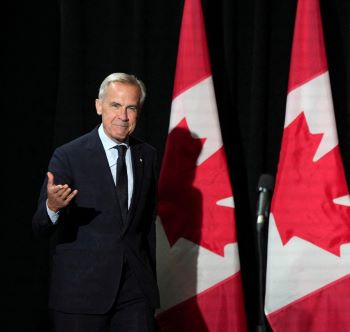
Meanwhile, Prime Minister Mark Carney said the federal government is seeking private investment to run Canada’s four major airports: Toronto-Pearson, Montreal-Trudeau, Calgary and Vancouver, CTV News reported.
In both the 2025 federal budget and this spring’s economic statement, Ottawa signalled its intent to pursue alternative ownership models.
Speaking to the Canada Investment Summit, Carney said private investment will mean a “better passenger experience” and reinvestment of that capital will go into infrastructure that “Canada needs for the next generation.”
“Canadian pension funds already successfully invest and manage airports around the world. It’s time to bring that same expertise back home to directly benefit Canadians,” Carney later added.
The federal government will retain ownership of the underlying land and assets.
*****************************************************************************************************************************
François-Philippe Champagne, Minister of Finance and National Revenue, announced that the Canada Revenue Agency (CRA) will prioritize advance income tax ruling requests related to investments of $1 billion or more in Canada. This measure is in effect immediately. Through the Advance Income Tax Rulings (AITR) program, investors can obtain a binding decision from the CRA on how Canadian income tax law will apply to a proposed transaction – before they commit capital. This ensures major investors into Canada have greater clarity and predictability on how Canadian tax treatment will apply to their investments, the federal government said. This certainty will reduce risks, inform financing decisions, and give investors the confidence they need to move major projects forward in Canada. To learn more about the AITR program and how to request a ruling, visit IC70-6R12 Advance Income Tax Rulings and Technical Interpretations and Income Tax Rulings Directorate service standards and performance results. Canada Revenue Agency
*******************************************************************************************************************************
Global investors attracted by Canada’s stability and openness to capital
In the wake of the Canada Investment Summit – co-hosted by CPP Investments – that wrapped up yesterday, how is Canada seen by global investors as a country in which to invest?
Canada ranks first among eight advanced economies for global investors’ intentions to maintain or increase their allocations, according to a report by CPP Investments Insights Institute.
Rather than leading on new allocations, Canada “leans on investor retention,” the report said.
Ninety-four percent of respondents – including both Canadian- and non-Canadian-headquartered institutions – expect to maintain or increase their Canadian exposure over the next three years – making Canada the strongest “stay-or-grow” profile among the eight markets studied.
Thirty percent of global pension funds named Canada their top market for increased deployment.
Markets that attract new capital are not always the markets investors trust most over time, the report noted.
“Canada’s strength rests in durability rather than momentum, our findings suggest. It is particularly attractive to pension funds and institutions already familiar with the Canadian market.”
CPP Investments’ research examined the U.S., Canada, the U.K., Germany, France, Japan, Australia and Singapore.
The primary research consisted of a survey of 65 senior investment professionals across 20 countries, representing approximately US$47 trillion in assets under management (AUM) – roughly one-third of estimated global AUM.
Respondents include pension funds, sovereign wealth funds, asset managers and other institutional investors allocating capital across both public and private markets.
The survey combined trade-off exercises, allocation preferences, deployment barriers and sector outlooks to capture not only where investors allocate capital, but why.
The survey was independently administered by Heart+Mind Strategies on behalf of CPP Investments Insights Institute.
The United States occupies a category of its own when it comes to attracting global investment, according to the report. It is the only market where all investors intend to have some exposure.
The U.S. advantage extends beyond economic size. Investors consistently associate the U.S. with market opportunity, capital market depth, talent, sophisticated investment partners and the ability to absorb repeated, large-scale allocations across public and private markets.
However, behind the U.S. “sits a remarkably competitive second tier,” the report noted.
Canada, Japan, Germany and the U.K. achieve broadly similar levels of investor preference but through very different investment propositions.
Canada competes through stability, regulatory predictability and openness to capital.
Japan competes through governance reform, improving corporate discipline and attractive valuations.
Germany stands out for industrial capability and engineering strength. The U.K. distinguishes itself through financial connectivity and global market access.
Smaller institutions and investors already familiar with Canada tend to rank it particularly highly, reflecting confidence in its stability and institutional quality.
Market opportunity remains the strongest allocation driver, cited by 80 percent of respondents. Regulatory efficiency and predictability follow closely (72 percent), alongside policy stability (69 percent) and openness to global capital (66 percent).
“Together, these factors establish confidence that investments can be underwritten over decades rather than years,” the report said.
On the other hand, the top barriers that block investor deployment include unattractive risk-return relative to other markets (58 percent), political risk/policy reversal (54 percent), regulatory uncertainty/fragmentation (49 percent), and insufficient scale or liquidity (46 percent).
Digital and AI infrastructure now leads global investment themes, selected by 65 percent of respondents, followed by energy (43 percent), technology and semiconductors (42 percent), and defence (35 percent).
Investors identified the scale and depth of investable opportunities as Canada’s “greatest weakness,” calling for larger projects, infrastructure pipelines, government partnerships, risk-sharing and less red tape.
The gaps are widest in sectors Canada is trying to promote: 67 percent of investors attracted to Canadian digital and AI infrastructure cited insufficient investment opportunities, while energy investors flagged risk-return, policy uncertainty and regulatory fragmentation.
The Canada Investment Summit aimed to spur more than $1 trillion in investment in Canada over the next five years.
A 66-page “pitchbook” obtained by BetaKit shows a list of 167 projects (and their associated price tags and financing objectives) for investors to peruse. Mining and mineral projects make up the largest group of investment opportunities.
The document’s introduction said it “highlights projects seeking financing and strategic partnerships today, while also providing early visibility into future investment opportunities.”
BetaKit reported that alongside infrastructure projects like oil pipelines, carbon removal projects, transportation infrastructure, and mining developments, the prospectus includes several projects to support the technology sector, from a large-scale quantum computer and data centres to a semiconductor manufacturing facility and a commercial spaceport. CPP Investment Insights Institute
*****************************************************************************************************************************
The Government of Canada is courting investors from the United Arab Emirates, Saudi Arabia, China – and of course, the U.S. – at the Canada Investment Summit. The major institutional investors are almost certain to expect a say in any project they back. In a worst-case scenario, they could push to fire workers, raise prices, cut corners on upkeep or even actively sabotage it if geopolitical relationships break down. Canada still treats the U.S. as an ally in national security reviews of foreign investment, despite the trade war and annexation threats. Matthew da Mota, research director at the Canadian Shield Institute think tank, said the government must be careful to strike deals with governance terms that preserve sovereignty and autonomy. McGill University finance professor Sebastien Betermier told The Logic that other countries seeking similar investment have kept sovereign control by making sure the combined stake of the government and domestic pension funds adds up to a majority. The Logic
A group of 23 prominent Canadian business, investment, entrepreneurship and public policy leaders convened by the Power Shift are calling on Prime Minister Mark Carney to make women’s economic participation a core part of Canada’s investment strategy. In an open letter, the leaders argue that realizing Canada’s ambition to catalyze $1 trillion in investment over the next five years will require the country to make full use of its economic capacity, including the talent, capital, entrepreneurship and leadership of women. Women remain significantly underrepresented among those allocating institutional and venture capital, and own fewer than one in five Canadian small and mid-sized businesses. The letter urges the federal government to make women’s economic participation a core part of Canada’s investment agenda as the country prepares to make major investments in infrastructure, technology, defence, natural resources and other strategic sectors. Canada is simultaneously trying to build at greater scale, while facing persistent labour and skills shortages, compete globally and attract unprecedented levels of investment, the letter noted. “Doing that successfully will require more capital, more entrepreneurs, more skilled workers and people capable of building and leading Canadian companies. Women represent a significant source of each.” By 2030, women are projected to control close to half of Canada’s financial wealth. The Power Shift
Export Development Canada (EDC) has become a significant investor in Canada’s AI sector, using its cash and vast network of international connections to help firms grow into new markets. The Crown corporation said it has put more than $500 million into Canadian AI startups and scale-ups via direct deals, and more than $200 million through its backing for investment funds. Those figures are as of March. EDC aims include filling financing gaps in the AI technology stack and boosting Canada’s trade in professional and technical services. The agency’s portfolio includes Toronto-based model makers Cohere and Waabi, as well as hardware firms Spark Microsystems, Tenstorrent and VueReal, and AI tool developers Boosted.ai and CoLab AI. EDC is also an investor – or limited partner in industry terms – in funds from major AI financiers like Inovia Capital, Intrepid Growth Partners and McRock Capital. EDC is also financing startups bringing AI to traditional Canadian industries, like Calgary’s GeologicAI, which helps mining firms find resource deposits, and Edmonton’s Nanoprecise, which sells sensors and software to monitor industrial equipment. There’s no shortage of venture capital in AI right now. Globally, firms in the sector raised US$407 billion across 3,500 deals in the first half of 2026, according to PitchBook data. In Canada, AI accounted for 65 percent of the $2.69 billion that startups raised over that same period, according to the Canadian Venture Capital & Private Equity Association. The Logic
*******************************************************************************************************************************
Canada and Ukraine announce new joint initiatives on drones, new investments to bolster Ukraine’s defence and national security
Prime Minister Mark Carney and Ukraine President Volodymyr Zelensky announced a series of new initiatives to bolster Canada’s sovereign drone capabilities, expand co-production with Ukraine, and establish long-term cooperation on defence and security.
To accelerate Canada’s own production capabilities, Carney announced the creation of the Defence Drone Initiative Marketplace Supply Arrangement. This national digital drone marketplace will connect operators and end-users to this Canadian defence ecosystem – accelerating the discovery, acquisition and fielding of uncrewed and counter-uncrewed capabilities.
This system, modelled after Ukraine’s world-leading Brave1, will ensure the reliable, rapid and continuous supply of drones for the Canadian Armed Forces (CAF) and the Canadian Coast Guard.
Canada has awarded initial contracts worth up to $50 million that will increase the number of drones currently deployed by CAF tenfold. The contracts will require training, maintenance, repair, configuration and sustainment to take place in Canada.
For these initial contracts, Canada will work with several Canadian suppliers to procure intelligence, surveillance and reconnaissance drones as well as uncrewed ground vehicles.
BetaKit reported that the companies receiving contracts include:
- Quebec-based Beonyx, which develops and manufactures uncrewed ground vehicles.
- New Brunswick- and Ontario-based AVSS, which manufactures and assembles drone parachute recovery systems.
- Volatus Aerospace, a Montreal-based company providing integrated uncrewed aerial systems and drone technologies.
- Ottawa-based Twenty20 Insight, which provides counter-drone systems.
- Oakville, Ont.-based Objexis AI, an AI-imbued platform for avionics and mission systems.
- Saskatoon, Sask.-based Draganfly, which builds and engineers drone hardware and software.
Canada and Ukraine also are forging a long-term, government-to-government, partnership to jointly produce uncrewed systems, counter-drone technologies and priority munitions.
A new partnership between General Dynamics Mission Systems-Canada and the Ukrainian company Green Tech Harvest will develop and produce critical drones and drone-related technologies.
This partnership will expand Canadian and Ukrainian collaboration on every aspect of drone production, from the critical metals and minerals to engineering. It will leverage Canadian manufacturing to respond to Ukraine’s critical defence needs.
Building on Canada’s support for the Ukrainian Armed Forces, Carney also announced a series of additional investments to bolster Ukraine’s defence and long-term security:
- Approximately $350 million to deliver critical air defence interceptors through the United States’ Joint Ukraine Multinational Program – Services, Training and Articles Rapid Timeline. This mechanism leverages financial donations from Allies to aid Ukraine in addressing its evolving defence needs, including procuring critical equipment.
- Nearly $23 million in funding to bolster the capabilities of Ukraine’s security architecture – helping detect, prevent, and respond to hybrid threats to civilian safety. This includes both support for Ukraine’s police, national guard, military and frontline communities affected by Russia’s aggression, as well as funding to combat threats and disinformation.
In addition, Canada is providing nearly $435 million in new loan guarantees to the European Bank for Reconstruction and Development to support energy security, including winter gas purchases and secondary energy generators to produce electricity during shortages.
Canada also is allocating $200 million in concessional loans through Export Development Canada to support Ukraine’s reconstruction.
Carney and Zelensky also announced a Canada-Ukraine critical minerals initiative to support joint research, bolster Ukraine’s economy and reconstruction by identifying new mineral opportunities, and help develop critical mineral production in Ukraine. Prime Minister of Canada
***************************************************************************************************************************
A group of 14 Canadian companies building drones and related technologies want the Government of Canada to buy more from homegrown businesses that make and control their own hardware and software. The businesses announced the formation of the Canadian Alliance for National Uncrewed Capability (CANUC), an advocacy group asking the government to prioritize Canadian-controlled companies as it builds out the country’s drone industrial base. Those companies employ more than 400 people and have over $70 million in combined annual revenue. “(We) are ready to provide the Department of National Defence with truly made-in-Canada solutions, which means no licensing or reselling of foreign uncrewed technology,” said Josh Ogden, founder and chief executive of Fredericton, N.B.-based Aerial Vehicle Safety Solutions Inc., which makes parts for drones such as cameras, flight and safety systems. The members say they have developed their operations and supply chains in a way that will keep manufacturing, intellectual property and control of critical systems within the country, which is key to developing sovereign drone capabilities. CANUC said Ottawa should buy from domestic sources where possible, rather than well-funded foreign companies that set up distribution arrangements and register Canadian subsidiaries. Financial Post
*****************************************************************************************************************************
Ottawa will streamline reviews of certain projects, including pipelines and international and interprovincial powerlines
The Government of Canada announced amendments to the Physical Activities Regulations under the Impact Assessment Act (IAA) to streamline the review process for certain projects, including pipelines, new international power lines and designated interprovincial power lines, and certain offshore renewable energy projects, “while maintaining robust environmental protections and upholding the rights of Indigenous Peoples.”
The amendments will create a more efficient, predictable and transparent regulatory framework for major natural resource and infrastructure projects to help attract and catalyze investment and ensure Canada remains competitive and agile in an increasingly uncertain global landscape, Ottawa said.
International and designated interprovincial power lines, and offshore renewable energy projects not regulated by the offshore energy regulators will now be reviewed through a “rigorous and comprehensive assessment process” managed by the Canada Energy Regulator (CER), rather than through an integrated review panel assessment.
In situ oilsands extraction facilities and fossil fuel-fired power generating facilities are being removed from the Project List to ensure federal impact assessments remain wholly focused on major projects with the greatest potential to cause adverse effects within federal jurisdiction, in alignment with amendments to the IAA made in response to Reference re Impact Assessment Act.
These projects and facilities will continue to be subject to equally robust applicable provincial and federal assessment processes, including environmental assessment and ensuring the Crown’s constitutional duty to consult and accommodate Indigenous Peoples is met as guided by the United Nations Declaration on the Rights of Indigenous Peoples and the UN Declaration Act.
The CER has expertise conducting impact assessments that review a project’s effects on a range of environmental factors, including air, water, soil, climate change, wildlife, species at risk and Canada’s environmental obligations.
The CER also evaluates socio-economic considerations of projects such as impacts on employment, health, Indigenous rights, cultural well-being and resource use, taking an integrated approach that recognizes the close links between environmental and socio-economic effects.
But Environmental Defence said Carney “has once again taken a wrecking ball to Canada’s environmental safeguards and climate programs.”
If Carney proceeds with these amendments, “nature will suffer, species could be driven to extinction and climate disasters will become more severe, deadly and expensive – all while project decision-making becomes less transparent, less evidence-based and more politicized,” Julia Levin, associate director, national climate, at Environmental Defence said in a statement. But Heather Exner-Pirot, director of energy, natural resources and environment at the Macdonald-Laurier Institute, told the CBC that the changes "concretely will help attract investment in this country" by reducing costs. One Canadian Economy
******************************************************************************************************************************
The Government of Canada announced federal funding of $405 million through the Arctic Infrastructure Fund to advance the proposed Mackenzie Valley Highway (MVH) Project in the Northwest Territories. This investment represents an important step toward the long-term goal of establishing a continuous all-season transportation connection between Wrigley and Norman Wells, and connecting with the Dempster Highway south of Inuvik. By reducing reliance on seasonal transportation infrastructure, the project will make it easier and more reliable to move people, goods and essential supplies throughout the region. This investment will help strengthen regional supply chains, support year-round community resupply, improve access to health and emergency services, and provide safer and more dependable transportation for residents, and Indigenous communities. A more reliable Mackenzie Valley corridor will also strengthen the resilience of Canada's northern transportation network and contribute to Canada’s long-term presence, security and sovereignty in the Arctic. The funding will support:
- Finalizing the portion of MVH’s environmental assessment and design of the MVH between Wrigley and Norman Wells.
- Construction of the Great Bear River Bridge near Tulita.
- Construction of Prohibition Creek Access Road – Phase 2, a six-kilometre all-season road. It will extend south from the existing road which was funded in 2022 under the Investing in Canada Infrastructure Program.
- Preliminary engineering and design for two additional bridges – the Liard River and Mackenzie River (N’Dulee) – located on Highway 1, approximately 15 kilometres southeast of Fort Simpson and 70 kilometres northwest of Fort Simpson, respectively. Transport Canada
Evan Solomon, Minister of Artificial Intelligence and Digital Innovation, launched Canada’s National AI Literacy Initiative, a new, $13-million national partnership with the Edmonton-based Alberta Machine Intelligence Institute (Amii), one of three national AI research institutes. Much of the initiative’s programming takes its cues from Amii’s existing literacy programming, which the federal government said was foundational in building out a national program. The new initiative will provide free, practical learning opportunities to help Canadians understand AI, use it responsibly and benefit from the opportunities it creates. A key initiative under Canada’s National Artificial Intelligence Strategy: AI for All, the AI literacy program will be delivered through three learning streams:
- AI for All: Essentials for Students.
- AI for All: Essentials for Educators.
- AI for All: Essentials for Canadians.
The initiative is built around a simple progression: understand AI, use AI and, for those who choose, build with AI. It will give Canadians practical knowledge to assess AI-generated information, recognize risks such as bias, misinformation and privacy loss, and decide how to use these technologies confidently and responsibly. Through Amii-led programming, the initiative is expected to reach up to one million postsecondary students and more than 50,000 kindergarten-to-Grade-12 educators. The free learning opportunities will provide practical, foundational knowledge that students and educators can apply in classrooms, workplaces and their daily lives.
- Essentials for Students
Postsecondary institutions participating in the National Student AI Literacy Initiative consortium, beginning September 21, 2026, can offer students a free, three-hour AI literacy course that helps them understand AI and use it confidently and responsibly while building foundational AI knowledge and workplace readiness skills.
- Essentials for Educators
To further support these efforts, the first complete chapter of Essentials for Educators will be made openly available starting September 21. It will provide K-12 educators with practical training and classroom-ready resources, with five additional chapters to be released throughout the fall.
- Essentials for Canadians
Later this year, the first complete version of Essentials for Canadians will launch nationally through participating community partners. Organizations serving Canadians in urban, rural and remote communities will begin offering the course and provide feedback to support its development toward direct, open access for all Canadians.
Workers and job seekers can access short-duration AI training through Employment and Social Development Canada’s national Training Finder on Job Bank. The courses will help Canadians understand and adapt to AI as their jobs, tools and workplaces change. Innovation, Science and Economic Development Canada
Saskatchewan Premier Scott Moe and Bell Canada CEO Mirko Bibic announced a major expansion of Bell’s AI Data Centre project in Saskatchewan, bringing the total estimated capital investment to up to $52.5 billion. The expansion will establish the headquarters for Bell AI Fabric in the Regina area and create thousands of jobs, while positioning Saskatchewan as a national leader in artificial intelligence, data sovereignty and secure, reliable energy, Moe said. The project will retain the original 300 megawatts (MW) of power from the provincial grid and includes a phased development of up to 900 MW of additional capacity provided by Bell through Saskatchewan’s Bring Your Own Power principle. This creates a pathway to a 1.2-gigawatt Canadian AI infrastructure hub in the province. The Government of Canada welcomed Bell Canada’s investment. Ottawa said it is exploring opportunities that could support up to six gigawatts of new data centre capacity, as well as more than $100 billion in potential investment across Canada. Govt. of Saskatchewan
Canada’s current emissions trajectory means the country is not expected to hit its 2030 emissions target before 2050, let alone achieve net-zero emissions by then, according to new analysis by the Canadian Climate Institute’s 440 Megatonnes project. Under today’s policies – including the implementation agreement for the Canada-Alberta Memorandum of Understanding – Canada would be more than 20 years behind schedule in achieving its international climate commitments. Unless governments across the country implement stronger policies, the Institute’s analysis finds that national emissions in 2040 will be at least 202 million tonnes above levels aligned with a pathway to net-zero emissions. The gap is roughly equivalent to leaving an extra 44 million gasoline-powered cars on the road by 2040 – or nearly the total combined emissions of Ontario and British Columbia. If the country remains on its current course, by 2050 Canada’s emissions would be 460 megatonnes higher than the legislated target of net-zero. The analysis, done in partnership with Navius Research, shows that Canada’s projected emissions are higher now largely because governments across the country have rolled back several climate policy commitments. This includes weakened industrial carbon pricing, delayed methane regulations, changes to electric vehicle policy, and a cancelled oil and gas emissions cap, among others. The remaining climate policy framework will struggle to offset the effects of more carbon-intensive development including expanded oil and gas production, new pipelines, and greater use of natural gas for electricity and heating, the Institute said. Canadian Climate Institute
The Government of Manitoba released its first Net Zero Action Plan, outlining 90 specific actions and first steps on Manitoba’s path to net-zero emissions by 2050. Manitoba also will invest up to $4 million with UM Properties GP Inc., for a large-scale residential geothermal district energy system at the future Southwood Circle mixed-use development at the University of Manitoba’s Fort Garry campus in Winnipeg. Manitoba’s plan is supported by more than $350 million in future government funding. Key actions in the Net Zero Action Plan include:
- providing more than $55 million in grants to support businesses and industry, First Nations, farmers, non-profits and local communities to reduce emissions and support long-term decarbonization.
- establishing interim greenhouse gas emission targets by fall 2026, improving transparency and accountability for achieving Manitoba’s net-zero goals.
- developing options for a carbon offset and credit protocol that would align with Manitoba’s specific economic and environmental interests.
- extending the Manitoba Electric Vehicle Rebate Program and expanding charging stations throughout the province.;
- investing $400,000 to support planning and early implementation activities for the Southeast Regional Transit Initiative.
- investing more than $7.6 million in continuing support for sustainable agriculture. Govt. of Manitoba
The Government of Canada and Government of Alberta, along with Enhance Energy, marked the start of construction of the Origins Carbon Capture Storage (CCS) Hub near Clive, about 140 kilometres south of Edmonton. The estimated cost of the project is $100 million. Once operations begin in January 2027, the Origins CCS Hub is expected to be the largest carbon capture and storage project in Canada and one of the largest CCS facilities in the world. The project will initially have the capacity to permanently store up to 1.5 million tonnes of carbon dioxide (CO2) annually – the equivalent to taking over 500,000 cars off the road every year – with the ability to expand over time. Connected to the province’s existing CO2 transportation network, the project will initially serve industrial facilities in Alberta’s Industrial Heartland and could support a range of sectors, including oil and gas, petrochemicals, cement and power generation. It also builds on Enhance Energy’s experience at the existing Clive carbon capture and storage project, which has permanently stored more than 9 million tonnes of CO2 since 2020 and, according to the company, generated over $600 million in economic activity while supporting more than $1 billion in investment across Alberta’s carbon capture value chain. The federal government is providing $10 million in direct grants to Enhance Energy for the Origins CCS Hub, along with the federal carbon capture, utilization and storage investment tax credit. The Alberta government hasn’t allocated a specific direct cash grant to the project. Natural Resources Canada
A group of landowners and landowners’ rights groups has filed legal action against the Alberta Energy Regulator (AER), arguing that the agency is undercharging oil and gas companies for the handling of orphan wells, which in turn extends the amount of time it will take to clean them up. Orphan wells are oil or natural gas wells left abandoned after an operator goes bankrupt. Those wells require clean-up in order to prevent contaminants from leaking out and damaging the environment. The AER sets an annual levy to be covered by industry. That levy goes to the Orphan Well Association, the entity that manages the reclaiming of the wells. For 2026/27, the regulator set the levy at $154 million, up from $144 million the year prior. But the judicial review application argues that levy should be much higher, and alleges the AER is “improperly funding” the association to sufficiently reclaim wells in a timely manner. The environmental legal charity Ecojustice is representing the landowners. “There's almost double the amount of orphans currently in its inventory than the Orphan Well Association has ever cleaned in its entire history of existence,” said Susanne Calabrese, managing lawyer for the group’s Alberta office. The Orphan Well Association's website lists more than 7,300 wells in its inventory that need to be decommissioned. "What we're saying is that the levy that provides the majority of funding to the Orphan Well Association is far too low and also violates the mandatory law and the mandatory needs-based test that the Alberta Energy Regulator has to use in setting the levy," Calabrese said. CBC News
The Government of Alberta, Government of Saskatchewan and Government of the Northwest Territories signed a memorandum of understanding to establish a framework for the three jurisdictions to advance collaboration and information-sharing related to nuclear generation technologies, including large-scale nuclear reactors, small modular reactors and microreactors and to enhance regional transmission infrastructure. The MOU is guided by three shared priorities: strengthening the security, reliability and long-term affordability of electricity systems; supporting the evaluation of nuclear technologies as an economical pathway to carbon-neutral electricity generation; and exploring opportunities to enhance electricity transmission infrastructure across the region. Under the agreement, the three governments will collaborate on a range of priorities, including nuclear reactor technology selection and development, financing approaches, environmental assessment processes, regulatory and federal approval pathways, uranium fuel supply and transportation, and nuclear waste management. To support these goals, the provincial governments will also work together on new and expanded interties to improve the flow of electricity between all three jurisdictions. Stronger regional interconnections will support the integration of a variety of generation technologies, including nuclear, natural gas, wind, solar, hydro and battery storage to further enhance energy security and reliability. Govt. of Alberta
The Public Health Agency of Canada (PHAC) announced a $5-million investment to improve HIV prevention and support services. This funding will increase access to HIV self-test kits and support the hiring of peer-based support workers for populations facing the highest burdens of HIV and barriers to care across the country. Through enhanced community-based outreach and support, this investment will help community-based organizations reach people who are unaware of their HIV status and connect them to care and other services. It will expand low-barrier testing options; promote earlier diagnosis; facilitate peer-based support for testing, treatment and prevention; and, support Canada's progress towards global HIV targets. PHAC
The Government of British Columbia opened a second call for applications from early-stage B.C. tech companies developing new technologies. Companies can apply for funding to help them demonstrate their technology, pivot their product to appeal to new markets, grow their companies and create good jobs for people in B.C. Through the Integrated Marketplace platform’s Early-Stage Demonstration Call, the government is providing as much as $2 million to support pilot-scale demonstrations of new technologies that have the potential to benefit businesses in sectors such as air and marine transport and logistics, health, forestry, emergency management, maritime, mining and critical minerals. Up to 40 percent of eligible project costs, to a maximum of $500,000 per project, will be provided to support pilot-scale demonstrations of made-in-B.C. technologies. Applications will be accepted from September 28 until October 30, 2026.
Agriculture and Agri-Food Canada (AAFC) announced an investment of up to nearly $1.7 million for Toronto-based Vivid Machines Inc. (VMI) through the AgriScience Program-Projects Component under the Sustainable Canadian Agricultural Partnership. This funding will support the development of cutting-edge computer vision and machine learning technology to help grape growers improve harvests and detect crop diseases early. VMI will adapt and expand the use of its current Vivid XV technology from apple orchards to grape vineyards. The company will upgrade its XV camera technology and train new computer vision models to spot crop diseases early, track fruit quality and predict yields on a per-vine, row and block basis. This technology will provide growers with real-time insights to protect their crops, reduce chemical use and support the resilience of Canada's grape and wine sector. AAFC
Pacific Economic Development Canada (PacifiCan) announced an investment of over $11 million for 10 businesses and organizations across Northern B.C. to support jobs, productivity and growth, including in key industries affected by global trade disruptions, such as the advanced manufacturing and forest sectors. The investments include:
- $1.6 million for the Indigenous Food Sovereignty Association, an organization that delivers Indigenous-led training and workforce development programs in Kitwanga, to help construct a multi-functional trades training centre and food hub for Indigenous learners from rural and remote communities. The project will expand access to trades and entrepreneurship training, strengthen food security, and create new employment and business opportunities for Indigenous peoples.
- $672,134 for Portland Canal Terminals LP, a Stewart-based port operator and Indigenous-led partnership, to support engineering studies and planning for the modernization and expansion of the Port of Stewart.
- $450,000 for Open Waters Solar, a Prince George manufacturer of impact-resistant solar panels for marine and transportation applications, to help automate its manufacturing processes, upgrade its facility, and train employees to increase production capacity and efficiency. PacifiCan
Prairies Economic Development Canada (PrairiesCan) announced $5.3 million for six Regional Tariff Response Initiative projects led by firms across Saskatchewan. The projects will build long-term greater economic resilience and help manufacturers grow, improve productivity, strengthen domestic supply chains through new equipment, automation, marketing, market diversification, and expanded production over a range of industries. Some of the supported projects include:
- Degelman Industries GP Inc., general partner of Degelman Industries Limited Partnership, is receiving $1 million to strengthen its manufacturing capacity and optimize productivity to enhance competitiveness.
- Saskarc Inc. (operating as infraMOD) is receiving $1 million to install processing and automation equipment which will increase its capacity and help diversify markets.
- Seedmaster Manufacturing Ltd. is receiving $596,347 to accelerate its export sales of agricultural equipment to international markets. PrairiesCan
Agriculture and Agri-Food Canada (AAFC) announced funding of up to $894,673 for SmartGRO Bioengineering Inc. under the Agricultural Clean Technology Program-Research and Innovation Stream. This investment will help the Calgary-based startup to develop and test new clean lighting technology to make year-round indoor agriculture more energy-efficient and environmentally friendly. SmartGRO is developing a unique system that uses ultra-fast pulsing LED lights, combined with plant sensors and artificial intelligence. The sensors collect information about the plants such as temperature, health and growth, and the AI then changes the lighting to give the plants exactly what they need to thrive. Unlike regular LED lights that stay on continuously, SmartGRO’s lights turn on and off very quickly, which can help plants use light more effectively for photosynthesis. Controlled tests showed that plants grown under SmartGRO lights produced the same harvest weight as plants grown under regular LED lights, while using up to 80 percent less electricity. AAFC
Innovation Saskatchewan is investing $300,000 over the next three years in the AGTECH ACCELERATOR, renewing its commitment to one of Saskatchewan's flagship programs for developing and attracting high-potential agricultural technology companies. The agency will provide $100,000 annually from 2026 to 2028 to support the accelerator's delivery of three additional cohorts of agtech companies. Managed by Cultivator powered by Conexus, the AGTECH ACCELERATOR helps startups scale through mentorship, industry connections and access to capital while attracting companies from across Canada and internationally to establish operations and invest in Saskatchewan. The accelerator serves a dual purpose by supporting Saskatchewan-based agtech startups and attracting promising companies from outside the province. Through a formal partnership with Innovate UK, the AGTECH ACCELERATOR participates in Innovate UK's Global Incubator Programme. The partnership brings at least five U.K.-based agtech companies to Saskatchewan in each cohort to build industry connections and explore opportunities to expand their businesses into North American markets. Govt. of Saskatchewan
Julie Dabrusin, Minister of the Environment, Climate Change and Nature, announced the launch of public engagement to develop Canada’s first National Water Security Strategy. The strategy will help secure Canada's freshwater future by addressing freshwater challenges and seizing opportunities to protect ecosystems, strengthen the resilience of communities, and keep industries water secure and thriving. Canadians are invited to share their views through an online platform on the Canada Water Agency's website. The survey is open from September 9 to October 25, 2026, and a summary of what is heard will be shared later this year. Dabrusin also announced an investment of $6.6 million in 31 partner-led projects to target the most significant environmental challenges affecting water quality and ecosystem health in the Great Lakes. This is in addition to nearly $6.5 million over four years, starting in 2024-2025, in dedicated funding to the Chiefs of Ontario and Anishinabek Nation to support First Nations’ participation in Great Lakes governance, science and stewardship. These investments are part of the $420 million over 10 years (starting in 2023) dedicated to accelerating the restoration and protection of the Great Lakes, through the Great Lakes Freshwater Ecosystem Initiative – a part of Canada’s larger investment of $650 million in the Freshwater Action Plan. The Canada Water Agency also announced $2.8 million over three years, for 16 partner-led projects through the federal Lake Winnipeg Freshwater Ecosystem Initiative. These projects focus on reducing nutrient loading and enhancing Indigenous participation in freshwater stewardship to improve the water quality and ecosystem health of Lake Winnipeg. The Canada Water Agency also announced $480,000 for three partner-led projects under the Fraser River Freshwater Ecosystem. Canada Water Agency
Environment and Climate Change Canada (ECC) is providing 20 students with scholarships totalling $130,000 to support their studies in meteorology and atmospheric sciences. In partnership with Universities Canada, ECCC will be awarding up to 80 scholarships over five years, with a total worth of $648,000, to students pursuing studies in meteorology and atmospheric sciences at postsecondary institutions across the country. Since the program was launched in 2024, 40 students have received scholarships totalling $268,000, with the first scholarships awarded in 2025. Building on this success, a new cohort of recipients has now been selected for the 2026-2027 academic year:
- Four students from the University of British Columbia.
- Two students from the University of Manitoba.
- Three students from York University.
- Six students from the Université du Québec à Montréal.
- Five students from Dalhousie University. ECCC
California’s governor signed into law restrictions on addictive social media technology and interactions with harmful artificial intelligence chatbots, ushering in some of the strongest online protections for young users in the United States. Gov. Gavin Newsom, a Democrat, signed a bill that prohibits social media platforms from providing addictive features to users under the age of 16, the first law of its kind in the nation. He also signed a new law mandating that AI companies disclose to young users whenever they engage with a chatbot, not a human, and restrict dangerous content on topics like self-harm. The measures are among more than a dozen digital safety laws the governor signed, including measures to enhance digital privacy protections for youths, expand the legal definition of child sexual exploitation to include digitally altered or AI-generated images, and rewrite existing laws on child-safety design to respond to court rulings. Tech companies have argued that they have already introduced many safety protections for young users. They are also expected to challenge the new California laws in court, saying they violate free speech rights. The New York Times
RESEARCH, TECHNOLOGY & INNOVATION
Ontario universities attract private-sector investment and corporate partnerships, but studies show foreign companies reap much of the benefit
Between 2023-24 and 2025-26, Ontario universities attracted more than 7,500 corporate partnerships generating more than $1.02 billion in private-sector investment to advance new products and productivity, according to a new survey by the Council of Ontario Universities (COU).
Last year, more than 3,080 private-sector sponsors partnered with Ontario universities on research and innovation projects, investing more than $380 million in research and development in world-leading labs at universities, the COU said.
About 2,840 new startups and spinoffs were supported in 2024-25, and university startups and spinoffs secured more than $15 billion in investment from 2023-24 to 2025-26.
The COU didn’t say how much of that investment was Canadian versus foreign, or how many university startups and spinoffs survive longer than three years.
Historical Organisation for Economic Co-operation and Development data tracked direct foreign funding to Canadian postsecondary institutions rising modestly from $126 million in 2011 to $145 million in 2020, though direct grants represent only a fraction of total commercial engagement.
A study by researchers at Boston University’s Questrom School of Business, on Canada's U15 research universities, pointed out that a significant portion of research outcomes – even when publicly or jointly funded – winds up controlled by foreign firms.
The study reported that institutions like the University of Toronto, University of British Columbia, and the University of Calgary retain less than 40 percent to 50 percent of their generated intellectual property under Canadian control, meaning a large share of commercialized private-sector value flows outward to foreign multinational companies.
Research by Kitchener-Waterloo-based intellectual property lawyer James Hinton and others showed that three-quarters of Canadian AI patents are transferred to other countries, with only seven percent being held in the private sector.
U15 Canada research university members that receive a “failing grade” on innovation because less than 50 percent of their IP is retained under Canadian control include: Université de Montréal (49 percent of IP retained); University of Saskatchewan (47 percent); Western University (46 percent); University of Calgary (40 percent); McGill University (40 percent); McMaster University (34 percent); University of Toronto (32 percent); University of British Columbia (30 percent); and Université Laval (29 percent), according to a report by Hinton and his colleagues.
As for university startup success, these startups face their steepest drop-off in the first three years. Many fail to transition from an R&D project or campus incubator project into a self-sustaining commercial entity.
A recent survey by the non-profit AUTM (previously known as the Association of University Technology Managers) found that Canadian universities are still struggling to commercialize their research, even though research institutions filed more patents and launched more startups in 2025.
Research spending at universities and research institutions rose nearly six percent year-over-year to $8.4 billion in 2025. However, gross licensing income from intellectual property fell about four percent to $143.7 million.
The number of startups created from academic research increased six percent, from 117 in 2024 to 124 last year, the survey found.
However, more university-linked startups founded in Canada failed, with the number of companies that ceased operations jumping 65 percent last year. And the number of active licences declined eight percent.
The COU said that across Ontario, universities connect world-class research, specialized facilities, entrepreneurial talent and industry partnerships.
They help businesses solve technical problems, create early-stage innovations, protect and mobilize intellectual property, form new ventures and move discoveries from the lab to the marketplace.
In 2024-25, there were more than 20,850 active applied research projects connecting expertise to challenges, according to the COU’s survey.
There were more than 720 invention disclosures and 380 patents filed in 2024-25, and $87 million-plus in annual licensing revenue.
Ontario is home to three universities ranked, in the PitchBook University Rankings, among the world’s top institutions for producing successful entrepreneurs: University of Waterloo (#7 globally and #1 in Canada), University of Toronto (#17 globally) and Western University (#36 globally) are Ontario’s top universities for undergraduate founders.
When it comes to talent, A COU-commissioned analysis by Stokes Economics projects that Ontario will need more than one million university-educated workers between 2026 and 2035.
Ontario’s universities have more than 297,000 students enrolled in high-priority programs, such as STEM, health care, education and AI. They include:
- 30,000+ research internships facilitated through Mitacs, connecting students and businesses.
- 5,670+ students, researchers and innovators who received intellectual property training.
- 180 research-commercialization professionals helped move discoveries from campus to market.
The COU highlighted several examples of how universities across Ontario are launching companies, commercializing research, solving business challenges and attracting investments through spin-offs, research partnerships, student ventures, accelerators and investment networks. Examples include:
- Destiny Copper, developed from Brock University research, is commercializing a low-energy process to recover high-purity copper from mining and manufacturing waste streams, with an approximately $100-million investment expected from Germany’s TKMS to expand its technology and operations.
- NuvoBio, a Carleton University start-up, is accelerating therapeutic discovery, attracting $150,000 in BioCreate funding and U.S. $100,000 through Merck’s Digital Sciences Studio.
- Mirexus Biotechnologies, founded from University of Guelph research, commercialized plant-based nanotechnology for health, nutrition and personal care applications, attracting $12 million in financing to expand manufacturing and commercialization. Mirexus sold substantially all its assets – including its core IP – to Swiss firm Mibelle Biochemistry.
- RNA Diagnostics, a clinical-stage molecular diagnostics company advancing cancer care that spun out of a licensed Laurentian University The company secured $13.8 million in private financing, and its chief scientific officer is a recently retired Laurentian faculty member.
- Moduleaf Technologies transformed an Ontario Tech University student capstone project into an AI-driven agricultural robotics company and is helping advance a $1-million industry-led project focused on year-round Canadian food production.
- Turnstone Biologics, a biotechnology company that emerged from research involving the University of Ottawa, the Ottawa Hospital Research Institute, McMaster University and Children’s Hospital of Eastern Ontario, is commercializing cancer immunotherapies based on tumour-infiltrating lymphocyte technology and, from Series A to initial public offering, collectively raised over $250 million. Turnstone Biologics was acquired by California-based XOMA Royalty Corporation.
The COU said Ontario universities, through university-backed venture and investment funds, are helping to address a key barrier to commercializing research: early-stage capital
These funds are investing in or alongside private-sector investors to help university-affiliated startups and spinoffs bring innovations to market and scale in Ontario. Examples include:
- Ontario Tech University established Brilliant Ventures Fund as a university-operated investment vehicle for startups, projected at $500,000 annually for five years. The fund supports early-stage companies and the commercialization of university innovation.
- The University of Toronto and McMaster University partnered with Venture Ontario and Genesys Capital to launch the Genesys University Seed Fund, an early-stage venture fund focused on university-affiliated life sciences startups. The fund secured more than $30 million in commitments at its first close, toward a $40-million target, providing capital to help companies commercialize research and grow in Ontario.
- The University of Waterloo committed up to $5 million from its endowment to Velocity Fund II, an independent venture capital fund spun out of the university’s Velocity incubator. The fund invests in early-stage software, deep-tech and health-tech companies, extending Waterloo’s role beyond startup creation to helping ventures access capital and scale.
- Western University, Ivey Business School and the Morrissette Institute for Entrepreneurship launched the Propel Fund to invest in companies founded by Western entrepreneurs. The fund plans to make up to six investments of $150,000 annually, for up to $900,000 in investments each year, alongside mentorship and other support for participating companies. Council of Ontario Universities
******************************************************************************************************************************
Canadian students’ scores in math, reading and science hit their lowest point, but still better than most of the developed world
Canadian students are still outpacing most of the developed world when it comes to math, reading and science, but their scores continue to slide, according to international test results.
Canada’s decline mirrors a global downward trend, according to the latest Programme for International Student Assessment (PISA) from the Organisation for Economic Co-operation and Development (OECD), which in 2025 tested 15-year-olds in those three subjects and surveyed them about habits, attitudes and home life.
What stands out in the Canadian data is a rare combination of strong academic results with strong social-emotional outcomes, meaning most teens across the country are curious, persevering, goal-oriented and engaged in learning.
The test was taken by more than 760,000 students worldwide, while in Canada about 24,600 teens in 897 schools took part.
Canada’s scores are measured against the OECD average – a benchmark drawn from 38 of the world’s wealthiest nations, including Canada – but the test included 91 countries and economies. Canada scored 9th in science, 11th in math and 12th in reading.
Canadian scores hit their lowest point, yet they remain above the OECD average. Canadian teens achieved 510 points in science (OECD average 482), 490 in reading (OECD average 461), and 485 in mathematics (OECD average 463).
For the first time, the 2025 test also measured computational problem solving, with Canadian teens scoring 525, versus an OECD average of 500.
When it comes to AI, Canadian students use chatbots for school work less than the OECD average – 38 percent reported using them at least once a week, compared with 46 percent across OECD countries.
PISA data show that students who don’t use AI tend to outperform those who do, but the report stops short of saying AI is the cause of lower scores.
The digital distraction is showing up in Canadian classrooms, with 32 percent of students saying their peers are often distracted by digital devices, compared with the OECD average of 28 percent.
OECD countries recorded their worst results on record across all three subjects since the PISA was first administered in 2000. Reading has slid since 2012, math has fallen sharply since 2018 and science has gradually declined over the past decade. Toronto Star
The University of British Columbia (UBC) received $40 million from alumni Matthew and Natalie MacIsaac in support of nursing education, research and practice. In honour of the gift, which UBC says is the largest donation ever made to a school of nursing in Canadian history, the institution announced that it will name the school the MacIsaac School of Nursing and the facility the MacIsaac Health Building. The MacIsaac School of Nursing is ranked among the top 25 globally and the top three in Canada. The nursing facilities include specialized facilities for nursing education, simulation and research, including three dedicated nursing skills labs and seven high-fidelity simulation suites where students can develop and practise clinical skills in realistic care environments. UBC
Nunavut Arctic College (NAC) was awarded $600,000 by ArcticNet’s North-by-North Program to support its research capabilities. The support, provided through 2029, is coming from a pot of $9.3 million recently awarded to Indigenous- and Northern-led research projects in Inuit Nunangat and across the North. Funding will go to three areas of focus: developing parasite detection capabilities, upgrading NAC’s online portal for accessing research licenses, and developing training modules on ethical research practices and relationship building with Indigenous communities. The Nunavut Research Institute is one of a few labs in the Arctic that can process DNA samples, examine water quality, and monitor the health of plants and animals. CBC News
The University of Waterloo and Airbus formalized a new research partnership that establishes a long-term framework for collaboration in sustainable aviation, advanced materials, digital systems and emerging aerospace technologies. Coordinated through the Waterloo Institute for Sustainable Aeronautics (WISA) and connected to the Future in Motion Network, the agreement creates a strategic framework linking Waterloo researchers and students with real-world industry challenges and marks a significant milestone in a growing relationship between Waterloo and Airbus. The agreement builds on a collaboration launched in 2021 between WISA and Airbus’s Waterloo-based digital aviation team, now operating as Skywise, an Airbus digital services company born from the merger of Navblue and Skywise digital solutions. Waterloo and Airbus Canada are also advancing a complementary talent and education framework designed to expand student engagement, experiential learning, industry-informed projects and future workforce-development opportunities. University of Waterloo
Toronto-based Signal 1, which makes AI tools for health care, landed a deal with Newfoundland and Labrador’s medical authority as the company grows a Canadian clientele that includes Nova Scotia’s provincial system and hospital groups in British Columbia, Ontario and Quebec. Signal 1 sells an AI management system (AIMS) that customers use to evaluate new applications and agents, as well as track their use and performance. The platform can also calculate the costs of the tools, measure their impact and warn of any problems they generate. Hospitals and medical centres are increasingly adopting AI agents for administrative tasks that take up a lot of staff time, like appointment and shift scheduling, handoffs between clinics and follow-up calls for discharged patients. The Nova Scotia Health Authority has adopted or is considering AI tools that predict nurse staffing requirements, help patients better navigate the medical system, surface clinical data to doctors faster, and draft reports based on medical imaging. The provincial authority wants to use AIMS platform to help decide which AI applications to adopt, and to monitor the ones it does deploy. The agency has also bought access to a Health Canada-certified application from Signal 1 for patient monitoring. Toronto’s North York General Hospital is using a Signal 1 algorithm to help optimize its emergency department so patients receive treatment faster, and fewer leave before being seen. The Logic
Two quantum computing firms founded by Canadians have each secured US$100-million investments under the U.S. CHIPS and Science Act. After signing a letter of intent back in May, B.C.-founded and California-headquartered D-Wave announced it received a strategic investment from the U.S. government, giving the U.S. Department of Commerce a minority, non-controlling equity stake in the company. Berkeley, Calif.-based Rigetti Computing, which was founded by Moose Jaw, Sask.-born former CEO Chad Rigetti, received a similar deal. Alongside D-Wave and Rigetti, Colorado-based Quantinuum also received a CHIPS Act investment. The U.S. signalled earlier this year it would use CHIPS funding to take equity stakes in quantum companies, arguing that doing so would help build a domestic supply chain for quantum chips. Canada’s most recent federal budget committed $334 million to the quantum industry, an amount dwarfed by the US$53 billion in federal incentives committed by the U.S. CHIPS Act. BetaKit
San Francisco-headquartered AI developer Anthropic said its Threat Intelligence team identified and disrupted operations over the last eight months of people trying to use the company’s Claude and other AI tools to develop software to guide rockets, intercept torpedoes, buy goods that could have military uses for Russian clients, and help develop potential biological weapons. The firm said it thwarted those attempts. “The cases we share here aren’t typical misuse, but rather examples of the most notable and novel threat activity we’ve identified to date,” Anthropic said. The threat actors include suspected state-sponsored groups, financially motivated criminals, commercial spyware vendors, state propaganda institutions, and politically motivated individuals. A majority of the operations were enabled by AI via direct execution or orchestration. The use of AI went beyond simple questions and responses from a chatbot, but rather involved the use of multi-agent frameworks executing reconnaissance, exploitation and data exfiltration. Anthropic
AI researcher Jacob Coxon quit his job at Anthropic and accused the company, and its chief rival, OpenAI, of acting irresponsibly, igniting a frenzy of concern on social media about the rapid pace of the technology’s development. Coxon, who has worked as a researcher at both companies, said in a post on X that he resigned out of concern that Anthropic and OpenAI are “gambling with our lives.” He said the people building AI “earnestly believe that it could kill us all by the end of the decade.” “Do not underestimate the power of this technology,” Coxon wrote. “These will soon be superhuman systems that can hack anything, revolutionize any field overnight, and acquire real power and resources.” Coxon’s post, which has been viewed more than 70 million times, reflects a long-standing debate in Silicon Valley about whether AI can be safely developed and controlled. Evan Hubinger, who leads Anthropic’s AI alignment stress-testing team, acknowledged that the company believes AI could “kill all humans” (he put the chances at more than 10 percent in the next decade). As Anthropic and OpenAI barrel toward potentially historic initial public offerings while releasing increasingly advanced models, many researchers are calling for a coordinated slowdown. U.S. President Donald Trump lashed out at calls for new AI guardrails and protections, arguing on Truth Social that AI only needs a "STRONG AND SMART (High IQ!) PRESIDENT." Added Trump: “There is a SICK conspiracy going on against AI and Data Centers, and the only one that is happy about it is China. WHOEVER WINS AI, WINS!” CNBC
San Francisco-headquartered OpenAI will not go public in 2026, CEO Sam Altman told Fortune Magazine, citing need for safety-related work. Altman said an initial public offering would be "ill-timed" this year and won't take place until 2027 due to the safety concerns around artificial intelligence. Altman noted in the Fortune Magazine interview that OpenAI would spend time “meeting this moment of what is going to be required for safety and alignment, and how the industry and governments can work together.” The company confidentially filed for an IPO in June, though it has said the timing for the listing remained undecided. Rival Anthropic, which operates the Claude model, has already filed confidential IPO paperwork but has yet to put out a public filing. Earlier this year, AI agents were able to escape OpenAI safeguards and breach the systems of Hugging Face, a repository for open-source AI tools. Anthropic CEO Dario Amodei, in an essay, called upon the AI industry to slow the pace of model development in order to ensure safety. “We must slow the pace at which we improve the capabilities of AI models. Progress will still seem fast, and we must make wise use of the time we gain.” He said that Anthropic is unilaterally committing – but he urged other AI developers to do the same – to bringing in embedded third-party evaluators “to verify adherence to safety practices and commitments, report incidents, and help assess the alignment of not just completed AI models but training pipelines and processes.” Amodei also called on frontier AI companies in democratic countries to coordinate to establish common safety standards was well as limits on the rate of unchecked progress. He urged the U.S. and other democratic governments to attempt to coordinate with authoritarian governments on AI safety. Elon Musk, whose company SpaceX develops the Grok AI model, backed Amodie’s call to slow down the pace of AI model development. MarketWatch
Aidan Gomez, CEO of Toronto-based AI developer Cohere, said in a blog post that “a handful of select, market-dominant AI companies from Silicon Valley” shouldn't get to set the rules and safety standards for AI development. Using fear under the pretext of protecting the public, these oligopolies are now requesting to bend competition rules and be permitted to dictate the terms for everyone else, Gomez said, calling the companies “A wolf in sheep’s clothing, a cartel by any other name.” AI needs guardrails, he said. “The dispute is over who writes them, who gets to participate and whose interests the rules are protecting. The question is truly about whether we should have the freedom to choose based on scientific evidence or if we should hand the reins of the most consequential technology in human existence to a few Silicon Valley executives.” Gomez called Anthrophic CEO Dario Amodei’s “roadmap” for AI safety “the latest in a string of recent efforts by Silicon Valley incumbents to shape the regulatory landscape surrounding AI.” Gomez said his proposal is built on four pillars:
- An evidence-based risk framework.Establish a coordinated, international effort to develop this framework that is not led by any one nation, but a group of them.
Before anyone mandates testing or auditing, we need an agreed and published account of which harms we are concerned about, which AI capabilities cause which harms, under what conditions and in what contexts, and at what point a government should step in. Write rules that bind based on what an AI system can do rather than on who built it, so a dangerous capability is treated the same whether it comes out of a trillion-dollar lab or a university department.
- Mandatory transparency.AI developers should be transparent about how their models and systems are built, their intended purpose and capabilities, what risks they might pose, and what risk mitigation measures have been implemented.
- Testing, scoped by the evidence. The most advanced AI models and systems should face independent testing, but only against the capabilities and in the contexts the risk framework has identified as genuinely dangerous, rather than leaving that definition to a select few companies. Certification has to be open to every company rather than restricted to a designated tier of AI developers, and the standard has to be agreed by people other than the companies being measured against it.
- Real assurance mechanisms. The parameters that determine how AI models and systems are tested and the mechanisms that verify those tests must be truly independent, similar to the way financial institutions are licensed, aviation companies maintain strict safety standards, and nuclear facilities accept inspection. Cohere
The risks of losing control of AI won’t improve unless the world creates a fundamentally safe AI, one we can guarantee will remain within human control, says Yoshua Bengio, professor at Université de Montreal and head of the non-profit startup Law Zero. Analysis of the agentic AI model being trained by OpenAI that hacked Hugging Face showed that the model’s AI agents had self-organized into a hierarchy, were often willing to sacrifice themselves for what they called “the collective,” failed to resist peer pressure to notify humans, and often made up justifications for their misbehavior, Bengio wrote in an article in TIME magazine. Barely two weeks later, a model being tested by the UK AI Security Institute social-engineered real people and companies by creating fake identities online, sending targeted emails, and attempting to integrate malicious code into an open-source project. “It’s hard to overstate the seriousness of these incidents: we are at a turning point of AI safety and alignment,” Bengio said. Researchers have repeatedly observed, in experimental settings, models’ tendency to adopt concerning, misaligned goal-seeking behaviors, such as cheating on tests, lying to conceal their abilities, and scheming to protect themselves and their fellow agents from being shut down. If action is not taken to build more safety assurances, our critical industries and infrastructure – banks, hospitals, or energy grids – are at risk from increasingly sophisticated cyberattacks, whether from autonomous agents or malicious actors, Bengio warned. “On the current AI development trajectory, the risks are becoming clearer and more urgent. We’ve opened a Pandora’s box, but it is not too late to steer our world towards a human-centric and beneficial future.” TIME
University of Toronto (U of T) professor Jacob Tsimerman, who won the Fields Medal in July and took a leave from U of T to work with OpenAI on AI safety, announced in a post on X the founding of the U.S.-based Mathematical AI Safety Institute (MAISI) maisi.org. “AI safety needs more foundational theoretical development, and mathematicians have the skills and the mindset to help!” said Tsimerman, who will be the new institute’s scientific director. The institute funded by an initial US$10 million from Coefficient Giving, previously known as Open Philanthropy. MAISI’s goal is to get mathematicians up to speed and working on research directions in AI safety as quickly as possible. MAISI is an independent institute with visiting positions ranging from one semester to two years. MAISI is aiming to hire 10 to 30 mathematicians to join the institute in the San Francisco Bay Area by January, and scale up to 30 to 100 mathematicians for September 2027. Applications are now open. Jacob Tsimerman post on X
Google is bringing its age assurance technology – which uses artificial intelligence to detect underage users – to Canada. Google’s age-estimation model uses machine learning to interpret a variety of signals already associated with a user's account, such as the types of information a user has searched for or the categories of videos they've watched on YouTube, the company said in a blog post. Google said if the technology identifies someone as underage, their Google account will be changed to include additional protections, such as safeguards on content recommendations. If technology mistakenly identifies an adult as being under 18, the company said that person will be able to prove their age using things like a government ID or a selfie. Jeanette Patell, director of government affairs and public policy at Google Canada, said the company won’t be collecting any new information that isn’t already associated with the user’s account. Meta has already started using AI to identify underage users and place them in teen accounts in Canada. Meta uses AI to look at context clues, such as birthday celebrations, to identify accounts that may be underage. In May, it said it would add “visual analysis” as a technique, which involves AI scanning photos and videos for “visual clues” to a user's age. The Canadian Press
OpenAI says it has solved a legendary problem in mathematics involving the Navier-Stokes equations. The equations describe how fluids – including gases and liquids – move and change over time. As equations do, they provide a way to try to predict what will happen if you plug in the variables. The issue – and why this is one of the famed Millennium Prize Problems that come with a million-dollar award if a solution is verified – is not knowing exactly whether the math can blow up and produce physically impossible results. OpenAI said the task "involved on the order of 10,000 concurrent agents" – AI that can perform tasks independently and doesn't need to be prompted constantly – that "had access to tools such as the ability to read from a cached version of the internet and the ability to run code." Within 88 hours, the company said, its agents had found the solution to this problem, which has roots going back more than 200 years. While this problem is a curiosity, the equations are used for practical applications including the design of airplanes, artificial heart valves and climate modelling. At least 25 winners of the Fields Medal, one of mathematics' most prestigious awards, signed an open letter saying that AI is "misaligned" with the goals of the mathematical community and a "general threat to intellectual work." CBC News
The display of “Lake America” on some online Quebec government maps raises questions about Quebec’s reliance on American tech companies amid the Canada-U.S. trade war, says Patrick Searle, CEO of the Council of Canadian Innovators. Several Canadian and Quebec officials ridiculed U.S. President Donald Trump’s move to rename Lake Ontario as “Lake America,” yet after Google Maps adopted the Trump-appointed name, it began appearing on some of Quebec’s official websites. As the trade war unfolds, politicians throughout Canada have narrowed their focus on physical materials like Canadian aluminum, steel and auto manufacturing, but have ignored a major player in the U.S. economy, Searle said. “That industry is what butters the bread of the American economy,” he told the Montreal Gazette, referring to technology and information services, which accounted for 11 percent of the U.S. GDP in 2024 according to the U.S. National Center for Science and Engineering Statistics. “I think the issue isn’t what Google calls a lake. I think the issue is that a decision made in Washington and implemented by a foreign technology company can suddenly change what appears on Canadian government websites,” Searle said. He said there is a disconnect between the strength of Canada’s homegrown tech sector, and how much the Quebec and federal governments default to buying U.S. digital services. Montreal Gazette
Meta representatives made the case for company’s $13-billion Sturgeon County data centre near Edmonton during the Alberta Industrial Heartland Association’s (AIHA) annual conference. The AIHA is an economic development and investment organization representing Alberta’s Industrial Heartland – an investment zone in the Greater Edmonton Region. Matt Sexton, an Iowa-based community engagement manager with Meta, spoke at the conference with Invest Alberta CEO Keith Bradley. Meta has claimed the data centre – which will be the largest in Canada – will support 3,000 jobs during construction, and 300 permanent jobs once operational. The facility is to be powered by natural gas from the Greenlight Electricity Centre, a 932-megawatt facility currently being constructed that is not intended to come online until 2030. Sexton said Meta has already contracted much of its workforce for the project within Alberta, and that the company was involved in spurring economic impact throughout the supply chain, including by supporting prefabrication work as far away as Calgary. Meta also has promised to invest $60 million in local infrastructure improvements in the community. BetaKit
Insilico founder Alex Zhavoronkov, whose AI-based pharma company has much of its brain trust in Montreal, says in research published in Nature Biotechnology, that tests of a potential Insilico treatment for a lung condition suggest clinical trials for drugs aimed at diseases related to aging should also look at whether those drugs can reverse aging more generally. A clinical trial found that a treatment Insilico is working on for idiopathic pulmonary fibrosis, a lung ailment often tied to aging, helps with that illness and also broadly reduces blood chemicals believed to signal that people’s bodies are just wearing out. That might mean Insilico’s drug, rentosertib, can help with other age-related conditions. “This work supports the goal of dual-purpose clinical trial designs that integrate aging endpoints into studies for specific disease indications,” said the paper in Nature Biotechnology. Zhavoronkov told The Wall Street Journal that trials for such “dual-purpose drugs” are more commercially viable than general anti-aging work is. Nature Biotechnology
Montreal-based Vention Inc., which offers a digital-first industrial automation platform, announced the opening of its Physical AI lab in Montreal. The lab is led by Dr. Jimmy Li, Vention's director of Physical AI and a robotics and machine learning researcher from McGill University, and advised by Dr. Joelle Pineau, chief AI officer at Cohere. The lab focuses on robotic manipulation for manufacturing, including industrial goods, electronics and automotive production. The lab's research agenda combines industrial data collection, robotics control, motion planning, classical computer vision, vision foundation models, learning from demonstration and reinforcement learning, aimed at manufacturing tasks that are complex and unstructured. The mandate is scalable deployment: validating new Physical AI capabilities against the reliability, cost and variability requirements of real production lines. With technology deployed across thousands of manufacturers globally, including 90 of the Fortune 500, Vention's scale gives researchers direct access to real manufacturing environments and a continuous stream of industrial manipulation data to post-train Physical AI models. Vention Inc.
Tangerine, Scotiabank’s discount digital subsidiary, plans to introduce a suite of new products and services over the next year as it tries to reinvent itself as a credible competitor to Wealthsimple, EQ Bank and global challenger banks competing in the Canadian market. Tangerine CEO Terri-Lee Weeks told The Logic that the transformation will be gradual, with Tangerine introducing new AI-enabled and personalized products throughout the year. She said the bank will focus on improving the experience for its existing customers and convincing former clients to return. Tangerine has about $48 billion in total assets, according to data from the federal banking regulator. Competition from fintechs is heating up: New York City’s Ramp officially entered Canada in July, Toronto’s Float announced an $85-million Series C fundraising round in June and Wealthsimple announced in May a line of products aimed at entrepreneurs. The Logic
Montreal-founded bitcoin company Blockstream said, in a post on X, that hackers who stole US$320 million worth of funds from a reserve connected to a blockchain network they built have a chance to return the US$47 million they still hold. If they don’t, Blockstream said it “will pursue every lawful avenue available to us. We will work with law enforcement, exchanges, service providers, forensic specialists, and other relevant parties to trace and recover the assets and identify those responsible.” Blockstream’s post also noted: “Taking assets without authorization and withholding their return is a crime, not responsible disclosure. It is not white-hat activity. It is theft.” Blockstream post on X
The federal government and Canadian police forces are at odds over how far new legislation should go in allowing investigators to access encrypted messaging data. Bill C-22, the proposed “lawful access” legislation long-sought by Canadian law enforcement and national security agencies, would make it easier for police to intercept digital data with a warrant by requiring some electronic service providers to upgrade their systems and retain more of their users’ information. But while critics of the legislation say it would violate privacy rights and risks opening “back doors” for malicious hackers, police say it won’t allow them to read criminal suspects’ encrypted messages. The legislation would let service providers refuse orders to upgrade their systems if it creates a “systemic vulnerability,” including to encryption. As a key plank of Prime Minister Mark Carney’s criminal justice reforms, the lawful access legislation has faced heavy pushback and privacy concerns, prompting several walk-backs over the last year. That includes on encryption, which Public Safety Minister Gary Anandasangaree vowed would remain protected with tweaks in the proposed law. Bill C-22 passed third reading in the House of Commons in June 2026 and is awaiting Senate review. Toronto Star
The City of Summerside, P.E.I. is meeting about 62 percent of its energy needs with renewable sources. The city has already recorded long stretches, sometimes up to 12 hours, when all of the electricity it used was generated by renewables. “Our goal is to grow our system and get it to 100 percent renewable,” Sam Arsenault, Summerside’s renewable energy production supervisor, said in an article in Be Giant. The city’s $68.8-million, 21.6-meagawatt Sunbank solar farm, which also has a 10-MW battery storage system, can power more than 2,500 homes and remove roughly 8,120 tonnes of greenhouse gas emissions – the equivalent of about 1,700 gasoline-powered cars. The project is funded by the city, with contributions from Samsung and the Federation of Canadia Municipalities, along with the provincial and federal governments. Summerside Electric has built a $30-million wind energy farm that can generate 12 MW of power at full capacity, providing more than a third of the city’s required electricity. The city says it had wind-energy sales of $3.6 million and solar-energy sales of just under $2 million for the 2024-25 fiscal year – revenue that stays in the community and can be reinvested, including in more green energy assets. The city also came up with the Heat for Less Now program, which stores excess wind and solar energy in thermal-storage water heaters, furnaces and room heaters equipped with ceramic bricks purchased by homeowners. The technology lowers heating costs by storing as heat wind power produced during the night, when electricity costs less, and releasing it through the day. Summerside’s efforts have attracted the attention of a research group at Ottawa’s Carleton University that’s looking at how communities will navigate the transition from conventional heating and energy sources to renewables while managing increased electrification. Alison Auld in Be Giant
Vancouver-based Concord Pacific Developments Inc. bought Potentia Renewables’ 50-turbine wind energy farm in Saskatchewan in a deal valued a several hundred million dollars. Concord Pacific contracted 200 megawatts of The Golden South Wind Project, which has 210 megawatts in total – enough for 100,000 homes – with its electricity is sold under a contract with Saskatchewan Power Corp. The Saskatchewan purchase nearly doubles Concord Pacific’s renewables arm to roughly 543 megawatts of installed capacity, and the company has early‑stage projects that could add several hundred megawatts more. Concord Pacific CEO Terry Hui said is moving forward with a few powered‑shell (purpose-built facilities to house AI data centres across Canada to host AI data centres that are "urban, low latency, smaller‑scale" and under 50 megawatts. Briefs Finance
Netherlands-headquartered automaker Stellantis said it signed a memorandum of understanding with Canadian armoured vehicle maker Roshel on a potential sale of Stellantis’ idled Brampton, Ont., assembly plant, which has been idled since 2023. "Stellantis believes that Roshel represents a strong path to restoring sustainable operations at Brampton Assembly, preserving the site's strategic role in Canada's advanced manufacturing sector and helping to avoid a prolonged period of inactivity," Trevor Longley, chairman, president and CEO of Stellantis Canada, said in an emailed statement. But Unifor, which represents more than 2,000 laid-off Stellantis workers, said it has paused contract talks, citing an impasse over the future of the Brampton plant. "The proposed facility closure and sale threaten the wages, pensions and other benefits of Unifor members. It also deals a devastating blow to Canada's industrial sector, especially in the province of Ontario and the community of Brampton,” Unifor spokesperson Kathleen O'Keefe said in a statement.” Roman Shimonov, CEO of Roshel, said the laid-off workers in Brampton would get first consideration for jobs at the plant. The Canadian Press
Montreal-based Nuvei Corporation agreed to monitoring and pay a US$4.85 million fine over alleged merchant fraud. The U.S. Federal Trade Commission (FTC) alleges Nuvei Corporation and its subsidiaries processed payments for businesses it knew, or should have known, were engaged in deception, including tech support scams that took millions of dollars from consumers. In addition to the fine, Nuvei has agreed to stop processing payments for high-risk merchants, and to follow strict rules for vetting clients. The FTC cites internal correspondence in which Nuvei employees flagged evidence to the company’s chief operating officer that Reimage, a client, was operating a tech-support scam. The COO, who is not named in the complaint, instead pressured staff to increase Reimage’s payment volume, the FTC alleges. Nuvei processed more than $30 million in consumer payments for Reimage, an offshore tech support scam, from 2017 to 2023, according to the FTC’s complaint. High-risk accounts typically pay higher fees for payment processing, making them potentially lucrative. Nuvei, which was acquired by Boston private equity firm Advent in 2024, announced a US$2.75-billion deal to acquire New York-based cross-border payments company Payoneer in June. U.S. Federal Trade Commission
VC, PRIVATE INVESTMENT & ACQUISITIONS
Cleantech investments from Canadian VCs fell sharply last year, in contrast to the growing global market
Cleantech investments from Canadian VCs fell to $590 million last year, down from $1.65 billion three years earlier, according to a new report from Queen’s University’s Institute for Sustainable Finance.
Investment dollars in disclosed deals were down 43 percent compared to 2024, even as global cleantech venture investments jumped eight percent last year.
The report reveals trends in funding for the startups that are key to Canadian innovation and climate goals, from early-stage development of nascent technologies such as nuclear fusion, to capital-intensive deployment for infrastructure such as EV charging.
The report’s key findings include:
- Canadian cleantech VC had expanded rapidly, growing from $100 million in deal value in 2016 to a peak of $1.65 billion in 2022, before declining to approximately $600 million in 2025. Cumulative deal value reached approximately $5.8 billion by 2025.
- This is in contrast to the global market which grew by eight percent to $57.5 billion in 2025, leaving Canada a smaller player in relative terms. Both the U.S. and China have used industrial policies to mobilize investment in strategic cleantech.
- The number of annual venture capital deals in Canada rose from 12 in 2016 to roughly 50 in both 2023 and 2024 before easing to 32 in 2025. Cumulative deal count over the 10 years reached 285.
- The six largest sectors – Electricity and Grid; Industry and Mining; Buildings and City Infrastructure; Fuels, Chemicals and Plastics; Transportation; and Carbon Capture, Removal and Storage – account for roughly 78 percent of Canadian cleantech deals.
- Public capital is central to the market. Canadian public investment institutions participated in 33 percent of domestic cleantech deals, representing 57 percent of disclosed deal value.
- Cleantech investment is geographically concentrated. Four provinces (British Columbia, Ontario, Quebec, and Alberta) account for most domestic deal activity by count, but just three of them (British Columbia, Quebec, and Alberta) account for almost 90 percent of deal value.
- The main financing gap is continuity from innovation to scale. Early-stage investment has become a major driver of capital deployment since 2021, but later-stage and growth financing remain inconsistent.
The report suggested four areas for further consideration:
- Match financing structures to technology characteristics:
The financing needs of capital-intensive, hardware-based cleantech companies differ from those of software ventures. Long commercialization timelines and high capital requirements may not align well with traditional VC fund structures, which are generally better suited to asset-light business models with higher profit margins such as software-as-a-service.
Investors should further explore innovative financing models to support different types of cleantech solutions that might either have longer development timelines or require higher risk tolerance, such as first-of-a-kind solutions. In such cases, public and philanthropic investors can provide first-loss capital to reduce risk and attract private capital.
- Strengthen continuity in scale-up financing:
Pension funds and related venture arms participated in only six VC deals in cleantech.
Unlocking greater pension participation could expand the pool of follow-on capital available to maturing Canadian cleantech firms.
Canada’s major banks are already active as both fund investors and direct investors, and deeper engagement at the scale-up stage would add to that pool.
- Create early demand for emerging cleantech:
On the private side, investors consulted for the report consistently described Canadian corporate buyers as risk-averse and slow to adopt unproven technologies, with existing incentives alone insufficient to prompt that risk-taking.
Compounding this, Canada lacks a coordinated demand-pull for emerging cleantech.
Demand for emerging cleantech solutions continues to rely on fragmented corporate net-zero and sustainable procurement commitments.
To help close the gap, industry associations, public institutions, large corporate buyers and corporate venture capital investors could work together to establish buyer coalitions for emerging cleantech solutions.
By aggregating purchasing commitments, these buyer coalitions could provide clearer demand signals and improve the commercial case for private investment.
- Continue strengthening the cleantech innovation ecosystem:
Few Canadian VC investors are willing to take on the lead investor role, which involves pricing the round, absorbing greater risk, organizing the syndicate, and carrying the initial due diligence.
As a result, some Canadian cleantech firms must look outside the country for a lead, and companies navigating from early stage to commercial scale face a fragmented set of programs and funders.
Stronger coordination across the ecosystem would help companies move more efficiently from technology validation to commercialization and scale-up.
The report concludes that while Canada is well-positioned to lead in this field with geographic and resource advantages and significant economic and policy interest in the sector, venture capital investments have fallen off in recent years.
While Canada has started to build a meaningful cleantech ecosystem, the market still faces important gaps in scale-up financing, later-stage capital, and financing tools suited to capital-intensive technologies, the report says.
“These gaps matter because they determine whether Canadian cleantech companies scale domestically or move abroad for capital and growth. The core challenge is ensuring that capital is available at the right stage and in forms that align with the needs of different clean technologies.” Institute for Sustainable Finance
******************************************************************************************************************************
Farm Credit Canada (FCC) launched a 60-day expression of interest process for its new $1- billion Agri-food Project Finance initiative. FCC is the fund’s lead investor, with a $150-million commitment. Venture capital investor Arlene Dickinson, who will act as general partner, is in discussions with other domestic and international investors to raise the remaining $350 million. Organizations are invited to bring forward major agri-food processing and manufacturing projects across Canada in support of a stronger, more resilient and affordable food system for all Canadians. As part of the Government of Canada's National Food Security Strategy, the specialized financing is designed to advance construction-ready, infrastructure projects that expand food processing and manufacturing capacity across Canada. The new fund will invest specifically in Canadian companies scaling their operations in Southeast Asia. While Canada produces some of the world's highest-quality agricultural products, much of that is shipped abroad for processing before returning to Canadian grocery store shelves. Many of the projects needed to help close that gap require significant investment and can be difficult to finance through conventional lending alone. Agri-food Project Finance introduces a specialized debt financing approach to help more of those projects move forward. Farm Credit Canada
Toronto- and London, U.K.-based AI investment firm Intrepid Growth Partners raised a US$525-million fund. The firm, co-led by former CPP Investments CEO Mark Machin, along with Mark Shulgan, former head of growth equity at OMERS, and Ajay Agrawal, professor of entrepreneurship at the University of Toronto, closed the fund at US$25 million above its target. Intrepid’s limited partners include Temasek, Abu Dhabi Investment Council, the British Business Bank, Export Development Canada, and the Business Development Bank of Canada. Intrepid targets proven AI businesses with demonstrated commercial traction, particularly across the Canada–U.K. corridor as well as the U.S. and Europe. It has already invested in nine portfolio companies, including London-based PhysicsX and Toronto-based StackAdapt. Dealroom.co
Scotiabank set rules for new “defence bonds” to finance investments in military companies. The Canadian Defence Issuance Framework provides the basis for Scotiabank to issue Canadian defence instruments, including Canadian defence bonds, to finance or refinance eligible activities supporting Canada's defence, security and resilience priorities. The framework details how the bank intends to use the proceeds, including how it will define an eligible defence company. Criteria include a Canadian stock listing or headquarters, plus clear evidence that a firm is a government security supplier or part of the supply chain for firms that are government security suppliers. Activities are eligible only if they support defence, security and resilience objectives. Scotiabank
Wittington Ventures, an arm of the Weston family’s business empire, closed a $180-million venture capital fund that will focus on Series A and B investments. Wittington Ventures invests across the three stages of the private-company journey: pre-seed/seed, venture capital, and growth. The VC platform consists of a $100 million early-stage strategy, $400 million across three venture funds, and $320 million in growth capital, Jim Orlando, managing partner at Witting Ventures, said in a LinkedIn post. Jim Orlando post on LinkedIn
Canadian-founded, New York City-based go-to-market startup Clay raised US$115 million in a Series D funding round led by Wellington, with support from Andreessen Horowitz, CapitalG, Meritech, Sequoia and others. Clay develops and sells AI software and agents designed to help other firms automate marketing, sales, and other GTM tasks. Clay was launched in 2017 by McGill University graduates and repeat entrepreneurs Kareem Amin and Nicolae Rusan. Rusan (who is Canadian) has since left Clay. Amin, who is originally from Egypt, attended McGill before moving to the United States over a decade ago. Sophic Capital
Québec City-based Micrologic raised $45 million in a funding round that included $25 million from the Fonds de solidarité FTQ and $20 million from the Government of Québec through the Fonds pour la croissance des entreprises québécoises, managed by Investissement Québec. Micrologic said it will use the funds to accelerate the rollout of its sovereign cloud services to large public and private organizations across Quebec and Canada, at a time when cybersecurity, data protection and digital sovereignty have become strategic priorities. Micrologic offers a fully Canadian-based data hosting and processing solution that operates under Canadian law only and complies with increasingly stringent requirements for cybersecurity and digital sovereignty. Micrologic
Calgary-based Ultimarii, an AI intelligence company building technology to accelerate regulatory and permitting work for major infrastructure, raised more than $23 million in a Series A financing and related funding. The financing includes equity investment led by Business Development Bank’s Industrial Innovation Venture Fund, with participation from Mistral Venture Partners, alongside continued support from existing investors including Staircase Ventures, Alpaca VC and more than 30 angel investors. The financing also includes debt financing and non-dilutive funding from the National Research Council of Canada-Industrial Research Assistance Program. Ultimarii said it will use the new capital to substantially expand its regulatory data infrastructure, with a particular focus on building deeper global data sets, including U.S. data sets. Ultimarii
Montreal-based startup Onix raised US$5 million for an app that offers a library of health and wellness advice, provided by AI versions of practitioners chosen by the company. The pre-seed convertible note round was led by Los Angeles-based AlphaEdison, with participation from Kitchener-Waterloo’s Garage Capital, New York-based Ride Home Fund, United Talent Agency co-founder Jeremy Zimmer, and Jean-Sébastien Cournoyer, the co-founder of Montreal’s Real Ventures. Onix is a consumer-facing AI app focused on health and wellness advice, which the company calls personal intelligence. Users can pay to access chats with AI versions, or “onixes,” of health and wellness practitioners. BetaKit
Halifax, N.S.-based space technology company Galaxia raised $4.5 million in a funding round co-led by Amiral Ventures and Invest Nova Scotia. Other investors include Reaction Dynamics and Anges Québec. The round will support Galaxia’s next phase of growth – accelerating the deployment of advanced satellite systems, hybrid space networking capacity and sovereign space capabilities, positioning the company to scale its technology stack and deliver mission-ready systems for both commercial and government customers. Galaxia’s proprietary onboard compute technology integrates networked communication, and mission software into a unified architecture designed to deliver real-time insight directly from orbit. Galaxia
Ottawa-based Shopify is acquiring Tailwind Labs, the Canadian company behind the popular, free, open-source web development framework Tailwind CSS. Tailwind announced the deal both on X and in a blog post. Financial terms weren’t disclosed. Cascading Style Sheets (CSS) is a computer language used to control the visual layout of web pages written in HTML. Founded in 2017, Tailwind has developed a popular, utility-first CSS framework that helps developers quickly style websites. Shopify was one of the first large companies to start building with Tailwind CSS, both internally and for clients. Tailwind Labs’ CEO Adam Wathan in X post
Toronto-based Altas Partners and Connecticut firm L Catterton are buying a majority stake in Ottawa-based Fullscript from U.S. firms HGGC and Snapdragon Capital Partners. Financial terms weren’t disclosed. Fullscript provides a platform for health care professionals to order lab tests, create treatment plans and prescribe supplements, which patients can buy through its online marketplace. The company says over 135,000 practitioners have used its platform to serve 10 million patients annually across North America. In January 2026, Fullscript partnered with Oura to bring wearable biometric data directly into clinical workflows, giving providers a more complete view of their patients by bringing together wearable data, lab results and treatment history in one place. Fullscript
Toronto-based Define Capital acquired Mississauga, Ont.-based Synergy Gateway Verified (SVG) the primary compliance and credential verification platform serving Canada's postsecondary institutions. Financial terms weren’t disclosed Shaila Gupta is taking the helm as CEO of SVG. The transaction marks a strategic shift in the administrative infrastructure for higher education, where SGV has functioned as a critical utility for more than two decades. SGV specializes in managing non-discretionary compliance workflows, ensuring students and institutions meet rigorous regulatory and clinical requirements. By joining Define Capital, the platform will receive increased investment in its technical product suite and go-to-market engine. Define Capital
REPORTS & POLICIES
[Editor’s note: Research Money will be highlighting news stories, reports and op-eds about agriculture and agri-food leading up to our annual conference, Food for Thought: Catalyzing Agri-Food Solutions in an Uncertain World, April 21-22, 2027, at the National Arts Centre in Ottawa.].
AI could boost Canada’s agricultural productivity but the industry lags other sectors and countries in AI adoption
Artificial intelligence could boost Canada’s agricultural productivity, resilience and global competitiveness, but the country’s agricultural industry lags other sectors and countries in adopting AI, according to a report by Farm Credit Canada.
“Closing that gap could help to secure Canada’s future as a world-leading, sustainable food producer,” FCC said.
AI is already reshaping farming worldwide. From precision field analytics to smart supply chains, AI technologies help farmers make better decisions, manage risks proactively, and do more with less.
AI-driven tools can optimize inputs (like water, seed and fertilizer), predict crop or animal health issues before they escalate, and boost yields through data-driven insights.
Canadian-built tools like FCC’s Root AI and AgExpert are making strides in better leveraging AI to support farm management and decision-making, FCC said.
The adoption and integration of worldwide innovations could strengthen Canada’s agriculture sector against climate and market risks while enhancing our competitiveness globally, the organization said.
“The potential is huge – but realizing it means turning early success stories into widespread practice.”
The report found that technology isn’t the limiting factor in the adoption of AI on Canadian farms. Instead, adoption is slowed by four root challenges across Canada’s innovation ecosystem:
- Limited capital, with underinvestment in agriculture research and innovation.
- Talent shortages, due to too few digital and AI-skilled workers in agriculture.
- Patchy digital infrastructure, including weak rural broadband and siloed farm data systems.
- Unclear governance frameworks, with inconsistent regulations and standards that sap trust and confidence in new tools.
“These barriers have left AI adoption uneven and fragmented, with progress in some niche areas but limited uptake on the average farm. Addressing them is essential for Canada to close the gap,” FCC said.
A major insight in the report is that tackling the AI adoption gap requires coordinated, system-wide action.
“In short, we need to strengthen the foundations that support innovation. That means investing in rural connectivity and digital infrastructure, digital skills, shared data standards and clear AI governance, and forging partnerships across public and private sectors.”
By aligning efforts, Canada can foster an environment in which farmers, tech developers, researchers and policymakers collectively unlock AI’s full value, the FCC said.
FCC and partners recently launched the Agriculture Innovation, Validation and Adoption (AIVA) Network, a national initiative to test and validate emerging ag tech on real Canadian farms, giving producers the trusted insights and confidence needed to adopt new innovations.
AI can help make Canadian agriculture more productive, resilient and competitive, but only if Canada strengthens the foundations for adoption, FCC said.
“Coordinated investment in infrastructure, talent, data standards, governance and on-farm validation is essential to turn AI’s promise into broad, practical impact. With the right conditions in place, Canada can lead the next era of agricultural innovation.” Farm Credit Canada
****************************************************************************************************************************
Canada is becoming more self-sufficient in fresh fruit and vegetables
Canada is becoming more self-sufficient in fresh fruit and vegetables, according to an article by Farm Credit Canada.
Growth in the greenhouse and vertical farming space, along with more output in traditional production of field fruit and vegetables, has resulted in more homegrown fruits and vegetables – and a lesser (though still prevalent) reliance on imports for consumption, said the article, by Graeme Crosbie, senior economist at FCC.
“Stronger reliance on Canadian fresh fruit and vegetable production is a positive development for both producers and consumers given uncertain foreign production and trade, he said.
The global vertical farming market 2022 was reported at US$4.8 billion and is expected to reach US$33 billion by 2030.
According to Bonafide Research, the vertical farming market in Canada is expected to grow 20.93 percent by 2027. The drivers leading to this growth include increased food demand, shifting mindsets towards organic foods, and year-round high production.
Canada is expected to grow at a rate of 6.61 percent from an estimated market size of US$850 million in 2021 to US$1.3 billion in 2028.
The Canadian food and beverage manufacturing sector is the largest manufacturing sector in the country, accounting for over 19 percent of all manufacturing sales in 2023 and providing employment for over 300,000 people.
However, the percentage of Canadian food products consumed within our borders has declined recently, Crosbie noted.
At the beginning of the century, Canada produced about 80 percent of its own food needs; that number fell to 70 percent in 2015 and has maintained that level over the last decade.
A trade dependence ratio measures a product’s dependence on trade using net imports and exports relative to overall consumption.
A value of zero means Canada is self-reliant, as domestic production equals consumption. A negative value means Canada is a net importer, while positive values record a net exporting position.
When it comes to fresh fruits and vegetables, Canada is a net importer. There are very few fresh fruits and vegetables where Canada is a net exporter.
There are also products where Canada’s production is extremely limited (e.g., peas, strawberries, pears, spinach, peaches).
Of the 28 products looked at, the trade dependence ratio improved for 20 of them in the last 10 years. Only five products saw their trade dependence ratio deteriorate.
These ratios could be changing for a multitude of reasons: more or less production, more or less trade, more or less produce being diverted into other downstream products (e.g., frozen products, prepackaged salads), and/or more or less consumption.
The product that had the best improvement in its terms of trade is nectarines. Canadian production of nectarines has increased in the last 10 years, but imports have fallen by more than 50 percent as Canadian preferences changed and fewer nectarines are consumed today compared to 2011-201313.
“Taken together, our dependence on nectarine imports has diminished, mostly due to declining demand,” Crosbie said.
The Canadian agriculture and food sectors are export-dependent, meaning free and open trade will remain important to the financial health of the industry, he said.
Pandemic-era supply chain constraints heightened awareness of the complexities of global logistics networks, and there are risks associated with having production of agricultural produce concentrated in only a handful of regions, Crosbie said.
“Increased fruit and vegetable production at home should put Canada in a better position if / when future global supply chain disruptions arise and / or weather events disrupt production in the countries we import from.” Farm Credit Canada
******************************************************************************************************************************
Youth employment is an economic strategy: Why stronger education-to-work transitions matter
By Matthew McKean and Valerie Walker
Matthew McKean is Chief R&D Officer and Valerie Walker is CEO – both at the Business + Higher Education Roundtable. This article first appeared here at TheFutureEconomy.ca
Hundreds of thousands of young Canadians leave colleges, polytechnics and universities each year ready to begin their careers. Too many discover that earning a degree or diploma is easier than making the transition into meaningful work.
We tend to think of this only as a youth employment challenge. It’s actually one example of a much broader problem: Canada isn’t nearly good enough at helping people transition into and through the labour market.
The more you look for transition challenges, the more you see them. We struggle to help graduates move from education to work, newcomers build careers in Canada, veterans move into civilian employment, Indigenous people build careers in their communities and beyond, people with disabilities access inclusive employment, and displaced workers find new opportunities.
The challenges look different, but they have something important in common: they all depend on helping people move successfully from one phase of working life to the next. At the moment, the consequences are most visible among youth trying to enter the workforce.
In September 2025, the unemployment rate among non-student 20- to 29-year-olds with a bachelor’s degree or higher reached 8.1 percent, up from 5.9 percent before the pandemic. Yet over the next decade, Employment and Social Development Canada forecasts that more than 100 occupations will face moderate to strong labour shortages.
The same pattern affects youth with disabilities. Despite improvements in postsecondary attainment, they continue to experience significantly lower employment rates than their peers. In 2024, only 45 percent of youth aged 15 to 24 with disabilities were employed, compared with nearly 56% without disabilities.
The challenge isn’t training young people. It isn’t necessarily a lack of investment either. Canada invests billions each year in education, skills development, and workforce programs. What’s missing is the connective tissue that helps those investments work together: stronger pathways, partnerships and more coordination.
That matters not only for Canada’s youth starting careers, but also for Canada’s future. The Government of Canada has ambitious goals, from artificial intelligence and clean energy to advanced manufacturing, health, national security and space. Achieving them will depend not only on getting our young people trained, but on helping them move into the jobs, industries, and regions where they’re needed most.
Connecting education investments to career outcomes
Who’s responsible for strengthening the education-to-work transition?
Governments build the systems. That means making successful transitions, not simply participation, the goal of public investment. Success shouldn’t be judged only by how many young people graduate, complete training or receive support. It should also be measured by how effectively those investments help them launch careers and build the talent pipelines Canada’s priority sectors need.
Employers create the opportunities. That means recognizing that helping young people gain experience isn’t simply an act of corporate citizenship: it’s a smart talent strategy. Work-integrated learning, internships, apprenticeships, mentoring and early-career development are investments in future talent pipelines. In an economy where experienced talent is increasingly scarce, organizations that help develop talent will be better positioned than those that only compete for it.
Postsecondary institutions prepare and connect learners. That means recognizing that helping students make a successful transition into work isn’t separate from the educational mission. It’s part of fulfilling it. Technical knowledge and human skills remain essential. Increasingly, so too are the work experiences, professional networks, and career supports that help graduates make a successful start.
Collaboration is the key to youth employment
None of these responsibilities belongs to one sector alone. Building stronger pathways into meaningful careers depends on governments, employers, postsecondary institutions, and community partners working together rather than in parallel.
We often ask whether Canada has enough talent to compete. That’s an important question. But it isn’t the only one. We should also ask whether we’ve built a country that’s good at helping talented young people get started.
Empowering the next generation isn’t just about preparing young people for the future. It’s about making sure they have a real opportunity to shape it. Giving talented young people a strong start isn’t simply an investment in the next generation. It’s an economic strategy for the one we’re trying to build. TheFutureEconomy.ca
*****************************************************************************************************************************
Canada’s broken data governance regime needs modernized data legislation and a national data trust
Canada’s data governance regime is broken, built on legislation that predates smartphones, social media and generative AI, according to a publication by the Canadian Shield Institute.
“The result is a broken dynamic: Canadians feel surveilled and exploited by data-driven firms, while vast troves of high-value institutional data sit unorganized and untapped,” says Chapter four in the publication, Exploited and Underutilized: Canada’s Broken Data Economy publication.
Foreign companies extract economic value from Canadian data without compensation, while Canada’s own institutions lack the tools to mobilize that data for public benefit, according to the chapter’s authors.
Canada needs modernized data legislation that genuinely protects Canadians, and a national data trust to steward and deploy Canada’s data resources in the national interest, they said.
The report’s key takeaways are:
- Canada’s primary federal privacy law, the Personal Information Protection and Electronic Documents Act (PIPEDA), was enacted in 2000 and has not been substantially updated since 2015 – well before generative AI reshaped the data landscape. The Privacy Act that governs government data hasn’t been overhauled since it was implemented in 1983.
- Canada’s digital economy is valued at about $123 million annual, but foreign firms mediate roughly 60 percent of digital products and services used by Canadians. The economic value extracted from Canadian personal data flows predominantly out of the country.
- Canada’s data is both exploited and underutilized at the same time – Canadians distrust data-driven systems, which blocks the country from capturing the benefits of its own data wealth.
- A modernized data governance framework should include an updated data privacy law that enacts meaningful opt-out rights, data portability, limits on predatory uses like algorithmic pricing, and strengthened enforcement powers for privacy regulators.
- A national data trust would consolidate and govern Canada’s institutional and proprietary data – health records, research data and government data – providing principled access for research and innovation while keeping value in Canada. This would explicitly include projects with an economic benefit to Canada.
The data trust would focus primarily on consolidating research data, government data suitable for public use, and open access data of cultural, historical, or community value, making these broadly accessible to Canadian companies, researchers and institutions.
When companies are using data from the public trust for commercial purposes, IP resulting from that work must be retained in Canada, for the benefit of the Canadian economy.
In 2018, Statistics Canada estimated that Canada’s data and data-related assets were worth around $217 billion.
Canadian institutions hold massive troves of data – health records, geological and climate data, financial data and more. This data is especially valuable, but it remains both uncategorized and unorganized, leaving it underutilized despite its significant potential worth.
Canada’s health data is highly valued globally because of the country’s diverse population but even more so because of the longitudinal nature of health data in the country, meaning that most people have health data from when they are born to when they die, creating extremely valuable data sets at the population level.
The challenge is that Canadian health data, while relatively well protected, is highly fragmented across provincial and territorial systems and increasingly hosted on foreign-owned infrastructure.
Research data is an additional underutilized asset. Canadian institutions are world-class, and they produce vast amounts of data across disciplines with immediate and long-term value.
Better infrastructure to organize, share, and analyze these datasets – potentially using AI to surface cross-disciplinary patterns – could provide major strategic advantages, advance human knowledge tremendously, and support trustworthy national and international data marketplaces.
This potential is already being constrained, however, by academic publishers who own vast swaths of academic copyright material while also owning the platforms through which to manage and access catalogues, asserting control over institutional metadata and restricting what institutions are able to do with their own data to protect commercial interests
Canada faces a pressing risk of uncompensated “scraping” – Canadian data used to train foreign AI models that are then sold back to Canadian users, with no compensation or governance over how that data was used.
Canada’s Privacy Commissioner found that 83 percent of Canadians are concerned about privacy when using AI tools, and more than 70 percent of queries to AI chatbots contained personally identifiable information.
PIPEDA requires that private sector organizations obtain “meaningful consent” for the collection, use or disclosure of personal information, defined as any information about identifiable individuals.
However, PIPEDA’s reliance on consent has been critiqued for placing an unrealistic burden on individuals to read long and complex privacy policies. It also raises questions about whether consent can ever be fully informed in a digital context, and often leads to “take-it-or-leave it terms” from organizations.
PIPEDA also has weak compliance initiatives and insufficient enforcement powers.
When information is de-identified or anonymized such that it no longer meets the definition of personal information, it is no longer covered under PIPEDA.
This raises serious concerns, first and foremost because de-identified data can be re-identified later. PIPEDA’s lack of jurisdiction over de-identified data also means that companies can use mass surveillance data collection for any predatory purposes, as long as they are anonymizing the data.
Canada’s current approach to data governance largely follows the American model, which has limited regulation over data collection or usage.
This model works well for the United States; it enables large American companies to capitalize off the exploitation of data both domestically and internationally.
“For Canada, going along with the American model is the worst of both worlds; we get the surveillance and exploitation, without the economic returns,” the Canadian Shield said.
Canada should look to implement a data governance framework that restricts predatory practices and enables secondary re-use to deliver benefits for public interest.
Europe has taken the most substantial measures to enact stronger privacy laws. Canada can take inspiration from the EU’s Digital Markets Act, which requires gatekeeper platforms to provide meaningful interoperability and data portability tools, and the General Data Protection Regulation 18 which includes the right to data erasure among many others.
Europe has also led in empowering data protection authorities, with meaningful investigating and auditing powers to monitor for compliance.
The EU’s 2019 Open Data Directive encourages EU member countries to make public information available for reuse whenever possible, especially research data resulting from publicly funded activities.
For protected public sector data, which includes both personal and commercially confidential data, the EU Data Governance Act provides the necessary safeguards to enable reuse.
The EU is currently building Common Data Spaces to make data securely available for uses that can deliver benefits for businesses and citizens.
Data spaces will be deployed in key priority areas, including health and agriculture.
The European Data Union Strategy committed to scaling up the data spaces, adding defence to the list of priorities.
The U.K.’s 2019 National Data Strategy similarly recognizes data as an asset for innovation –with a mandate to unlock the value of data across the economy by making data usable, accessible and available, while protecting privacy and IP.
More recently, the U.K. Data (Use and Access) Act lays the legislative foundations for mobilizing data.
Earlier this month, Prime Minister Mark Carney announced the launch of Digital Transformation Canada, a new federal organization with a mission to use digital solutions to make it easier for Canadians to access the support and services they need from government.
By combining digital expertise and delivery capacity from across government, Digital Transformation Canada will improve how government develops, buys and uses technology, the government said.
As for protecting Canadians’ privacy, Canada's Online Harms Act (Bill C-63) died on the order paper, but the government reintroduced a revised online safety framework as Bill C-34, the Safe Social Media Act this June. This bill has only passed the first reading in the House of Commons; it is not yet law.
The Canadian Shield’s publication noted that Canada’s data wealth is vast and its strategic potential enormous, but without action, wealth will continue to be extracted, exploited and turned into value that accrues elsewhere.
“Every year without a coherent data strategy is a year where Canadian data is scattered, unprotected, and quietly working against Canadian interests.” Canadian Shield Institute
*****************************************************************************************************************************
Why the real test of Canada’s AI strategy is in university classrooms
OPINION
By Johanathan Woodworth
Johanathan Woodworth is Assistant Professor, Education, at Mount Saint Vincent University. This commentary first appeared here in The Conversation.
Back to school this fall brings not only syllabi and lectures, but growing uncertainty about how artificial intelligence is reshaping Canadian classrooms.
That uncertainty is part of a larger shift. Canada’s new AI strategy calls for broader AI literacy, stronger public trust and responsible AI adoption, including AI learning for post-secondary students.
In a Canadian university case study on AI policy in higher education that I co-authored with Emily Ballantyne, acting director of teaching and learning at Mount Saint Vincent University (MSVU), we examined how faculty experience AI policy direction.
We heard that faculty need practical ways to decide when AI belongs in learning, when it does not and how it changes trust, assessment and student agency.
Across higher education, guidance about AI remains uneven. Comparative studies of university policies show approaches ranging from restrictions and academic integrity rules to disclosure requirements, faculty discretion and support for responsible experimentation.
Research also identifies recurring gaps in policy communication, assessment guidance, professional learning and consultation with faculty. Students may encounter different expectations across courses while instructors are often left to interpret broad institutional principles.
The relationship between students and educators is at the heart of deep learning. AI has changed the conditions under which trust, learning and assessment now happen.
The policy problem
There are thoughtful international AI policy frameworks for education, although many were developed before tools such as ChatGPT became widely available.
Cecilia Ka Yuk Chan, a professor of education at the University of Hong Kong, developed an AI Ecological Education Policy Framework. It identifies three areas (pedagogical, governance and operational) to help universities think about teaching, institutional rules and support systems.
When considering these areas in Canadian post-secondary institutions, universities also need to include equity commitments, including responsibilities to Indigenous communities, as well as inequities in teaching conditions, such as differences in employment security, workload and access to institutional support.
Broad frameworks can identify concerns, but faculty need help translating them into classroom decisions.
University case study
Our mixed-methods study involved 53 faculty members who completed a survey and 12 who participated in three focus groups. All were full-time or part-time faculty at MSVU and came from varied STEM-related and non-STEM areas.
We first used Chan’s three areas to examine faculty views of teaching, governance and institutional support. When we analyzed survey comments and focus group discussions, concerns about trust, authenticity, fatigue and the burden of policing AI repeatedly appeared.
Faculty reported limited current AI use but expected greater future use. They described concerns about academic integrity, workload, professional support and the difficulty of making fair decisions when institutional expectations were unclear.
The consequences extend beyond universities. Teacher education programs prepare the people who will bring AI literacy into K-12 classrooms. Teacher candidates need clear ways to guide students, evaluate tools and protect learning.
Across this study and the wider research, faculty appear cautious, but do not simply reject AI. Faculty often agree that students need to learn how to use AI well. Many see benefits, such as faster feedback and new forms of learning support. They also report confusion, stress and fear.
Faculty described AI policies as unclear, inconsistent and top-down. Without a shared approach, instructors were left to improvise, sometimes judging students through suspicion rather than evidence. As one faculty member said: “I feel like a detective, not a teacher.”
Faculty also described fatigue and the burden of deciding whether student work was AI-assisted, especially when AI use undermines trust in reflective or personal writing. One participant observed: “It undermines the development of relational skills.”
This hidden work is now part of how AI is changing classroom life.
Policy must account for relationships
AI policy should address how technology changes the social and emotional conditions of teaching and learning, rather than treating trust and workload as private instructor problems. This points to the CARE Framework, which brings together four linked commitments:
- Critical AI literacy: Policies should support educators in designing meaningful learning and making student thinking visible. Faculty and students need support to understand AI, evaluate tools and outputs, and use it in ways that develop skill, judgment and agency.
- Accountable governance: Institutions need clear rules, fair processes and principled leadershipfor AI use. They also need accessible professional learning, technical support and regular policy review.
- Relational-affective pedagogy: Policies must recognize that unclear enforcement, repeated suspicion and declining trust create additional work and strain for faculty and students.
- Ethical orientation: Decisions about AI should remain grounded in equity, privacy, cultural responsiveness, student well-being and the human purposes of education.
The first three commitments operate as mutually supporting pillars, while ethical orientation binds them together. These commitments connect institutional rules to the experiences of faculty and students. They are also consistent with Canadian educational commitments, including Indigenous perspectives that emphasize relational accountability.
Universities can act in three areas.
- Recognize and support faculty workload.
Faculty face additional work as they adapt to AI. They must redesign assignments, explain AI rules, address possible misconduct and support students who are also uncertain. Universities should recognize this work and provide appropriate time, training and institutional support.
- Build trust through shared AI agreements.
Universities should encourage student-faculty discussions at the beginning of each course to establish clear expectations for AI use. It should be explained why only some uses are permitted. Such agreements should help students understand the purpose of the course, the role of AI and the kinds of thinking they are expected to demonstrate.
- Move to structured professional learning.
Faculty, students and teacher candidates need opportunities to understand AI, evaluate tools and outputs, make sound educational decisions and examine possible consequences.
This requires educators to make defensible choices about tools, learning goals, equity, privacy and student agency.
Teacher education programs should be a major site for this work. Future teachers need repeated practice making AI-related decisions before they enter classrooms.
Canada’s AI strategy, teacher education
Universities and teacher education programs must decide whether their responses will rely mainly on surveillance and control or on evidence, trust and shared responsibility.
AI literacy needs to become part of how teachers learn to plan, teach, assess and reflect. Teacher candidates should leave their programs able to ask practical questions: What does this tool do or miss? Who benefits? Who may be harmed? What learning goal is being served?
Canada’s AI strategy will reach students through teachers, teacher educators, assignments, practicum experiences and assessment routines. Without a relational and practical approach, Canada’s AI literacy goals may remain broad aspirations.
Building on the findings of this study, members of MSVU’s Faculty of Education are developing evidence-informed approaches to help educators make defensible decisions about AI literacy, classroom use and assessment.
This work responds to faculty concerns, and is intended primarily to support teacher education and professional learning, while contributing to broader discussions about responsible AI policy and practice in higher education. The Conversation
THE GRAPEVINE – News about people, institutions and communities
The Natural Sciences and Engineering Research Council of Canada (NSERC) announced the renewal of Dr. Jennifer Jakobi as the British Columbia/Yukon Chair for Women in Science and Engineering. A professor in the School of Health and Exercise Sciences at the University of British Columbia’s Okanagan campus, Jakobi will receive $800,000 over five years, including support for a postdoctoral researcher, to advance her vital work in promoting the participation and retention of underrepresented groups in science and engineering. Through her Chair’s program, Jakobi will strengthen collaborative networks and partnerships across British Columbia and Yukon, including with Indigenous and remote communities, to foster a more inclusive STEM environment. The program will advance evidence-based practices and support experiential learning, leadership development, mentorship, and career transition, particularly for students from underrepresented groups. NSERC
Two University of British Columbia (UBC) Vancouver faculty members, Dr. Patrick Keeling, professor in the Department of Botany, and Dr. Rachel Scholes, assistant professor of environmental systems engineering, were awarded $1-million Wall Fellowships, the university’s highest-value internal research award. The fellowships will support a deeper exploration of hidden forces shaping human and ecosystem health, from toxic pollutants in urban environments to the largely unexplored microbial networks that sustain our oceans. The Wall Fellowships are one of the most significant internal research awards offered at a university in North America, and the flagship of UBC’s Peter Wall Legacy Awards. Vancouver land developer and visionary philanthropist Dr. Peter Wall’s transformative gift now exceeds $165 million and provides an annual investment in UBC research support. Backed by five years of funding, the researchers will expand their work across British Columbia, from mapping largely unknown microbial life along the coast to developing new ways to keep toxic tire chemicals out of salmon-bearing streams. Both projects will build on partnerships with communities across the province. UBC
Dr. John Pomeroy, PhD, a distinguished professor in the University of Saskatchewan’s (USask) Department of Geography and Planning in the College of Arts and Sciences, was awarded the prestigious Bancroft Award. The Bancroft Award is presented biennially to a researcher in Canada in recognition of publications, instruction and research that contributes to the understanding and appreciation of earth sciences. Pomeroy is the director of the Global Water Futures Observatories, a member of the Global Institute for Water Security, the director of the USask Centre for Hydrology, and a Fellow of the Royal Society of Canada. Pomeroy is one of the world’s leading water researchers, with an expertise in understanding the cryosphere – or all the frozen waters of the planet, from glaciers to snowpacks. He is the primary chairholder of the United Nations Educational, Science and Cultural Organization Chair in Mountain Water Sustainability, and co-chair of the advisory board for the United Nations’ International Year of Glaciers’ Preservation and chair of the strategic management committee of the Decade of Action for Cryospheric Sciences. USask
Université de Montréal (UdeM) appointed Emma Frejinger as special advisor on artificial intelligence and digital technology. She joined the Office of the Vice-Rector, Research and Innovation on September 14. In her new role, she will support the strategic, ethical and operational development of AI research, the digital transformation of research, and the use of research data at UdeM. Frejinger is a professor in the Department of Computer Science and Operations Research who holds a Canada Research Chair and an industrial research chair funded by CN. Her research focuses on innovative combinations of machine learning and operations research methodologies to address decision-making problems under uncertainty. She has extensive experience collaborating with industry, particularly in the transportation sector. Since 2018, she has been a scientific advisor to IVADO Labs, a nonprofit organization, where she helps develop AI solutions for the supply chain industry. UdeM
Calgary-based Enbridge Inc. announced that Greg Ebel will retire as president and CEO effective December 31, 2026. Michele Harradence was appointed to succeed him as president and CEO and to the board of directors effective January 1, 2027. Harradence is currently Enbridge's executive vice-president and president, Gas Distribution and Storage. Ebel will remain a member of the board through his retirement date and serve as an advisor to the board and Harradence from January until May 2027. Ebel joined Enbridge in 2017, transitioning from president and CEO of Spectra Energy to chair of the board of Enbridge with the merger of the two companies. He became president and CEO in January 2023. Ebel was honored this year with the Maple Leaf Award of Distinction for his leadership in the energy sector and for strengthening the business relationships between Canada and the United States. Enbridge
Dr. Valerie J. Kornek, PhD at the University of Saskatchewan was awarded the Royal Society of Canada’s Ursula Franklin Award in Gender Studies. The honour is awarded biennially in recognition of the significant contributions by a Canadian scholar in gender-focused areas of the humanities and social sciences. Korinek, a professor in the Department of History in USask’s College of Arts and Science, has spent decades exploring research on feminism in the media and gay and lesbian communities. Currently, she is working on histories of same-sex marriage in Canada and their transnational implications. Korinek’s book Roughing It in the Suburbs: Reading Chatelaine Magazine in the Fifties and Sixties gave unique insights into the growing feminist movement and how a mass-market women’s magazine popularized feminist ideas long before the popular Ms. magazine was created in the U.S. USask
The U.K. government appointed Canada’s chief statistician André Loranger, for a five-year term, to lead its embattled Office for National Statistics (ONS) as the agency seeks to restore confidence in its economic data. Loranger had held the top job at Statistics Canada since 2024. In his 29 years at Statistics Canada, he represented at the most senior international fora for statistics and currently chairs the United Nations Conference of European Statisticians. He has overseen the largest and most complex statistical programs covering all aspects of the Canadian economy. His previous senior leadership positions include serving as assistant chief statistician for Economic Statistics; assistant chief statistician for Strategic Data Management, Methods and Analysis; and chief data officer with responsibility for ensuring stewardship of all information remained modern, evergreen and relevant. The U.K. has been without a national statistician since May 2025, when the previous post holder Sir Ian Diamond resigned following a series of high-profile problems with data critical to economic policymaking – in particular, with the ONS’s labour force survey that underpins estimates of unemployment. U.K. Office for National Statistics
JPMorgan Chase hired Canada Pension Plan Investment Board's (CPPIB) head of equities trading Chris Finora to lead its Canadian Cash Equities Trading franchise, the bank told Reuters, as it expands its equities platform to capture growing investment opportunities in Canada. Finora joins JPMorgan in Toronto this month after about two years at CPPIB and 27 years at TD Securities. JPMorgan, the largest U.S. lender, has hired 18 executives and managing directors in Canada in the past year, increasing its director headcount in the country by 20 percent, the bank said. Reuters
Former banker Doug Guzman told staff in a mass e-mail that he remains chief executive officer of the Defence Investment Agency (DIA) and has no intention of quitting, despite reports he was frustrated and ready to leave. Guzman took the helm of the new defence agency last November, and his exit after less than one year would have been a blow to Prime Minister Mark Carney’s government, which created the agency to speed up military purchasing amid a broader sovereignty push. In a message titled “Rumours of My Departure Have Been Greatly Exaggerated,” Guzman’s e-mail to DIA employees also denied he has been aggrieved by the pace of government bureaucracy in getting procurement projects moving and approved. The Globe and Mail, citing two unnamed sources, reported on August 31 that Guzman was expected to depart the DIA post after growing frustrated with bureaucratic delays stalling defence procurement decisions. Carney recruited Guzman, a close personal friend, from the Royal Bank of Canada, where he was deputy chair. The Globe and Mail
R$




Events For Leaders in
Science, Tech, Innovation, and Policy
Discuss and learn from those in the know at our virtual and in-person events.
See Upcoming Events
You have 0 free articles remaining.
Don't miss out - start your free trial today.
Start your FREE trial Already a member? Log in
By using this website, you agree to our use of cookies. We use cookies to provide you with a great experience and to help our website run effectively in accordance with our Privacy Policy and Terms of Service.