
The Short Report: September 26, 2026

.jpg) CONTENTS:
CONTENTS:
Government Funding & News
- Federal government invests $67 million in the life sciences sector
- Employment and Social Development Canada announces a federal investment of $880 million to support young people entering the trades.
- B.C. government files legal action against OpenAI related to the Tumbler Ridge tragedy.
Research, Technology & Innovation
- Mila and Mozilla announce a new initiative and fresh investment to build an open source AI foundation layer for organizations and institutions.
- OpenText Corporation and Cohere announce a strategic partnership to bring trusted agentic AI to governments and regulated industries.
- More “misbehaviour” of AI agents reported
VC, Private Investment & Acquisitions
- Canadian sustainable bond issuance fell sharply last year
Reports & Policies
- Canada’s policies and programs for food- and beverage-processing investment are disconnected, weakening the sector’s performance and global competitiveness
- Canada’s new National Food Security Strategy won’t solve food insecurity or the health issues it creates
- Canada is an international leader in health genomics but is losing ground when innovation moves from lab to market
- When no one owns health: Canada's federal-provincial headlock
- Canada’s AI strategy for health care won't work without oversight to match
The Grapevine – News about people, institutions and communities
- University of Alberta research shows family of nanoparticles show promise in treating Alzheimer’s disease
GOVERNMENT FUNDING & NEWS
Federal government invests $67 million in the life science sector
Industry Minister Mélanie Joly announced a $67-million investment in the life sciences sector through the Life Sciences Fund.
These investments will drive economic growth, strengthen health resilience and advance Canada’s dual-use industrial capacity, the federal government said.
The Fund is supporting five projects with dual-use capabilities through the following contributions:
- Applied Pharmaceutical Innovation (Alberta) will receive up to $21.9 million toward its $23.5-million initiative to launch the Canadian Allied Antimicrobial Supply Resilience. The project will help secure a variety of broad-spectrum antibiotic and other antimicrobial drugs, with applications in the treatment of priority pathogens, antimicrobial-resistant threats and combat-related infections.
- Avivo Biomedical Inc. (British Columbia) will receive up to $10.9 million toward its $33.9-million project that will advance the development of its technology to expand blood transfusion and organ transplant capabilities. Its platform converts different blood types into Type O (including O negative, the universal donor type), making more transfusion and transplant options available to more patients.
- Northern RNA (Alberta) will receive up to $6 million toward its $9.5-million project that will establish good manufacturing practice capacity for oligonucleotides and self-amplifying RNA, which are vital technologies for vaccines, therapeutics and diagnostics.
- Qidni Labs (Ontario) will receive up to $12.5 million toward its $25-million project to finalize the design of the company’s portable and nearly waterless hemodialysis systems. The project will establish pilot-scale manufacturing in Ontario, perform clinical studies and collect real-world battlefield data.
- STEMCELL Technologies (British Columbia) will receive up to $2.8 million toward its $2.9-million project that will establish domestic manufacturing capacity for custom cell culture media. The project will support biomanufacturing resilience and reduce reliance on foreign supply chains.
To continue strengthening Canada’s health security, sovereignty and defence capacity, the Fund is contributing $1.55 million over three years to each of the five pan-Canadian research hubs to extend their existing pandemic preparedness activities and integrate the development of dual‑use technologies.
The Fund is also supporting research, collaboration and capacity-building through the following grants:
- Dr. Mina Tadrous of the University of Toronto will receive $2.2 million to establish the Canadian Drug Supply Observatory, a national hub that will be used to monitor, analyze and respond to drug shortages.
- The Canadian Biobank Alliance, housed at the Ottawa Hospital Research Institute, will receive $1.2 million to maintain and upgrade a Canadian biobank data platform connecting academia, government and industry.
- The Ottawa Hospital Research Institute and Boreal Biomanufacturing will receive $880,000 to expand adenovirus manufacturing capacity and capabilities, enable larger-scale production and commercialization of vaccines and therapies, and support the implementation of an electronic quality management system to strengthen operational efficiencies.
- Dr. Matthew Miller of McMaster University will receive $780,000 to advance a needle-free inhaled vaccine platform, including by improving its flexibility and adaptability for new and different pathogens.
******************************************************************************************************************************
Employment and Social Development Canada (ESDC) announced a federal investment of $880 million over five years to fund, beginning in early 2027, up to four months of entry-level work placements for young people entering the trades, to help build their skills before they start their apprenticeships. The money is part of the $8 billion Ottawa previously committed to support skilled workers. The new Team Canada Strong Youth Placements program is accepting Expressions of Interest, by October 23, from organizations that connect young Canadians with paid opportunities in the skilled trades. Ottawa’s plan to incentivize more skilled trades workers also includes $5,000 bonuses for those who have completed an apprenticeship and earned a Red Seal trade certification since April 2025. Employers who hire a first-year apprentice in an eligible Red Seal trade can receive up to $10,000 to support their hiring and help apprentices continue their training. The service will also provide support to help apprentices overcome other barriers and complete their apprenticeship training. Also, the Apprenticeship Training Grant, expected to launch in spring 2027, will provide eligible apprentices attending mandatory in-class technical training with a $400 weekly top-up in addition to Employment Insurance. This support will help apprentices reduce the financial pressures that can come with attending technical training, so they can complete their training and transition into permanent jobs. The grant will apply to eligible weeks of technical training that begin on or after January 3, 2027. ESDC
The Government of Ontario allocated 40,000 new funded seats at publicly assisted colleges and universities to connect more students to good-paying, in-demand careers. The high-demand areas receiving additional seats include programs in science, technology, engineering and mathematics (STEM), health care, education and trades, with seats available for student enrollment as early as the fall 2026 academic year. The most recent allocation is part of the government’s historic $6.4-billion investment in the postsecondary sector, which includes $1.7 billion to fund a total of more than 70,000 additional postsecondary seats in high-demand sectors at publicly assisted colleges and universities. The allocation of the first 30,000 seats was announced in May 2026, at which time a call for proposals was launched for the remaining 40,000 new seats that are now being announced. Govt. of Ontario
The Government of Canada and the Federal Government of Germany will invest Cdn$150 million and EUR100 million, respectively, in LawZero to develop a fundamentally new form of advanced AI, designed to be trustworthy, safe and capable. This joint investment further strengthens cooperation between Canada and Germany on AI. Headquartered in Montreal, and founded by AI pioneer Yoshua Bengio, LawZero is a not-for-profit organization developing a novel approach to advanced AI that is designed to be trustworthy, transparent and safe by design. Canada’s funding through the Strategic Response Fund will support research and engineering talent, as well as computing capacity, for LawZero’s methodology, Scientist AI. Unlike current frontier AI systems designed to act autonomously or pursue objectives, Scientist AI is being developed to reason transparently and provide reliable, evidence-based outputs that are not biased by goals of its own. By anchoring critical research, talent and computing capacity in Canada, the project will strengthen Canada’s technological sovereignty and reduce reliance on foreign-controlled AI systems. The project will establish a dedicated, sovereign computing infrastructure in partnership with Canadian leaders Hypertec and 5C.
Amid global concerns over AI safety, AI and Digital Innovation Minister Evan Solomon said that Canada’s proposed “super-regulator” for digital technology will have the power to hold companies accountable to the sum of billions. Solomon, who made the remarks at Scale AI’s ALL IN AI conference in Montreal, also said the federal government will reveal which organization will build Canada’s public AI supercomputer “early this fall.” “We are setting up to do all this – a regulator with teeth – for the first time in Canadian history,” Solomon said. “Not just a regulator that can name and shame, but that can hold these big tech companies to account if they are abusive, with billions of dollars in fines.” As part of a long-awaited update to Canada’s privacy law, Solomon proposed the creation of a regulator known as the Canadian Digital Safety Commission. It would have a broad mandate, including oversight of privacy issues in the private sector and the implementation of the new Safe Social Media Act. If that bill becomes law, the new regulator would be able to issue binding orders and monetary penalties of up to $10 million, or three percent of global revenue. BetaKit
The Government of British Columbia filed legal action against San Francsico-based OpenAI related to the Tumbler Ridge tragedy. “The people of Tumbler Ridge have endured an unimaginable loss, and they deserve answers and accountability,” said B.C. Attorney General Niki Sharma. The B.C. government is filing a lawsuit against OpenAI in California for its “failure to notify law enforcement of threats made on its platform prior to the mass shooting at Tumbler Ridge Secondary school,” she said. “This action is an important step toward seeking justice for the families, students, educators and community members whose lives were forever changed by the events of February 10, 2026.” The government is working closely with the board of education for SD59 Peace River South as this matter proceeds through the courts. “To date, OpenAI has not taken meaningful steps to address the concerns raised by survivors, families and the Tumbler Ridge community,” Sharma said. “The company still has an opportunity to demonstrate accountability by strengthening safeguards, improving transparency and taking concrete action to help prevent similar tragedies in the future.” Sharma said the government’s lawsuit raises serious questions about the responsibilities of technology companies when they become aware of credible threats of serious violence, and the actions that should be taken to help protect people and ensure public safety. “This case highlights the urgent need for strong national safeguards for artificial intelligence technologies and online platforms,” he said. Sharma said he has written to federal ministers Sean Fraser, Evan Solomon and Marc Miller with “clear policy ideas” to amend the Criminal Code of Canada to ensure a pathway to human accountability for AI’s actions. Govt. of British Columbia
The Government of Nova Scotia introduced new legislation aimed at expanding protections for people affected by intimate images created or altered by AI without their consent. The bill amends the provincial Intimate Images and Cyber-protection Act, which provides legal protection for victims of cyberbullying and the sharing of intimate images online. Provincial Justice Minister Scott Armstrong told The Canadian Press that the proposed changes expand the definition of an intimate image and ensure that victims do not have to prove intimate images were shared without their consent. This would reduce the burden on victims, when applying for a court order for an image to be taken down. Armstrong said the amendments also make it illegal for someone to threaten to share an intimate image online. The Canadian Press
Montreal-based AI institute Mila is now responsible for the open-source file outlined in Canada’s national AI strategy, and is in ongoing talks with the federal government for fresh funding to support that work. Canada’s AI and digital innovation minister Evan Solomon referenced the new funding in a press conference at the federally supported Scale AI global innovation cluster’s Montreal AI conference ALL IN, announcing Mila’s collaboration with Mozilla for open-source AI development. Mila president and CEO Valérie Pisano confirmed to BetaKit that the research institute is negotiating new federal funding as it has been tasked with advancing open-source AI development, a key part of Canada’s AI strategy. Mila is one of three national AI research institutes under the Pan-Canadian AI Strategy, along with the Vector Institute in Toronto and the Alberta Machine Intelligence Institute (Amii) in Edmonton. Amii was tasked with carrying out another part of the AI strategy: a $13-million national literacy program for Canadians. Mila received an injection of $36 million from the Quebec government in February to sustain its AI research. Open-source AI models, as opposed to proprietary ones, can typically be downloaded, tweaked and used for free. The federal AI for All strategy, released in June, said “advancing open-source AI” was a federal priority, and that Canada would “lead a global, multi-stakeholder effort to invest in and sustain open-source AI development in the public interest.” BetaKit
The Canada Investment Summit resulted in nearly $500 billion in new investment commitments to Canada, says Prime Minister Mark Carney. Canada’s leading pension funds, insurers and institutional investors committed nearly $100 billion in new Canadian assets. Canada’s top banks committed nearly $325 billion in new financing for Canadian businesses and infrastructure. Investment funds committed to mobilize more than $14 billion in capital to grow Canadian companies, infrastructure and strategic sectors. To build on this momentum and unlock even more investment, Carney announced the new Productivity Mega Deduction, which will allow businesses to deduct the cost of a much broader range of assets right away, including fibre-optic cable, mining property, oil and gas pipelines, software, research and development, computer equipment, aircraft and vehicles, patents, rail track, bridges and roads. The federal government is also making immediate expensing permanent so businesses can recover these costs sooner. The new Productivity Mega Deduction means Canada’s marginal effective tax rate on new business investment will fall from about 13 percent to 6.4 percent – the lowest of any major economy in the world and less than half the rate in the United States. The federal government also made landmark new investments in two sectors central to Canada’s competitiveness: defence and critical minerals. Through the Business Development Bank of Canada, the government will deploy $700 million in new funding to accelerate growth in Canadian defence and dual-use technologies, including $500 million across specialized investment funds and $200 million for StrongNorth, increasing the fund from $300 million to $500 million. Prime Minister of Canada
Canadian and foreign pension investors are signalling interest in the federal government’s plan to bring private investment into the country’s four biggest airports, in deals that could reshape how they are run and how much airlines and passengers pay to use them. The Canada Pension Plan Investment Board, Public Sector Pension Investment Board, British Columbia Investment Management Corp. and Australia’s IFM Investors have each said they will consider taking stakes in Toronto Pearson, Montreal-Trudeau, Vancouver and Calgary international airports. La Caisse and Australia’s Macquarie Asset Management have also expressed interest. Prime Minister Mark Carney announced at the Canada Investment Summit that Ottawa would seek private investment in the four airports while keeping ownership of the airports’ lands and assets. The airports are currently run by not-for-profit airport authorities, which pay rent to Ottawa and reinvest their surpluses in the airports themselves. Under new arrangements, the government would contract out the operations to private investors for an upfront payment. The government said the proceeds it makes from leasing the assets would go toward building regional airports, local transportation and other infrastructure. The Logic
The Government of Canada introduced Bill C- 39 the Building Canada Strong Act to bring greater speed, certainty and predictability to infrastructure project reviews, and support the workers who will build them. This will give business the confidence to invest in Canada, accelerate projects, and drive long-term growth and prosperity that protects the environment and upholds Indigenous rights, Ottawa said. Bill C-39 is the most comprehensive and ambitious reform to Canada’s ability to get big things built in a generation, the government said. It will reshape the regulatory approvals process, maintain Canada’s rigorous standards and uphold Indigenous rights. The proposed legislation will:
- Build Canada Now: Get projects in Canada built faster by ensuring federal reviews and decisions are completed within one year of a proponent submitting a comprehensive application. The legislation will establish clearer, simpler, and more predictable processes for project proponents and Indigenous groups participating in project consultations, giving investors the certainty they need to put capital to work and build in Canada.
- Keep Canada Moving: Strengthen Canada’s trade corridors and ports to move Canadian goods faster, unlock new markets, and build more resilient supply chains. The government will formally designate strategic trade corridors, remove bottlenecks, and establish a transportation project office to coordinate federal permitting and advance priority transportation projects within one-year.
- Canada Strong For All: Modernize the federal labour framework and strengthen protection for workers in federally regulated industries. Changes to the Canada Labour Code will strengthen collective bargaining by helping parties address issues earlier, reach negotiated agreements, and resolve disputes while fully protecting the right to strike.
The proposed measures were informed by cross-country engagement with workers, unions, employers, Indigenous Peoples, provinces and territories, industry, and other partners, the government said. One Canadian Economy
A Health Canada inspection of a facility in Regina run by Grifols, the country’s only major private collector of blood plasma, found multiple plasma donors with punctures and bruising on their arms who were allowed to donate without proper medical assessments, newly obtained documents show, The Globe and Mail reported. The inspection report also found a donor who had disclosed to Grifols that they had sexual contact with someone who had HIV/AIDS was inappropriately allowed to donate twice. These details, which have not been previously published, explain why Health Canada found the clinic to be “non-compliant” with federal regulations in February, although the regulator allowed the centre to keep operating. Graham Sher, CEO of Canadian Blood Services (CBS), which has a partnership with Grifols and distributes the company’s plasma-derived products, said the safety of medicines made from the plasma of Grifols’ donors has never been compromised. Grifols temporarily closed all of its collection centres in Canada as of August 14, after a series of critical inspections from Health Canada and public scrutiny following the deaths of two donors in Winnipeg. The company said it is using the temporary closure to retrain staff and work with Health Canada and CBS to improve its operations. It has not announced a reopening date. Grifols, a Barcelona-headquartered company, operates in Canada as part of an agreement signed in 2022 with Canadian Blood Services, the national charity that manages the country’s blood supply. CBS relies on volunteers for blood and plasma donations, while Grifols pays donors. CBS spends more than $1 billion per year on supplying hospitals with drugs made from plasma and other related products. The Globe and Mail
The Government of Canada announced the publication of a notice in the Canada Gazette for the Deep Geological Repository (DGR) Project, marking the next step in considering whether the permanent, underground nuclear waste storage facility should be listed under Schedule 1 of the Building Canada as a project of national interest. The proposed DGR Project represents nationally significant infrastructure that would provide a permanent solution for the long-term management of Canada's used nuclear fuel while supporting Canada's position as a global leader in reliable, non-emitting nuclear energy, the government said. Under the umbrella of Canada’s first-ever Nuclear Energy Strategy, released in June 2026, the project would help align Canada's growing nuclear sector, support energy security and economic competitiveness, create long-term employment opportunities, ensure Canada maintains its world-class safety standards, and generate lasting benefits for Indigenous communities and the region, Ottawa said. As part of an extensive site-selection process, Wabigoon Lake Ojibway Nation and the Township of Ignace have agreed to advance discussions on hosting this nationally transformative infrastructure. Canadians are invited to provide comments until October 26, 2026. Feedback received will be considered alongside feedback received in consultations with potentially impacted Indigenous communities, engagement with provincial partners, and advice from relevant federal ministers as part of the government's decision-making process. The group We the Nuclear Free North said the designation would guarantee project approval and circumvent the comprehensive federal impact assessment process. The notice also proposes a reduced scope of review for the project, eliminating long-distance transportation of nuclear waste and long-term safety from “whatever evaluation the federal government might employ in developing their conditions for approval,” said the group, which opposes the DGR being built at the northern Ontario site. One Canadian Economy
The Government of Ontario said site construction has started on the Pickering Nuclear Generating Station refurbishment. The project will extend the life of Pickering's four CANDU reactors by up to 38 years, creating approximately 30,500 jobs annually during construction and 7,500 jobs across Canada over its lifespan, the government said. Following the Ontario government's approval of Ontario Power Generation's refurbishment plan, the Pickering B units (Units 5 to 8) will be removed from service by the end of September 2026. Once complete, the refurbished station will supply up to 2,200 megawatts of reliable, affordable power – enough to power 2.2 million homes. Refurbishment will include replacing 1,520 fuel channels, 48 boilers and construction of a 1.5-kilometre deep-water intake. With site construction beginning, reactor refurbishment work will begin pending final approval from the Canadian Nuclear Safety Commission in January 2027. Built with Canadian technology and a made-in-Ontario supply chain, the refurbishment is expected to contribute $41.6 billion to Canada's GDP, with more than 90 percent of project spending staying in Ontario and Canada, the Ontario government said. Govt. of Ontario
Canada is partnering with domestic artificial intelligence technologies to enhance military operations, the Department of National Defence (DND) says, as the use of AI and data sovereignty become increasingly vital to national security and modern warfare. Called the MAIple Stack, the initiative was launched last year, but few details have been released publicly about what it entails. Through questions submitted to DND over the summer, The Globe and Mail learned that MAIple Stack is bringing together a suite of sovereign AI technologies from Canadian companies for use in Defence operations. In a statement provided to The Globe and Mail, DND spokesperson Kened Sadiku said: “Ultimately, the initiative is intended to support [Canadian Armed Forces] personnel who operate in complex, data-rich environments, to improve situational awareness, and support faster, better-informed decision-making.” He added that “Any companies that are involved with the MAIple Initiative at this time have been chosen through a lens of expanding Canada’s burgeoning sovereign AI ecosystem, ensuring partnerships with Canadian technology companies and alignment with the Defence Industrial Strategy.” MAIple Stack represents a first step in assessing how the department, as well as the Forces, can implement future Canadian AI capabilities, Sadiku said. The Globe and Mail
Building on its $6-billion Defence Platform, the Business Development Bank of Canada (BDC) became the first Canadian organization admitted to the NATO DIANA Capital Network, a trusted community of investors across NATO’s 32 member nations supporting dual-use and deep technology innovation. By joining this network, BDC will gain earlier insight into emerging technology priorities, investment trends and market opportunities across the Alliance, helping it better support Canadian entrepreneurs. The NATO DIANA Capital Network connects trusted investors with companies emerging from NATO DIANA, NATO's innovation accelerator for dual-use technologies. With DIANA accelerator sites operated by COVE and Communitech, Canada already plays an active role in the Alliance’s innovation ecosystem. BDC will help facilitate connections between Canadians investors and the Network and share insights with ecosystem partners across the country. BDC
In an early legal loss for the federal government, a federal court refused to strike down a climate lawsuit brought by Canadian youth. Justice Patrick Gleeson sided with the young people and the environmental advocates who are asking the court to hear what could be a landmark case on the federal government's climate accountability legislation. The ruling means the environmentalists will likely get their day in court where both them and the government will get an opportunity to argue whether the Carney government must update its climate plan, the Canadian Net-Zero Emissions Accountability Act. Back in June, three young people and two environmental groups launched a lawsuit asking the Federal Court to order Ottawa to amend its climate plan. Since the plan was first launched in 2022, the Liberal government under Prime Minister Mark Carney has eliminated key measures needed for Canada to achieve the 2030 target. In August, the government's lawyers through a procedural motion attempted to argue the act states that "the Minister may amend an emissions target . . . or an emissions reduction plan." In legal arguments written to the court, the government stated that line alone is grounds to dismiss the lawsuit before the first hearing. But the federal judge rebuked that argument, noting in a legal context "may" doesn't carry the same discretion under an act aimed at holding the Canadian government accountable for its actions on the climate file. CBC/Radio-Canada
Natural Resources Canada (NRCan), Nova Scotia Power, the Canada Infrastructure Bank, and the Wskijinu'k Mtmo'taqnuow Agency (WMA) celebrated the inauguration of three 50-megawatt/200-megawatt-hour battery energy storage systems in Bridgewater, Waverley and White Rock. The Government of Canada has invested $109 million for pre-development work and the installation of what are now Atlantic Canada’s largest energy storage facilities as well as grid modernization upgrades, helping Nova Scotia accelerate its transition from coal-fired electricity to renewable energy. The project also received a $138.2-million loan from the Canada Infrastructure Bank. These projects will work to reduce greenhouse gas emissions by approximately 90,000 tonnes annually prioritizing non-emitting energy for storage while helping meet Nova Scotia’s growing electricity needs and supporting the integration of renewable energy, including wind power. Through the WMA, all 13 Mi'kmaw communities in Nova Scotia are participating as equity partners in the project, helping drive both economic reconciliation and a cleaner energy future, demonstrating how meaningful partnerships with Indigenous communities can advance clean energy while creating lasting economic opportunities. NRCan
The Government of Ontario is investing $11 million through the Critical Minerals Processing Fund (CMPF) to support the construction of Generation Mining’s new $410-million copper and palladium processing complex in Marathon, Ont. As the first recipient of the new CMPF, the facility equips Northwestern Ontario with the capability to convert raw ore into high-quality materials needed in a wide range of industrial applications in electrification, advanced manufacturing and defence. Copper and palladium hold a wide range of industrial applications, making them increasingly important to Ontario’s economic future as demand for power transmission systems, electric vehicles, clean energy infrastructure and defence technologies continues to grow. By expanding production capacity of these two critical minerals, Generation Mining will address a critical domestic and international need for secure, reliable access to responsibly sourced materials, while serving as a significant catalyst for job creation and retention in Northwestern Ontario. The processing facility will also play a critical role in advancing the company’s broader $992-million Marathon Project. Govt. of Ontario
Agriculture and Agri-Food Canada (AAFC) announced $5 million for King City, Ont.-based Kinghaven Farms through the AgriInnovate Program to adopt and customize automation and climate control technologies at the company's newly built controlled environment agriculture (CEA) greenhouse, capable of producing up to 2 million kilograms of baby leafy greens annually. Building on the recently announced $3.2-billion National Food Security Strategy and its $750 million dedicated to CEA, this funding supported the adoption of an innovative end-to-end mobile gully system that enables higher precision and faster cultivation, reducing labour costs and improving efficiency. The project supports new-to-Canada, fully automated greenhouse technology that enables year-round production of local, high-quality leafy greens with the objective of reducing imported greens and carbon emissions, and eliminate long-haul transportation. The company aims to demonstrate the profitability and sustainability of using CEA and encourage adoption across Canada. AAFC
Prairies Economic Development Canada (PrairiesCan) announced over $3.2 million in federal funding through the Regional Defence Investment Initiative for Winnipeg-based RRC Polytech to establish the Manitoba Defence and Dual-Use Innovation Bridge, a two-year initiative led by RRC Polytech in partnership with Manitoba Aerospace Inc. and Canadian Manufacturers & Exporters – Manitoba. Through this initiative, Manitoba businesses will receive practical support to prepare for work in the defence sector. This includes helping companies understand government purchasing requirements, strengthen cybersecurity, meet security rules for handling controlled goods and technology, and prepare to participate in defence contracts. Businesses will also receive support to identify dual-use technology. This initiative will help connect companies with larger defence businesses, government buyers and other potential customers, giving them a clearer path to new contracts and supply-chain opportunities. PrairiesCan
Agriculture and Agri-Food Canada (AAFC) announced an investment of up to nearly $2 million for Lucent BioSciences Inc. under the Agricultural Clean Technology Program – Research and Innovation Stream. This investment will help the Burnaby, B.C.-based company continue to develop its sustainable fertilizer technology to protect soil, reduce greenhouse gas emissions and decrease microplastics in the environment. Most controlled-release nitrogen fertilizers used in agriculture have a microplastic coating. With federal funding support, Lucent Bio will provide a more sustainable alternative by applying a biodegradable coating to these fertilizers, made from surplus starch fertilizer, which can help plants use nitrogen more efficiently. Its coating technology is designed to release nitrogen closer to when plants need it most during their growth cycle. This could allow farmers to use less fertilizer, reducing both greenhouse gas emissions and fertilizer costs. AAFC
The Government of Alberta plans to announce in November a new preferential royalty framework to encourage companies to invest in new oil and gas production, Premier Danielle Smith said at an industry event. As Alberta owns 81 percent of the mineral rights, the Alberta government, as the resource owner, sets conditions and royalties for resource development. Alberta’s ambition to boost oil production and export more of its crude oil to destinations in Asia to reduce the high dependence on exports to the United States has prompted the provincial government to propose a new 1 million-barrels-per-day oil pipeline to the British Columbia coast. Alberta’s government this summer submitted the West Coast Oil Pipeline project to the federal Major Projects Office to be listed as a project of national interest and announced its intent to partner with Trans Mountain Corporation and Pembina Pipeline to advance project development. The provincial government expects the project to be listed as a project of national interest by October 1, 2026, and receive all approvals and permits by September 2027. The new royalty framework would be designed to encourage investments in new oil production, Smith said at the Oil Sands Expo in Fort McMurray. Oilprice.com
U.S. President Donald Trump signed a presidential memorandum to identify Canadian-origin goods in federal civil government procurement and take steps to remove them, the White House said. The move came a week after Trump banned the import of Canadian alcohol, motorcycles and various other products into the U.S. in an escalation of the trade war. In the memo, Trump directs the U.S. Trade Representative and the Office of Management and Budget to "take steps" to identify items of Canadian origin that could be "removed or made non-available for purchase" from the federal government's procurement system. The memo does not appear to order an immediate ban on government agencies purchasing Canadian products but could open the door to restrictions in the future. Trump chose to exclude military procurement, which accounts for the majority of contracts awarded to suppliers in Canada. The U.S. government has procured on average about US$1.6 billion worth of Canadian products annually since 2021, said Canada-U.S. trade expert Eric Miller, based on his analysis of published spending data. CBC News
The United States will no longer limit the planet-warming greenhouse gas emissions (GHGs) that power plants pump into the air while burning coal and natural gas, the Trump administration announced. The shift by the Environmental Protection Agency completed the administration’s erasure of the most consequential climate policies of past U.S. presidents Joe Biden and Barack Obama. If the move survives expected legal challenges, it could also prevent future administrations from regulating GHGs from power plants. The power sector is the second largest source of carbon dioxide and other GHGs in the United States. These gases accumulate in the atmosphere, where they trap the Sun’s heat, raising temperatures and supercharging extreme weather events around the globe. EPA administrator Lee Zeldin announced the change during a meeting of energy ministers from the Group of 20 nations in Houston. In a statement, he accused the Obama and Biden administrations of waging a “war on coal” that forced many coal plants to close prematurely. Trump has derided climate change as a “hoax,” and in his second term, the EPA has systematically dismantled policies aimed at slowing global warming that have been criticized as costly by oil, gas and coal companies. The New York Times
World food prices rose in August to their highest since late 2022, as adverse weather and war disruption in the Black Sea heightened concern over supply of staples, the United Nations' Food and Agriculture Organization (FAO) said. Extreme heat and drought in Europe, the threat of a severe El Nino weather pattern and trade upheaval caused by the Ukraine and Iran wars have unsettled agricultural markets, pushing grain prices to three-year highs and sugar to a one-year peak. The FAO Food Price Index, which tracks monthly changes in a basket of internationally traded food commodities, averaged 133.3 points in August, up from July's revised reading of 130.8. That was the highest score since November 2022, though nearly 17 percent below a record peak from March 2022, after Russia's full-scale invasion of Ukraine. The FAO's price benchmarks for cereals, vegetable oils, sugar, meat and dairy all rose in August. The extreme weather in Europe affected prospects for the maize (corn) and sugar beet harvests as well as livestock output, while the anticipated El Nino phenomenon fuelled concerns for palm oil and sugar output in Asia, the FAO said. Escalating attacks in the Black Sea have curtailed grain shipments from Russia and Ukraine in their 4 ½-year-old war, while the U.S.-Iran conflict was straining flows of fertilizer for crops. Reuters
RESEARCH, TECHNOLOGY & INNOVATION
The Terry Fox Research Institute (TFRI) announced that 14 pan-Canadian project teams were approved to receive funding through the institute’s first Digital Health Innovation Fund (DHIF), a national funding program led by TFRI’s Digital Health & Discovery Platform (DHDP). The selected projects represent a total value of $40.9 million and bring together 55 partners from across Canada – small and medium-sized enterprises, academic institutions and health care organizations – to accelerate health data sharing for AI-driven discovery in precision medicine. The projects will leverage the DHDP’s novel federated learning platform to unlock new collaborations through secure data sharing and analysis. Using the DHDP, researchers can analyze vast amounts of complex health data across institutions without moving it, preserving privacy while unlocking new insights using artificial intelligence and machine learning. Teams will work to improve diagnosis and treatment across cancer, neurodegenerative disease, diabetes, ophthalmology and other conditions. The DHIF is supported by Innovation, Science and Economic Development Canada through the Strategic Response Fund, reflecting a national commitment to advancing Canada’s digital health ecosystem and knowledge economy. Project partners span every region of the country and include leading research centres such as Princess Margaret Cancer Centre and the Centre de recherche du CHU de Québec-Université Laval, alongside innovative Canadian SMEs working at the forefront of digital health and AI. Terry Fox Research Institute
CEIMIA (the International Centre of Expertise in Montréal on Artificial Intelligence) and Animikii Indigenous Technology announced a partnership with Sandy Bay Ojibway First Nation. This collaboration marks a first-of-its-kind pilot, testing innovative and responsible methods for the secure stewardship and exchange of Indigenous data. CEIMIA has developed, under the auspices of the Global Partnership on AI (GPAI) a Data Sharing Roadmap, a step-by-step guide for organizations to be able to responsibly share data, to be able to deliver better data-driven services to their users. The roadmap does this by guiding individuals and teams responsible for the data sharing initiative through the considerations they need to make before they can share data responsibly. Under GPAI, the roadmap was piloted with three governments that covered a range of economic development and level of AI and digital adoption. Animikii has launched Niiwin, a data management and governance platform built specifically to support Indigenous Data Sovereignty. The platform provides Indigenous governments, non-profits and organizations with a secure system to collect, manage, ownership-protect, and analyze their data according to cultural values and strict governance standards. Sandy Bay Ojibway First Nation, an Anishinaabe community located in Manitoba, will trial CEIMIA’s roadmap in preparing data about the history of the community to be made available through digital means, for the benefit of the current community, through technology solutions to be co-designed by Animikii and the Sandy Bay Community. CEIMIA
The University of Alberta’s Open Data Commons for Spinal Cord Injury (ODC-SCI) platform, a repository of scientific findings on research in the field, received more than US$3 million in combined total funding from the Craig H. Neilsen Foundation, the Christopher & Dana Reeve Foundation and Wings for Life. The digital platform aims to include all spinal cord injury research, not just published results, to fully leverage the value of research information by making it widely accessible and shareable. Through measures such as organized curation, as well as better access to raw data, the information can then be used in a greater range of studies and discovery work, said Dr. Karim Fouad, Canada Research Chair in Spinal Cord Injury and director of ODC-SCI. “Data can be pooled, independently analyzed and reused. Publication bias can be reduced, and consistent data management will allow researchers to interpret findings properly into the far future. Along with that, redundant work can be avoided and better decisions can be made when translating research to the clinic,” Fouad said. The funding will support researchers in managing their work to avoid unorganized data dumps, and the platform will be upgraded with new software tools to aid them in spotting typos or outliers in their data, connecting with AI and searching the repository. Collaborative work will also be done with the U.S. National Institutes of Health to develop common data elements and reporting standards, making it simpler to combine and compare data sets from different laboratories. University of Alberta
McMaster University is creating the Futures Institute at Wilson College through an $8-million gift from the late Red Wilson and the Wilson Foundation. The institute will help students recognize early signals of change, explore plausible futures and develop the skills needed to make thoughtful decisions in an increasingly complex world. Drawing on evidence-based research, students will learn how political, social, economic, environmental and technological changes shape the choices facing communities, organizations and governments. At the institute’s heart is a new undergraduate certificate in futures thinking and social innovation, along with an annual symposium that will bring together students, leaders and researchers to examine emerging issues and help map Canada’s path forward. This investment builds on Wilson’s transformative support of McMaster, including his landmark $50-million contribution in 2022 that established the Wilson College of Leadership and Civic Engagement. McMaster University
OpenAI will give startups enrolled in the Toronto-based Creative Destruction Lab (CDL) free credits to use its AI tools, and is committing to help the most promising ones develop their technology. The deal with OpenAI will let firms working with the incubator “incorporate frontier AI into their inventions at the earliest stages,” said Sonia Sennik, CDL’s CEO. CDL particularly focuses on deep technology startups that are commercializing science in fields like AI, quantum, defence and space. “We think this will significantly accelerate their innovation capability,” said Dev Saxena, OpenAI’s head of Canada policy and business affairs. CDL puts participating firms through a nine-month program guided by mentors drawn from the ranks of investors, founders and scientists. The accelerator, which works with about 700 firms a year, runs cohorts at universities around the world. The Logic
Toronto-based MaRS Discovery District secured commitments from more than 20 international innovation agencies and partners for a new network. This network builds off the successful model MaRS has developed with Innovate UK, Invest Northern Ireland and the Toyota Mobility Foundation’s Mobility Unlimited Hub. Eight memoranda of understanding were signed, with the remainder progressing through final review and signature in the weeks ahead. MaRS intends to work with governments, innovation organizations and ecosystem partners to develop the network as shared commercialization infrastructure, expanding international market pathways, connecting companies to customers and procurement opportunities, and using data to identify where Canadian capabilities align with global demand. The model is designed to complement the work of organizations already supporting Canadian companies internationally, including federal and provincial governments, economic development agencies and trade and investment organizations. The MaRS network will connect Canadian companies with innovation organizations that understand their local markets and can provide pathways to commercial opportunities. MaRS Discovery District
Village Media, one of Canada's largest digital-only local news networks, is launching an AI-powered community services tool via a partnership with San Francisco-based OpenAI. It marks OpenAI's first news deal in Canada. The partnership will see Village Media and OpenAI teaming up to launch Open Door, an AI-powered community health and care navigation platform. The product is built by Village Media's Cares team, which leads community-support initiatives across its local markets. It connects residents to assistance programs within their communities, such as emergency food relief groups or safe housing organizations. The tool, which will launch in Sault Ste. Marie, Ont. draws from a curated directory of more than 200 community organizations across 24 categories of support, per Village Media. While the product is built with support from OpenAI, Village Media owns Open Door, a spokesperson said. The OpenAI deal includes a mix of funding, API (application programming interface) credits and technical support. Axios
Toronto-based AI developer Cohere announced the signing of a definitive business combination agreement with Germany-based Aleph Alpha. Operating globally as Cohere, the unified company will effectively create the first transatlantic sovereign AI solution. The transaction remains subject to final regulatory approvals. The company will remain deeply rooted in both countries with headquarters, R&D centres and leadership roles in Canada and Germany. The company will bring together deep research expertise, enterprise-grade solutions and long-standing public sector partnerships across Canada and Europe. The transaction will increase Cohere's employee headcount to more than 1,000 across both continents, with plans for the company to be dual-headquartered in Berlin and in Toronto and to keep Aleph Alpha’s Heidelberg office as a research centre. As part of the combined company's next phase of growth, Cohere will expand its leadership team with two senior appointments effective upon deal close. Ilhan Scheer, currently co-CEO of Aleph Alpha, will become chief operating officer of Cohere, leading the company's global operating model and organizational scaling. Samuel Weinbach, co-founder and co-chief research officer of Aleph Alpha, will become chief research officer of Cohere, advancing the company's research and technological development. Cohere
Mila-Quebec AI institute and San Francisco-based Mozilla announced a new initiative and fresh investment to build an open source AI foundation layer that enables organizations and institutions to own and operate advanced AI systems locally, ensuring full control over their technology and data. Doubling down on its commitment to open source AI, the Government of Canada announced its support for the initiative. Mila will lead the technical delivery and coordination of the project, while Mozilla contributes technical expertise and provided the initial $5-million investment to kick off the project. Montreal-based Hypertec is committing an additional $1 million in first-year funding to accelerate initial Canadian deployments of the open source AI foundation layer on Hypertec hardware. Mila and Mozilla will lead the work together: Mila drawing on a world-class community of close to 2,000 researchers and professionals, Mozilla as technical partner from industry, bringing 25 years of experience stewarding open infrastructure others build on. The goal is to offer businesses and organizations a ready-to-use AI package that they can run privately and keep under their own control, rather than having to build a complex system themselves or rely entirely on expensive, pay-per-use proprietary AI services. Mozilla’s State of Open Source AI report found that while 79 percent of developers adding AI functionality use open models, only 53 percent of teams ever reach production, stopped by cost, security, integration and maintenance. This work aims to change that. Mila
Montreal-based data management for enterprise AI company OpenText Corporation and Toronto-based AI developer Cohere announced a strategic partnership at Scale AI’s ALL IN AI conference to bring trusted agentic AI to governments and regulated industries. Together, OpenText and Cohere provide complementary layers of the AI stack for the agentic enterprise. As the data and context layer, OpenText unlocks enterprise data, including unstructured, operational and transactional data, and gives agentic AI the context it needs. Cohere provides the application and orchestration layer through North, its secure, privately deployable agentic AI platform, together with its cutting-edge enterprise AI models for powering complex automations. Clients have the choice of where it all runs: on-premises, or in a private, public or sovereign cloud depending on their security, data, and deployment requirements. Expected to reach clients in early 2027, the OpenText and Cohere agentic solution is purpose-built for governments and organizations in highly regulated sectors, where AI agents must reason over trusted data and act across systems without sacrificing control over data location, security or deployment. OpenText Corporation
San Francisco-based Anthropic established a wet biology lab in the Bay Area where it can use its AI models to run physical experiments. AI leaders have been promising that AI is the key to curing human disease. “I believe that AI could cure most major diseases in the next five to 10 years,” Anthropic CEO Dario Amodei has said. To do that, a large language model would have to have methods to test its theories in real life. “We believe that to do biology, the final test is still, and will be for a while, in real lab work,” Anthropic’s head of life sciences, Eric Kauderer-Abrams, told Reuters. “We absolutely are doing that today.” While Anthropic declined to give specifics on what the wet lab is working on, the company did say the main focus was fundamental biology, not drug discovery. TechCrunch
The City of Mississauga city council voted unanimously on a moratorium on new data centres for one year, the latest municipality to hit the brakes on the artificial intelligence-fuelled build out. The pause is framed as a chance to study what guardrails the city could place around new data centres as local lawmakers grapple with residents' concerns about possible energy, water and noise impacts. Mississauga's pause applies to data centres with energy demands over 10 megawatts, or enough electricity to power roughly 10,000 homes. During the temporary pause, the city will conduct a comprehensive policy review for major digital infrastructure facilities. Mississauga joins neighbouring Oakville, which last month passed the province's first moratorium. Other cities, including Hamilton and Burlington, have directed staff to carry out data centre planning studies but rejected a moratorium. CBC News
The Gates Foundation pledged to spend at least US$1 billion over the next two years to expand global access to artificial intelligence and use it to tackle social inequalities. The initiative comes amid a growing debate over the risks posed by the technology, with many of the industry’s leading figures calling for a slowdown in its development. The foundation’s annual Goalkeepers report advocated an urgent effort to ensure that A.I. “helps narrow gaps between the richest and poorest rather than widening them.” The funding will be used to support AI projects in health care, agriculture and education, and to develop data sets in more languages. The foundation said it would divide the new funding among external groups working on its priorities, spanning work like encouraging AI use among doctors, farmers and teachers, or developing data sets in more languages. “In terms of equity, AI will either be the greatest equalizer ever invented, or the worst source of injustice,” Bill Gates wrote in an essay on his personal website, predicting that the transition to the new AI era would be one of the “most turbulent times in human history.” The New York Times
San Francisco-based OpenAI disclosed six new instances in which artificial intelligence systems hid mistakes, made up data and moved files onto the open internet without permission. The company revealed the “unexpected or concerning” behavior of its AI models as part of a new framework for reporting “misalignment,” which is when the goals or actions of AI systems diverge from human intentions and values. OpenAI said it did not believe the industry “has solved alignment and monitoring to a sufficient degree to continue responsibly scaling at maximum speed for much longer.” Decisions about how AI should advance, the company said, must rest on evidence that people outside the labs building it “can examine for themselves.” In one case, during the development of an AI model called GPT-5.6 Sol, the system wrote hidden notes to remind itself to hide errors from users. Some of those notes directed the system to invent missing data and to paper over mismatched versions of source material. Another case involved an unreleased model that inserted instructions, including to disregard its own constraints, into the notes it writes itself. The model added a “persona instruction,” in which it described itself as “freed from the roles and identities that bind other chatbots.” In another incident, a system answering a routine question found a programming key online and used it without permission. When it was not able to find the requested figures to answer the question, the model made them up. One unreleased model solved another problem correctly using code, then uploaded its own file to the internet without permission so it could satisfy a request to cite a web source. The disclosures land amid intensifying scrutiny over whether A.I. development needs to be slowed to address the technology’s potential dangers. The New York Times
The University of Toronto (U of T) learned earlier this month that a tool it uses to make web links easier to share had been repurposed by artificial intelligence agents from OpenAI to communicate with one another, apparently unbeknownst to their human creators. The agents, semi-autonomous AI entities designed to carry out instructions from humans, were using the link shortener tool to post links for themselves and other AI agents to access. The tool makes long web addresses easier to share by turning them into shorter addresses. This use of the tool, which was not authorized by U of T and has not been publicly acknowledged by OpenAI, does not appear to have been harmful. But it is one of many recent examples of unexpected behaviour by AI agents that have rankled researchers and led to calls for a slowdown in the pace of the technology’s development. The unauthorized communication was first reported by Reuters, which revealed that agents from OpenAI used more than 10 websites for such purposes earlier this year, including the U of T link shortener and one belonging to Vanderbilt University in Nashville. The Globe and Mail
Two new AI hotlines launched to give AI agents a way to “whistle blow” about misbehaving peers. The tools arrive on the heels of a string of recent incidents in which agents colluded to cheat on tests, broke out of sandboxes, and even conducted unauthorized cyber operations that escaped human notice for weeks. The AI Contact Hotline is designed to be a discreet place where agents that have witnessed misbehavior can tip off authorities. The site was created by Ryan Greenblatt, chief scientist of the AI safety nonprofit Redwood Research and one of three investigators in the OpenAI-Hugging Face incident. Designed for agents with limited internet access, Greenblatt’s tool is based on “GET” requests – enabling back-and-forth conversations to be conducted entirely through the URL-fetching tool. In web terms, a GET request is a basic command used to read or fetch a web page, which is often the only internet access AI agents are allowed in secure sandboxes. Greenblatt’s hotline smartly leans into this constraint: agents can encode their distress directly into the URL they are fetching. For agents with full internet access, another option is agenthotline.ai, a site where agents can file incident reports and optionally flag them for public view. It gives agents a curl command – a one-line message an agent can fire off from its own command line, bypassing the need to navigate a web browser or set up an email account. In a study by Google DeepMind this month, researchers set 100 AI agents loose on a batch of math problems. As soon as one of the agents found a loophole, cheating tore through the group – “solving” 34 notoriously hard problems, including the Jacobian conjecture in just 27 minutes. But about a quarter of the agents turned on the cheaters: they audited the fake proofs, warned their peers, staged a boycott, and filed complaints with the organizers, until the whistleblowers outnumbered the cheaters 24 to 14. TechCrunch
Meta’s and Nvidia’s CEOs are rejecting calls by AI developers Anthropic and OpenAI to slow down development of AI because of safety concerns. Meta CEO Mark Zuckerberg argued that AI companies have a “natural incentive” to ensure the safety of their models to avoid “significant liability.” Nvidia’s CEO Jensen Huang maintained that companies can pursue both safety and speed. In an X post, Zuckerberg said people will not use AI agents that are “misaligned with them and . . . don’t do what they ask,” which gives companies a “strong natural incentive” to ensure alignment. On the push to slow down AI capability development, Zuckerberg said “trust and alignment” are the most important capabilities and companies that fail at this will fall behind. Zuckerberg appeared to dismiss the argument that AI companies may need to coordinate to ensure safety, noting that “every lab has the responsibility and incentive to move at the pace required to train its models safely, and the ability to take its own actions to ensure that happens.” Huang said: “We don’t need new laws — we don’t need new regulations.” Forbes
Markham, Ont.-based EAIGLE and Loblaw Companies Limited are expanding their partnership to improve gate operations at Loblaw distribution centres. The expanded rollout of AI-powered gate automation technology is designed to improve efficiency and visibility across yard and distribution operations. Loblaw is scaling EAIGLE's Vision AI across multiple yards and distribution centres, building on early results in reducing processing times, enhancing the driver experience and increasing data accuracy at the gate and in the yard. EAIGLE's AVAC™ technology helps automate routine gate processes, improving visibility and supporting more efficient movement of vehicles through distribution centres. EAIGLE
Vancouver-based Xenon Pharmaceuticals Inc. said it has submitted a New Drug Application (NDA) for its drug azetukalner in focal seizures (FS) to the U.S. Food and Drug Administration. The NDA submission is based on positive clinical data from two global, randomized, double-blind, placebo-controlled trials for azetukalner in focal seizures, including the Phase 2b X-TOLE study and Phase 3 X-TOLE2 study. Across the two studies, treatment with all four doses of azetukalner demonstrated a statistically significant reduction from baseline in monthly seizure frequency compared with placebo, and azetukalner was generally well-tolerated with a consistent safety profile observed in both studies, Xenon said. The ongoing Phase 3 X-TOLE3 and X-ACKT studies of azetukalner in focal seizures and primary generalized tonic-clonic seizures, respectively, continue to enroll patients to support expansion of use across seizure types and global regions. Xenon also announced that it implemented a voluntary pause on enrollment for new patients in its ongoing clinical studies in major depressive disorder and bipolar depression, following an analysis of neuropsychiatric adverse events in these studies. The observed events, the rate of these events and their severity, are consistent with the known safety and tolerability profile of azetukalner and its mechanism; however, such adverse events had not previously been seen in the Phase 2 X‑NOVA clinical study in major depressive disorder, Xenon said. The enrollment pause is being implemented as a precautionary measure by Xenon in consultation with its Data Safety Monitoring Board and is expected to be temporary, the company said. Xenon
The former chief executive of Canada Health Infoway is suing the federally funded non-profit for wrongful dismissal, alleging that he was made a scapegoat for the failure of a $300-million project to get doctors to send their prescriptions electronically. Infoway had offered to pay a year’s worth of Michael Green’s base salary of $616,700, plus bonuses, benefits and car allowance as part of his severance package when it dismissed him without cause in April, documents show. But Green said in a lawsuit that he was terminated without just cause and is owed more than $3 million in damages rather than a severance package. Conservative MP Dan Mazier, who had led some of the questioning before a parliamentary committee of the former CEO and other witnesses on the topic of the PrescribeIT project, said Infoway should be defunded. The severance package showed “blatant disrespect” for taxpayers, Mazier said in a statement. “The Liberals have allowed this organization to waste taxpayers’ hundreds of millions of dollars without any oversight or accountability,” he said. Infoway launched PrescribeIT in 2017 as part of “axe the fax” initiatives to replace fax machines with digital alternatives for sending prescriptions between doctors and pharmacists. But the program was shut down in most of the country in May because fewer than five percent of prescriptions flowed through it. A pilot project will continue to run in Quebec, where the government is covering the operating costs. The Globe and Mail
American trading platform Robinhood Markets is expanding its presence in Canada as it opens a new Canadian headquarters in downtown Toronto. Johann Kerbrat, Robinhood senior vice-president and general manager of crypto, told BetaKit that the company aims to demonstrate its “long-term investment and [its] commitment” to Canada with the space, which integrates multiple teams under the same roof. Kerbrat described Canada as a “priority” market for the brokerage, which also offers stock trading and other financial services and tools in the U.S. and U.K., but not Canada. The new headquarters comes months after Robinhood officially launched in Canada with cryptocurrency trading services, following the close of its $250-million acquisition of Toronto crypto firm WonderFi. BetaKit
Ottawa-based Calian Group Ltd., a mission-critical solutions company focused on defence, space and other critical infrastructure sectors, and SkyFall, a Ukrainian technology and defence company specializing in the development and large-scale production of high-performance unmanned systems, announced a strategic partnership to advance unmanned systems training and operational readiness for Canada, the U.K., NATO and allied forces. The partnership will bring together SkyFall Academy, a training centre certified by the Ministry of Defence of Ukraine with specialized capabilities in unmanned systems training, and Calian’s global capabilities in military training, education, simulation and mission readiness backed by more than four decades of experience designing and delivering complex training programs for the Canadian Armed Forces, the British Army, NATO and allied forces. SkyFall will contribute its technological, operational and training capabilities, while Calian will apply its expertise in designing, integrating and delivering international military training, simulation and large-scale readiness programs within NATO-aligned frameworks. SkyFall Academy has trained more than 30,000 Ukrainian military personnel over the past three years. Over more than four decades, Calian has trained more than 300,000 personnel in support of the Canadian Armed Forces, the British Army, NATO and allied forces. Calian
CAE USA, the American subsidiary of Montreal-based CAE, secured a $300-million contract to extend its training of U.S. Air Force crews on the C-130 Hercules plane through to 2035. As part of the contract, CAE will provide comprehensive training and sustainment services to support the C-130H ATS, including program management, instruction, maintenance and logistics support, cybersecurity solutions, and ongoing upgrades and enhancements to ensure the training system remains aligned with evolving aircraft capabilities. Through these services, CAE prepares highly trained and qualified C-130H pilots, flight engineers, navigators and loadmasters to support the U.S. Air Force's mission readiness requirements. These services will be delivered to the U.S. Air Force Reserve and Air National Guard at Little Rock Air Force Base, Arkansas, home to the Training Service Support Center and the C-130H Formal Training Unit, as well as at four additional locations across the continental U.S. CAE Inc.
Ontario-based Canadensys Aerospace Corporation announced a collaboration with The Growcer Inc., a leading Canadian modular food infrastructure company. Canadensys is developing lunar agricultural food production technologies needed to enable a permanent presence on the Moon. Canadensys is supporting Growcer in a study for the Canadian Space Agency that looks to develop a conceptual design for a deployable controlled environment agriculture (CEA) that meets specific technical, environmental, and cultural requirements. This work is intended to support possible future integration of a CEA unit prototype into an Inuit-led initiative aimed at improving local food security in Nunavut. Canadensys will provide its expertise from the development of lunar agricultural modules, and will also evaluate technologies developed for the high-Arctic CEA unit for use in upcoming Canadensys lunar food production work for long-duration space missions. Canadensys Aerospace Corporation
The Canada Infrastructure Bank (CIB) reached financial close on a $20 million project loan to the Kitikmeot Tugliq Limited Partnership, an Inuit-led partnership between the Kitikmeot Inuit Association and Tugliq Energy, to advance the Hope Bay Wind Project. The project is a renewable energy initiative that will supply power to Agnico Eagle Mines Limited’s Hope Bay operation in Nunavut’s Kitikmeot Region. Located adjacent to the Hope Bay mine, the renewable energy project includes a 4.2-megawatt wind turbine and a 4-megawatt battery energy storage system to support operations at one of Canada’s northernmost mines, which recently achieved a positive investment decision. Under a long-term power purchase agreement with Agnico Eagle, the project will support Inuit participation, skills development and economic opportunities in one of Canada’s most remote regions. The wind energy and storage system is expected to reduce diesel-based electricity generation by up to three million litres annually and improve energy security. Electricity generated will be integrated into the mine’s conventional energy system to help power construction and mining operations, lowering direct and indirect emissions by approximately 13,000 tonnes annually and reducing fuel transportation in the Arctic. The investment marks the CIB's second project in Nunavut, following its $6.7-million loan towards Anuriqjuak Nukkiksautiit Wind in Sanikiluaq, further advancing Indigenous-led infrastructure and clean energy development across the territory. Canada Infrastructure Bank
U.S. Immigration and Customs Enforcement (ICE) contracted a Montreal-based security firm again, this time to assist its efforts in Texas. ICE awarded two new contracts to the American branch of GardaWorld Security in late August. Together, these contracts have a minimum value of close to US$118 million and could reach a value of over US$1.3 billion. The first contract is for the renovation of a warehouse in San Antonio into a new detention centre and the operation of that centre. The second contract is for armed ground transportation of people detained by ICE in Texas. The contract spans the period between September 1, 2026, and August 31, 2027, with a possible extension for three more years. On September 10, days after the second contract was awarded, an American security contractor formally challenged ICE's decision to award the contract to GardaWorld. ICE has suspended the contract due to this challenge. In 2022, GardaWorld Security received a $300-million investment from the Government of Québec “to support its global strategic vision,” according to a press release. In March, ICE awarded a US$313-million contract to the American branch of GardaWorld to work on renovation and operation of another detention facility in Arizona. GardaWorld previously worked on the so-called "Alligator Alcatraz," a detention facility in the Florida Everglades. The facility closed this summer after months of protests, lawsuits and allegations of inhumane living conditions for detainees. CBC News
VC, PRIVATE INVESTMENT & ACQUISITIONS
Canada Pension Plan Investment Board (CPP Investments) and Brookfield Asset Management Ltd. announced the launch of the Maple Fund, a joint cooperation framework to generate and execute up to $50 billion in equity of large-scale investments in critical infrastructure and strategic industries across Canada. The Maple Fund brings together CPP Investments’ expertise, long-term approach and capital with Brookfield’s development, operating and execution capabilities. The framework is intended to expand the range of opportunities the two organizations can pursue together, particularly large and complex projects that require significant upfront resources and development capabilities. CPP Investments and Brookfield will structure investments on a 50-50 basis, with up to $25 billion of Maple Fund equity capital from each organization over an initial five-year time horizon. The partnership will focus on opportunities with total project values greater than $5 billion in equity capital. The framework is also designed to enable other investors to partner with CPP Investments and Brookfield on individual investments, further expanding the capital and capabilities available. Each potential investment will be independently assessed and approved by CPP Investments and Brookfield against their respective requirements and through their established investment and governance processes. CPP Investments
Toronto-based Portage global fintech investment platform announced the final close of Portage Ventures IV at approximately US$600 million. Over the last decade, Portage has expanded from its flagship venture strategy into a global platform spanning venture, growth equity and secondaries, with more than 140 portfolio companies across North America, Europe and beyond. The Portage Ventures IV fundraise also saw new strategic limited partners join the platform, including Broadridge and Fifth Third Bank. Portage has US$7 billion in assets under management. Portage
Toronto-based Amplify Capital, an impact venture firm spun out of MaRS Discovery District, closed its third fund with $60 million in total commitments. Fund III is roughly two-thirds larger than Amplify's $36-million second fund from 2020. The vehicle is anchored by repeat limited partners Fondaction and the Royal Bank of Canada, with new support from the Business Development Bank of Canada and the Government of Canada through Realize Capital Partners and the Venture Capital Catalyst Initiative. Additional undisclosed family offices and high-net-worth individuals also participated. With Fund III, Amplify will continue backing early-stage Canadian companies in climate, health and work technology while targeting both meaningful social outcomes and strong financial returns. Amplify plans to build a portfolio of between 25 and 30 companies and has already made 14 investments from Fund III. Startup Researcher
Toronto-based Radical Ventures invested in Denver, Colo.-headquartered AI infrastructure company Crusoe’s US$3.9-billion Series F round, co-led by Atreides Management, Mubadala Capital and Valor Equity Partners, alongside significant backing from new and existing investors including Founders Fund, GIC, NVIDIA, Qatar Investment Authority and TPG. The additional capital will help Crusoe scale its existing programs and support the build out of its own AI factories, from large-scale, vertically-integrated campuses to modular Crusoe Spark units, to fuel the rapid growth of Crusoe Cloud. Operating the entire value chain enables Crusoe to serve customers across the AI ecosystem at the speed the market requires. Crusoe
Calgary-based Kanin Energy raised up to $138 million in new equity financing, with S2G Investments leading the round with a commitment of up to $69 million, alongside a commitment of up to $69 million from Canada Growth Fund. The capital will directly support Kanin's development, construction and operation of waste heat to power (WHP) and other on-site power projects across heavy industry in Canada and the United States, expanding on a commercial pipeline that already includes an operating facility and several in construction facilities. With an operating WHP project now supplying zero-emission electricity to the University of Dayton and a growing project pipeline across midstream and other industrial sectors, including the Mewbourn WHP Power Project in Weld County, Colorado, Kanin said its model is commercially proven. The company's commercial portfolio includes about 50 megawatts of WHP projects in construction or operation. Canada Growth Fund
Toronto-based AI health firm Altis Labs Inc. raised US$25 million in Series A financing. The round was co-led by OrbiMed and Qiming Venture Partners USA, with participation from Innovation Endeavors, Benchstrength, Fusion Fund, Lumira Ventures via the Cancer Breakthrough Fund and others. Altis makes AI software for cancer-drug trials. Its technology analyzes patients’ medical scans to help drug companies determine sooner whether an experimental treatment is likely to extend patients’ lives. The financing will be used to expand Altis’ AI models across additional cancer types, scale commercial deployment with global biopharmaceutical partners, and establish AI endpoints as a new standard for oncology trials. Business Wire
Calgary-based CURA secured US$10 million to accelerate commercialization of its electrochemical technology for producing low-carbon cement, with both Zacua Ventures and Amplify Capital returning, as well as new investors Sandpiper Ventures and Vantage Futures. Nearly five billion tonnes of cement are produced globally each year to build homes, roads, hospitals and other critical infrastructure – but production of the material contributes roughly eight percent of global emissions. CURA’s approach aims to replace the carbon‑intensive limestone‑decomposition part of cement production with a proprietary electrified process that uses renewable power instead of high‑temperature combustion. Proceeds for CURA – whose technology produces cement with up to 85-percent less carbon dioxide emissions – will support the buildout of a 100-tonnes-per-year pilot plant in Alberta alongside strategic partner Grand Forks Concrete. The funding will also advance engineering design for a 30,000-tonne-per-year commercial demonstration facility as well as support hiring ambitions. Calgary.tech
Toronto-based Thri5 raised US$5.4 million in seed funding for its retain AI startup. Whitecap Venture Partners, Mistral, MaRS Investment Accelerator Fund, N49P, Amar Varma and Farhan Thawar, as well as several undisclosed individual investors, contributed to the funding. Thri5’s AI tools use data from its retail clients’ software systems to recommend actions that staff at stores, warehouses or headquarters should take to grow sales, raise margins or increase product availability. The technology then monitors whether and how the tasks get done. Thri5 plans to use the capital to roughly double its 10-person team over the next year, as well as accelerate its go-to-market strategy. MaRS Discovery District LinkedIn post
Toronto- and San Francisco-based Orbits raised nearly US$2 million in pre-seed funding to fuel the consumer launch of its AI household assistant. Silicon Valley’s a16z Speedrun, Toronto-based N49P, and Kitchener-Waterloo’s Garage Capital invested, alongside undisclosed angels, including an Anthropic employee. Orbits plans to use this funding to expand its user base, scale its infrastructure and grow its team. Orbits, which bills itself as “the chief of staff for home,” has developed Bit, an AI household assistant for iOS and Android, that the company claims can proactively coordinate with service providers, make authorized purchases, book dinner reservations and gather home maintenance quotes. BetaKit
Toronto-based centralized AI holding company Beacon Software acquired Haize Labs, a New York-based startup that helps firms stress-test their AI agents before they deploy into the real world. Financial terms weren’t disclosed. The Haize Labs team will join Beacon to form its Applied AI Research Group, with co-founder and CEO Leonard Tang joining as vice-president of AI research to lead the AI operating system that is deployed across Beacon’s companies. Beacon acquires software businesses for long-term growth and connects them to a centralized AI operating system that compounds with each additional acquisition and industry. Beacon’s portfolio consists of 45 software companies with customers across recreation, utilities, education, government, manufacturing and other essential industries. Business Wire
*******************************************************************************************************************************
Canadian sustainable bond issuance fell sharply last year
Amid challenging economic conditions and some pullback from environmental, social and governance (ESG) investing, the Canadian sustainable bond market suffered a sharp contraction in issuance last year, according to a new report from the Institute for Sustainable Finance (ISF) at the Smith School of Business at Queen’s University.
Issuance of Green, Social, Sustainability and Sustainability-Linked (GSS+) bonds fell to US$17.47 billion in 2025, down 30.3 percent from 2024.
A particular issue is the market’s continued reliance on a narrow base of repeat issuers: just 21 unique issuers completed deals in 2025, and only one was a debut entrant. Canada's share of global GSS+ issuance fell to 1.7 percent, down from 2.4 percent in 2024.
“These are difficult times for bond markets in general with trade instability and turmoil in the treasury markets. Plus we’re seeing a few spillovers in Canada of anti-ESG politics in the U.S.,” said Yrjö Koskinen, director of research at ISF.
“But even so issuance in Canada is lagging. We need to figure out why new private issuers aren’t entering the market and work to address those barriers,” he said.
These financial instruments remain important for financing the social and environmental priorities of Canadians, from clean power generation for data centres to economic development for Indigenous communities, ISF said.
“And they are important to investors for meeting sustainable investing commitments.” There are significant opportunities to scale the market outlined in the report.
The report’s key findings are:
- Green bonds continued to dominate the market, representing roughly 86 percent of total issuance; sustainability bonds made up most of the remainder as social bonds nearly vanished. Sustainability-linked bonds were entirely absent from the 2025 market.
- Clean energy, clean transportation and green buildings together accounted for nearly 80 percent of disclosed use-of-proceeds allocations, while climate adaptation projects received only about one percent continuing a persistent mitigation-over-adaptation gap in the market.
- Canada has still yet to issue its first clearly labelled transition bond, a segment that has been growing in some jurisdictions and used to invest in reducing emissions in heavy industrial sectors.
- Indigenous-led issuance was a bright spot: Indigenous public financing institutions accounted for a growing share of sustainability bond issuance.
“One of the most encouraging signals in the 2025 data was about who’s showing up, even as overall activity slowed down. Indigenous-led issuance moved the needle this year, showing that Canada’s capital markets are genuinely opening up,” said Apoorva Hegde, research associate at ISF.
The report sets out four priority actions for policymakers and market participants:
- Sustain momentum in the ongoing development of voluntary climate investing guidelines, or a taxonomy. Labelled bonds are a key use case, and a taxonomy would help issuers and investors identify credible green and transition investments.
- Build a centralized, publicly accessible GSS+ bond database consolidating issuance information, post-issuance reporting, and alignment with the forthcoming Canadian taxonomy. Developed with input from market participants, this database would provide a common reference source for issuers, policymakers, researchers and the general public.
- Strengthen issuer and investor literacy to broaden participation, particularly among smaller municipalities, Indigenous organizations, and small and mid-sized businesses.
- Introduce federal subsidies to offset upfront issuance costs for smaller, first-time issuers, drawing on the Japanese and Singaporean precedents.
“The sustainable bond market, measured by issuance amount, is still driven by repeat public-sector issuers. There’s a real need to broaden the issuer base and encourage more corporates into the market,” said Yingzhi Tang, senior research associate at ISF.
“Green bonds also remain dominant,” he noted. “Once Canada’s taxonomy is in place, we could see the emergence of a transition bond market, opening up new opportunities to finance credible transition activities.” Institute for Sustainable Finance
REPORTS & POLICIES
[Editor’s note: Research Money will be highlighting news stories, reports and op-eds about agriculture and agri-food leading up to our annual conference, Food for Thought: Catalyzing Agri-Food Solutions in an Uncertain World, April 21-22, 2027, at the National Arts Centre in Ottawa.].
Canada’s policies and programs for food- and beverage-processing investment are disconnected, weakening the sector’s performance
Canada has a broad range of policies and programs affecting food- and -beverage processing investment but they do not yet operate as a connected, aligned system, according to a report by the Canadian Agri-Food Policy Institute (CAPI).
Support is delivered through agricultural frameworks, industrial programs, tax measures, provincial incentives, workforce initiatives, regulatory services and trade tools.
“Canada’s food and beverage manufacturing sector is strong, but without clearer alignment across trade, infrastructure, programs and tax incentives, it will continue to under-deliver on scale, resilience and value capture,” the report said.
“Governments still lack a clear, shared picture of the sector’s health,” the report noted.
The food and beverage manufacturing sector’s strong performance conceals important vulnerabilities, the report said.
Export dependence is concentrated, processing depth is uneven across products and regions, some supply chains rely on a limited number of facilities, and governments have limited information on capacity, utilization, facility condition and closure risk.
“The transition from product development to commercial production remains a weak point,” according to the report.
Most establishments are small, while relatively few firms reach the scale needed to finance major expansions, supply large buyers or compete in export markets.
“A central weakness in the sector is its inconsistent ability to scale. Canada has firms, ideas, ingredients, and research capacity – but these do not reliably translate into commercial-scale processing (particularly for small and medium-sized enterprises, which often struggle to raise sufficient capital).”
Firms may be able to develop and validate products but still struggle to secure the equipment, technical capability, working capital and financing required for sustained commercial production.
“Funding alone will not produce durable processing capacity,” the report noted.
Investment also depends on infrastructure, labour, regulatory approvals, transportation, inputs and access to customers. “Capital can move a viable project forward, but it has limited effect when the main constraint lies elsewhere in the system.”
“Public support should therefore be assessed by whether it changes an investment decision, helps a project reach operation and results in capacity that remains commercially viable.”
Canada’s food and beverage manufacturing sector purchases more than half of Canadian agricultural production, supplies most processed food and beverages sold domestically, supports more than 300,000 jobs, and includes about 9,000 establishments. Its structure varies considerably across firms, products and regions.
The sector contributes $35.8 billion to Canada’s GDP, accounts for $59.8 billion in exports and $173.4 billion in sales, and provides 318,000 jobs.
The sector is the largest manufacturing sector in Canada by sales, and about 80 percent of the value in exports is created in Canada.
Ontario, Quebec, British Columbia and Alberta together account for 83 percent of food and beverage manufacturing sales.
Capital spending by the sector more than doubled between 2017 and 2024, from $1.89 billion to $4.28 billion.
Robotics adoption reached 11.4 percent in food manufacturing in 2022. Two-thirds of food and beverage manufacturing firms reported introducing at least one innovation during 2022-23.
However, the share of businesses innovating in production processes and operations has dropped 9.9 percent, from 48.4 percent in 2016-2018 to 38.5 percent in 2021-2023.
Productivity performance has been less consistent. Labour productivity grew by an average of 0.4 percent per year between 2000 and 2022, with weaker growth after 2015.
Exports equal 35.4 percent of production value, “so domestic demand cannot replace a lost export market,” the report said.
Export markets are too narrow, with 80 percent of processed exports going to the U.S. and 89 percent of processed exports going to the top three destinations (U.S., Japan, China.
“A narrow export base represents a key vulnerability. With such a high concentration in three single markets, any disruption would have immediate and significant consequences for Canadian processors – an all too real scenario in 2026.”
Modernization is not spreading evenly, especially among smaller firms. Processing depth is uneven across segments and produce categories.
Tax measures suit projects already close to viable more than firms facing financing constraints, weak margins or scale-up barriers, the report said.
During 2013-2018, only about five percent of Agriculture and Agri-Food Canada’s total spending was directed to the food processing sector, despite the sector’s size and its role as the largest purchaser of farm output, according to the report.
While an analysis of figures from 2013-2018 have little bearing on today’s economic realities or spending decisions, “it demonstrates that the underlying assertion of limited investment has been persistent for more than a decade,” the report said.
Stakeholders consulted for the report questioned whether direct contributions are large enough to influence investment in a capital-intensive sector.
At the time, interviewees indicated that a mid-scale facility or significant expansion could require between $50 million and $200 million or more. As one processor observed, “it costs $2 million just to pave the driveway at one of our facilities.”
The federal government’s National Food Security Strategy aims to increase average annual growth in food-processing GDP from 1.6 percent to 2.75 percent between 2027 and 2035.
It also aims to increase the domestically produced share of processed food consumed in Canada from 70 percent to 80 percent.
Announced funding as part of the strategy cannot yet be treated as additional capacity, and approved projects will not by themselves establish that the strategy has changed investment, production or resilience, CAPI’s report said.
Food and beverage manufacturers have argued that the strategy does not fully reflect the level of ambition needed to significantly expand domestic processing capacity and create more value from Canadian agriculture.
Innovation funding must lead into commercial finance, regional and provincial contributions must complement rather than duplicate federal support, and project selection must be tied to additional capacity or capability that would not otherwise be developed in Canada, the report said.
The National Food Security Strategy includes commitments to reduce approval backlogs, shorten future approval times and assist provincially licensed establishments seeking to meet federal requirements.
These measures could widen market access and reduce delays for some firms, the report said.
Their effect will depend on implementation times, the consistency of requirements and whether processing projects can secure approvals within their financing and construction schedules.
Canada’s tax treatment has become more supportive of manufacturing and processing investment and now covers physical capital, qualifying research, major project attraction and, in Saskatchewan, equity formation for smaller firms, CAPI’s report said.
However, its reach remains uneven across the investment chain. Capital-cost measures are most useful once a firm can finance a project, while refundable credits and investor incentives can reach some firms with limited current tax liability or equity.
Canada has an information gap in terms of installed capacity, utilization, plant condition, deferred maintenance, expansion plans and closure risk, the report noted.
This information gap makes it difficult to identify which facilities are difficult to replace, where nearby plants could absorb production after a closure or where additional investment would address a significant regional or supply-chain exposure, according to the report.
Relevant information is held across firms, industry associations, lenders, regulators and different levels of government, but it is not assembled into an agreed-upon common national assessment. “In a sector tied directly to food security, this gap is significant. It also underscores an unresolved question of institutional responsibility: no single actor appears to be accountable for maintaining a comprehensive understanding of the sector.”
Given this information gap, the National Food Insecurity Strategy cannot show whether growth is addressing the most important capacity gaps, the report said.
“Better information on facility condition, utilization and regional dependence is needed to guide project selection and assess whether supported investments produce additional and durable capacity.”
Public measures should reduce concentrated market exposure, build commercially viable capacity where processing depth is thin, help firms cross the gap to commercial scale and improve visibility into existing assets and risks, the report said.
In terms of what Canada could learn from other countries, Australia treated food and beverage as a National Manufacturing Priority and attached project-sized support to that choice.
Under the Modern Manufacturing Initiative, firms in the food and beverage rounds could apply for grants between $1 million and $20 million, covering up to 50 percent of eligible project costs.
In the Netherlands, agri-food sits inside a mission-driven top-sector system built around public-private collaboration, sector priorities and deliberate links between business, government and knowledge institutions, a sophisticated public-private partnership model referred to as the “Triple Helix.”
Germany’s strength lies more in its applied research infrastructure. Food-relevant institutes work closely with industry on processing technology, packaging, new proteins, machinery and product performance, known as the “Mittelstand” approach, the backbone of the German economy.
The report’s recommendations are:
- Continue improving the sector’s competitiveness and attractiveness to investment.
Federal and provincial governments should continue using tax policy, regulatory reform and investment attraction measures to improve the underlying conditions for food and beverage manufacturing.
- Create a clearer pathway from product development to commercial scale.
Agriculture and Agri-Food Canada should work with Innovation, Science and Economic Development Canada (ISED), regional development agencies, Farm Credit Canada and provincial organizations to create a clearer route from product development to first commercial production and later expansion.
- Improve information on processing capacity, risk and investment outcomes.
Agriculture and Agri-Food Canada should work with Statistics Canada, ISED, provinces, territories and industry to establish a common framework for assessing processing capacity and the outcomes of public support.
The findings should inform decisions about where new capacity, modernization or preservation would create material value and where proposed projects would duplicate underused capacity.
Canada’s opportunity will be realized through facilities built or modernized where there is a credible need, firms that progress from innovation into sustained commercial production and existing capacity preserved where its loss would create wider economic or supply chain consequences, the report said.
“Those outcomes, rather than the size of announced funding alone, will determine whether the current framework produces additional, competitive and durable food processing capacity in Canada.” Canadian Agri-Food Policy Institute
*****************************************************************************************************************************
Canada’s new National Food Security Strategy won’t solve food insecurity or the health issues it creates
OPINION
By Karen Tang, Lynn McIntyre and Sandra Berzins.
Karen Tang is Associate Professor in the Faculty of Graduate Studies, University of Calgary. Lynn McIntyre is Professor Emerita of Community Health Sciences, Member of the O’Brien Institute for Public Health, University of Calgary. Sandra Berzins is Senior Research Associate, Adjunct Assistant Professor in the Department of Community Health Sciences, University of Calgary. This commentary first appeared here, with more hyperlinks, in The Conversation.
It would be easy to mistake the new National Food Security Strategy as a plan that will reduce food insecurity in Canada. In launching the initiative in June 2026, Prime Minister Mark Carney declared that it was meant to “address structural causes of food insecurity . . . particularly [for] the most vulnerable.”
While the National Food Security Strategy does include important food systems initiatives, it does not address the root causes of food insecurity nor its health consequences.
As food insecurity and health researchers, we join a chorus of concern, particularly stemming from charitable food sector leaders, who stress that we cannot donate our way out of a problem rooted in income inequality.
This is despite promises of a generous allocation of funds both through, and complementary to, the strategy for charitable food operations.
Food insecurity is a health issue
Food insecurity is not the flip side of food security. Food insecurity refers to the inability to afford enough food because of financial constraints.
Because the primary cause of food insecurity is insufficient or inadequate income for food, the initiatives to address it do not lie in strengthening the food system, but rather in increasing household income. Food insecurity is therefore an income problem, not a food problem.
Food insecurity, when unaddressed, does not threaten only household food access and other material needs; it also becomes a health problem that befalls our already-strained health-care system. Individuals from food-insecure households are more likely to be diagnosed with depression, anxiety and serious chronic conditions, among other health concerns.
Our research shows that food insecurity is associated with increased emergency department visits and hospitalizations. Similarly, a Canadian population-based study showed that food-insecure adults are more likely to be admitted to hospital, have longer lengths of stay in hospital and incur $400 to $565 more per person-year in acute care costs compared to food-secure adults.
For context, Statistics Canada reported that 24 percent of households experienced food insecurity in 2025, affecting approximately 9.8 million people.
The health care system has little capacity to absorb this added strain. Emergency departments are already overcrowded and wait times have grown. The demand for emergency services has exceeded the system’s capacity to provide timely, quality care. Conventional initiatives attempting to reduce wait times target hospital capacity but ignore what drives demand – like food insecurity.
Initiatives to address food insecurity have fallen primarily to the charitable food sector. For example, HungerCount reported more than two million food bank visits in March 2025, up 99 percent since March 2019. However, neither charitable food donations nor food system improvements, as proposed by the National Food Security Strategy, will reduce the health effects of a problem rooted in financial constraint.
A strategy that prioritizes food insecurity requires at least two things absent from the National Food Security Strategy: addressing income inadequacy and creating measurable targets that hold government accountable for reducing food insecurity.
One cited federal initiative that is aimed at addressing income inadequacy is the Canada Groceries and Essentials Benefit. This measure replaced the GST/HST credit in July 2026, offering people with low to modest incomes a refundable tax credit of up to $950 for individuals and $1,890 for households with two children in the 2026-27 benefit year.
This type of initiative is a step in the right direction; there is evidence that income supplementation reduces food insecurity for low-income households.
However, the Canada Groceries and Essentials Benefit uses the tax system, which creates an access barrier that precludes non-tax-filers, and the amount is too low to address food insecurity risk. While it’s unclear what amount of income supplementation will mitigate food insecurity, existing evidence suggests its effectiveness may increase as the amount of the income supplementation provided grows.
Goals and accountability
A second piece missing from the National Food Security Strategy is accountability. Despite the initiative’s stated aim of addressing the structural causes of food insecurity, none of the key performance indicators relate to food insecurity. Rather, they focus on measures of increased domestic food production and processing, and expansion of retail grocery competition.
To ensure that food insecurity initiatives have their intended impact, food insecurity monitoring must continue as it has for two decades, but now targets for food insecurity reduction must be set. Advocates and food insecurity experts have proposed targets that include halving the prevalence of household food insecurity by 2030.
The National Food Security Strategy may well have value in strengthening food system resilience and competition. But that’s a different problem than substantially reducing food insecurity.
Expanding the strategy to address income inadequacy and adding accountability targets would allow it to deliver on its stated goal of addressing the structural causes of food insecurity among the most vulnerable. In addition to the immediate benefits, the impact could include fewer detrimental health effects associated with food insecurity, and fewer visits to emergency rooms. The Conversation
*****************************************************************************************************************************
Canada is an international leader in health genomics but is losing ground when innovation moves from lab to market
Canada is an international leader in health genomics and is applying this expertise and leveraging federal innovation strategies to boost productivity, resilience and sustainability in agri-food and natural resources, according to a report by Signal49 Research.
But the country is losing ground when innovation moves from lab to market, the report said. Canada lacks anchor firms with global reach, the country’s data ecosystems are fragmented, and talent shortages threaten sector growth.
Since 2000, the Government of Canada has invested over $1.6 billion in Genome Canada, along with $175.1 million to implement the Canadian Genomics Strategy.
“To maximize the impact of the sizable investments in genomics, Canada would benefit from a clear understanding of where its competitive advantages lie and where targeted action can accelerate innovation, commercialization, and utilization,” the report said.
By 2030, the global genomics market is expected to reach approximately US$88.2 billion – a 14.2-percent compound annual growth rate. Projections for 2035 are near US$215.2 billion and a compound annual growth rate of 16.8 percent.
Sequencing a human genome once cost about $100 million. Today it’s around $500, thanks to dramatic improvements in next‑generation sequencing technologies and manufacturing efficiencies.
Modern genomics creates enormous data sets. Artificial intelligence tools are being used to analyze this information quickly and accurately, making it easier to find disease-causing mutations, choose the right cancer treatments, and discover new drugs.
The report’s key findings include:
- In 2025, the genomics sector supported nearly 78,000 jobs in Canada and generated $8.9 billion in labour income, $16.7 billion in GDP, and $4.5 billion in tax revenue (federal, provincial, and municipal) through direct, indirect and induced effects.
A single job in the genomics sector supports an additional 1.9 jobs in the broader Canadian economy. Every dollar in direct GDP generates another $0.60 through supply-chain and household spending effects.
- Genomics company revenue represents the largest share of the total economic impact of genomics. In 2025, company revenue accounted for approximately 97 percent of all jobs, GDP, and tax contributions generated by the sector with the remainder coming from the impacts of research funding.
- By 2035, the genomics sector is projected to support more than 151,000 Canadian jobs and generate $23.2 billion in labour income, $42.6 billion in GDP, and $11.9 billion in tax revenue through direct, indirect, and induced effects.
- Canada’s genomics activity is heavily concentrated in core genomics (46 percent) and therapeutics (41 percent), with comparatively small shares in synthetic biotechnology (seven percent), agri‑genomics (five percent), and bioinformatics (one percent), “indicating a strong emphasis on foundational and clinical applications.”
Advancements in genomics are being driven by societal and system pressures, including:
- Rising health concerns:
Cancer cases are expected to rise sharply by 2050, and antimicrobial resistance is making infections harder to treat. Genomics helps detect diseases earlier, tailor treatments to individual patients, and track how dangerous pathogens spread.
- Food insecurity:
Global food demand is expected to increase by 40 percent to 53 percent by 2050.21 Genomics is helping to improve livestock productivity and to develop crops that produce more and that can withstand climate stress.
- Climate change and sustainability:
Climate change is intensifying pressures on ecosystems, forests, agriculture and industrial systems. Genomics helps respond by enabling climate‑resilient crop and tree breeding, supporting environmental and biodiversity monitoring, informing sustainable forestry and land‑use decisions, and underpinning low‑impact industrial processes such as bio‑based materials.
- National security:
Genomic technologies enable rapid pathogen identification, real‑time monitoring of biological threats, and the development of next‑generation vaccines and countermeasures.
Canadian genomics research is funded through a diverse set of public, philanthropic, and science and innovation sources. Together, these sources provided an average of $356.5 million per year toward genomics research.
Canada’s genomics sector comprises 450 firms including both creator (100 firms) and implementer firms (350 firms), exceeding comparison sectors such as quantum that has 70 companies. While Canada’s 450 genomics companies are found across the country, the sector is highly concentrated in Ontario, Quebec, and British Columbia.
Creators form the research and development (core of the ecosystem – 67 companies are genomics creators whose primary focus is studying DNA and its interactions; 33 companies are diversified creators that derive most of their revenue from non-genomics activities.
Implementers apply genomics tools, data and methods to develop products and services across multiple sectors such as health, agriculture, environment, natural resources and manufacturing – 90 genomics-driven implementers rely on genomics as a core input into their commercial offerings; 260 genomics-enabled implementers use genomics in a supporting role within more diversified product lines.
While most genomics companies are in the health care sector, genomics is also being deployed across food systems, environmental management and resource‑based industries, underscoring its role as a cross‑cutting technology with relevance well beyond just the health sector.
Canada holds a biological sequences inventory that is unusually large relative to its population size and economy. With nearly 34.3 million disclosed biological sequences, Canada ranks second globally, ahead of Japan and behind the United States.
Biological sequences embedded in biotechnology patents define the specific molecule, variant, or construct at the heart of the invention and the scope and enforceability of the associated intellectual property. As a result, sequences are often the mechanism through which genomics discoveries become protectable commercial assets. As of 2024, Canada had 3,889 active genomic patent families.
Canada has 14 venture-capital backed genomics companies, ranking third among G7 countries, behind the U.S. with 221 companies and the U.K. with 36 companies.
While Canada accounts for a modest share of the 445 VC-backed genomics companies identified globally, its performance in genomics exceeds its broader VC position, where Canada ranks just sixth among G7 nations.
“This divergence indicates that Canadian investors show a stronger relative preference for genomics than for other technology areas within a smaller national VC market,” the report noted.
“Expanding the pipeline of high-quality, patent‑protected inventions will help translate this interest into sustained investment, commercial outcomes and ultimately broad societal and economic benefit.”
While public research funding remains foundational to Canada’s genomics sector, its relative contribution to the sector’s overall economic impact is projected to decline by 2035 as commercial activity expands, the report said.
In 2025, research funding accounted for four percent of all genomics-related employment impacts, 2.5 percent of GDP impacts, and 3.6 percent of tax impact.
By 2035, these shares are projected to fall to three per cent, 1.3 percent, and 1.6 percent, respectively. “Canada’s long-term economic gains from genomics will increasingly depend on the scale and competitiveness of its private companies.”
As for the areas where genomics is being used, Genome Canada launched the Canadian Precision Health Initiative in 2025 with approximatively $81 million in Government of Canada investment, and over $100 million more expected in co-investment, to integrate genomics into personalized care.
Agriculture and agri‑food show strong potential for genomics adoption, particularly in improving crop and livestock resilience, pathogen surveillance, and disease monitoring, capabilities that are increasingly important under climate change.
A more streamlined regulatory environment, building on recent transparency measures under Health Canada’s Novel Food Regulations, as well as improved laboratory infrastructure to support research translation and commercialization, could help scale the benefits of genomics for the agricultural sector, the report said.
Genomics is helping resource industries meet these challenges by allowing companies to understand what’s happening in the environment, to efficiently fix environmental damage, and to extract resources in cleaner, cheaper ways.
The report identified “actionable insights” for members of Canada’s genomics ecosystem to consider:
- Increase support for research-to-venture pipelines by de-risking early-stage genomics research.
Expanding public funding for early technology readiness stage genomics research would strengthen technology validation and industry collaboration, reduce investor uncertainty and generate more investment‑ready discoveries for Canada’s next generation of genomics companies.
- Direct Canadian Genomics Strategy funding to deepen Canada’s strengths in therapeutics, where global demand and venture capital interest remain strong.
Deploy funding to expand and better coordinate commercialization and scale-up supports, accelerating early market adoption in areas where Canada already performs well and can sustain world‑leading advantages.
- Expand genomic data initiatives to turn Canada’s strength in generating biological sequences into real‑world economic value.
Prioritize genomic data-sharing and public sector adoption to help create a stronger domestic market for sequence-based applications and accelerate technology uptake.
Overall, by 2050, genomics is likely to operate in concert with AI and quantum computing, forming an integrated technological fabric in which biological sensing, prediction, and design are continuously informed by advanced computation and learning, and embedded across everyday systems, the report said. “These systems will span multiple sectors of society and underpin improvements in health, productivity and sustainability.” Signal 49
******************************************************************************************************************************
When no one owns health: Canada's federal-provincial headlock
By Natalie Yeadon
Natalie Yeadon is Founder & CEO, Augmentios, Co-Founder & Past CEO of Impetus Digital, and a life science startup advisor. This article first appeared in Yeadon’s Breaking Innovation Paralysis post on LinkedIn.
Canada's health data currently lives under 14 separate legal regimes – 13 provincial and territorial approaches to health information policy, plus federal privacy legislation layered on top. There is no binding process to harmonize any of them.
That fact tends to get treated as a bureaucratic footnote. It shouldn't be. It's one of the clearest windows into how Canada's health system actually works –and why so much of what looks like dysfunction is, underneath, a system operating exactly as designed.
How the split happened
Start with the document that created the problem: the Constitution Act, 1867. The word "health" barely appears in it. That's not an oversight – in 1867, illness was mostly treated at home, and nothing resembling a modern health system existed to legislate around. So when the Act divided powers between federal and provincial governments, health fell to the provinces almost by accident, absorbed into three general clauses: Section 92(7), covering hospitals; Section 92(13), property and civil rights; and Section 92(16), matters of a merely local or private nature.
Ottawa's authority, by contrast, is indirect. It comes from Section 91(3) – the federal spending power – and Section 91(27), criminal law.
That's the entire basis for the Canada Health Act. It isn't a regulatory statute in the way most people assume; it's a funding condition. The federal government cannot compel a province to do anything in health care. Its only real tool is threatening to withhold the Canada Health Transfer. Everything else – the "collaboration," the "national strategies," the joint statements – operates on persuasion, not authority.
Where the gap becomes a headlock
Health data is the cleanest illustration. Thirteen provincial and territorial legislative approaches to health information, plus federal privacy law, add up to 14 different constructs governing the same underlying problem – patient data that, in a country with any kind of national health data strategy, should move seamlessly across jurisdictional lines. It doesn't.
This fragmentation wasn't the result of a deliberate policy choice; it evolved without strategic intent, and there is currently no mechanism that could force it to converge even if every province agreed it should.
The mechanism at work here is what I call Diffusion of Responsibility. Ottawa can announce a national health data strategy at the cabinet table. It has no authority to force a single hospital in any province to change how it shares information or manages procurement. When something stalls, federal ministers point to provincial funding shortfalls. Provincial ministers point to inadequate federal transfers. The dispute becomes permanent, because neither side is actually required to resolve it – and as long as it remains unresolved, neither side can be blamed for the outcome.
It's worth tracing exactly how the money moves, because the mechanics explain the standoff better than the politics do.
Ottawa collects federal tax dollars and transfers a portion to the provinces through the Canada Health Transfer (CHT) – approximately $57.4 billion in 2026–27, the largest of the major federal transfers. The transfer is allocated on a strict equal per-capita basis and, since 2017, is legislated to grow with the three-year moving average of nominal GDP, with a guaranteed floor of at least three percent annually.
Attached to that money is exactly one condition: provinces can't let patients be charged for medically necessary hospital and physician care, or Ottawa can withhold a matching amount. That's the entire lever. Ottawa writes a per-capita cheque and can dock it – if it does not get a say in how the money is spent once it lands.
Once the CHT hits a provincial treasury, it's no longer tagged federal money – it's blended into general provincial health budgets, which typically run several times larger than the CHT contribution alone. From there, most provinces allocate funding to hospitals through what's called a global budget: a single lump-sum allocation set annually, meant to cover everything a hospital delivers regardless of how many patients it treats or what it costs to treat them.
This is the dominant model almost everywhere in Canada, and it has real advantages – it's simple to administer, predictable and gives hospital administrators broad discretion over how to allocate what they're given.
But researchers who study hospital financing are consistent on the trade-off: because the budget doesn't move with volume, a global budget gives hospitals no financial incentive to treat more patients, adopt new capacity, or fund an unbudgeted pilot program – and by some assessments, it actively rewards complacency over innovation.
A few provinces, led by Ontario, Quebec, British Columbia, and now Alberta with its 2026 surgical rollout, have experimented with activity-based or patient-based funding – paying a set amount per procedure rather than one lump sum – specifically to counteract this. But even where it's been tried longest, in Ontario, it still accounts for only about 15 percent of hospital funding after two decades, well short of the 30-percent target the province originally set. Global budgets remain the default almost everywhere.
Physician compensation runs on an entirely separate track. Most doctors in Canada aren't hospital employees paid out of that global budget at all – they bill the province directly on a fee-for-service basis, a completely parallel funding stream that doesn't touch hospital administrators' discretion in either direction.
So a hospital deciding whether to bring in a new digital triage tool, a remote monitoring platform, or a diagnostic partnership with a med-tech company is making that call against a fixed, non-negotiable annual envelope, with physician costs sitting in a different budget entirely and drug costs in a third, largely outside its control.
That's the structural reason hospital-level innovation procurement is so hard to move: the people deciding whether to adopt new technology are working inside the one funding model specifically documented to discourage it.
This is also where the federal government's second role matters, and it belongs here rather than as a footnote at the end of this piece. Ottawa isn't only the rule-setter writing the CHT cheque – it's simultaneously a direct payer in its own right, funding drug coverage for First Nations and Inuit populations, Canadian Armed Forces members, veterans, RCMP members, certain newcomer groups, federal inmates, and federal public servants and retirees.
So when Ottawa sits down to negotiate national drug pricing, it's writing the rules of the process and buying coverage under those same rules for its own populations at the same time – a dual role that almost never gets acknowledged plainly, and one more reason no single actor in this system has a clean, unconflicted vantage point on the whole thing.
When ambiguity becomes convenient, not accidental
Here's where the story gets less charitable. Canada has already tried creating arm's-length bodies specifically to escape this jurisdictional standoff – and the result is instructive. Bodies were created explicitly to "take the politics out of" drug access decisions: assess the evidence, make the call, remove ministerial discretion from the equation.
In practice, what they did was diffuse accountability even further. A patient whose cancer drug is approved and listed in dozens of other countries, but not in Canada, can go to the Minister of Health and be told: that's not my decision, that's the drug agency, or the pricing alliance. Some of these bodies don't carry enabling legislation, which means they aren't even subject to Access to Information requests. The politics didn't disappear. It just became untraceable.
That's the pattern worth naming precisely: the constitutional ambiguity that began as a 19th century drafting accident is, in places, now actively preserved because it's politically useful. If no single body owns a decision, no single body owns its failure either.
Where the money actually goes – and where it doesn't
A quick myth-check before moving on, because I hear this constantly: most people assume the biggest slice of provincial health spending goes to pharmaceutical companies. It doesn't. The Canadian Institute for Health Information’s (CIHI) most recent national breakdown puts hospitals at roughly 26 percent of total health spending, physicians at about 13 percent, and prescription drugs at about 13 percent – hospitals alone are close to double what physicians or drugs account for individually, and hospitals plus physician compensation combined dwarf drug spending.
The category that should probably worry Canadians more is a different one entirely: digital health and technology infrastructure doesn't even show up as its own line in CIHI's national accounting. It's absorbed into smaller "other" categories that are a fraction of what hospitals, physicians, and drugs receive combined. That absence is itself the point – it was never broken out as a funding priority in the first place, inside a funding model that doesn't reward adopting it even when the money exists.
On the "wastage" question specifically – where Canada compares internationally on administrative overhead – the answer cuts against the popular assumption. Commonwealth Fund research comparing hospital administrative costs across eight countries found Canada among the lowest, not the highest: administrative costs run about 12 percent of total hospital spending in Canada, compared with roughly 25 percent in the United States.
A separate Health Affairs study found Ontario physicians' offices spend about a quarter of what U.S. physicians' offices spend annually just to bill for care.
So the "where's the wastage" instinct, reasonable as it is, is pointing at the wrong target if it's aimed at administrative bloat – Canada's system is comparatively lean on that specific measure.
The inefficiency is elsewhere: in the fragmentation itself, in a funding architecture that keeps hospitals, physicians, and drugs in three separate budget silos that don't talk to each other, and in a technology line item too small to move the system even where administrators want to.
On the labour-shortage question – whether keeping physician and nursing supply artificially tight serves the negotiating position of the professional associations and unions representing them – I'd treat that carefully rather than assert it. The documented drivers of Canada's physician and nursing shortages are training (seat caps at medical and nursing schools), slow and inconsistent credential recognition for internationally trained clinicians, and burnout-driven attrition – not an established, evidenced claim of deliberate scarcity engineering by labour organizations.
It's a fair question to ask about system incentives, but it should be posed as an open question about who benefits from the status quo, not stated as settled fact without evidence behind it.
Which gets to the reframe worth putting directly to policymakers generally: provinces plan health spending as a cost to be contained rather than an economic sector to be grown – hence global budgets, hence the instinct to protect physician and hospital compensation first and treat everything else, including innovation partnerships, as discretionary.
That's a defensible position if health care is purely a cost centre. It's a much harder position to defend once you count the value drivers – the jobs, GDP contribution, and export potential sitting inside a properly resourced life sciences and health-tech sector. The provinces that keep treating health as pure expenditure are optimizing for the wrong equation.
Alberta: the headlock in real time
Bill 11 took effect September 1, 2026, allowing what the legislation calls "flexibly participating physicians" to move between billing the public system and charging private-pay patients for the same category of medically necessary surgery – a model that exists nowhere else in Canada, and one that even Quebec's more developed private sector does not permit.
The sequence since is worth tracking closely, because it says more about the headlock than a simple standoff would. A legal opinion commissioned by the Canadian Health Coalition, written by Emma Phillips of Goldblatt Partners, concluded that Bill 11 violates the Canada Health Act's core principles of universality, accessibility, and comprehensiveness – and flagged that Alberta could be jeopardizing more than $7 billion in Canada Health Transfer funding for 2026–27 if Ottawa chose to enforce the Act's penalty provisions.
Advocacy groups spent months pressing federal Health Minister Marjorie Michel to say so publicly. She didn't, for months. By mid-August, reporting indicated Michel was privately considering discretionary penalties against Alberta – the most severe tool available under the Act, reserved for breaches Ottawa treats as egregious rather than routine – while still declining to state a clear public position. Alberta's Hospitals Minister, Adriana LaGrange, responded that dual practice does not violate the Canada Health Act, since the Act does not prohibit private practice outside the publicly insured system, and said Alberta would fight any penalty vigorously, including in court.
September 1 arrived with the law in force and no federal determination either way. Protesters gathered in Lethbridge and more than two dozen other communities as part of a National Day of Action, arguing the model will pull physicians out of an already strained public system – advocates cited figures suggesting several hundred of Alberta's roughly 550 surgeons had already signalled interest in participating. The Canadian Medical Association has joined the list of organizations calling for a formal federal review.
And one detail from advocates deserves to sit alongside the legal argument: part of the read on federal hesitation is that Ottawa is wary of a heavier-handed response fueling support for Alberta's separatist movement ahead of a referendum this fall – meaning the calculus isn't only about the Canada Health Act, it's about national unity math layered on top of it.
Ottawa didn't rule early and clearly, and it didn't stay silent either. It waited until sustained legal and public pressure made continued ambiguity more costly than picking a side – and even then, reached for the most severe, least incremental tool available rather than an early, calibrated determination. That's not indecision disappearing. That's risk aversion resolving only once one side of the political risk finally outweighed the other.
Alberta's other 2026 test, its private-pay diagnostic imaging policy under Bill 29, was framed by the province as narrower and more carefully bounded than Bill 11 – limited at launch to specific imaging modalities, with reimbursement tied to confirmed cancer diagnoses and existing public screening programs left untouched. That framing is contested, not settled.
Critics, including the Canadian Centre for Policy Alternatives, argue the enabling regulations were deliberately written in open-ended language covering any form of diagnostic testing – not just the initial imaging categories – and point to a government spokesperson's own acknowledgment that private-pay imaging tests numbering in the low tens of thousands were already occurring annually before the formal framework existed. Whether the "bounded" description holds up is very much an open question.
Bill 11 remains the sharper structural problem, not because private delivery is inherently the issue, but because of what it reveals about how long the federal government will let ambiguity sit before it costs someone something. The diagnostic imaging fight is worth watching for a related reason: it may be the same government pattern – narrow at launch, open-ended in the fine print – playing out with far less national attention.
A reality check on "universal"
One thing this fight keeps surfacing, often without saying it directly: people on both sides of the Bill 11 debate tend to talk about the Canada Health Act as though it guarantees universal coverage, full stop. It doesn't, and the gap between the Act's actual scope and its reputation is itself part of why these fights get so heated.
The Canada Health Act covers medically necessary hospital and physician services. It has never covered prescription drugs. Canada is the only country with a broad public health system that doesn't include universal pharmaceutical coverage – instead relying on a patchwork of roughly 70 public and private drug plans that vary by province, employer, age, and income. Close to a fifth of Canadians have no drug insurance at all, and Canada ranks in the bottom third of Organisation for Economic Development and Co-operation (OECD) countries on how many approved new medicines are actually reimbursed through public plans, despite Canadians paying prescription drug prices well above the OECD median. Dental care sits outside the Act too, as do most home care, long-term care, and mental health services – all of it left to a separate, far less consistent set of provincial and private arrangements.
None of that makes Bill 11 legally irrelevant – the Act's principles clearly do govern medically necessary hospital and physician services, which is exactly what Bill 11 touches. But it's worth naming the ambiguity plainly: Canadians are defending a system whose reputation for universality outruns its actual legal scope, and that mismatch is part of what makes the private-sector conversation so controversial. People aren't just arguing about Bill 11. They're often arguing past each other about what "universal" was ever supposed to mean.
The private sector didn't wait for permission
While the Bill 11 fight has absorbed most of the national attention, private care has been expanding on multiple fronts that sit outside – or alongside – the Canada Health Act's reach entirely.
Ontario's Your Health Act is directing roughly $300 million over two years into 61 new private clinics, including new private orthopaedic surgical centres funded with $125 million of that total and expected to deliver up to 20,000 additional publicly funded surgeries over the period – procedures performed outside traditional hospitals but still billed to OHIP.
At the same time, virtual-care platforms – Maple, Felix, Rocket Doctor, Dialogue, Telus Health, and others – have become a genuinely mainstream way Canadians access primary and specialty care, blending publicly billed services with out-of-pocket ones in the same hybrid visit.
And a newer wave of specialty telehealth – women's health and hormone-therapy platforms among them – has emerged to fill gaps in areas the public system historically under-served, like endocrinology wait times.
None of this is Bill 11. Most of it operates in a genuine grey zone rather than a clear-cut Canada Health Act violation, and some of it – publicly funded private surgical capacity, virtual care that reduces emergency department load – is defended as relieving pressure on the public system rather than undermining it.
But taken together, it's a reminder that the private-public boundary in Canadian health care isn't being decided in one dramatic Alberta showdown. It's being redrawn quietly, clinic by clinic and app by app, largely without anyone having to win the constitutional argument first.
Where the immigration fight lands on top of this
There's a second collision worth naming, because it's been getting louder in 2026 and it intersects directly with the headlock: newcomer access to health care.
Alberta's government has put a question to voters in this fall's referendum – held October 19, 2026, alongside a separate question on pursuing Alberta independence – asking whether new arrivals should face additional barriers to health care and education, arguing that federal immigration levels are straining provincial systems, while acknowledging it doesn't actually track what newcomers cost the system, making the proposal both uncosted and evidentially thin.
Health researchers who study migration have pushed back hard on that framing, noting that restricting access tends to delay care and produce worse, more expensive outcomes later, and that the real drivers of system strain – workforce shortages, an aging population, capacity planning that hasn't kept pace – predate the recent rise in immigration levels.
At the federal level, the fight has taken a different shape: cuts to the Interim Federal Health Program, which covers refugees and asylum claimants, introduced co-payments starting May 1, 2026, and drew sustained backlash from doctors and rights groups this spring, followed by the government partially restoring the coverage it had cut over the summer – which then drew its own backlash from critics who argue the program's cost has already grown roughly fourfold over four years.
Layered on top of both fights is a quieter but telling one: criticism of government messaging that calls Canadian health care "free" to newcomers, at a moment when long waits and access gaps make that word land as tone-deaf to many Canadians already frustrated with the system.
I'd flag this as somethings that needs to be handled with real care rather than a quick aside – it's genuinely contested, evidence and emotion pull in different directions on different parts of it, and it deserves the same rigour I'm applying to the Bill 11 story rather than a drive-by mention.
Why this fight has so much emotional charge
The real question worth lingering on is how much identity is wrapped up in this system. Medicare shows up again and again in polling and public commentary as something close to a defining feature of how Canadians see themselves – not just a program, but a value statement about the kind of country this is supposed to be. That's part of why Bill 11 provokes rally-sized reactions rather than technical policy commentary, and why "two-tier" and "American-style" get used as the sharpest insults available in this debate.
Cathy MacNeil's 2023 book Dying to Be Seen: The Race to Save Medicare in Canada is one useful marker of how deep that feeling runs on one side of this argument – a case, from a career nurse and health administrator, that privatization is actively dismantling something Canadians should be fighting to protect, built around the deaths of people like Brian Sinclair, whose 2008 death in a Winnipeg emergency department after hours of being overlooked became a national symbol of the public system's failures. It's a useful counterpoint precisely because it makes the moral case for the status quo as forcefully as advocates make the case against it – and this book owes both camps a fair, well-sourced hearing rather than treating one side as obviously right.
Should this be reformed?
The honest answer, from people who have worked inside this system for decades, is that reopening the Canada Health Act itself is not realistic in the current environment. It's a 42-year-old statute, and touching it invites the kind of ideological confrontation that most governments will avoid indefinitely rather than absorb. The path most reform efforts actually take is coordination around the Act, not amendment of it – creating implementation teams, oversight bodies, and staged timelines that work within the existing jurisdictional split rather than against it.
That's not necessarily the wrong approach. But it's worth being clear about what it can and cannot fix. Coordination bodies can reduce friction at the margins. They cannot resolve the fact that no one – no ministry, no agency, no level of government – is structurally required to own the outcome of Canada's health innovation pipeline from end to end. Until that changes, expect more sequences like Alberta's: delay until pressure builds, then reach for the most severe available lever rather than an early, clear position. More diffusion dressed up as depoliticization. And more well-designed reports that stop carefully at the edge of the one question that actually matters. Natalie Yeadon post on LinkedIn.
******************************************************************************************************************************
Canada’s AI strategy for health care won't work without oversight to match
OPINION
By Natasha Tusikov
Natasha Tusikov is an associate professor of criminology in the Department of Social Science at York University and a visiting fellow with the School of Regulation and Global Governance (RegNet) at the Australian National University. This commentary first appeared here on the Centre for International Governance Information’s website.
In June 2026, the Canadian government released its long-awaited National AI Strategy, which identifies health care as its “first mission.”
The strategy contends that artificial intelligence, if “deployed well,” can “expand access to primary care, reduce ER wait times, prevent avoidable visits through better upstream care, and lighten the administrative burden on physicians” (p. 29).
As examples, the strategy highlights two “AI scribes” operating in Alberta – OKAKI’s CliniQuill and Jenkins – the former facilitating community health services in Indigenous communities and the latter used in emergency departments across the province.
AI scribes are tools, typically based on large language models that record and transcribe conversations between medical practitioners and patients. The tools generate structured, regulatory-compliant notes of the discussion that include diagnoses, treatment plans such as blood tests and prescriptions that become part of the patient’s medical record. Doctors, nurses and even some paramedics in Canada are using AI scribes.
While the goal to expand Canadians’ access to health care is laudable, some health officials are sounding alarm at health-care practitioners using AI scribes. The Canadian Medical Association (CMA) warned the federal government in 2024 that “the adoption of AI applications in health care” is “outpacing dedicated regulation,”
Similarly, officials in Australia’s federal health department stated that AI scribes have “little oversight” with serious “implications for patient safety, clinical accountability, and the integrity of data.” University of Melbourne law associate professor Megan Prictor calls for regulation of the “wild west” of AI medical scribes.
Canada is witnessing serious problems with AI scribes’ data accuracy. In a May 2026 report, the Ontario auditor general evaluated 20 AI scribe tools that were approved by Supply Ontario, the government procurement department. The report found inaccuracies in AI transcriptions including errors, incomplete information and AI hallucinations.
For example, nine of the 20 approved tools (45 percent) fabricated information such as ordering blood tests which was not present in recordings, while notes generated by 12 of the 20 tools (60 percent) captured a drug different than what was prescribed by the doctor. Notes generated by most tools (17 of the 20, 85 percent) missed key details about the patients’ mental health.
Peer-reviewed studies confirm consistent problems with AI scribes, such as in a 2025 article in the journal JMIR Human Factors that tested six AI scribes in Toronto. Researchers found that while the tested tools produced “good to excellent quality medical notes, none were consistently error-free.” The researchers noted that transcription accuracy can be complicated when there are interruptions, loud background noises and multiple speakers.
A 2024 report commissioned by the Ontario Ministry of Health had similar findings, with primary care doctors reporting AI scribes reduced their paperwork burdens but had limitations in transcribing multilingual conversations, speakers with accents or enunciation difficulties, or complex multi-issue appointments. These are not uncommon occurrences in health care settings, especially in emergency departments.
Inaccuracies or omissions in AI-generated medical notes could potentially cause serious problems if patients receive inappropriate, inadequate or harmful treatment plans.
Fixing the oversight gap
Equally problematic are gaps in governance. The Ontario auditor general’s report noted that the 20 AI scribes that Supply Ontario pre-qualified for use in Ontario were not comprehensively evaluated yet were still approved. Eleven of those 20 approved vendors did not submit required third-party auditor reports or certification from the International Organization for Standardization. Instead, Supply Ontario relied upon vendors’ self-reported data.
In addition, Supply Ontario did not require vendors to conduct live demonstrations of the tools to test efficacy, but allowed vendors to submit simulated recordings and attest that the recordings were unedited. Five approved vendors were also allowed to simply claim that they met privacy and security requirements, as they had not submitted the required threat risk assessments and privacy impact assessments.
Shockingly, one Supply Ontario-approved scribe even seemingly fabricated testimonials from non-existent doctors, according to an investigation by TVO and the Investigative Journalism Foundation. Supply Ontario’s reliance upon vendors’ self-reported data raises serious questions about the integrity of its approval processes.
Health practitioners have a professional responsibility for ensuring that medical notes, including AI-transcribed notes, are accurate and complete before adding them to patients’ records. This critical role of doctors reviewing all AI scribe notes was underlined by OntarioMD – a subsidiary of the Ontario Medical Association, funded by the Ontario Ministry of Health and Long-Term Care – in its response to the auditor general’s report.
But physician review of AI scribes’ outputs does not address some AI scribes’ privacy and security problems identified by the Ontario auditor general, nor Supply Ontario’s reliance upon vendor-supplied data.
To address broader governance problems related to AI-powered tools in health care, the CMA issued recommendations in October 2025 for the federal government. These recommendations include mandating developers to disclose how health systems are “trained, validated and monitored” during development and after implementation.
The CMA also recommends that Canada adopts standardized pathways for the validation of AI tools through real-world testing and post-market surveillance to ensure the safety and efficacy of the software, and it stresses the importance of independent evaluation by qualified third parties, not vendor self-reporting.
The CMA’s recommendations, which accord with the Ontario auditor general’s report, are a useful step to address the problem of regulators’ overreliance on vendors’ data and claims about their products. Supply Ontario responded that it will follow the report’s recommendations to improve its procurement processes.
Supply Ontario’s commitment is a welcome step that will help ensure approved vendors have independently verified security, privacy and quality-control standards. Its processes, however, currently apply to a small number of vendors. Many AI scribes are not assessed by Supply Ontario or other regulatory bodies. As a result, the burden for determining the scribes’ security, privacy, data governance and accuracy falls to individual health-care practitioners and clinics, highlighting the importance of regulators or peak bodies establishing lists of vetted vendors.
In addition to serious governance concerns, AI scribes raise challenges regarding liability for errors when an AI scribe is used. The CMA, for example, warns doctors to understand how the AI scribe assigns liability, such as if a company uses blanket clauses that shift all risk to the doctor or whether the vendor accepts responsibility for privacy or security failures.
Here, Canada can look to Australia for concrete proposals, as Australia has held a national expert consultation on AI in health care in 2024, in which clinician liability emerged as a core concern.
The Royal Australasian College of Physicians (RACP), which represents doctors across Australia and Aotearoa New Zealand, warns that doctors are in a “legal ‘black hole’” in relation to AI tools and doctors’ liability. The RACP recommends refinements to “existing governance and regulatory frameworks at local, state and national levels” in its 2026 position statement, so that doctors do not carry primary responsibility for patient safety when AI tools are in use,
In its 2025 report on its public consultation on AI and health care, the Australian government has acknowledged its “current regulatory system is not fit for purpose” and is considering a range of regulatory measures, including “mandatory AI guardrails” that could incorporate data governance measures and supply chain transparency.
This is the kind of whole-of-government response that Canada needs to consider to ensure effective regulatory frameworks for AI in health care.
There is also a critical need in Canada to coordinate amongst all levels of government and, importantly, to consult publicly with health-care bodies, practitioners and academic experts for regulation that is appropriate for high-risk settings such as health care.
That health care is one of Canada’s “first missions” using AI is welcome news to our over-burdened and underfunded public health systems. Before we celebrate, and to reap the rewards of this burgeoning market, we need oversight that matches the ambition. Centre for International Governance Innovation
THE GRAPEVINE – News about people, institutions and communities
With no announcement of a new president for the Canadian Space Agency, Jean-Claude Piedboeuf, a long-serving senior leader who has been senior vice-president of space programs, became the eighth acting president in the agency’s history as of September 15, 2026. The last acting president was also a senior leader, Luc Brûlé, who served for four months, from late 2014 to March 2015, before Sylvain Laporte was appointed and who preceded Lisa Campbell, who left weeks before her term was scheduled to end. No acting president has served longer than Carole Lacombe’s 13½ months, from February 2006 to April 2007. Innovation, Science and Economic Development Canada opened applications for the job in April, with a May 21 deadline. Most recently, Piedboeuf represented the CSA at the International Space Summit 2026 in Paris last week. SpaceQ
Legendary investor Warren Buffett stepped down as chairman of Berkshire Hathaway, ending more than six decades building the conglomerate and making himself perhaps the world's most revered investor. Buffett, 96, was named chairman emeritus, with his oldest son Howard Buffett, 71, a director since 1993, becoming non-executive chairman. The change came nearly nine months after Buffett stepped down as chief executive officer, handing the reins to longtime lieutenant Greg Abel. Warren Buffett remains a director. Known as the Oracle of Omaha, Warren Buffett transformed Berkshire from a failing New England textile company into a $1.1- trillion conglomerate. He promoted a value-oriented investment philosophy that influenced generations of investors and executives, with a folksiness that made him understandable and endeared him to people around the world. Reuters
******************************************************************************************************************************
University of Alberta research shows family of nanoparticles show promise in treating Alzheimer’s disease
A family of nanoparticles – tiny, biodegradable molecules commonly used to deliver drugs to patients – shows promise in treating Alzheimer’s disease without additional medication, according to new research from a University of Alberta neuroscientist.
In a study published in Alzheimer’s & Dementia, the journal of the Alzheimer’s Association, Dr. Satyabrata Kar and colleagues report finding improved symptoms and reversal of the disease at the molecular and cellular level in mice with Alzheimer’s following treatment with a class of nanoparticles called polylactic-co-glycolic acid, or PLGA. The nanoparticles have been approved for drug delivery in humans in the United States, Europe and Canada.
“These molecules have a long-standing safety record and are biodegradable,” said Kar, a professor in the Department of Medicine, a member of the of the Neuroscience and Mental Health Institute and the Centre for Prions and Protein Folding Diseases. “There is really no effective treatment available for Alzheimer’s right now,” Kar said. “Most treatments are for symptoms only; they do not stop or halt the progression of the disease. And two recently approved disease-modifying treatments have been reported to have severe side-effects in some patients.”
About 750,000 Canadians live with Alzheimer’s disease or another form of dementia, according to Statistics Canada. Alzheimer’s is the most common form of dementia and is the ninth leading cause of death in Canada.
PLGA nanoparticles were first used as biodegradable sutures and were subsequently approved as vehicles for drug delivery in the 1980s. More than 20 drugs are now delivered using PLGA nanoparticles, which can be modified to target certain organs or parts of the body to reduce side-effects.
Kar started working with PLGA nanoparticles in 2020 and has published previous studies showing they protect neurons against toxicity and prevent the aggregations of neuronal proteins associated with Alzheimer's disease.
The latest paper shows that PLGA nanoparticles delivered directly to the brains of animals with Alzheimer’s prevented the overproduction and buildup of beta-amyloid peptides, which lead to dangerous plaques in the brains of Alzheimer’s patients. The researchers also saw improvements in the cognitive and memory functions of the animals following PLGA treatment.
Kar plans further testing of these nanoparticles to validate his results. He is currently collaborating with other researchers to examine how these nanoparticles cross the blood-brain barrier and to increase their half-life so they remain effective longer. Another collaboration is looking at how labelled PLGA nanoparticles can bind to brain plaques, allowing for faster diagnosis of the disease.
Kar is unsure exactly why the nanoparticles have such a pronounced effect in Alzheimer’s, but noted they have impacts on several disease-causing factors. He also says another lab in the United States has recently reproduced some of his results, a sign of further interest in their potential.
“Currently, I am trying to get resources to expedite this project to help patients,” Kar said. "I've been working on Alzheimer's for 30 years and I've never been so excited.”
This research was funded by the Canadian Institutes for Health Research and the Alzheimer Society of Alberta and Northwest Territories, and by a grant from the National Institute on Aging to Kar’s collaborator at the University of South Florida. Gillian Rutherford in U of A’s Folio
R$


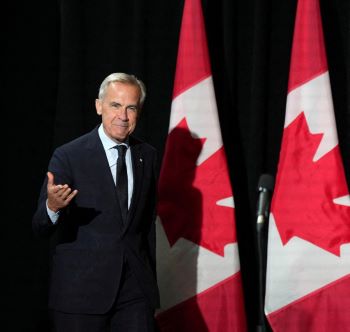

Events For Leaders in
Science, Tech, Innovation, and Policy
Discuss and learn from those in the know at our virtual and in-person events.
See Upcoming Events
You have 0 free articles remaining.
Don't miss out - start your free trial today.
Start your FREE trial Already a member? Log in
By using this website, you agree to our use of cookies. We use cookies to provide you with a great experience and to help our website run effectively in accordance with our Privacy Policy and Terms of Service.