Securing sufficient early-stage investment for startups requires a network on the ground

Mark Lowey
April 22, 2026

It takes a village to raise a child. It takes a network to raise early-stage capital. 

That was the message of angel and venture capital funding leaders during a roundtable presented by the National Angel Capital Organization (NACO).

It requires creating and sustaining an “infrastructure” of experienced investors, startup founders and business mentors to find and nurture angel and venture capital for early-stage startups.

Without that seed and pre-seed capital, promising startups arrive at Stage A and later-stage funding rounds without the strength and momentum to efficiently raise capital.

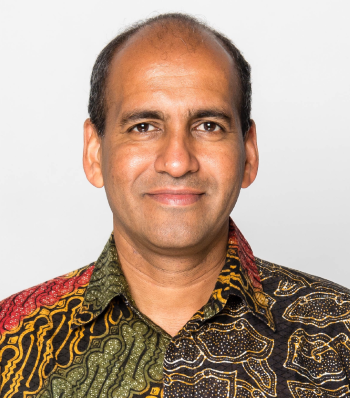
“It recognizes that you need an end-to-end capital pipeline to drive the flywheel effect,” said Claudio Rojas (photo at right), CEO of NACO.

“The question in front of us as a nation, as an ecosystem, and in the days and months ahead, is whether we can make that system work consistently, not just for one company but for hundreds across the country,” he said.

Rojas pointed to Toronto-based fintech company Wealthsimple, which last October raised $750,000 in a funding round that valued the company at $10 billion. Wealthsimple’s story started with a $250,000 cheque from an angel investor, he noted.

NACO’s roundtable was part of the organization’s effort to persuade the federal government, which in Budget 2025 committed a total $1.75 billion to a venture capital strategy, to spend $750 million of that allocation on early-stage investment.

NACO has recommended to Finance Canada and Innovation, Science and Economic Development Canada that $500 million should be used to create a five-year Early-Stage Matching Funds Program, at two-to-one private-public matching at pre-seed and seed stages.

Another $250 million should be allocated over five years to an Early-Stage Infrastructure Growth Funding Initiative, to stabilize and professionalize the foundational layer of Canada's pre-seed and seed ecosystem that makes private capital deployment possible at scale, NACO said.

This funding would support 125 angel networks, pre-seed funds and seed-stage venture capital funds in every region of Canada, Rojas said. This includes supporting human capital, diligence and governance, technology and shared infrastructure.

“You cannot mobilize private capital at scale without well-resourced organizations doing the work on the ground,” he said.

Research by NACO and Startup Genome found that funding at the seed-stage funding level funds 30 percent fewer companies than in the U.S., and Canadian seeds rounds are 40 percent smaller than in the U.S.

This funding gap widens to 40 percent at the later growth stages of Series A level funding and to 50 percent at Series B.  

The five-year funding gap in pre-seed funding once Canadian companies reach the Series A stage amounts to US$1.6 billion. “That's $323 million a year in capital that should be reaching Canadian startups and it isn't,” Rojas said.

“This is not a growth-stage problem. This is an early-stage problem showing up at the growth stage,” he said.

“Our top ecosystems are losing value not because we lack talent, but because we’re structurally underfunding companies at the very beginning,” said Lisa Graston, director of operations at NACO.

Canada Pension Plan Investments now allocates 47 percent of its portfolio to U.S. assets and only 12 percent to Canada, the lowest domestic share in the fund's history, Rojas said. “That's not because Canadian funds are too small, it's because the pipeline hasn't produced the returns to justify domestic allocation.”

“Fix the pipeline and you fix the returns. Fix the returns and you bring the capital home,” he said.

Pre-seed and seed-stage investing is hyperlocal, high risk and relationship-driven – the “exact conditions where U.S. venture capital doesn’t compete, Rojas said.

“This is our space, this is our country, these are our communities, and it is the single most powerful buy-Canadian play that we have. Because early-stage investing fuels companies that stay, companies are embedded in Canadian networks, funded by Canadian angels, and they arrive at the growth stage with enough momentum to choose where they scale,” he said.

Capital formation is an “ecosystem,” not just writing a cheque

Atlantic Canada’s 12-year journey from a nascent angel investment ecosystem to producing multi-million-dollar capital raises and exits for companies was founded on networks driving venture capital, said Alex MacBeath (photo at left), managing partner at Island Capital Partners in Charlottetown, P. E. I.

MacBeath founded Island Capital Partners in 2017 and other funds in Newfoundland and Nova Scotia started around the same time.

“These funds needed networks with a key part of that foundation that fueled the growth over this last 10 or 12 years. And I can assure you there were no VCs from Silicon Valley or Toronto arriving in Halifax or Fredericton or Charlottetown writing $250,000- or $400,000 cheques,” he said.

Atlantic Canada has had some major successes during the last three years, with companies like Kinduct Technologies, CarbonCure, Meta Materials, Wattpad and Interhive having capital raises and exits at $100 million to $600 million.

Access to capital and capital formation are core issues for early-stage startups, MacBeath noted.

"Capital formation is not just a single cheque. It's an ecosystem. It's angels, it's funds, it's networks, it's diligence capacity, it's mentoring. When any piece of that continuum is missing, the whole system slows down,” he said.

Early-stage investors have been the “connective tissue” for the ecosystem, given their involvement in mentoring, judging pitch competitions, serving on boards, working with universities, influencing government policies and programs – and writing cheques, he said.

“It is hyperlocal and relationship-driven and that’s what keeps early-stage companies in Atlantic Canada,” he added.

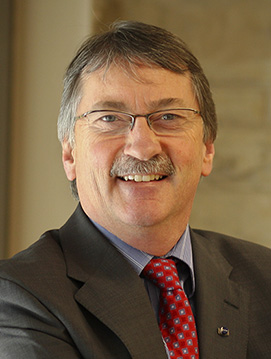
The pre-seed and seed stages of angel investment are essential parts of the deal flow and help identify good potential candidates for moving forward to later growth-stage funding, said Hans Knapp (photo at left), co-founder and partner at Yaletown Partners in Vancouver.

Yaletown Partners started as a seed fund in 2001 and now operates at a larger scale, but relies on a healthy early-stage investment pipeline for deal flow. 

"It's now past debate that there is a suboptimal level of quality deal flow coming out of the seed and pre-seed stage,” Knapp said.

One recurring theme has been the proportion of time that CEOs need to spend on fundraising rather than running their business, he added.

“This has significant implications for their ability to move the business forward and do all of the things required to prosecute the business and advance it,” Knapp said. “That’s a sign that there’s a challenge in the ecosystem.”

Jacques LaPointe (photo at right), cofounder of Metiquity Ventures in Calgary, said he sees startup founders with zero to $200,000 in revenue, chasing $10,000 or $50,000 cheques.

His fund helps fills the lead investor gap, but it took 52 investors and three and a half years to raise $10.5 million.

“You have to really build the trust of those high net worth individuals and family offices, because that’s the first step is the trust,” LaPointe said.

“Second step is them believing in the competency and the experience that you've had, whether you've had an exit, whether you've done lots of deals, whether you've been involved in the journeys of these companies.”

“There is no shortage of founders with great expertise. They just haven't been on the journey before,” LaPointe said.

“They haven't got the network to raise the capital. When we come into a deal as a lead investor, writing a $300,000 to $500,000 cheque, that creates the weight to attract angel investors." “There’s a whole ecosystem of investment that has to take place to get early-stage companies to different levels of maturity,” LaPointe said.

Challenges include retaining angel investors and having a consistent framework to galvanize investment

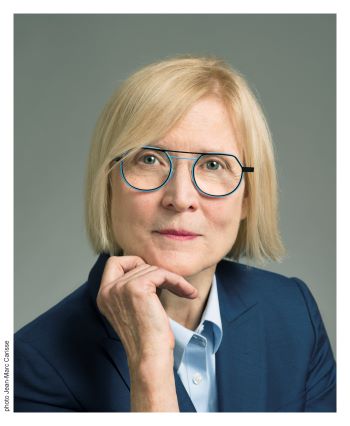
There is also a challenge to retain angel investors who enter the asset class, but then leave when follow-on capital fails to materialize, said Carollynn Shafer (photo at left), general partner at Okanagan WMN in Kelowna, B.C.

"We try to go through a lot of different steps because we want to retain angel investors,” she said. “Retaining angel investors is very difficult, especially when they see companies they have supported not receiving more support. It's very easy to lose angel investors."

In one company’s case, the firm raised Series A funding of $7 million but its foundation was $3 million in angel capital over a number of years. “It just takes that much angel capital to activate these companies and we're not seeing that anymore,” Shafer said.

Shelley Kuipers (photo at right), CEO of The 51 in Calgary, related how The 51 pioneered a new model for mobilizing women as limited partners in early-stage funds – going from a $5,100-minimum investment per year to having hundreds of limited partners across the country.

When The 51 first went out to the market in 2019, there was a lot of discouraging talk about pursuing the women’s market and how women weren’t going to write cheques or become limited partners, she said.

But The 51’s research showed women graduating faster than men from postsecondary institutions, women creating companies at a faster rate than ever before, and that the majority of private wealth in Canada will be held by women in 2030.

“We took the view that you could be an investor today or you could be an investor in 10 years. So it didn't really matter coming to The 51. We’re really looking at this as a long game,” Kuipers said.

The 51 established a not-for-profit, Movement 51, focused on building the capacity in the ecosystem for both the investor and the founder.

“Activating the capital is just as much work as deploying the capital,” Kuipers said. “We democratized the asset class [a group of similar investment vehicles]. There are now 1,300 women from coast to coast on the wait list for The 51’s next fund.

NACO roundtable participants also pointed to the need to have a consistent framework, such as a tax credit or investment tax credit to activate private capital into early-stage investment funds and startups.

“You don’t build an ecosystem with matching funds alone,” MacBeath said. “It requires organizations and people on the ground who turn interest into investment.”

“The ecosystem just doesn’t happen on its own,” LaPointe agreed. “You need somebody – some groups, angels and otherwise – to do some of the heavy lifting for these companies and the early stage to help get them to the next level.”

Rojas said the roundtable participants’ expertise and experiences illustrate the need to build and support a strong national network of investor organizations at the earliest stages of investment.

“It’s important that we have the infrastructure in place, the matching funds in place, so that when the private capital is being deployed, it's smart money that is being deployed into good deals so that we get that flywheel effect,” he said.

“So if you get these in the right order, you get massive economic upside,” Rojas said.

“That’s why the $750 million [federal] envelope is so critical, because you will not have success with an investment tax credit in the absence of the infrastructure.”

R$


Other News


Events For Leaders in
Science, Tech, Innovation, and Policy


Discuss and learn from those in the know at our virtual and in-person events.


See Upcoming Events


You have 0 free articles remaining.
Don't miss out - start your free trial today.

Start your FREE trial    Already a member? Log in


Top

By using this website, you agree to our use of cookies. We use cookies to provide you with a great experience and to help our website run effectively in accordance with our Privacy Policy and Terms of Service.