
Cultivating Canada’s best minds and research: Q&A with Ted Hewitt, past president of SSHRC

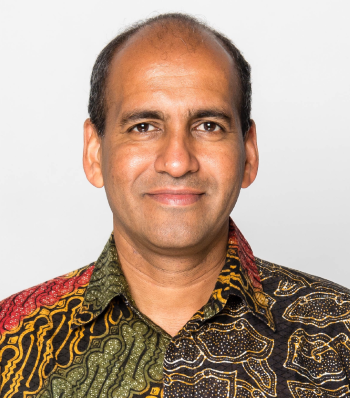
.jpg) Dr. Ted Hewitt, PhD, led the Social Sciences and Humanities Research Council of Canada (SSHRC) as president from March 2015 to February 28, 2026. He served as the inaugural chair of the Canada Research Coordinating Committee from 2017 to 2019, and was the first to serve a second term as chair in 2023.
Dr. Ted Hewitt, PhD, led the Social Sciences and Humanities Research Council of Canada (SSHRC) as president from March 2015 to February 28, 2026. He served as the inaugural chair of the Canada Research Coordinating Committee from 2017 to 2019, and was the first to serve a second term as chair in 2023.
Hewitt led SSHRC through tremendous growth and change. He played an instrumental role in mobilizing social sciences and humanities research expertise to help Canada navigate the pandemic and ensure a strong recovery.
He oversaw the launch and implementation of key national research priorities to promote international, interdisciplinary, transformative and high-risk research; strengthen Indigenous research and research training capacity; and enhance equity, diversity and inclusion in Canada’s research ecosystem.
In his role as chair of the Tri-agency Institutional Programs Secretariat, Hewitt led major investments in research chair programs and initiatives across Canada, as well as new funding for biomedical research and support to institutions for the indirect costs of research, including for enhanced research security.
Before joining SSHRC, from 2004 to 2011, Hewitt was Vice-President, Research and International Relations, at Western University in London, Ont., where he had been a professor of sociology since 1989. He was also a public policy scholar at the Brazil Institute of the Woodrow Wilson International Center for Scholars in Washington, D.C. He is the past Canadian co-chair of the Canada-Brazil Joint Committee for Cooperation on Science, Technology and Innovation.
Hewitt agreed to do a Q&A interview with Mark Lowey, Research Money’s managing editor. The Q&A focused on: the role of social sciences and humanities research for a technology-focused federal government; balancing fundamental and applied research and, increasingly, “mission-oriented” research; the proposed new “capstone” organization that would consolidate the management of the three federal research funding agencies; the future of international research collaboration; and highlights from his years as president of SSHRC.
R$: The federal government seems very preoccupied right now with spending on defence and national security, and with artificial intelligence. Is there a role for social sciences and humanities research in these technologically-focused areas?
TH: I think the short answer is: ‘Yes, more than ever.’ The reason being that, in the case of new technologies or innovation, at the end of the day it's all about people and where it lands [in society]. I think having a better understanding of how things are going to fit in the social fabric is super important in this process. I was listening to the astronauts [aboard the Artemis II mission] – probably the highest, most technologically advanced activity that we've seen in quite a while, when you think of all the science that goes into this mission. Canadian astronaut Jeremy Hansen said they are there for all of humanity. So not just proving a concept or just playing with science because it's fun. They’re there for the future because we don't know where the world's going or where we might need to go and how we might need to get there. So I think it's pretty critical.
One of the last calls that we did for the New Frontiers in Research Fund was on harnessing disruptive technologies. And the keyword in the whole thing was “harnessing” because we're at a point where we've advanced so far in terms of the scope, the quality, the depth, the impact of these technologies that we need to think really carefully about how they're going to land in society. Are people going to accept them? Are they going to use them? Are they going to harm them? I think that's where social sciences and humanities really play a role in the providing of that advice. So there are ethical issues for sure, that’s what we think of first. But a lot of it comes back to social license. Is it possible to implement these technologies in the way that the people who developed them imagined? How will technologies likely be received? How will society react? Will they be adopted? Will [society] in fact work against new technologies? Having a better sense of that and doing the research on the ground I think will help in the rollout and the implementation of new technologies in ways that are helpful and not the opposite, including for those who are standing to benefit from these new technologies.
In the U.K. they have science advisors – quite a few actually – but they have a science advisor specifically in the social sciences who looks at these things and tries to understand how technological development is creating opportunity and concern, and how best to adapt or to frame adaptation for new technologies in the context of U.K. society. So I think that's something we could really benefit from here.
R$: Do you think that social sciences and humanities research can still fit within the existing funding envelopes, given the federal government's current focus?
TH: I think based on how the current funding allocations work, absolutely the Social Sciences and Humanities Research Council is capable of playing that role and does. But also in the development of the Tri-agency programs – the big ones like the New Frontiers in Research Fund and the Canada First Fund – those things are designed to incorporate social sciences and humanities input right into them in their development. And they’re assessed on this basis because there's little point, in my view, in developing high-end technologies in the life sciences or any other area unless you start to think about policy, the law, intellectual property. How these technologies will in fact be accepted within the context of Canadian society and society more broadly, and those programs in fact require consideration of this. This is a key piece of that whole area within technological development.
R$: It seems there has always been a debate about the importance and need for fundamental research versus applied research and, increasingly, “mission-oriented” research. Is fundamental research still valuable, and how do you see achieving a balance between these different kinds of research?
TH: The fundamental research is really the origins of all new thinking, new ideas, new knowledge. We have to allow our researchers to explore, to test new ideas and theories, and really see where they might take things. This is absolutely critical for the future. Jim Flaherty, a former [federal] minister I was speaking with years ago, congratulating the government on investments in research, and he said, “Research is our future. We have to invest in that.” And I think we need to invest in research in a way that allows for our best and brightest minds to explore things that no one else is thinking. Otherwise, how do we make progress?
Having said that, mission-driven applied research is extremely critical because we have problems that we need to solve. So we need a balance and I think that's absolutely important. I think it's somewhere in the realm 70 to 30 [percent] or 80 to 20 [percent] – 70, 80 fundamental, 20, 30 direct investment in applied mission-driven research. But the two are so mixed. They go so far hand in hand that you have to leave opportunity always for doing both, and the [Tri-council] agencies do exactly that. Focused programs are growing, we've seen more of that. We’ve seen a push on the part of government to fund more mission-driven research and I think that's fine, but you've got to keep that balance in place.
What I always tell people is, the things that the government values most right now – AI, quantum – they didn't come out of government programs. They came out of fundamental research. But there's this kind of magical thinking that goes on to say, “Well, if I fashion a research program in, say, Moon exploration, that I'm going to get all the research I need to now proceed with Moon exploration and exploitation.” And it just doesn't work that way. People start down one path and they end up somewhere else. This can be in areas completely different from what they’d originally intended, or they could be spot-on coming from areas that have nothing to do with where they ended up. So it's important to keep the system fluid, let researchers do what they do best and allow space for more applied research that can meet immediate needs. There are ways to do that. I think we're achieving that balance as we move forward.
I want to be clear. I think this kind of directed research is very useful. In wartime, we’ve seen how it's worked and the invention of a space-age plastics, for example. I remember when Western, my university, was involved in the development of the pressure suit for jet flying, and that was a very mission-driven focus. We have lots of things we need to be doing – battery power, finding sustainable energy sources – and people are working on that and they’ll continue to do that. But they may find other things in the process. So let's not tie people too tightly to the [mission-driven] task is my recommendation.
R$: As far as I know, the federal government is still committed to implementing the new “capstone” research funding organization to consolidate the management of the three federal research granting councils. Do you think this capstone organization is a good idea and, if so, how should it be set up, structured and staffed and what sort of authority should it have? Should it be able to “overrule” the Tri-council agencies’ decisions on research funding?
TH: I think this is worth some more discussion and certainly within government, within the agencies, within the [research] community. Because right now it's not clear to me at all, and I think to many, what it is exactly government is thinking right now in terms of this capstone organization. We know it's not what was in the Bouchard report (the Report of the Advisory Panel on the Federal Research Support System), because ISED (Innovation, Science, and Economic Development Canada) and the agencies organized the consultation on that two years ago or so. What they were proposing or at least hinting at was something that would operate more as an umbrella. Bouchard was focused more on creating a brand-new agency which would sit alongside the other [research funding] agencies. They even gave it a name [the Canadian Knowledge and Science Foundation]. I think the ISED response was more focused on an umbrella organization that would sit on top of the agencies, which would have certain implications – certainly structures for advice and input and so forth.
My view is that in both the Bouchard variant of the so-called capstone [organization] and what eventually government has been contemplating has tended to be rather top-down structure. In some respects [it is] quite complex and it's layering and also quite expensive. I've seen no estimates that didn't involve literally tens of millions of dollars of investment in order to create this thing. This has been discussed in terms of what the overall cost may be. It certainly may involve some legislative changes in terms of how the agencies would interact with each other in a new capstone organization which had an umbrella body on top of it. My personal view is government really should be asking, “What is the problem that they're trying to fix, and what is the simplest way to achieve that, and who should the key players be?”
If you ask yourself those questions, the first thing you would recognize is that the research funding agencies are considered globally as world-class organizations. They work with the best agencies globally. They're extremely efficient in the way that they expend or distribute funding with a very low overhead. [But] they are often tied in their operations by the way that funding is allocated. So when governments typically allocate funds to the agencies, they put conditions on how that funding can be spent or not spent. And that in turn has limited the ability of the agencies to really be flexible with respect to program development, working together, developing new programming.
So my thinking is that in order to get at some of the key objectives within the discussion around the capstone [organization] – greater degree of harmonization, enhanced internationalization, better integration between and among the agencies – are things that the agencies themselves would be capable through the establishment of umbrella programming, say for example in the form of the Canada Research Coordinating Committee. They would be perfectly capable of enhancing the structures that are already there, with some greater ability and flexibility to develop programming and to use funds to support that programming across the agencies, which they currently lack. They would be in a good position to do much of what was envisioned for the capstone and much of what's been of concern to the community in the past few years. So [this would involve] some overarching structure through an enhanced Canada Research Coordinating Committee with new powers to move funding, to create new programming, an ability certainly to develop new Tri-agency programming with that funding that would better suit or meet the needs of government for mission-driven research, for researchers themselves as well in institutions, in a flexible way that would not involve the kinds of investments that have been discussed in the last couple of years during this long period of discussion, consultation and debate.
I think that's absolutely possible. And the best example that I have for this is the New Frontiers and Research Fund which was developed when Kirsty Duncan was [science] minister. The funds for that were given to the Canada Research Coordinating Committee to administer, to develop the program Tabula Rasa [or a blank slate] and to oversee it, which they have. They’ve allocated that fund to all the different programming that's been developed in that New Frontiers program. It's delivered by the Tri-agency Institutional Programs Secretariat, which resides at SSHRC, but they're responsible for delivering it. The oversight for New Frontiers rests with the Canada Research Coordinating Committee. I think that model could be applied to all Tri-agency programming such that, instead of a myriad of committees and cross-agency types of organized organisms, you would have one body. The Canada Research Coordinating Committee (CRCC) would be deliberating on how these funds would be used, what programs would best meet the needs of government and researchers, how they would be funded, and they would have their own funding in order to do that. Delivery can certainly remain with the agencies, as appropriate, and in the case of the Tri-agency and the Institutional Programs Secretariat that can operate pretty much the way it has. The direction, the strategizing would occur at a higher level within the CRCC and revised or modernized or revamped in any way that one might imagine in terms of membership or who should be involved and how that should be structured.
I have some ideas about that. I discussed these with my colleagues before I left. I know that that's continuing to evolve. But this sort of discussion is directed towards how we can find ways to get at some of the things we know we need to do – mission- driven research, internationalization, greater harmonization, simplicity of structures. That can be done among the agencies and collaboration, say with Canada Foundation for Innovation, with some minor changes that would incur minimal cost as opposed to what was imagined or what certainly we understand government to have been thinking about since we really don't have that specificity.
People, researchers, the agencies, anybody who's interested in this, need to take a very, very close look at how this rolls out in the next few months. Because I think a lot of what lies behind the thinking about modernization is about ensuring that government has adequate oversight and control over how research dollars will be spent in support of what areas of research. And I think there are real limits, and should be real limits, to the extent that becomes normalized, which is not the case in most research funding agencies globally and where everyone recognizes that there needs to be a line between how research funding agencies operate and the kind of projects they fund, and what government considers to be worthy of support. I think that's natural. I think people understand that and everybody needs to kind of stay in their lane if the research funding system is to work to its maximum benefit for Canadians.
There's lots that can be done that would meet the objectives that have been contained in these past reviews, whether it be Naylor [Canada’s Fundamental Science Review] or Bouchard, in a much more cost efficient and effective way with the right tools and the right legislation. Changes in legislation that would allow for oversight wouldn't even need changing legislation. It would only need a minister’s mandate letter in my view to get the [Tri-Council agency] presidents working together to start building these structures – at very low cost.
R$: The global geopolitical landscape is changing rapidly, and Canada and the U.S. no longer seem to have the trusted relationship they had in the past. Also, the Trump administration has made significant cuts to science, research, scientific organizations and researchers. Given this geopolitical context, do you think international engagement and collaboration in research is still important and necessary, including with the U.S.? And if so, why?
TH: This whole situation has created massive opportunity for Canada. I think we always as Canadians and researchers have worked collaboratively with our colleagues all over the world, whether it be Europe or Africa or Latin America or Asia. But mostly with the U.S. I think this [situation] has given researchers some pause to reflect and think about where they might look for possible collaborators in future, given the fact that their colleagues in the U.S. may be less well funded than they were. Or government has imposed restrictions on research, which are quite insidious in fact. You’ve seen where government is saying, “Well, you can do research on X but not Y. And we don't want to see research on this topic or anything to do with equity, diversity, inclusion or anything to do with X or Y.” And this is really, really insidious. We don't want really to get involved in that. As Canadians, we don't accept that.
So I think it's created opportunity. I don't see why we would stop working with our American partners and those who would be willing. I think that should continue and hopefully will continue. The real question may be, “Would the funding be available for our for our U.S. counterparts to do that?”
One of the changes that we made for a lot of our programming at SHHRC and for the Tri-agency program is that we have a built-in mechanism for encouraging international collaboration in that we allow for all of the Tri-agency programming, the Canada First Research Excellence Fund, the New Frontiers Fund. You can apply as an international researcher, as a co-applicant with a Canadian applicant, and you can be funded. That’s very novel. That gets research funded and international research funded really quickly and effectively. SSHRC and many of the agencies have agreements with countries in Europe and Latin America and Africa and Asia which allow for joint research funding in the form of bilateral agreements or joint calls. So there's never been a better time, in my whole career at least, and certainly within the social sciences and humanities, to get funding for international research. This is the best it’s ever been. In the case of SSHRC, for the most part, it's as easy as applying for a grant, bringing your international co-applicant. That holds for 90 percent of our programming. And if they get funded, then away we go. That can serve also as an impetus or a toe hold for these same collaborators to seek funding from their own agencies. So I think there's more to do, but I think we need to keep going and expand some of these linkages both on the individual basis and between agencies. Now Canada is an associate member of Horizon Europe and these are awesome developments – fantastic.
But when you do what they've done in the U.S. in terms of not just limiting funding and eliminating agencies – the National Endowment for the Humanities (NEH) is all but closed – and that’s a piece of what we fund in Canada. That has shut down many, many collaborations and our collaboration directly with NEH. Within the U.S. National Science Foundation we know where the priorities are – in the science area and much less in the other areas. That’s going to hurt. It’s definitely going to hurt the collaboration with Canadians. But that may not even be as bad as the kind of restrictions in funding that the Trump government has put on research funding, which I think causes a lot of concern among Canadian researchers who now find themselves collaborating with Americans in areas that are literally taboo in the U.S. framework, which is really scary from a from a research perspective.
R$: What for you are the highlights of your term as president of the Social Sciences and Humanities Research Council. What programs or initiatives are you most proud of?
TH: We’ve seen increases in research funding in social sciences and humanities that have been unprecedented, including increases in our share of research funding within the three councils and I'm very proud of that. Our share of Canada Research Chairs increased, our share of research funding increased, and that increased funding success rates substantially. And I'm very proud of this: when I came in, Insight Grants, which is kind of our bread and butter program, had a success rate of under 20 percent, which was very, very low. That increased to around on average over 40 percent. So that more than doubled on average over the over the term of my presidency. So I've been really pleased with that.
The other thing would be the introduction of programs, new programs particularly, that helped us build a structure that provided opportunity for new researchers, mid-career and senior researchers or established researchers, and also for across small projects to large projects. So we now have a kind of full array in a in a very limited number of programs, maybe 12, but we introduced new programs to fill some of these gaps, like the Partnership Engaged Grants, the new one that we introduced, the Policy Innovation Partnership Grants. Then of course, all the amazing Tri-agency programs that I was involved in, helped develop as president. And of course there, the New Frontiers in Research Fund is the one that attracts most attention.
Lastly, we were talking about international, but work that we've done with European, Latin American, African funding agencies to create the Trans-Atlantic Platform (a collaboration of research funders from South America, Europe and Africa aiming to enhance international, multidisciplinary research cooperation), and our work with the European Commission that resulted in in our associate membership. All those things and probably a dozen more. So I'm very, very happy.
R$: What is next for you? Have you returned or are you planning to return to being a full-time sociology professor at Western University?
TH: I'm full-time, garden variety, back-in-the ranks university professor. I'm very happy. I get to do some of the stuff I haven't had time to do – work on Brazil and innovation systems and how Brazil is innovating and some of its international ambitions and activities and international relations – Brazil and Canada, Brazil and Africa. The kind of things I've always been interested in. And I'm busy putting together new courses, one on global inequality and another on social change and development, which speaks to my research areas historically. So how could I not be happier?
I have been supervising grad students for quite some time – I did even as president of SSHRC.
One grad student is just about to finish up this summer. And there'll be others. I get some interest occasionally from Brazil and elsewhere, and I look forward to that.
R$: Are you going to miss being at the helm of SSHRC?
I will and I do in some respects. But on the other hand, there comes a point where you've kind of done what you could do and you've made all the arguments you can make – like say around capstone – and you really have to turn it over to somebody else to take on these battles and work hard for our system.
The [Tri-council] agencies are really quite unique. They are part of government, they respond to government needs, but they were created for a reason. They’re supposed to be arm’s-length, they're supposed to respond to generally the needs of government. But they're supposed to be developing or cultivating the best in the research environment and ecosystem in the universities and colleges. Government has government science. They can do whatever they want. They have labs and facilities and scientists in many departments. That’s what government science is for, that’s what NRC (National Research Council) is for.
But I think in terms of what the agencies do, we're trying to build and cultivate the best we can from the best minds that we have in this country and to attract more of them. And that's a different objective and it's one that we cannot let slide. We need to preserve that model if we're going to get the best out of our researchers and out of the system.
When we see the damage that will be done, when all is said and over in the U.S., this is going to take years to repair and it’s going to take our best minds. It’s not going to be solved with technology. It’s going to require our best legal, policy, legislative minds – and their best minds – to undo the damage that was done, not only in the U.S. but in the whole global system of international governance.
See also: Science diplomacy: A quiet but powerful counterbalance to current pain points in Canada-U.S. trade relations (op-ed by Ted Hewitt)
R$

Events For Leaders in
Science, Tech, Innovation, and Policy
Discuss and learn from those in the know at our virtual and in-person events.
See Upcoming Events
You have 0 free articles remaining.
Don't miss out - start your free trial today.
Start your FREE trial Already a member? Log in
By using this website, you agree to our use of cookies. We use cookies to provide you with a great experience and to help our website run effectively in accordance with our Privacy Policy and Terms of Service.