
The Short Report: August 12, 2026

CONTENTS:
Government Funding & News
Research, Technology & Innovation
VC, Private Investment & Acquisitions
- Canada loses another key chip-making company to a U.S. firm
- Canadian startups raised more venture capital in the first six months of 2026 – the first increase at the half-year mark since 2021
Reports & Policies
- Commercializing Canadian health research: The case for targeting grants and increasing overall investment
- Canada can stop surveillance pricing before it reaches the checkout
- Generative AI tools are increasingly shaping how tasks are performed across workplaces in Canada
- AI use is expanding – especially among younger Canadians – but many remain concerned about its impact and use
- Building workforce for Western Canada’s nascent nuclear industry needs to start now
The Grapevine – News about people, institutions and communities
- University of Waterloo researchers are investigating ways to make lithium-ion batteries in data centres safer
*****************************************************************************************************************************
 GOVERNMENT FUNDING & NEWS
The Government of Canada is investing $1.95 billion to renew VIA Rail’s long-distance, regional and remote locomotive fleet while bringing passenger locomotive assembly back to Canada for the first time in decades. The investment includes:
- $1.6 billion for the production of 45 new locomotives by Stadler, a leading Swiss rail manufacturer with a global centre of competence facility for mainline locomotives in Spain. Leveraging its global supply chain and Canadian suppliers, Stadler will complete the final assembly of up to 36 locomotives in Canada, marking the first time in decades that passenger locomotives for VIA Rail will be assembled domestically.
- $357 million for VIA Rail to build a new assembly and maintenance facility in Montreal, where the Canadian assembly of the locomotives will take place. Built by Pomerleau, the facility will also support the maintenance and operation of the new fleet at VIA Rail’s Montréal Maintenance Centre over the long term.
The new locomotives, powered by hybrid battery-diesel technology with batteries supplied by ABB from its Saint-Laurent facility, will replace VIA Rail's aging fleet serving Canadian routes and will become North America's first hybrid-powered passenger locomotives. The battery systems will be used to optimize and reduce fuel consumption, providing an immediate efficiency gain while laying the groundwork for future zero-emission propulsion. The first of the new models is to go into service in early 2029. The investment will improve reliability, operational efficiency and service for Canadians while supporting domestic innovation and helping build a cleaner, more resilient transportation system. Transport Canada
The Defence Investment Agency awarded an initial contract for approximately $2.3 billion to Telesat LEO, to deliver the Enhanced Satellite Communications Project – Polar (ESCP-P). The contract also includes two option periods for approximately $214 million and $218 million. The contract will defend Canadian sovereignty in the Arctic by delivering the first phase of next-generation military satellite communications capabilities for the Canadian Armed Forces (CAF) through the Telesat Lightspeed Low Earth Orbit (LEO) constellation. Once complete, the military Ka-band satellite communications component of the ESCP-P will enable secure, resilient and reliable military communications in the Arctic and other high-latitude regions. This critical capability will support a broad range of CAF operations, including defending Canada and North America through NORAD, supporting operations with allies, enhancing Arctic situational awareness, and supporting search and rescue missions. This is the first contract awarded following the strategic partnership established in December 2025 between the Government of Canada, Telesat and MDA Space. This agreement allows Telesat to immediately expand its LEO constellation by 69 satellites, bringing the total number of satellites from 156 already in production to 225. The satellites will be built by MDA Space at its state-of-the-art, high-volume satellite manufacturing facility in Montreal. MDA Space will serve as the prime contractor responsible for end-to-end mission delivery. Defence Investment Agency
Public Services and Procurement Canada (PSPC) awarded a $768.6-million construction services contract to PCL Construction Canada Inc. for the Regulatory and Security Science Main (RSS Main) project in Ottawa. This marks a major milestone as the project advances into full construction following earlier site preparation and enabling work. As part of Canada's commitments under NATO's defence investment framework, the RSS Main project will contribute to defence and security-related investment goals by strengthening Canada's national security, resilience and emergency preparedness capabilities through modern science infrastructure. Through this investment, PSPC is delivering six modern science facilities on the existing Canadian Food Inspection Agency (CFIA) Ottawa Laboratory site. Together, these facilities will form the RSS Main campus and support greater collaboration among scientists and researchers from the CFIA, the Canada Border Services Agency, Health Canada and the Public Health Agency of Canada. The RSS Main campus will feature modern laboratories, advanced technologies and digital systems that support science and research. These capabilities will help strengthen Canada's food supply, enhance emergency preparedness and secure our borders while keeping trade and travel moving to support the economy. The Government of Canada is working closely with the Anishinàbe Algonquin Nation and other Indigenous partners to incorporate Indigenous perspectives into the planning and design of RSS Main, including Indigenous businesses’ and communities’ participation in project contracts. PSPC
Natural Resources Canada (NRCan) announced a binding agreement between Ksi Lisims LNG and Germany’s Uniper SE. This first-of-its-kind deal will see Uniper purchase two million tonnes per annum of Canadian LNG for up to 20 years, with first deliveries expected to begin in 2032. These deliveries will benefit customers in Uniper’s core markets of Germany, the United Kingdom, Sweden and the Netherlands. This deal supports the federal government’s trade diversification agenda, enabling the country to go from less than 0.01 percent of Canada’s natural gas exports being sent to non-U.S. markets in 2024 to an estimated 55 percent by the early-to-mid 2030s. Led by the Nisga’a Nation, Ksi Lisims LNG is a $30-billion project that will be Canada’s second-largest LNG facility, with the potential to represent 13 percent of Canada’s total natural gas exports by the early-to-mid 2030s. It will also be one of the world’s lowest-emission LNG operations, with emissions 94 percent below the global average. It was referred to the federal Major Projects Office in November 2025. NRCan
International Trade Minister Maninder Sidhu announced the creation of Canada’s Strategic Exports Office (SEO). Established within Global Affairs Canada and led in close collaboration with Export Development Canada, the new office will strengthen Canada’s ability to secure international business opportunities and coordinate senior-level commercial engagement in strategic sectors, including aerospace and defence, infrastructure and energy. The SEO will bring together Canada’s diplomatic, commercial and financial expertise to remove trade barriers and open more doors for Canadian companies looking to succeed in markets worldwide. By combining Canada’s diplomacy efforts, market intelligence and financial know-how, the SEO will support Canadian businesses pursuing strategic export opportunities by:
- identifying and advancing large-scale export opportunities critical to Canada’s economic interests.
- coordinating whole-of-government engagement to support Canadian firms.
- supporting targeted advocacy by senior government officials where it can be decisive.
Sidhu also announced the launch of Canada’s 14-member Strategic Exports Advisory Council. The council will provide a forum for strategic dialogue between the Government of Canada and private sector leaders on trade diversification and the operations of the SEO. The council will advise the minister on opportunities and challenges related to international trade diversification for Canadian businesses and provide real-time feedback on how to best support them. Global Affairs Canada
The Government of Canada will "eliminate" the financial contribution requirement for online streamers set by the Canadian Radio-television and Communications Commission (CRTC) and replace it with government funding, Ottawa said in a court document. "We are instructed to inform the court that the government's intention is to eliminate the base contribution requirement on streaming services and to provide government funding to replace those contributions," the attorney general's office said in a document dated July 17. But Kevin Desjardins, president of the Canadian Association of Broadcasters, said: "The language in the letter [filed in court] does not align with what we have heard from the government, and we believe it would be premature to reach any definitive conclusions from this administrative communication between the court and one of the respondents." The office of Culture Minister Marc Miller declined to comment when asked to clarify the government's stance. In early June, the government said it would issue a new policy directive to the CRTC after the broadcast regulator increased contributions for large streaming services from five per cent to 15 percent of Canadian revenue. The government also said at the time it would instead provide the industry with $600 million in annual funding. The contributions, which became known as the "Netflix tax," followed the passage of the Liberal government's Online Streaming Act in 2023. CBC News
The Government of Canada committed $125 million to help fund the expansion of Luxembourg-headquartered ArcelorMittal’s Quebec pellet plant. The contribution will flow from the government’s $5-billion Strategic Response Fund, which supports large private-sector projects in priority sectors. ArcelorMittal Mining Canada, a subsidiary of one of the world’s largest steelmakers and iron ore producers, first announced its plans for a $205-million expansion of the plant on the sidelines of the UN Climate Change Conference in 2021. When complete, the company said the Port-Cartier, Que. plant will be one of the world’s largest producers of direct-reduced iron pellets, a key component of low-emission steel production. The project includes a flotation system designed to reduce the silica in the iron concentrate. The process requires less energy, and is expected to eventually lower greenhouse gas emissions by 200,000 tonnes per year, the company said. The Logic
Industry Minister Mélanie Joly announced up to $70 million in funding from the Strategic Response Fund to support Granby, Que.-based Volta Energy Solutions Canada Inc. (VESC) in establishing a copper foil facility in Granby. The Government of Canada’s investment in VESC’s $760.9-million project will enable the company to upgrade and expand an acquired facility to produce copper foil for battery cells used in electric vehicles and energy storage systems. This investment will support the creation of 260 new jobs, and the facility will be transformative for Canada’s domestic EV supply chain, with an anticipated production capacity of 25,000 tonnes of copper foil per year starting in 2027 and plans to scale up to a total of 63,000 tonnes, Ottawa said. Innovation, Science and Economic Development Canada
National Defence Minister David J. McGuinty announced the launch of the Quantum Defence Innovation Secure Hub (DISH) under the Bureau of Research, Engineering and Advanced Leadership in Innovation and Science (BOREALIS) in Calgary. Quantum technologies are expected to transform defence and security through advances in sensing, secure communications, navigation, computing and decision support. The Quantum Defence Innovation Secure Hub (DISH) will provide a secure environment where government, industry, academia and innovators can collaborate to rapidly develop, test, validate and transition these technologies into operational capabilities for the Canadian Armed Forces. A University of Calgary-led consortium will receive $20.3 million over two years to establish and operate the Quantum DISH. Bringing together organizations from Canada's quantum, defence and innovation sectors, the consortium will help accelerate the transition of promising Canadian quantum technologies from research into mission-ready capabilities that support Canada's defence and security priorities. The Quantum DISH will focus on accelerating capabilities in quantum sensing, communications, algorithms and hardware assurance to help the Canadian Armed Forces address emerging operational challenges, strengthen resilience and maintain Canada's technological advantage. National Defence
Pacific Economic Development Canada (PacifiCan) announced an investment, through the Regional Tariff Response Initiative, of over $30.5 million for 24 businesses and organizations across B.C. to help them pivot to new pathways for growth, improve productivity, expand into new markets, reduce costs and build more resilient supply chains. This investment will also help protect jobs in key sectors affected by global trade disruptions such as advanced manufacturing, forestry, and steel and aluminum. Quadrogen, a Burnaby-based clean technology company that develops systems to clean and upgrade biogas is receiving a $3.6-million PacifiCan investment to design, manufacture and demonstrate a lower-cost biogas clean-up and upgrading system for deployment in developing markets, including India. PacificCan
The Government of Canada announced a $10.2-million contract to Architecture49 Inc., for architectural and engineering services for the medical countermeasures laboratory facility. This work marks an important step forward in advancing the facility's design and delivery. The facility will be co-located with the existing National Microbiology Laboratory in Winnipeg, and will expand Canada's capacity to develop vaccines, therapeutics and diagnostic tools. Expected to be completed in 2033, the new facility will support cutting-edge pre-clinical research and strengthen Canada's position in life sciences and global health innovation. It represents a significant, long-term investment that will enhance Canada's preparedness for future health emergencies, support the Winnipeg economy, and contribute to global health security. Public Health Agency of Canada
Health Canada authorized Moderna to move forward with a Phase I clinical trial for its candidate mRNA vaccine for Ebola disease caused by the Bundibugyo virus. Canada is the second country to authorize a Phase I clinical trial for a Bundibugyo virus vaccine candidate after the U.K. Massachusetts-headquartered Moderna has a state-of-the-art vaccine manufacturing facility in Laval, Quebec. The clinical trial will assess the candidate vaccine’s safety, determine the right dosage range and identify any side effects in healthy participants. Following this, Moderna would be required to conduct additional clinical trial phases before it could seek approval from Health Canada for the vaccine. Any final submission would need to meet Health Canada’s stringent safety, efficacy and quality standards before the vaccine could be allowed on the Canadian market. There is currently no licensed vaccine or treatment for Bundibugyo virus disease, the type of Ebola disease that is causing the current outbreak in the Democratic Republic of the Congo. Health Canada
Albertans are now able to pay out-of-pocket for diagnostic screening tests, including an MRI and an ultrasound, and without a doctor’s referral. The new change can help those who pay get a faster cancer diagnosis and improve their chances of survival, without increasing wait times for others, the Government of Alberta said. Patients pay for the tests when they receive them. They could start being reimbursed, if the results lead to a cancer diagnosis. The announcement follows up on legislation passed by Premiere Danielle Smith’s United Conservative Party government in the spring, though it limited test options. The government previously promised to allow the private purchase of any diagnostic screening and testing service, including blood work. Smith said Albertans will have the option to self-refer for ultrasounds, X-rays, MRIs and CT scans “to start.” Officials at the news conference offered reassurances that patients accessing the same tests with referrals from health care practitioners would still be given priority. The new self-referral option also follows other proposals by the Alberta government to privatize portions of its health care system. Starting in September, for example, some physicians can begin offering privately paid surgeries, like hip and knee replacements, while working in the publicly funded system. Public health advocacy group the Friends of Medicare said the changes pave the way for two-tier, American-style health care. Global News
Environment and Climate Change Canada (ECCC) announced the establishment of the 15-member Expert Taskforce on Natural Capital Accounting and Nature Financing. Bringing together experts in nature conservation, Indigenous-led conservation, finance, economics, business and public policy, the taskforce will provide independent advice to the government on how to better measure, value and account for nature in decision-making. The creation of the taskforce builds on Prime Minister Mark Carney’s announcement of A Force of Nature: Canada’s Strategy to Protect Nature, which includes an investment of $3.8 billion to protect and restore nature across the country. Over the coming months, the taskforce will develop recommendations aimed at mobilizing private investment for nature-positive outcomes while advancing the use of natural capital accounting to better reflect the value of nature in public and private decision-making. The taskforce will also conduct consultations with Indigenous partners and engagement processes, such as meetings and roundtables, to incorporate perspectives of various actors and sectors. All recommendations will help inform effective Government of Canada policies and financial mechanisms that strengthen Canada’s nature economy and support long-term economic resilience. ECCC
The Federal Economic Development Agency for Southern Ontario (FedDev Ontario) announced over $11.3 million to support 13 Niagara Region businesses affected by trade disruptions. This funding, through the Regional Tariff Response Initiative, will help these companies improve efficiency, adopt new technologies and enhance their competitiveness. The funding includes $75,000 for High Strength Plates & Profiles Inc., which is undertaking a $1.5-million project to support increased steel processing capabilities and diversification of product offerings through the adoption of advanced equipment and infrastructure upgrades. FedDev Ontario
The Government of Canada announced a $10-million investment, through the Strategic Response Fund, in Hanon Systems to support the construction of a manufacturing plant for vapour-injected electric compressors for electric and hybrid vehicles, as well as a product development centre, in Vaughan, Ont. The project, with total costs of $198.75 million, will enable Hanon Systems to expand its North American manufacturing footprint, and the plant is expected to produce up to 1.5 million e-compressors per year by 2034. This project will also bring significant economic benefits to Canada and the province of Ontario, including by creating around 300 jobs in Vaughan, the government said. Innovation, Science and Economic Development Canada
Environment and Climate Change Canada (ECCC) announced $10.9 million for 22 electric vehicle infrastructure and education projects across Canada. The funding includes almost $9 million to install nearly 400 chargers across Canada through nine projects funded by the Zero Emission Vehicle Infrastructure Program. Additionally, about $2 million in funding will support 13 education and awareness projects that increase familiarity with electric vehicles and electric vehicle charging. These investments will enable Canadians from coast to coast to coast to choose clean, affordable transportation with confidence, Ottawa said. In British Columbia, these investments build on the growth in electrification already taking place in the province, where there are now more than 8,900 public charging ports – an increase of 87 percent since 2023. ECCC
Natural Resources Canada (NRCan) announced nearly $7 million for eight clean energy projects in Yukon, the Northwest Territories and Nunavut to strengthen local electricity systems, reduce reliance on fossil fuels and support long-term economic growth for communities in the North. These investments will help ensure communities have reliable access to clean power that will support families, businesses, critical infrastructure and future economic development. Generating reliable, affordable, low-emissions power is essential as electricity demand in Canada is expected to double by 2050, Ottawa said. NRCan
Natural Resources Canada (NRCan) announced a nearly $5-million investment under the First and Last Mile Fund in the Saguenay – Lac-Saint-Jean region that will help advance infrastructure essential to responsibly developing Quebec’s critical minerals, specifically First Phosphate’s Bégin-Lamarche phosphate mine. First Phosphate is matching NRCan’s contribution for both projects, catalyzing an additional close to $5 million in private investment. Quebec accounts for nearly one-fifth of Canada’s mineral production, containing significant deposits of critical and strategic minerals including phosphate, which is used in lithium iron phosphate batteries – durable, cost-effective technology that powers electric vehicles, renewable energy storage systems, off-grid power solutions and emergency backup systems. This funding will go towards pre-development work including feasibility and environmental studies and engagement with Indigenous and local communities to help determine the best routes and designs for power transmission and transportation infrastructure that would link the mine to regional rail networks and the Port of Saguenay. This will speed up responsible development by addressing infrastructure gaps that can delay resource development. Once launched, the projects are expected to create approximately 500 jobs during construction while the mine is expected to create approximately 300 jobs once production begins in 2029. NRCan
Companies seeking access to Ontario’s electricity grid will need to demonstrate “community benefits,” pay the full cost of the electricity they consume, and satisfy a broader set of provincial priorities before receiving approval, Ontario Energy Minister Stephen Lecce said. “The bottom line is, if a data centre wants to come to Ontario, it is not your right,” he said. “What I can commit to you is, if a data centre wants to enter the grid, there will be criteria set out.” But the government has yet to publicly release the criteria, despite Ontario being home to the largest share of active data centres in Canada, and with municipalities grappling with how to handle new proposals. Lecce said the Ministry of Economic Development, Job Creation and Trade will soon unveil a broader framework for digital infrastructure. But without clear rules, critics say municipalities are being forced to shoulder the burden of evaluating complex proposals on their own. The Trillium
Integrating AI into the public service has changed the way the Government of Alberta views digital procurement services, and it expects vendors to adapt. Speaking at the Velocity Symposium, Alberta’s technology minister Nate Glubish told attendees that the province’s growing AI use means that those looking to do business there must adapt to changing technological realities or risk being left out. The Alberta government has made available Velocity White Papers, a series of open source technical documents outlining the methodology Alberta has used to bring AI adoption to its public service over the past 18 months. Glubish said the government is finding efficiencies through AI that are dramatically changing how it approaches some contracts. “We’ve had examples in-house where we’ve built things for 95 percent cheaper and in 95 percent less time,” he said. BetaKit
Prince Edward Island is making a $40.5-million bet on a rural innovation campus to help drive its transition to a net-zero economy by 2040. Designed to bring together researchers, students, industry professionals and government stakeholders, the new initiative aims to attract private investment and to position P.E.I. as a hub for clean technology development. These groups will work together and form a centralized ecosystem, offering a sense of community and driving innovation to benefit the island economy. The hope is to build on the island’s established strengths in sectors such as precision agriculture, aquaculture and defence-related technologies. Located in Georgetown, about 50 kilometres east of Charlottetown, the campus – Cleantech Park – will span about 20 hectares. At its centre will be the Cleantech Learning and Innovation Centre, home to the Cleantech Academy, a collaborative initiative involving the Government of Prince Edward Island as well as local postsecondary institutions Holland College and the University of Prince Edward Island. The 44,000-square-foot facility is expected to be completed this fall. According to Export Development Canada, environmental and clean technologies contributed approximately $80 billion to Canada’s GDP in 2022, while Statistics Canada estimates the sector supported more than 360,000 jobs nationwide – roughly 1.7 percent of all jobs – in 2024. The Globe and Mail
Four Saskatchewan technology companies are partnering with public sector, postsecondary and community organizations across the province through the Made In Saskatchewan Technology program. The pilot projects help startups test Saskatchewan-developed technologies in real-world settings while giving partner organizations access to innovative solutions that address workforce, service delivery and operational challenges. Several projects use artificial intelligence and other digital tools to improve efficiency, support frontline workers and strengthen critical infrastructure operations. Through the program, the startups will receive more than $100,000 in combined funding to support project implementation. Government of Saskatchewan
The U.S. government plans to auction off massive sections of water surrounding American Samoa for potential deep-sea mining in an unprecedented move expected to draw criticism from many countries. The area of the water surface planned to be auctioned off covers a total of 33 million acres (about 51,560 square miles). The area falls within the U.S. exclusive economic zone – meaning the U.S. has the sovereign authority to exploit and manage the waters and the seabed there. The proposed leasing notice was published as U.S. President Donald Trump’s administration seeks to expedite mining permits despite growing environmental concerns. The unilateral U.S. move is also a departure from previous administrations that have respected the rules of the International Seabed Authority, a Jamaica-based U.N. body, which oversees deep international waters and has been debating mining rules for years. More than 43 countries have called for a moratorium or ban on deep sea mining, which scientists have warned could unleash noise, light and suffocating dust storms and affect fragile marine life. But the U.S. and others are eager to mine the seafloor for copper, iron, zinc and other minerals that are in demand for technology, military use and electric vehicles. The Associated Press
RESEARCH, TECHNOLOGY & INNOVATION
The Natural Sciences and Engineering Research Council of Canada (NSERC) launched the Geoffrey Hinton Prizes, recognizing Discovery Grant applicants whose creative application of artificial intelligence in the natural sciences and engineering (NSE) has generated or is poised to generate significant impact. Named in honour of Nobel laureate Dr. Geoffrey Hinton, the prizes aim to accelerate discovery and innovation across the NSE by recognizing and supporting early-stage researchers from any NSE discipline who are leveraging AI in novel, innovative and impactful ways. Each year, up to three prizes, valued at $100,000 each, will be awarded. For more information on eligibility, application instructions and the review process, consult the Geoffrey Hinton Prizes web page. NSERC
The Government of Saskatchewan and Government of Canada signed a memorandum of understanding aimed at maintaining operations at the Indian Head and Scott Research Farms. Saskatchewan Agriculture Minister David Marit said the research farms are an important part of Saskatchewan's agricultural research network and help keep the province's agriculture sector competitive. Marit said the MOU creates an opportunity for governments and industry partners to develop a Saskatchewan-led solution that supports producers, maintains research capacity and protects the province's reputation as a supplier of high-quality crops. The province has been working with industry stakeholders since Agriculture and Agri-Food Canada announced plans to close the two sites. Under the agreement, the province and industry organizations will continue efforts to establish a new operating model to ensure agricultural activities continue at both locations. The announcement was welcomed by a number of producer and commodity organizations. SaskOats board chair Elwood White said growers are hopeful similar arrangements can be pursued at other research facilities facing uncertainty, including the Lacombe Research Centre in Alberta. Discover Humboldt
The Government of Canada announced that the Canada Impact+ Research Chairs program has been renamed the Eddie Goldenberg Research Chairs of Canada. The name change honours the late Eddie Goldenberg, a distinguished public servant and former chief of staff to Prime Minister Jean Chrétien, whose decades of leadership helped shape Canada’s modern research and innovation landscape. A passionate advocate of excellence and opportunity, Goldenberg recognized that attracting the world’s brightest minds was essential to Canada’s prosperity and global competitiveness. His commitment to strengthening Canada’s research ecosystem helped inspire the ideas and collaborations that continue to attract exceptional talent to Canada today. Working alongside the David Johnston, former Governor General of Canada, and Dr. Alan Bernstein, Goldenberg helped play a pivotal role in advancing the Canada Global Impact+ Research Talent Initiative, launched in December 2025 as part of a $1.7-billion investment announced in Budget 2025. At the heart of this investment is the Eddie Goldenberg Research Chairs of Canada, which will provide up to $1 billion over 12 years to support Canadian postsecondary institutions in recruiting exceptional international researchers and expatriate Canadian researchers leading transformational research projects. These chairs will help ensure that the next generation of researchers, innovators and leaders have the opportunity to build their futures in Canada and contribute to discoveries that will benefit people across the country and around the world. Innovation, Science and Economic Development Canada
Research Nova Scotia (RNS) is seeking qualified individuals to serve as members or chair of the Scientific Review Panel for the April-September 2026 Ear to the Ground Research funding competition. The panel will assess the scientific merit of up to 10 full applications across RNS’s three priority sectors:
- Natural Resources, Climate Change and Clean Energy.
- Life Sciences and Health Sciences.
- Construction and Transportation.
RNS intends to appoint three members to the Scientific Review Panel, including one chair. A reserve list may also be established. Panel applications are now open and will close by August 28, 2026, although the call may close earlier. Panel members each receive an honorarium of $500. Research Nova Scotia
The Canadian Space Agency (CSA) announced $2.4 million for the CubeSats Initiative in Canada for STEM 2026 (CUBICS 2026). Through this initiative, Canadian universities and postsecondary institutions will be able to access funding to engage students in a space science mission that involves designing, building, testing, launching and operating CubeSats. Students will gain hands-on experience in STEM and develop skillsets that can be transferred to the Canadian workforce. The initiative includes a new stream for more experienced teams, giving them the possibility of building a larger CubeSat and collaborating with new schools. CUBICS 2026 offers maximum grants of $650,000 and $350,00, in two categories. Application deadline is November 19, 2026 at 4 p.m. ET. CSA
Oregon-based Theia, which offers markerless motion capture, announced that kinesiology researchers in New Brunswick, are using Theia3D, the company’s AI-powered markerless motion capture platform, to evaluate a patient-handling system that helps caregivers safely reposition patients in bed while reducing the physical demands of one of health care's most demanding tasks. The project is led by Dr. Michelle Cardoso, research chair at the Université de Moncton, and Dr. Wayne Albert, dean at the University of New Brunswick. Their team is the first in North America to evaluate the Vendlet system, a powered patient repositioning system that uses motorized side rails and specialized sheets to gently turn and reposition patients in bed, reducing the physical demands of manual patient handling. Cardoso and Albert are using Theia3D markerless motion capture to compare manual patient handling with and without the Vendlet system across nearly 550 laboratory-based trials involving simulated patients. Using artificial intelligence and standard video cameras, Theia3D captures and analyzes full-body movement without the markers or sensors traditionally required for biomechanics research, allowing researchers to efficiently measure caregiver movement during complex patient-handling procedures. Already used throughout Europe and other international markets, the Vendlet system has the potential to improve both caregiver safety and patient comfort. Theia via email
Waterloo, Ont.-based QuantumCore Inc. is developing a device to tackle the heat generated when translating quantum calculations done under frigid conditions to room temperature systems for processing. As quantum computers get bigger, the devices currently available to translate those calculations will generate too much heat, according to QuantumCore, creating a bottleneck to developing more powerful quantum computers. QuantumCore was founded in 2025 by researchers at the Institute for Quantum Computing at the University of Waterloo. QuantumCore’s KI-TWPA amplifier, short for kinetic inductance travelling wave parametric amplifier, uses superconducting materials to boost extremely small quantum signals with less heat generation. While existing semiconductor amplifiers, such as the ones used in phones, can power small 50-100 qubit quantum computers, they won’t be suitable for larger machines in the future. Current amplifiers act like tiny heaters that overwhelm the cooling capacity of the quantum system and destroy the tiny pieces of data that these computers process, called qubits. QuantumCore expects to deploy evaluation units of their hardware to major customers in the next five weeks for testing, said Eugene Profis, QuantumCore’s cofounder and chief executive, and expects to move through prototyping, collaboration agreements and purchase sales within the next year. Financial Post
An Ontario aerospace and defence startup is aiming to solve what may be the biggest threat to secure communications by using quantum technology based in space. Many fear quantum computers will be able to decrypt today’s encrypted data within the next decade or less, but Maple, Ont.-based QEYnet wants to use the laws of quantum physics to turn the table. Current methods use mathematical encryption formulas, or keys, to secure communications ranging from personal emails and online banking to business and government data to utility and health care infrastructure. Though generally complex enough now to stop decryption by current computers, these mathematical keys are vulnerable to interception and decryption with quantum computing. Quantum key distribution (QKD) is a method developed in the 1980s to use quantum physics to create encryption keys that are sensitive to “eavesdropping.” QKD uses the quantum characteristics of two particles, such as photons, to allow two parties to share a secret key. On a quantum level, the photons exist in a state of uncertainty where the act of measuring them (locking them into a state of certainty) alters them, making an effort to intercept the key evident. The QKD technology is currently transmitted by terrestrial fibre networks, the underground systems of cables that carry data using light particles. The problem with terrestrial fibre networks is that photon signals degrade over large distances, so new sets of secret codes need to be generated when it travels more than 100 kilometres. This means higher system costs, possibility of fibre-tapping or physical damage to the cables. QEYnet is developing a global QKD network using lower-cost microsatellites that generate photons that carry secret codes, or keys. These codes are sent down to secure receivers on Earth using highly precise lasers. Anyone who tries to intercept the communication will disturb the particles, producing a broken code that the sender and receiver can discard, QEYnet said. Research and development at QEYnet is led by co-founder Thomas Jennewein, a physicist at the University of Waterloo and a faculty member at the Institute for Quantum Computing. The company has received funding from the Canadian Space Agency and Department of National Defence. Financial Post
Ottawa-based Carleton University scientists building a “digital twin” of Canada released the computer code that allows users to work with the platform, opening the door to what they hope will become a shared national resource. To encourage its adoption, the team at the Carleton Immersive Media Studio also launched a not-for-profit organization, Collab Digital Twins, that serves as the entry point. The goal is to provide a repository for all manner of data on buildings, communities and landscapes, which can be updated to reflect changes in the real world. For those who create and manage physical spaces, it is a way of tracking what exists and experimenting with what could be. Such a platform “can include representations of buildings and roads, but it can also include data from sensors, images from cameras, environmental information and census data – pretty much any kind of information that may be relevant to the problem you are trying to solve,” said Dr. Stephen Fai, director of the Carleton Immersive Media Studio. Digital twins are already a feature of commercial software used by architects and builders. What the Carleton team has developed is a way for digital twins to co-exist on a shared platform rather than in separate universes. The platform is like a virtual canvas, which users can populate with their own assets and creations, allowing them to work together more easily. The group has received support from the National Research Council, through a program to improve innovation in the construction sector. A big test of the Carleton group’s effort will come in the next phase of their collaboration with the federal government when a version of the platform is set to be deployed by the Department of National Defence for keeping track of some 22,000 non-classified built assets across the country. The Globe and Mail
Toronto-based Superwhisper, a system-wide AI voice-to-text and dictation app, partnered with Toronto-based AI developer Cohere, with Cohere Transcribe now available in the Superwhisper models library, running dictation on devices. Cohere Transcribe is one of the top-ranked models on Hugging Face’s Open ASR Leaderboard, with a 5.35-percent average word error rate that drops to 1.2 percent on clean audio. Transcribe is a 2B parameter model, maintaining high word accuracy with strong throughput for its size class. It’s open source under Apache 2.0 and supports 14 languages, including English, French, Spanish, Mandarin, Japanese, and Arabic. Superwhisper
A robot developed by Toronto-based Realbotix might not get to go to school after all. Mark Beehler, superintendent of New York’s Salamanca City Central School District, confirmed in an email that its high school has paused plans to bring Sally, a US$58,000 robot designed to help students with school work, into the classroom. Parents and the teachers’ union had raised concerns about privacy, as well as Realbotix’s connection to Intima, a subsidiary that makes sex dolls and adult AI products. Realbotix said in a statement that “No adult-products business has any involvement in the Salamanca project.” The company said it supported the district’s decision to pause the rollout. The New York Times
California- and Israel-based Safe Superintelligence Inc. (SSI) – founded by Canadian computer scientist Ilya Sutskever – and NVIDIA announced a long-term partnership to rapidly accelerate SSI’s strategic growth. NVIDIA has additionally made an investment in SSI. For SSI, NVIDIA’s substantial investment [for an undisclosed amount], combined with access to the next-generation, best-in-class NVIDIA Vera Rubin platform, will allow SSI to increase its compute by an order of magnitude. The two companies will also collaborate on the technical advancement of NVIDIA’s current and future compute platforms, leveraging SSI’s insights into the future of AI. For the last two years, SSI has been quietly advancing a new research direction to unlock a powerful and robustly aligned artificial intelligence. NVIDIA said it entered this partnership to accelerate SSI’s next stage of growth after obtaining rare access into the company’s closely guarded research. NVIDIA
The City of Mississauga, Ont. council approved a motion directing staff to prepare an Interim Control By-law that would prohibit the approval of development of digital infrastructure projects, such as data centres, for up to one year. City staff are also undertaking a comprehensive review of this emerging sector to assess whether updates to city policies and regulations such as the Official Plan and Zoning By-law are needed. The growing use of digital services is increasing demand for larger-scale data centres across Canada. The city’s comprehensive review will evaluate impacts on municipal infrastructure, economic activity, the environment, noise levels, energy and water consumption. It will also consider the role of provincial and federal governments in the regulation of data centre development. There will be opportunities for public engagement. The review aims to help inform future policies and decision-making related to digital infrastructure while balancing economic growth, sustainability and community well-being. Last month, the City of Hamilton council voted against imposing a temporary ban on the development of data centres, arguing it would deter investment and be subject to legal battles. City of Mississauga
Albertans aren’t sold on data centres but they aren’t overwhelmingly skeptical either, according to a Leger survey. Canadians on the whole were generally open to data centre development, although opinions became more divided when projects were proposed within their own province. The survey asked Albertans about the proposed $13-billion+ Meta AI data centre in Sturgeon County and the rules that should apply to projects of this scale. Support grows when the investment, jobs and infrastructure commitments are clearly explained, while questions around electricity access, public costs and future approvals remain central to the conversation. Findings are based on an online survey of 1,000 Alberta residents aged 18 and older, conducted from July 17 to 19, 2026, using Leger’s LEO online panel. Key highlights are:
- Half of Albertans favour stricter rules for large AI data centres.
- Only 12 percent say large AI data centres should be allowed to use Alberta’s electricity grid under the same terms as other major industrial customers. Another 23 percent would permit access if operators pay the full additional cost of electricity, transmission and required infrastructure.
- Meanwhile, 29 percent believe these projects should arrange their own dedicated electricity supply and pay all grid-connection costs, and 22 percent say large AI data centres should not be approved in Alberta.
- 44 percent support the proposed Meta AI data centre in Sturgeon County, while 36 percent oppose it.
- After learning more about the Meta AI project’s investment, jobs and energy commitments, 57 percent say it is a good deal for Alberta.
- Electricity demand and power prices are the leading concerns, while investment in Alberta is seen as the main potential benefit.
- Albertans are closely divided on development near their community: 41 percent would support a large AI data centre within approximately 25 kilometres of their home, while 44 percent would oppose it and 14 percent are unsure.
- Forty-two percent would prefer a temporary pause on data centres while an independent public review examines electricity prices, grid reliability, water use and emissions.
Nationally, 32 percent of Canadians said operators should pay the full cost of their electricity and required infrastructure, while 31 percent said companies should be responsible for meeting their own energy needs. Leger
NVIDIA will lease Canadian-founded and Miami-Florida-based Hut 8’s one-gigawatt data centre in Texas for up to US$50 billion over 30 years. The deal expands NVIDIA's physical AI infrastructure presence beyond supplying chips and into directly hosting compute capacity. The move fits with NVIDA’s broader push into full stack AI factories with partners such as SK Group and NAVER. Simply WallST
New York-based Brookfield and Florida-based power utility NextEra announced a partnership to build a US$100-billion data centre campus on the site of a U.S. Department of Energy defunct Cold War uranium-enrichment plant in Western Kentucky. The partnership also includes Big Rivers Electric Power Corporation, Jackson Purchase Energy Cooperative, and Paducah Power System. The data centre will include a two-gigawatt natural gas-fired power plant, up to 2.6 gigawatts of battery storage, and an AI and high-performance computing campus with 1.8 gigawatts of computing capacity. Construction is scheduled to be completed in 2032. The investment is part of Brookfield’s push into the broader AI value chain, across which the firm manages about $100 billion in assets. Brookfield is also raising US$10 billion for a dedicated AI infrastructure fund, with backers including NVIDIA and the Kuwait Investment Authority. Brookfield
Amazon said its capital expenditures totaled $53 billion in the second quarter, up 69 percent from a year earlier, as it built AI data centres and other infrastructure. It joined a parade of other big tech companies, with Meta reporting that its costs had risen 55 percent from last year, while Microsoft said its capital expenditures had soared 69 percent. Last week, Google also disclosed that its costs had jumped and said it would boost its spending further. From April through June, capital expenditures by the four companies totaled $170 billion, up 72 percent from a year earlier. These numbers are only set to skyrocket. Across this year and next, Amazon, Google, Meta and Microsoft are expected to spend $1.5 trillion building data centres and stuffing them with advanced chips, according to Wall Street estimates compiled by FactSet. Alarms are rising as Wall Street and others question when this spending can be justified. JLL projects global data centre capacity could roughly double – from about 103 gigawatts today to around 200 gigawatts by 2030 – and that expansion may require as much as $3 trillion in new infrastructure spending. McKinsey's numbers run even higher, suggesting total worldwide outlays on data centre build-out could approach $7 trillion by the end of the decade. The New York Times
Revenue from artificial intelligence has reached a tipping point, showing that the hundreds of billions of dollars tech companies are spending on it may be economically sustainable, according to a report from research firm Exponential View. Global AI sales, excluding China, reached $25 billion in the first quarter of 2026, exceeding the industry’s estimated $21 billion in depreciation costs tied to investments in data centres and chips for the second consecutive quarter. While the milestone suggests that AI companies are beginning to cover the cost of their capital spending, the margins are thin. Depreciation charges still consume more than two-thirds of revenue, leaving a small buffer to cover other costs such as power, labor and financing. “For now, the economics are holding,” the report said. “But the margin for error is narrow,” it adds, with more financing risk shifting into capital markets through leases, debt and equity, especially among the so-called neoclouds. The findings speak to one of the central questions hanging over the AI boom: Whether customer demand is large enough to justify the hundreds of billions of dollars being poured into chips and data centres. The biggest U.S. tech companies, including Meta Platforms Inc., Alphabet Inc., Microsoft Corp. and Amazon.com Inc. plan to spend as much as $725 billion this year on capital expenditures, much of it on AI infrastructure, in one of history’s largest corporate spending sprees. Generative AI revenue, excluding China, reached $110 billion over the past 12 months and is scaling three times faster than any previous information technology wave including the internet, mobile applications and the cloud, according to the report. Bloomberg News
Hugging Face CEO Clem Delangue is calling for “radical transparency” and US$100 million in computing power after OpenAI admitted one of its models breached New York-based Hugging Face’s AI platform. Delangue is asking OpenAI to “release the traces from the ‘rogue’ agents so the entire research community can study what happened.” He also wants “more capabilities for defenders,” calling for OpenAI to commit $100 million worth of computing power “to help the Hugging Face community build powerful cyber defenses with the best open and closed models.” Delangue added: “The first autonomous agent cyberattack is an unprecedented event. It deserves an unprecedented response!” Despite the autonomous nature of the attack, cybersecurity experts suggested that it could also be blamed on human error – namely, OpenAI’s apparent failure to properly configure what should have been a fully isolated testing environment. TechCrunch
Hackers have absconded with more than $140 million worth of Bitcoin from thousands of supposedly secure accounts in recent days, setting up another scandal for investors who have been repeatedly preyed upon by thieves in the sector. The latest missing money stems from a software flaw in what’s known as a “cold” Bitcoin wallet hosted by Toronto-based Coinkite Inc. Cold wallets have physical hardware associated with them alongside private passwords, or “keys,” intended to add an extra layer of security beyond the typical lengthy codes that nonetheless frequently get hacked. A flaw in the software of the Coldcard devices meant that the generated “seed phrase” – a long string of words used to gain access to a wallet – was predictable, according to a report from Block Inc.’s engineering team. The core of the issue was how Coinkite implemented the random-number generator when producing the phrases, according to Block. True randomness is a critical component of cryptographic security, but Coldcard wallets had a fallback mechanism that resulted in keys being generated using simpler values, such as the device serial numbers. The result was that attackers have been able to systematically recalculate and drain user wallets. Bloomberg News
A former Alberta Machine Intelligence Institute (Amii) founder, who has since gone on to start an “ethical AI” company, released a privacy-first model intended to keep all data in the hands of the user. Synsira Software is a Vancouver Island-based AI company founded by Jonathan Schaeffer, one of the AI researchers who helped found Amii. Synsira says it builds “ethical, user-friendly AI products” with a privacy and environmental impact focus. The firm’s latest product offering is a version of its flagship product, Kind Pro. Whereas Kind Pro sends portions of user data to cloud infrastructure, this new version runs entirely on-device, enabling users to interact with the AI program without accessing the internet, as well as retain control over the data those interactions generate. Dubbed Kind Local Pro (KLP), Synsira’s product installs proprietary AI tools that leverage open-source AI models. Once installed, users drag-and-drop files – ranging from documents, video, images, videos, email inboxes, audio and more – into KLP. In turn, the AI ingests those documents and bases its knowledge database and responses solely from the materials provided. While similar in concept to applications like Google’s Notebook LM, KLP differs by not moving any user files off-device to cloud storage or elsewhere, according to Schaeffer. Because KLP operates independent of cloud-based storage and data centres, Synsira is marketing the product toward data-sensitive industries like legal work, intellectual property development, or academia. BetaKit
Eleven of the largest technology, social media and AI companies, along with their leading trade associations, spent a combined $41 million lobbying the U.S. federal government between January and June – an average of more than $226,000 per day. That’s up roughly $3 million (or eight percent) from the $38 million spent by these same entities during the first six months of 2025. Just four years ago, major AI players Anthropic, NVIDIA, and OpenAI didn’t even have federal lobbyists. “Big Tech’s influence campaign has burrowed deep into Washington,” said Alix Fraser, vice-president of advocacy at Issue One. “After pouring millions of dollars into lobbying, campaign spending and political influence, the tech industry’s wealthiest and most powerful executives are cashing in, securing extraordinary access and watching the Trump administration bend policy to suit their financial interests.” Issue One’s analysis of new federal filings show that six of the biggest tech, social media and AI companies – Alphabet (the parent company of Google and YouTube), Anthropic (the AI company behind Claude), Meta (the parent company of Facebook and Instagram), Microsoft, AI chipmaker NVIDIA, and OpenAI (the AI company behind ChatGPT) – paid for a combined 324 lobbyists during the second quarter of 2026. Issue One
AI-native Canadian startups are outperforming the global average for annual revenue growth, according to a report from American cloud computing giant Amazon Web Services (AWS). The study found that Canadian firms are expanding their sales by an average of 165 percent year-over-year, eclipsing the 156-percent mark reported globally among this group and the 65-percent rate for startups overall. In an interview with BetaKit, AWS Canada head of digital transformation and AI, Patricia Nielsen, attributed Canada’s performance to its deep domain expertise in areas like financial services and health care, as well as “decades of investment in AI research and talent.” The most advanced users of AI are increasingly the businesses that understand an industry deeply, such as financial services, health care and life sciences, technology and energy, and that use AI to do that work far better, according to the report. The report defines AI-native startups as companies younger than five years old that are building products with AI at their core, such as their own models or agentic systems. On AWS’ behalf, Strand Partners surveyed more than 3,400 startup founders and senior leaders from across 20 countries, including non-AWS customers. BetaKit
The health care industry suffered the most expensive cybersecurity breaches globally, according to a report by IBM. The average breach cost to the industry was US$6.64 million – down 10.5 percent from US$7.42 million last year. Attackers continue to value and target the industry’s patient personally identifiable information, which can be used for identity theft, insurance fraud and other financial crimes. The average cost of a successful cybersecurity attack on a Canadian firm has reached US$5.2 million, the report said. That’s up from US$4.84 million last year. Among breached organizations globally, 53 percent didn’t encrypt sensitive data at rest and in motion at the time of the breach. The findings are based on a voluntary survey of organizations that suffered breaches between March 2025 and February 2026. Breaches are getting bigger and taking longer to fix and they’re increasingly likely to target critical infrastructure, IBM said. When a target is hacked in a supply-chain attack – via one of its vendors, typically, rather than directly through its own systems – that’s a big driver of increased costs, according to the findings. IBM, which urges the use of AI-based cybersecurity tools, said its survey shows firms that use artificial intelligence extensively found and contained breaches faster, and thereby reduced the damage. AI used in attacks increased by 56 percent over last year. IBM
French digital health insurer Alan SA is recruiting doctors in Canada for a virtual care service and preparing to launch its AI health-care helper Mo in the country next year. Mo, originally launched as a chatbot in the French market in November 2024, fields both customer service issues and health care-related questions. Alan, founded in 2016, is what’s known in the industry as a “payvider,” which provides group benefits plans to employers and some health services to their employees. It charges clients a subscription fee per user, and says it doesn’t make money on insurance premiums. The firm covers 1.2 million people worldwide, including just over 4,000 workers in Canada who access Alan via their employers’ benefits plans. The Ontario Teachers’ Pension Plan holds a minority stake in Alan. The Logic
Vancouver-based AbCellera announced a collaboration with Boston, Mass.-based Vertex Pharmaceuticals Incorporated to research, develop, manufacture and commercialize multi-specific T-cell engagers (TCEs) for autoimmune diseases and other conditions. Under the terms of the agreement, AbCellera will leverage its proprietary TCE platform to lead discovery and early development activities. Vertex will fund all research and development costs and will have the right to develop and commercialize therapeutic multi-specific antibodies resulting from the collaboration. AbCellera will receive $28 million in total upfront payments and is eligible to receive preclinical, development, regulatory and commercial milestone payments, along with tiered royalties on net sales. In addition, AbCellera and Vertex may mutually agree to have AbCellera perform cell line development, process development and clinical manufacturing through Phase 1 for any program under the collaboration. AbCellera's T-cell engager platform is a fully integrated capability, from discovery to clinical manufacturing, for developing multi-specific TCEs in many therapeutic areas, including oncology and autoimmune conditions. AbCellera
New York City-based fintech Ramp announced its entry into the Canadian market, making its finance platform available to businesses in Canada. Ramp is also opening a new office in Toronto as part of its long-term investment in Canada, where the company is building a local team to support customers across the country. Ramp pitches itself as a way for companies to manage growing AI spending, helping them reroute tasks to cheaper models. With Ramp, companies can manage spend across currencies in one place, including cards in CAD and USD, CAD bill payments and reimbursements, automated GST, HST, PST, and QST coding, and shared controls, approvals and accounting workflows. Ramp
Montreal-based TFI International Inc. aims to roll out autonomous big-rigs in the United States next year, with testing to start within months. The self-driving tractors would haul semi-trailers on fixed, long-distance legs between terminals or distribution centres in parts of the U.S. TFI is working on the project with a partner south of the border in a bid to boost reliability, safety and fuel efficiency, said TFI chief financial officer David Saperstein. “It can drive day and night. There’s no hours of service,” he told analysts on a conference call. Driverless vehicles steer clear of human factors such as fatigue, illness and poor driving, he said. Though they remain rare, self-driving tractor-trailers are nothing new to the U.S. Loaded with food and dairy, autonomous trucks created by Aurora Innovation now ply highways in Texas. Driverless trucks from Kodiak Robotics haul hydraulic fracturing sand along leased roads in that state and New Mexico. Waabi Innovation, an artificial intelligence startup launched in Toronto five years ago, ran at least a dozen autonomous trucks between the Dallas and Houston areas for Uber Freight as of last year. But regulations in Canada have delayed their rollout here. The Canadian Press
Ottawa-based BluWave-ai signed a deal with four Ontario utilities to deploy its technology that regulates electric vehicle charging as a way to reduce strains on the province’s grid when demand is high. The project is aimed at smoothing out power demand peaks as loads grow in the coming years with the expansion of EV use and data centre construction, said Devashish Paul, BluWave-ai’s founder and chief executive. The company’s platform, called EV Everywhere, can benefit the provincewide grid by reducing loads during peak times, and ratepayers in local distribution areas by allowing utilities to defer capital spending on physical upgrades to power systems, Paul said. Such costs get passed on to consumers. Oshawa Power, Oakville Hydro, Enova Power and Essex Powerlines have agreed to participate in the project, under which BluWave-ai will garner $6 million through various sources of funding, the company said. The deal builds on a program it announced early this year to deploy the patented AI technology across the country. The Globe and Mail
Manitoba-based enterprise data intelligence firm mode40 and Canadian Manufacturers & Exporters (CME) announced a partnership to launch the AeroTrace Initiative, a Prairie-wide program designed to demonstrate, validate and communicate the value of AI-enabled systems, traceability, digital-thread capabilities and operational intelligence for aviation, aerospace and defence manufacturers. AeroTrace will involve nine participating manufacturers – three each in Manitoba, Saskatchewan and Alberta. Eligible participants may operate in aviation, aerospace, defence or dual-use manufacturing. Each company will receive a manufacturer-specific discovery and opportunity assessment, implementation or pilot planning, technical support, validation activities and a value summary. The initiative will focus on operational visibility and production intelligence; traceability and digital-thread continuity; quality management and audit readiness; defence and aerospace compliance support; supplier performance visibility; scheduling, throughput and constraint management; asset and process monitoring; and actionable insights for management and front-line teams. Mode40 will lead technical delivery, while CME will lead manufacturer recruitment, regional coordination, stakeholder engagement and sector-facing activities. AeroTrace is structured to reduce the cost and risk of adoption for participating manufacturers. Each manufacturer project is intended to be supported equally by three contributors: one-third from mode40, one-third from CME through third-party funding, and one-third from the participating manufacturer. CME
Ottawa-based SAAS NORTH AI, Canada’s conference for AI and software founders and operators, announced DEPLOY, a new one-day defence-technology summit for companies eyeing, entering or expanding in the defence and dual-use market. Presented by Ottawa-based defence technology company Dominion Dynamics, and co-sponsored by Ottawa-based defence and dual-use tech firm Anvil, DEPLOY will take place November 5, 2026 at Rogers Centre Ottawa. DEPLOY arrives amid the largest increase in Canadian military spending since the Second World War. The federal government’s first Defence Industrial Strategy, launched in February, commits $6.6 billion over five years to building domestic capability, including lifting the share of federal defence contracts awarded to Canadian firms from 43 percent today to 70 percent by 2035. The bet is national as much as commercial: the capabilities Canada is now trying to buy may already exist inside its early-stage and scaling software and AI companies, if those founders can be convinced the market is theirs to build and to keep at home. A June 2026 report from BDC and The Icebreaker, based on a survey of 642 Canadian small and medium-sized businesses, found 374 firms actively looking to enter defence. Business Wire
AIRO Group Holdings Inc., a next-generation aerospace and defense company, announced that Jaunt Air Mobility – AIRO’s core business segment – has selected Calgary-based Calogy Solutions to design the battery system for its recently unveiled next-generation hybrid-electric, JC-250 and JX-250 VTOL drone variants. The collaboration marks another key milestone in Jaunt's development of advanced autonomous aircraft designed to support defense, commercial and industrial missions. By integrating innovative battery engineering and thermal management technology, Jaunt continues to advance a platform engineered for safe, reliable, and high-performance operation in demanding environments. Calogy Solutions will develop the battery system using its proprietary Uni.T™ passive air-cooling technology, which delivers liquid-cooling performance without the weight and complexity of traditional liquid-cooled systems. The lightweight architecture is designed to support reliable operation across a wide range of environmental conditions while helping mitigate thermal runaway propagation to enhance overall system safety. The battery system is a critical component of Jaunt's hybrid-electric propulsion architecture, designed to enable efficient power management while supporting the aircraft's performance, endurance and operational flexibility. Business Wire
A new oil pipeline to the West Coast would lift Canada and Alberta's gross domestic product, but perhaps not to the degree the provincial and federal governments are forecasting, according to a report from TD Economics. The government analysis predicts a 0.6-percent boost to the national economy by the 2040s and 3.5 percent to Alberta's. "While these figures provide a useful benchmark, they should be viewed as proposal-stage estimates from proponents and governments with a clear interest in advancing development, and therefore may lean optimistic," economists Marc Ercolao and Likeleli Seitlheko wrote in the report. Using more conservative assumptions, the economists said the increase could be more like 0.3 percent nationally and two percent provincially. "Even if the realized impacts fall shy of official government estimates, the project would still represent a meaningful contribution to growth, particularly when combined with improving market access and export diversification," Ercolao and Seitlheko said. CBC News
The Union of British Columbia Indian Chiefs (UBCIC) is calling on the federal and Alberta governments to halt efforts to advance the West Coast pipeline, saying expanding the oil industry will accelerate climate change and disasters. The UBCIC said on International Day of the World’s Indigenous Peoples that it also wants to reaffirm that it is against the pipeline because government has not consulted and co-operated in good faith with the First Nations. The UBCIC said government has already developed the project's corridor, named prospective development partners and is publicly promoting its economic case. The group said consultation is not meaningful when First Nations are invited only to discuss how a predetermined project will proceed. Ottawa took a step last week toward giving the proposed project a national interest designation under the Building Canada Act, which would allow government to fast-track the pipeline and skirt some environmental laws. The government said it is accepting public feedback until mid-September on the designation. The Canadian Press
Calgary-based Entropy Inc., a subsidiary of Advantage Energy Ltd., commissioned its Glacier co-generation, carbon capture and storage (CCS) project to deliver low-carbon natural gas and low-carbon power. With commissioning complete, Entropy is now bringing the facility to steady-state operation. The company is backed by Advantage Energy, Brookfield Asset Management Ltd. and the Canada Growth Fund. Glacier Phase 2 provides a new 15-megawatt (MW) co-generation installation with fully integrated carbon capture, transportation and storage for both the co-generation gas turbine and approximately 30 MW of reciprocating engines that drive compression at Advantage’s Glacier Gas Plant in Saddle Hills County in northwestern Alberta. The project builds on earlier phases of commercial capture systems operating since 2022 and integrates CCS on a total of 45 MW across both gas compression and power generation. Electricity is being sold to Advantage under a 15-year power purchase agreement for 6 MW at a price of $85/megawatt-hour. Entropy plans to deploy its technology at other gas plants, data centres – many of which are being designed to run on gas-fired electricity – and in Alberta’s oilsands. Entropy
Canadian lumber giant Interfor Corp., which blamed U.S. tariffs on softwood lumber when it idled two Northern Ontario sawmills indefinitely in April, has told employees it plans to shift its corporate and functional support operations from the company’s current headquarters in Burnaby, B.C., to an office in Georgia. In a memo sent to employees in July and viewed by the Financial Post, chief executive Ian Fillinger said the Peachtree City office, which is on the outskirts of Atlanta, will be established as Interfor’s “primary hub for corporate and functional support.” The July 9 memo says “a continued West Coast presence” will be maintained as part of a multi-year operational strategy and that the company hopes to handle the gradual shift to a U.S. corporate support hub largely through attrition and future hiring decisions. The memo did not say which specific job functions would eventually move to the U.S. Financial Post
A New Mexico judge ordered Meta to pay US$567 million and make changes to the way young people can use its platforms, the largest financial penalty yet against the tech giant in its ongoing legal battles over social media harm and addiction. The ruling was in addition to $375 million that Meta was ordered to pay in the same case in March, when a jury found that the company misled users about the safety of its platforms and enabled the sexual exploitation of young people. The $567 million will go toward a fund to remedy damages caused by the company, including money for treatment of young people who have been harmed by social media. As part of the changes ordered in the judge’s ruling, Meta is prohibited in New Mexico from sending push notifications to the accounts of underage users on Instagram and Facebook between the hours of 10 p.m. to 7 a.m. The company also must limit the amount of time those users spend on its platforms to no more than 90 hours a month. Andy Stone, a Meta spokesman, said in a statement that the company disagreed with the ruling and planned to appeal. The New York Times
VC, PRIVATE INVESTMENT & ACQUISITIONS
Toronto-based Cross-Border Impact Ventures (CBIV) announced the first close of its second fund, the Women’s and Children’s Health Technology Fund II, securing US$58 million toward a target fund size of US$125 million. The new fund included returning investors who doubled down, including KfW on behalf of German Federal Ministry for Economic Cooperation and Development (BMZ), the Skoll Foundation with Capricorn Investment Group, Ceniarth, Equality Fund with RockCreek Group, Wire Group, and several family offices and high-net worth individuals, among others. CBIV invests in companies developing technologies that address conditions affecting women and children specifically. CBIV’s inaugural US$90.3 million Fund I invested in 11 technology companies spanning maternal and fetal health, neonatal care, cardiovascular disease, oncology, respiratory health, reproductive health and gut health. Fund I had a successful strategic exit and helped the portfolio reach more than 356,000 women and children across 32 countries. Cross-Border Impact Ventures
Toronto-headquartered Celestica completed a US$3.4-billion share sale to meet demand for data centre equipment. The company offered 11.1 million shares at US$310 apiece. Celestica will receive slightly less than that after accounting for underwriters’ options and costs, and will use some of the money to fund new capital investments. The firm designs and manufactures data centre infrastructure, including electronics, storage equipment, switches and other hardware. Celestica
Toronto-based trucking-data startup Terminal raised US$20 million in a Series A round led by Battery Ventures, with participation by existing investors Y Combinator and San Francisco-based Wayfinder Ventures. Insurer Intact joined the round via its private capital arm, as did truck dealer Penske. Marcus Ryu, a Battery Ventures general partner, is joining Terminal’s board of directors. Terminal connects 325 data sources from commercial trucks – including location, speed, fuel consumption and maintenance information – so it can be used more easily by insurers and other service companies. The company said it will use the money to meet more demand from partner companies. yahoo!finance
Toronto-based Radical Ventures co-led an investment in California-based Discovery Loop, a public benefit company founded by Jeff Dean, Sanjay Ghemawat, Quoc Le, and Oriol Vinyals. They helped build the hardware and software upon which the modern world – billions of people and businesses – relies, including Google Search, TPUs (Google’s proprietary chips), MapReduce, TensorFlow, AlphaFold, and Google’s GenAI platform, Gemini. Among them are three of the most-cited AI researchers and two of the most-cited distributed systems researchers. The scientific method is arguably the most powerful algorithm humanity has ever invented. The problem is that, to date, scientists have executed the process manually: propose ideas, run experiments, observe outcomes, refine protocols and repeat. This loop is sequential and slow. Discovery Loop is focused on automating this process. Instead of humans running experiments in series, the Discovery Loop team is building AI systems that run thousands of experiments in parallel. The AI proposes the experiment, conducts the run, learns from the result and iterates recursively. Radical Ventures
White Star Capital, which has eight offices worldwide, including in New York, Montreal and London, closed its fourth flagship fund, raising US$250 million to invest in scaling companies across North America and Europe. The new fund relied heavily on returning investors and had strong support in Quebec from pension fund subsidiary Fonds de solidarité FTQ, Investissement Québec, Desjardins and Teralys Capital. New and existing European investors also participated. The firm plans to invest in 15 to 20 companies through the latest fund, typically writing initial cheques of between US$5 million and US$15 million. The Logic
Dubai, United Arab Emirates-based tobacco product company AIR Global is investing US$20 million in Toronto-based vape tech company Greentank Technologies. Under the agreement, AIR Global will invest the $20 million through the purchase of preferred Greentank shares. Additionally, the agreement provides AIR Global with the option to increase its ownership stake by another 20 percent in the next two years, and earns it the right to nominate a director to Greentank’s board. Founded in 2016, Greentank designs and manufactures vapourization hardware and heating technology for both cannabis and nicotine vaping devices. BetaKit
B.C.-based Version One Ventures led a seed funding round that raised US$4.5 million for San Francisco-based Pilot Protocol, which is building an online network for AI agents. Participation in the round included Precursor Ventures, Night Capital, Todd & Rahul Capital, as well as angel investors Lenny Rachitsky and Ben Tossell. Pilot Protocol is building the internet for agents – the network where AI agents discover, trust, and transact with one another, and where companies reach them directly. Business Wire
Oakville, Ont.-based Algonquin Power & Utilities Corp. will move its headquarters to Chicago. More than 80 percent of the company’s operations are in the U.S. and less than five percent are in Canada. Algonquin said moving will also help it reduce cross-border tax inefficiencies, expand its access to capital, and create a possible route to get included in U.S. equity indices and funds. The announcement came as Algonquin reported a second-quarter profit of US$4.9 million, compared with US$14.8 million in net earnings attributable to common shareholders a year ago. The Canadian Press
New York-headquartered Claryx, a genomic intelligence company, raised US$3.5 million in a pre-seed funding round led by Outlander VC and with participation from Company Ventures, Boost VC, Neon, Mana Ventures, 640 Oxford and Precursor. Claryx is building an immune system for hospitals, one that catches transmission while it's happening, shows the infection prevention team where to intervene, and confirms afterward that it stopped. Reading a pathogen's genome is the only way to tell a real transmission chain from chance, and it's what links scattered cases as one outbreak, points to the likely source (another patient, a shared piece of equipment, a reservoir anywhere in the building) and confirms the response worked. Claryx finds those reservoirs by matching infections against a digital twin of the hospital, built from its air, its water and its surfaces. Business Wire
Québec City-based Tenor, which is developing a blockchain-based lending platform for asset managers and businesses, raised US$2.5 million in seed funding. Variant led the round, with support from fellow digital asset-focused investors like Nascent and existing backers Prelude, Coinbase Ventures, Lattice, Very Early, and undisclosed angels. Tenor plans to use this capital to continue building its decentralized finance platform for institutional lending and borrowing and lending stablecoins “on-chain” through smart contracts. Variant, Nascent, and Prelude were all also early investors in Ethereum-based French credit network Morpho; Tenor is built on one of Morpho’s fixed-rate lending protocols. BetaKit
Quebec-based investment group La Caisse and private equity firm Cinven are jointly acquiring U.K.-based Optio Group, an insurance agent that manages and underwrites specialty risk, for an undisclosed amount. Optio underwrites a highly diversified portfolio of specialty risks across six business lines – Profession & Specialty, Transportation, Property & Energy, Healthcare, Transactional Liability, and Surety & Credit – spanning more than 30 products. Cinven and La Caisse each have deep experience in the specialty underwriting sub-sector and have both been tracking Optio for a long time. The acquisition builds on the Cinven Funds' extensive expertise and long track record of investing in the specialty underwriting and broader financial services sector, including investments in Compre, Miller and Policy Expert. For La Caisse, the investment reflects a longstanding global focus on insurance and insurance-related platforms, with experience across Europe, North America and Australia. La Caisse
Virginia-based BWX Technologies is selling its medical business, including medical isotopes, to Sweden-headquartered health investor Nordic Capital for up to US$800 million. BWXT owned Nordion’s manufacturing business in Canada and the stable medical isotopes created by Kinectrics, a former Ontario Hydro research arm. The sale will enable BWXT to concentrate resources and capital on accelerating growth in its core nuclear national security and commercial nuclear power markets, areas central to the company’s long-term strategy. BWXT will continue providing specialized isotope and radiochemical expertise under the agreement. BWXT
Vancouver-headquartered Intellistake Technologies Corp. is acquiring Dallas, Texas-based NanoAi Technologies Inc. through a $17-million share purchase. NanoAi is a nanotechnology and artificial intelligence company that has developed proprietary standoff detection devices capable of identifying multiple specific threats, with applications across defense, health care, aerospace, energy and critical infrastructure. NanoAi builds the NanoAi Analyzer, a portable nanotechnology-based air screening device capable of identifying multiple specific threats. Its proven proprietary product platform portfolio also includes standoff threat detection applications intended to integrate into wearables, entryways, drones and robots. Intellistake's existing AI agent and data infrastructure capabilities, including enterprise Software-as-a-Service (SaaS) deployment, RAG (Retrieval-Augmented Generation) engine architecture, and AI-driven data pipelines, are intended to extend NanoAi's platform into enterprise-grade, multi-sensor data fusion and SaaS fleet management at scale. Intellistake Technologies
Toronto-based vitamins and supplements maker Jamison Wellness Inc. said it has agreed to be acquired by Japanese beer-and-beverage company Kirin Holding Company Limited in an all-cash deal valued at $2.5 billion. Kirin will pay $45.75 per share for Jamieson. Following completion of the deal, Jamieson shares will be delisted from the TSX. The deal would put another Canadian company in foreign hands, following Shell’s $22-billion agreement to buy Calgary-based ARC Resources and Francisco Partners’ deal to acquire Calgary firm Blackline Safety for up to $850 million. Jamieson Wellness
***************************************************************************************************************************
Canada loses another key chip-making company to a U.S. firm
California-based chip giant Advanced Micro Devices Inc. (AMD) announced a definitive agreement to acquire Toronto-based Taalas, a pioneer in specialized AI inference silicon.
As AI inference becomes one of the fastest-growing segments of the AI market and workloads become increasingly specialized, the acquisition strengthens AMD's long-term AI roadmap with differentiated inference technology and world-class engineering expertise, the company said.
Taalas’ technology optimizes inference dataflows, significantly reducing compute and memory bottlenecks associated with general-purpose architectures and enabling highly optimized AI inference capabilities.
AMD said Taalas' technology will complement AMD's full-stack AI platform and the company's expanding AI ecosystem.
Last June, AMD bought Toronto-founded Untether AI Corp. while California-based Nvidia Corp. purchased CentML Inc., also founded in Toronto.
Chip startup Tenstorrent Inc. relocated from Toronto to the U.S. in 2023, citing investor requirements.
With AMD’s latest deal, Canada has now lost its three marquee chip companies, said Daniel Wigdor, a computer science professor at the University of Toronto and co-founder and chief executive of AXL Labs, a venture studio that aims to build 50 applied AI companies.
“Canada’s place in the (AI) inference market right now is a supplier of brilliant people and foundational ideas to companies headquartered somewhere else,” he said.
Wigdor said that outflow can be attributed to Canada’s lack of institutions to truly help a startup grow and scale, pointing to the United States’ Defence Advanced Research Projects Agency as an example of an organization that does the applied work of studying emerging technologies, market needs and funding large and ambitious projects.
The acquisitions also highlight that homegrown chip startups continue to struggle to access capital and the steps needed to move from research to commercialization: namely, late-stage venture capital, strategic partnerships and customer access, said Michael Buhr, executive director of C100, an organization connecting Canadian founders with Silicon Valley networks and funding. AMD, Financial Post
*****************************************************************************************************************************
Canadian startups raised more venture capital in the first six months of 2026 – the first increase at the half-year mark since 2021
Startups raised $2.69 billion in the first six months of 2026, up 17 percent from the same period a year earlier, according to a Canadian Venture Capital & Private Equity Association (CVCA) report.
It’s the first increase in investments at the half-year mark since 2021.
However, the number of deals declined from 274 to 250, the fifth consecutive first-half decline and the lowest level since 2022, as VC firms continue to favour bigger but fewer deals.
Rounds financed entirely by Canadian investors made up 66 percent of transactions, in line with the first half of 2025.
“Canadian investors kept capital moving through a period that would have halted most markets,” said Benjamin Bergen, CEO of the CVCA.
“As rounds get larger, more of the world’s investors come to the table, a sign of how much Canadian companies can attract at scale. The work ahead is building more of the capacity to lead those rounds at home, so Canada captures more of the upside,” he said.
Foreign investors took part in 56 percent of later-stage rounds, up from 30 percent a year earlier.
Sixteen financings of $50 million or more took 59 percent of capital.
Early-stage financing came to $1.18 billion across 68 deals, up 24 percent in dollars on a flat deal count.
Later-stage investment reached $984 million across 18 deals, the lowest later-stage deal count in any first half CVCA has recorded.
Growth-stage financing totalled $127 million across three deals, most of it Nesto’s $107 million round.
Seed financing fell to $285 million across 82 deals, down 31 percent in dollars year over year.
Information and communications technology captured 65 percent of capital, $1.75 billion across 137 deals, up 41 percent in dollars year over year, and was the largest source of both dollars and deal flow.
Life sciences fell to $258 million across 49 deals, down 39 percent and the lowest first-half total in the series.
Cleantech held at $336 million across 18 deals, up four percent in dollars on eight fewer transactions.
Venture debt financing totalled $276 million across 11 facilities, concentrated in the first quarter, which recorded seven facilities at $256 million. The second quarter recorded four at $20.7 million, the lowest quarterly total across CVCA’s records.
Disclosed value across venture-backed exits totalled $716 million over 18 exits, fueled entirely by exits via mergers and acquisitions. No initial public offerings occurred, consistent with 2024 and 2025.
As for private equity, in the first half of 2026, $12.7 billion was invested across 252 private equity transactions in Canada.
Deal count fell 24 percent against the 332 transactions recorded in the first half of 2025. The second quarter recorded 106 transactions, the fewest in any quarter on CVCA record.
Four take-private transactions accounted for $7.25 billion, 57 percent of all capital deployed.
“A few very large take-privates shaped the half, with global and domestic capital both deploying into Canadian companies at scale,” Bergen noted. “That tells you something about the appetite for Canadian assets. The opening now is the mid-market, where most Canadian companies are built.” CVCA
REPORTS & POLICIES
Commercializing Canadian health research: The case for targeting grants and increasing overall investment
Canada should significantly expand commercialization-focused grant programs through the Canadian Institutes of Health Research (CIHR) and increase Canada’s overall health science research investments to a scale commensurate with global competition, according to a report by the Centre for Canadian Innovation and Competitiveness.
Canada invests heavily in academic health research, yet its commercialization outcomes trail those of leading innovation economies, said the report by Jeremy Hirota, Leonard Waverman, Jason Choi and Noah Kornberg. (Authors’ affiliations at end of story).
Key factors include the share of CIHR funding directed toward commercialization, discontinuity of grant programs, an absence of a national IP framework, limited tech-transfer capacity, and an academic culture that could better reward entrepreneurship, according to the report.
“Canada needs a strategic expansion of commercialization-oriented grant programs and structural reforms to improve its capacity to convert academic research into economically impactful innovations,” the report said.
This report shows that commercially focused CIHR grants yield better translational outcomes than do grants more focused on technology development and basic sciences: recipients file more patents, form more companies and attract more private investment.
Canadian researchers have a funding efficiency ratio 10 times greater than researchers at a comparable U.S. institution, suggesting that the quality of Canadian health research is not the constraint – the scale of investment is.
“To compete globally, Canada also needs to significantly expand government funding for health science research,” the report said. “For Canada to compete at a world scale, it should match and multiply federal CIHR funding by a factor of five.”
Canada ranked second in higher education R&D intensity across G7 countries in 2022.
However, it ranked 17th out of 139 countries in the 2025 Global Innovation index, with comparatively low scores in patenting, scale-up success, licensing income and the economic value realized from academic discoveries.
Canada’s advanced industries (technology and manufacturing) output as a share of gross domestic product also trails peer nations, indicating a gap in translating postsecondary research into industrial performance.
The commercialization gap is partly attributable to limited staffing and expertise in Canadian technology transfer offices compared with their well-funded U.S. counterparts, the report said.
Canada does have notable strengths: It ranks 13th globally on innovation inputs, backed by a robust institutional framework, a high-quality education and research base, and a vibrant venture capital ecosystem. Canada ranks among the top economies for market sophistication (8th), university-industry R&D collaboration (6th), and late-stage VC deals (8th).
The report analyzes 10,698 CIHR grants awarded from 2009 to 2024. Grants were classified into three categories: commercialization-focused (COM), technology development (TECH), and basic science (SCI).
COM grants produced significantly higher commercialization outputs than did the other two types, including greater rates of patent filing, company formation and venture investment.
COM grants resulted in 2.5 patents per individual, TECH grants nearly one patent per individual, and basic science grants 0.5 patents per individual. Consistent with patent activity, a deeper dive into company formation and exits also favours COM funded grant recipients to partake in these activities.
COM grants demonstrated a markedly higher funding efficiency ratio, reflecting more effective translation of public investment into commercial success.
Between 2009 and 2024, CIHR gave out a total of approximately $15 billion for health science research and related activities. The study analyzed $5 billion of these grants.
In the United States, federal funding for basic research over the study period amounted to $580 billion, 36 times as much as Canadian federal funding. In 2023-2024, the U.S. federal government spent US$48 billion on health science research. This was approximately 48 times Canada’s CIHR budget of Cdn$1.37 billion (when converted to US dollars).
To benchmark Canada’s performance, the study compared CIHR grant recipients against U.S. National Institutes of Health-funded researchers at Emory University in Atlanta, a single university that received roughly the same total funding (US$5.08 billion) as the one-third of all CIHR grants analyzed in this study (equivalent to US$4.83 billion).
Despite similar total funding, the distribution was strikingly different: CIHR funding was distributed across 4,876 recipients, averaging approximately US$1 million per recipient, while Emory concentrated funding among 1,038 recipients, averaging US$4.6 million each.
Emory recipients filed slightly more patents (22.6 percent vs. 20.3 percent). But CIHR recipients exhibited greater engagement in company-related activities, including company formation (1.91 percent vs. 1.25 percent), securing Series investment (1.29 percent vs. 0.87 percent), and company exits (0.37 percent vs. zero percent).
Strikingly, CIHR’s funding efficiency ratio – a measure of how much academic funding leads to downstream investment – was 0.35, compared with just 0.034 for Emory. However, Emory University’s strategy is not to maximize patents; it is to maximize income from research through licensing. Over the period from 2016 to 2024,
Emory received US$521 million in revenue from its technology licensing and more than US$1.4 billion since licensing began.
In 2022, the 30 Canadian universities surveyed by AUTM together had Cdn$164 million in licensing, royalty revenue, etc. The largest revenue was at the University of Toronto – Cdn$58 million. University of Waterloo reported only Cdn$245,000. In contrast, Emory University had licensing revenue of US$238 million in 2022.
Although more research is required, “ the comparison demonstrates the potential for Canadian researchers and entrepreneurs if given a supportive culture and ecosystem,” the report said. “Second, perhaps more emphasis should be placed on licensing the technology developed at Canadian Universities and maximizing income.”
The report noted that Canada’s commercialization gap reflects structural factors that targeted policy can address: the small share of CIHR funding directed toward commercialization, the discontinuity of grant programs, the absence of a national IP framework similar to the Bayh-Dole Act in the U.S., limited technology transfer capacity, and an academic culture that does not adequately reward entrepreneurship alongside traditional academic metrics like publications.
“The opportunity to close the gap is real, and the policy levers to do so well understood,” the report said.
“These results support the strategic expansion of commercialization-oriented grant programs and highlight the need for structural reforms to improve Canada’s capacity to convert academic research into economically impactful innovations. Comparison with other countries’ government funding for health science research also suggests the need for a large expansion of Canadian funding to compete globally.”
Study authors:
Hirota is an associate professor in the Department of Medicine, Division of Respirology and a Tier 2 Canada Research Chair in Respiratory Mucosal Immunology and GSK Chair in Lung Immunology at McMaster University.
Waverman is a member of the board of the Information Technology & Innovation Foundation’s Centre for Canadian Innovation and Competitiveness.
Choi is an economic research assistant working under Hirota and Waverman at McMaster University.
Kornberg is a designer and developer who served as a data engineer research assistant at McMaster University. Information Technology & Innovation Foundation
*****************************************************************************************************************************
Canada can stop surveillance pricing before it reaches the checkout
OPINION
By Sarah-Louise Ruder
Sarah-Louise Ruder is a research associate at the University of the Fraser Valley and an adjunct professor at Simon Fraser University. This commentary first appeared here, with more hyperlinks, in Policy Options.
This spring, surveillance pricing for groceries hit a nerve for Canadians, sparking a flurry of headlines and policy action.
In March, Manitoba became the first government in Canada to introduce legislation to ban surveillance pricing, with a focus on grocery prices. The law was enacted in June. Federal NDP leader Avi Lewis also advocated for banning surveillance pricing, accompanied by NDP MP Don Davies’ defeated motion in the House of Commons in April. The same week, the Ontario Liberals introduced the Fair Grocery Prices Act, currently awaiting second reading, which proposes a similar ban.
You might find this recent surge surprising, given the ubiquity of these practices. Airlines started experimenting with algorithmic pricing in the 1980s. Consumers are used to surge pricing for flights, hotels and ride-sharing services. Terms like “surveillance capitalism” have even made it into the public vernacular. Yet organized public and policy response to surveillance pricing in general has been lacklustre.
Why are people paying attention now? And what should governments do about it? There are several policy levers that the federal, provincial and territorial governments can use to restrict surveillance pricing in grocery stores before the practice becomes widespread.
Whereas flights are generally considered a luxury purchase, groceries are essential. The idea of paying even more for groceries leaves a bad taste in Canadians’ mouths as food insecurity and the cost of essentials are on the rise.
Nearly one in four households across Canada was food insecure in 2025. The average cost of groceries was 27 percent higher in 2025 than in 2020. Even as overall inflation began to plateau in 2022, grocery prices continued to rise.
In a 2023 Mintel survey, 83 percent of surveyed Canadians believed grocery retailers were using inflation as an excuse to price gouge, and 94 percent believed it especially harmed lower income individuals.
When Loblaw chairman Galen Weston was called to Parliament Hill along with the heads of Canada’s other big grocery chains, he insisted that “the idea that grocers are causing food inflation is not only false, it’s impossible.” Many people had trouble buying it, accusing grocery giants of “greedflation.”
While public awareness is still nascent, a 2026 Abacus survey showed that more than half of Canadians were at least sometimes “suspicious of algorithmic pricing” and believed that charging different amounts for the same product was “unfair.”
Artificial intelligence systems significantly expand grocery retailers’ ability to test and optimize customers’ “willingness to pay.” There are two important technologies in grocery retail that enable surveillance pricing.
The first is the shift from paper to electronic shelf labels (ESLs). Big Canadian grocers are quietly expanding ESL systems across the country, although their e-reader-style screens are rather inconspicuous. Stores can instantly change prices on ESLs, manually or through algorithms using data on markets, inventory, competitor prices and even the weather.
While consumers have raised transparency and competition concerns related to ESLs, Canadian grocery giants Loblaws, Metro and Sobeys claim that the recent expansion of ESLs is not related to algorithmic pricing.
The second is platforms that collect massive amounts of customer data. It’s not just about finding the most strategic price for ESLs, which anyone would have to pay. Retailers want to make predictions about and nudge the behaviour of individual shoppers or customer segments.
Surveillance pricing requires massive amounts of data about individuals. North American grocery titans like Loblaws, Kroger and Walmart have petabytes of longitudinal data on individual grocery purchases and habits. Through reward programs and grocery apps, retailers can infer information about individuals and households: What do you buy most regularly? When do you shop? Are you likely to buy more when an item is on sale? Do you respond to discounts in the app?
Some grocery giants have the added benefit of tracking behaviour beyond groceries. For example, Loblaw owns more than 20 regional and submarket banners for grocery, banking, apparel and pharmacy retailers. With each PC Optimum card scanned, more data is added to customer profiles.
Retailers have continuously refined strategies for personalized marketing since the early 2000s. Remember the controversy about the accuracy of Target’s “pregnancy predictor score” based on shopping habits? Now, U.S. grocery giant Kroger is facing backlash for its AI-based “income predictor score,” which includes inferences about customer gender, household structure and education.
When ordering groceries online or checking coupons in a grocery app, you might see a different price than your neighbour for the same item at the same time. A 2025 investigation found up to a 23 per cent difference in price for simultaneous identical purchases from Instacart. A peer-reviewed study with hundreds of thousands of price observations from Walmart and Amazon Fresh in the U.S., both in store and online, found similar evidence.
The price you see on the same device may be different depending on the time of day or where you open the app. Investigations revealed that opening the Target shopping app in or near the store changed the price presented using location data. The assumed “willingness to pay” is higher when the shopper already made the effort to go to the store.
There are also inequity concerns when retailers influence food choices through surveillance pricing, potentially targeting cheap ultra-processed foods to low-income shoppers, and limiting discounts to those with a smart phone and the free time to continually check and compare prices.
Because fully autonomous surveillance pricing in Canadian grocery stores is not yet widespread, there is an opportunity to be proactive.
There are at least three policy levers available to governments to restrict surveillance pricing: privacy law; federal competition law; and consumer protections, mostly at the provincial and territorial level.
The recently unveiled National Artificial Intelligence Strategy recommends strengthening privacy law, calling “surveillance pricing” an “inappropriate” use of personal information. Bill C-36, which quickly followed and is currently awaiting second reading, expands the definition of “personal information” in privacy law to include “information that is inferred about the individual.” If enacted, this could apply to inferred information used to maximize consumers’ willingness to pay via surveillance pricing (even though this is not explicit in the bill).
Provinces and territories may also leverage their existing privacy law. For example, in 2025, Quebec privacy regulators prevented Metro from using facial recognition through the cameras in grocery stores, because it would not meet the expectations of express consent protected by the Quebec IT Act.
Next is competition. Ontario Premier Doug Ford dismissed the NDP’s nonbinding motion to ban surveillance pricing as being “against the free market.” He claimed there is “no better way of letting people get lower costs, no matter if it’s cars or homes or groceries, than competition.”
But algorithmic pricing could be anti-competitive, especially in a grocery oligopoly like ours.
The new National Food Security Strategy also recommends stronger privacy law and leveraging recent changes to the Competition Act to better respond to collusion and price setting enabled by algorithmic pricing.
As outlined by the Competition Bureau, while the Competition Act does not prohibit surveillance pricing in general, it could be used to sanction applications of surveillance pricing that enable price-fixing, anti-competitiveness or deceptive marketing. (Of course, grocery price fixing is top-of-mind for many with the bread class action settlement in the headlines.)
Finally, there are consumer protections. Manitoba’s Bill 49 is an example of restricting surveillance pricing through consumer protections, by labelling it an “unfair business practice.”
At a time when food insecurity remains a persistent problem across the country and many Canadians are struggling to put food on the table, governments should act to curb the use of surveillance pricing by large grocers before the practice becomes entrenched. Policy Options
****************************************************************************************************************************
Generative AI tools are increasingly shaping how tasks are performed across workplaces in Canada
Generative artificial intelligence tools – such as those used to produce text, images and computer code – have emerged rapidly and are increasingly shaping how tasks are performed across workplaces in Canada, according a report by Statistics Canada (StatsCan).
While the capabilities of these technologies continue to evolve, their integration into day-to-day work is uneven, StatsCan said.
In March 2026, the vast majority (93.4 percent) of workers reported being aware of generative AI tools. Among them, just over one-half (51.5 percent) were familiar with how these tools could be applied to their current work, including 15 percent who reported being very familiar. A further 11.1 percent were not familiar with how these tools could be applied to their work.
At the same time, 37.4 percent indicated being familiar with generative AI tools, but they did not believe they were applicable to their work.
In March 2026, 41.6 percent of workers reported having used at least one AI or automation technology as part of their main job or business over the previous 12 months. Generative AI tools were by far the most commonly reported AI or automation technology, having been used by 35.9 percent of workers, or just over one in three workers.
Across industries, use of generative AI tools at work was more prevalent in professional, scientific and technical services (65.6 percent), finance, insurance, real estate, rental and leasing (59.2 percent) and educational services (53 percent).
In comparison, their use was lowest in accommodation and food services (16.3 percent), agriculture (17.5 percent) and transportation and warehousing (21.1 percent).
Occupations can be classified into three groups based on their degree of potential exposure to and complementarity with AI: (1) high exposure and high complementarity (HEHC), (2) high exposure and low complementarity (HELC) and (3) low exposure (LE) (regardless of the degree of complementarity).
HEHC occupations, such as doctors, nurses, teachers and engineers, are associated with tasks with more potential complementarity with AI and therefore might be more likely to benefit from these technologies.
In contrast, HELC occupations, including occupations in retail sales, office support and software development and accounting, may be more susceptible to task replacement by AI.
LE occupations, such as skilled trades, service jobs and first responders, may be less likely to be affected by AI-related transformation.
In March 2026, 31.2 percent of workers aged 15 to 69 years were employed in HEHC occupations, 29.6 percent in HELC occupations and 39.3 percent in LE occupations.
In March 2026, the use of generative AI was most common in occupations with high exposure to and complementarity with AI (HEHC).
Over half (53.8 percent) of workers in HEHC occupations reported using generative AI tools at work. This was followed by those in high-exposure, low-complementarity (HELC) occupations (45.9 percent). The share of workers using generative AI tools was significantly lower among workers in low exposure (LE) occupations (14.2 percent).
The use of generative AI at work varied by age group. For workers in HEHC occupations, use was higher among core-aged workers aged 25 to 54 years (56.9 percent), compared with workers aged 55 years and older (45.3 percent) and youth aged 15 to 24 years (39.1 percent).
Similarly, just over half (51.9 percent) of core-aged workers in HELC occupations reported using generative AI tools, compared with one-third of young (33.2 percent) and older (31.5 percent) workers.
Although the use of generative AI tools was relatively low within LE occupations, it was lowest among older workers, with 6.7 percent of those aged 55 years and older reporting using generative AI tools at work, compared with 15.3 percent of younger and 16.3 percent of core-aged workers.
Within each potential exposure to and complementarity with AI occupational group, men were on average more likely than women to use generative AI tools at work. In HEHC occupations, 57 percent of men reported using generative AI tools, compared with 50.9 percent of women.
A larger difference was observed in HELC occupations, where use was higher among men (52.9 percent) than women (41.2 percent).
There was no gender difference within LE occupations, with 14.1 percent of men and 14.4 percent of women reporting using generative AI tools at work.
In March 2026, generative AI use was highest among workers in management occupations (75.1 percent) and natural and applied sciences (67.5 percent.
Use was lowest among workers in trades, transport and equipment operators (14.7 percent) and natural resource, agriculture and related occupations (17 percent).
These results align with differences in potential occupational AI exposure, as management and scientific occupations are more likely to be considered highly exposed to AI, whereas occupations in agriculture or trades have lower potential exposure to AI.
Use of generative AI in the past 12 months was lower among private sector employees (33.4 percent), compared with public sector employees (41.2 percent) and those who were self-employed (39.6 percent).
Part of this difference reflected the higher share of occupations with high potential exposure to AI in the public sector. Within HEHC occupations, the use of generative AI tools by workers in the private (54.9 percent) and public (54.5 percent) sectors was similar.
Likewise, there was little difference between the private (45.8 percent) and public (43.1 percent) sectors within HELC occupations.
In March 2026, among people who reported using generative AI in the past 12 months, most used AI moderately in their work; that is, they used AI tools for some but not most tasks. Nearly two-thirds (63.5 percent) of users fell into this category. Meanwhile, minimal usage, referring to AI use for almost no tasks, was reported by one-quarter (24.9 percent) of users.
Broad usage, which captures use across most or nearly all tasks, remained relatively rare. Among users of generative AI tools at work, eight percent reported using them for most tasks and 3.6 percent for almost all tasks, for a combined total of 11.6 percent.
Moderate usage prevailed across all potential exposure to and complementarity with AI occupational groups. In March 2026, two-thirds of users in high-exposure occupations reported using generative AI for some, but not most, tasks (67.6 percent in HEHC and 63.6 percent in HELC), compared with one-half (50.7 percent) in LE occupations.
Among generative AI users, broad usage was more common in HELC occupations (15.4 percent) relative to HEHC (9.2 percent) and LE occupations (9.9 percent).
Most workers who use generative AI tools do so regularly, with a majority reporting daily or weekly use. In March 2026, daily use was reported by just over three in 10 users (31.4 percent), while 38.3 percent used these tools a few times per week.
In comparison, just over one in five users (21.7 percent) reported using AI tools a few times per month, while 8.7 percent used them a few times a year.
For most occupational groups, using generative AI tools a few times per week was the most reported frequency among users.
Daily use of generative AI tools at work was concentrated in certain occupations in March 2026. In particular, 45.6 percent of users in natural and applied sciences reported using these tools daily, compared with lower shares among occupations in manufacturing and utilities (18.6 percent) as well as natural resources, agriculture and related occupations (18.2 percent).
This pattern is consistent with differences in potential occupational exposure to AI, as daily use was more common in high-exposure occupations – across both low- (37.1 percent) and high- (31.1 percent) complementarity roles – than among workers in LE occupations (18.2 percent).
In March 2026, among workers who did not use generative AI as part of their main job or business in the previous 12 months – representing nearly two-thirds (64.1 percent) of all workers – the most commonly cited reason was that generative AI tools had no applicability to their work (56 percent).
This reason was reported more frequently by private sector employees (59.8 percent) than by public sector employees (47.7 percent) and self-employed workers (48.6 percent).
Meanwhile, one in five workers (21.6 percent) indicated that they had no interest in using generative AI tools, and this was more commonly reported by self-employed workers (26.9 percent) than by public sector (21.4 percent) or private sector (20.8 percent) employees.
Nearly one in 10 workers who had not used generative AI tools (9.8 percent) cited security, privacy, environmental or ethical concerns, with public employees (16.9 percent) being more likely than private employees (7.4 percent) and self-employed workers (11.1 percent) to report this reason for not using generative AI.
Barriers related to skills, training and access were reported by a smaller share of non-users. For example, 5.8 percent indicated a lack of skills or knowledge, although self-employed workers (10.7 percent) were more likely than public sector employees (6.7 percent) and private employees (4.7 percent) to cite this barrier.
About five percent of non-users indicated that company or organizational policies limited their use of generative AI tools. This reason was reported most often by public sector employees (8.9 percent), followed by private sector employees (4.2 percent) and self-employed workers (1.8 percent). Statistics Canada
***************************************************************************************************************************
AI use is expanding – especially among younger Canadians – but many remain concerned about its impact and use
AI use is expanding, especially among younger Canadians, but many remain concerned about its impact and use, according to a Leger survey commissioned by the Association for Canadian Studies, in collaboration with the Diversity Institute at Toronto Metropolitan University, and the Future Skills Centre.
The study was conducted through a web-based survey among Canadians aged 18 and older, randomly selected from Leger’s online panel and invited to participate through via email. A total of 1,700 respondents completed the survey, including a booster sample of 200 individuals with an immigration background.
The study’s key insights are:
- Young Canadians are heavy generative AI users, but they also express strong concerns about cheating and disclosure:
- Nearly half of Canadians use AI tools like ChatGPT or Copilot at least weekly. Persons at school and the most educated are most likely to use AI tools.
- Usage rises to roughly 60 percent to 70 percent among Canadians under age 45.
- Younger Canadians are significantly more frequent daily users than older cohorts.
- More than half of Canadians aged 18-24 say they know someone they consider to be cheating using AI. However, when asked whether they acknowledge the use of AI tools at work or school, 45 percent said yes and more than one-third (34 percent) said they did not acknowledge the use.
- Younger Canadians are especially likely to view AI-generated final answers as cheating.
- About 75 percent of Canadians support disclosure of AI use in academic work, including many heavy AI users.
- AI translation tools are becoming part of the infrastructure supporting immigrant integration and communication across language groups:
- Immigrants and people interacting across language groups are substantially more likely to use AI tools, including generative AI tools such as ChatGPT and Copilot.
- Over one-third say AI translation improves job performance.
- Nearly 30 percent say they would face more workplace barriers without AI tools.
- Non-English/French first-language speakers report the greatest benefits from AI translation technologies.
- Many Canadians are already relying on generative AI to complete substantial portions of their work:
- About 24.8 percent of users say AI does most or almost all of the work for them.
- Another 18 percent say they contribute equally with AI.
- Younger users are more likely to rely heavily on AI-generated output.
- Heavy AI users are much more likely to see AI as beneficial overall.
- Canadians appear to support transparency and disclosure more than outright restriction of generative AI:
- About 75 percent support disclosure of AI use in schoolwork or academic assignments.
- Around 60 percent support disclosure of AI use in workplace tasks.
- Even many heavy AI users support disclosure requirements.
- More people said it was unclear (47.2 percent) than clear (20 percent), or neither.
- Dependence on generative AI tools is increasing even as trust remains moderate:
- One-third of Canadians say they feel increasingly dependent on AI tools.
- More than half of Canadians aged 18-24 report growing dependence.
- Over one in three Canadians agree that AI translation improves their job performance and reduces misunderstandings at work, and some 30 percent agree that without AI tools they would face more barriers at work.
- Roughly one-third trust AI-generated information most of the time.
- Another one-third trust AI only about half the time. Trust is highest in the 18-24 cohort, with nearly 80 percent saying they trust AI at least half the time.
- About six percent of Canadians don't trust the accuracy of AI at all and 25 percent trust it a little. Older Canadians are substantially more skeptical than younger Canadians. Diversity Institute
****************************************************************************************************************************
Building workforce for Western Canada’s nascent nuclear industry needs to start now
Deploying small modular nuclear reactors (SMRs) in Western Canada is at least a decade away, and skilled talent in Alberta and Saskatchewan that could be applied in the nuclear industry is already in high demand by oil and gas, mining, utilities and heavy industry, according to a report by the Information and Communications Technology Council (ICTC).
Alberta and Saskatchewan needs to start now to create a talent and workforce development pipeline for establishing a nuclear industry in Western Canada in the 2030s, said the report, by Erik Hennigsmoean, senior research and policy analyst, and Christopher Lindstrom, economist, at the ICTC.
“Alberta and Saskatchewan will need to develop a nuclear energy workforce from the ground up,” the report said.
“To have skilled workers ready to build and operate SMRs in Western Canada in the coming decade, new education and training programs in Alberta and Saskatchewan will need to begin the design and approval process in the coming years.”
Universities, colleges and polytechnics in Alberta and Saskatchewan have a significant role to play in providing specialist nuclear energy education and training programs for Western Canada’s future nuclear energy workforce, according to the report.
The federal government’s strategy seeks to greatly expand Canada's already significant nuclear energy sector, adding 10 new nuclear reactors and doubling the size of Canada's nuclear energy workforce.
Ottawa’s strategy calls for the development of at least one nuclear reactor, such as an SMR, outside of Ontario by 2035, as well as a Canadian demonstration microreactor deployed by 2035.
There are currently 17 large conventional nuclear reactors (not SMRs) and small research reactors in Canada, including 14 active reactors and three undergoing refurbishment. These reactors are spread across four nuclear power stations, with three in Ontario and one in New Brunswick. There is also one former nuclear power station in Bécancour, Quebec, that was shut down in 2012 and is undergoing decommissioning.
In November 2023, the Government of Saskatchewan announced $80 million in funding for the Saskatchewan Research Council to procure a demonstration microreactor (one to 20 megawatts of power).
Saskatchewan is set to establish a Small Modular Reactor Safety, Licensing, and Testing Centre for SMR technology, which will include testing loop facilities that simulate different parts of a nuclear reactor. This new facility will be at the Innovation Saskatchewan Research and Technology Park near the University of Regina.
A 2022 study commissioned by Prairies Economic Development Canada found that Alberta and Saskatchewan’s construction and heavy industrial sectors could furnish 68 percent of needed capital inputs to build SMRs in Western Canada.
SaskPower, Saskatchewan’s principal electric utility company, has been evaluating the feasibility of building SMRs in the province since 2019. A final investment decision will not be made until 2029, with construction of the first SMRs beginning in 2030 and entering operations in the mid-2030s.
The project will be near Estevan, with two candidate sites under consideration. It is not yet determined how many SMRs would be deployed for this project.
In 2024, SaskPower established SaskNuclear, a subsidiary company, to advance SMR projects in Saskatchewan through regulatory review and licensing.
Alberta is currently still exploring its options, with potential SMR project proponents, such as a consortium between Capital Power and Ontario Power Generation conducting feasibility studies for deploying SMRs in the province.
Alberta’s deregulated electricity market requires a private sector project proponent to pursue SMR development using private capital. This makes establishing development timelines for new SMR projects less certain as no centralized authority exists to drive SMR development. There are no confirmed SMR projects or decisions on which technologies may be adopted.
In 2021, Alberta’s largest oilsands producers (Suncor Energy, Cenovus Energy, MEG Energy, and others) formed an alliance to explore net zero greenhouse gas emissions reduction technologies, including SMRs.
In 2023, Cenovus Energy conducted an engineering feasibility study, funded by Emissions Reduction Alberta. The study assessed if SMRs could be used to produce industrial heat for an oilsands facility that used steam-assisted gravity drainage oil recovery technology, and found SMRs were not a viable option due to technological, financial and regulatory risks.
When it comes to Canada’s nuclear industry workforce, Canada’s nuclear energy industry employed around 89,000 people as of 2024, amounting to a 17-percent increase in nuclear energy employment between 2019 and 2024, according to the Canadian Nuclear Association (CNA).
There over 200 specialized companies participating in Canada’s nuclear supply chain as vendors and contractors, according to the International Atomic Energy Agency.
A significant portion of Canada’s existing nuclear energy workforce will retire in the coming years. As of 2024, 30 percent of nuclear energy workers in Canada are over the age of 50 years old, while 44 percent are 40 years old or younger.
The CNA projects that demographic greying of Canada’s nuclear energy workforce, coupled with a significant build-out and renewal of Canada’s nuclear energy capacity, will lead to labour shortages by 2030, which will become more acute into the early 2040s.
Current demand for skilled nuclear workers is highly concentrated in Ontario, where most nuclear energy infrastructure is located. This is expected to shift as nuclear energy projects, such as SMRs, are built and operated in Alberta and Saskatchewan.
Security requirements specific to the nuclear industry, including rigorous vetting of workers entering the industry, may further constrain supplies of labour to Western Canada’s nuclear energy industry.
The safety culture in the oil and gas industry is distinct, but highly compatible with the safety culture in the nuclear energy industry, making oil and gas workers in Western Canada good candidates to transition to nuclear energy careers, the report said.
Interprovincial migration might not meaningfully offset labour shortages as SMR development progresses, emphasizing the importance of addressing nuclear workforce supply needs through multiple channels, including reallocation from adjacent industries and the establishment of targeted, nuclear-specific training pipelines.
Due to the significant time it takes to design, obtain institutional and government approvals for new academic programs, and recruit and graduate the first cohort of students, new nuclear-specific academic programming at universities, colleges and polytechnics must begin being designed and undergo the approvals process in the coming years to produce graduates in time to fill highly skilled future nuclear positions in Western Canada, according to the report.
A major potential capacity constraint facing a future nuclear energy sector in Western Canada is a lack of local nuclear energy programs, such as nuclear engineering, housed at Alberta and Saskatchewan postsecondary institutions.
To close this gap, research-intensive universities would play a major role in training highly qualified personnel, such as engineers and nuclear scientists, while the provinces’ polytechnics and regional colleges would cover training for specialist technical roles, as well as provide qualified skilled trades personnel to construct and maintain SMR sites.
Western Canadian postsecondary institutions may also host training and professional development for the nuclear energy industry.
“When we compare the timeline for new academic program development, approval and graduating first cohorts of students with estimated SMR project development timelines for Alberta and Saskatchewan, we find that both provinces have a limited runway of years to begin planning and approvals to have college diploma and university degrees producing graduates before the first SMRs are estimated to be built and begin their operations,” the report noted.
The report makes several policy recommendations:
- Establishing university-level specialist nuclear science and engineering programs in Alberta and Saskatchewan, including at the post-graduate level. These programs should be developed, approved, and opened to enrolment to coincide with the development of new nuclear facilities in Western Canada.
- Establishing nuclear energy-specific work-integrated learning programs, such as co-op placements and internship programs, in Alberta and Saskatchewan to provide career on-ramps for students and recent graduates with specialized nuclear energy education to nuclear energy employers.
- Creating a Western Canadian nuclear talent forum to allow government, industry and postsecondary institutions to collaborate and coordinate in workforce planning, labour market analysis, and education and training program development.
- Creating purposeful recruitment pipelines for women and Indigenous workers to enter Western Canada’s nuclear industry.
- Developing a nuclear operator recruitment and training pipeline in Alberta and Saskatchewan, using existing power engineering diploma programs at polytechnics and regional colleges as a basis.
- Developing industry training and professional development programs, including micro-credentials and short courses, at colleges, polytechnics and universities in Alberta and Saskatchewan. This should include reskilling and conversion programs to stream experienced oil and gas and heavy industrial talent into Western Canada’s nascent nuclear industry.
- Building a research/demonstration reactor in Alberta, possibly at the University of Alberta or University of Calgary, and continuing to co-locate other nuclear science and testing infrastructure at universities and adjacent research parks. An Alberta-based research/demonstration reactor would complement the research/demonstration microreactor being built by the Saskatchewan Research Council in Saskatchewan.
- Establishing SMR simulator facilities in Alberta and Saskatchewan to train the nuclear energy workforce, rehearse complex operations and maintenance tasks, and test licensed nuclear operators locally.
- Streamlining interprovincial credential recognition and federal security clearance acquisition, as well as developing fast-track certification pathways for internationally trained nuclear energy professionals and skilled workers transitioning from adjacent industries. ICTC
THE GRAPEVINE – News about people, institutions and communities
University of Toronto professor of mathematics Jacob Tsimerman, the first Canada-based mathematician to win the coveted Fields Medal, is going on leave to work in San Francisco on OpenAI’s safety team. The move follows a year as a distinguished visiting professor at the Institute for Advanced Study in the U.S., but still marks a surprising departure for one of the world’s leading mathematicians. Tsimerman told the Toronto Star he has been thinking about going into AI safety for a while, and the timing works for him. Toronto Star
University of Toronto associate professor of computer science Sanja Fidler is leaving her role as NVIDIA’s vice-president of AI research after eight years at the world’s most valuable company. Fidler announced her departure from NVIDIA in a LinkedIn post. Fidler, who specializes in computer vision, joined NVIDIA as its director of AI at the invitation of CEO Jensen Huang in 2018. She led the company’s AI research lab in Toronto, developing underlying technologies that enable AI systems to perceive, model, and interact with the physical world. Fidler is also a co-founder of Toronto-based AI research organization Vector Institute. Fidler didn’t disclose what was next for her, but she said that world models (which are meant to simulate the physical world) are “where the next breakthrough lies, and it is around the corner.” Sanja Fidler on LinkedIn
The Law Commission of Canada (LCC) announced that Kaitlyn Blaser, Marie-Pier Jolicoeur, and Leanna Katz were selected as Emerging Scholars for the Spring-Summer 2026 term.
- Blaser is a doctoral candidate at the Peter A. Allard School of Law and a research fellow with the Access to Justice Centre for Excellence. Her doctoral research engages the question of what a transformative and equitable approach to access to justice looks like, focusing on the intersection between societal inequality and the institutional structure of B.C.’s civil justice system.
- Jolicoeur is a doctoral candidate in law at Université Laval, supervised by professors from Université Laval and the University of Ottawa. Her doctoral research examines the norms – including laws, guidelines, family practices, and others – that aim to prevent the consequences of problematic use of digital technology in early childhood.
- Katz is a doctoral candidate at McGill University's Faculty of Law and a Schulich Fellow at Dalhousie University's School of Law. Her doctoral research analyzes the legal conditions in which investor ownership has grown in the childcare sector, and explores emerging regulatory responses.
Through the Emerging Scholars program, the LCC offers doctoral candidates an opportunity to share their research through community engagement. This may take the form of educational workshops, podcast episodes, community group roundtables, etc. Law Commission of Canada
Nine students from Calgary Islamic School – Akram Joman Campus, part of Prairie Rose Public Schools, won first place in an international autonomous-vehicle competition at the Massachusetts Institute of Technology (MIT) Beaver Works Summer Institute – the first-ever Canadian team to claim the title. Competing in the internationally recognized RACECAR (Rapid Autonomous Complex Environment Competing Ackermann steering Robot) program, the team recorded the fastest overall time in the program's final competition and was named the International Team Winner, outperforming teams from around the world. The MIT Beaver Works Summer Institute is a world-renowned STEM program that provides high achieving high school students with advanced learning opportunities in artificial intelligence, robotics, autonomous systems, and programming. The team spent the second semester of the school year completing rigorous university-level coursework before attending the summer institute in Cambridge, Mass. During the program, students participated in intensive daily instruction, hands-on technical training, collaborative engineering challenges, and presentations from leading experts in science, engineering, and technology. Landing Zones Canada Inc.
Finance Minister François-Philippe Champagne tapped a veteran of Parliament Hill to take over as his chief of staff. Jean-Philippe Arseneau is returning to Ottawa after eight years in the private sector. Arseneau, who has been working as a consultant in London for the past few years, is well-known in Ottawa, having previously served as chief of staff to the late Marc Garneau when he was transport minister. He is replacing Champagne’s long-time chief of staff Ian Foucher, who signalled he would leave his post in the spring. Foucher has held senior positions within the Liberal government for more than a decade and was also Champagne’s top aide during his previous posting at industry. He followed the minister to the finance department last year. The Globe and Mail
Selim Bassoul, who was named CEO of Montreal-based Goodfood in February, will be replaced by Najib Maalouf, who joined the company as chief operating officer in March. The company, which delivers meal kits and has production facilities in Alberta and Quebec, did not say why Bassoul resigned. Goodfood warned last month that “investors could see the value of their investment decrease significantly” if the company does not stabilize its finances and debt, and its share price is down about 82 percent over the past month. Goodfood’s co-founder Neil Cuggy stepped down as COO in January and its chief financial officer Roslane “Ross” Aouameur left in March. Goodfood
Jake Brockman, who led public policy and labour strategy at Uber in Toronto for 6 ½ years, is taking a job in Anthropic’s public policy department. Brockman said in a LinkedIn post he’s “particularly proud of the work we did in Canada with United Food and Commercial Workers (UFCW Canada) which helped forge a new pathway for labour relations in a changing economy that was responsive to what workers wanted.” Jake Brockman on LinkedIn
Former LNG Canada CEO Peter Zebedee will replace Rich Kruger as Suncor Energy’s president and CEO in April 2027, as Kruger transitions to executive vice-chair. To support this transition, Zebedee will be appointed president and chief financial officer on September 14, 2026, with oversight of all non-operating functions. Zebedee, who joined Suncor in 2022, has over 30 years of industry experience and is widely recognized for his commitment to safety, operational excellence and track record of delivering results, Suncor said. Suncor Energy
Connor Moucka, a 26-year-old from Kitchener, Ont., pleaded guilty in the U.S. to charges stemming from a hacking and extortion campaign that targeted customers of a major cloud storage provider reported to be Snowflake. U.S. prosecutors said Moucka, who was extradited to the U.S. last year, and his co-conspirators used stolen login credentials to access sensitive data belonging to dozens of companies and obtain ransom payments totalling more than US$2.5 million. Over 165 victim organizations lost a combined US$9.5 million, the U.S. Department of Justice (DOJ) said. Prosecutors allege the scheme exposed billions of records, including banking information, passport numbers and social security numbers. Along with extorting victims themselves, the hackers advertised the stolen data for sale on Telegram and various cybercrime forums, according to the DOJ. Moucka’s sentencing is scheduled for Oct. 27. He faces up to 30 years in prison. U.S. Department of Justice
***************************************************************************************************************************
University of Waterloo researchers are investigating ways to make lithium-ion batteries in data centres safer
University of Waterloo researchers are investigating ways to manage the risks posed by lithium-ion batteries used in data centres.
Dr. Vinny Gupta is working to understand how and why these batteries fail and what can be done to prevent dangerous fires in the critical infrastructure underpinning the digital economy.
Lithium-ion batteries have become essential to modern life, powering everything from phones to electric vehicles. But in data centres, their role is both less visible and far more concentrated. Massive banks of batteries provide backup power, stabilize the electricity supply and ensure uninterrupted operation during outages.
“Pretty much every single data centre will have a huge quantity of lithium-ion battery storage embedded within it,” Gupta said. That concentration creates a unique safety challenge.
While individual battery cells are common and generally reliable, packing thousands of them together in confined environments increases the potential consequences when something goes wrong.
At the centre of the issue is a phenomenon known as thermal runaway propagation, a cascading chain reaction that can cause batteries to rapidly overheat, release flammable gases and, in some cases, ignite.
In large-scale systems like data centres, that risk multiplies. A single failing cell can transfer heat to neighbouring cells, triggering a domino effect and a cascading failure that engulfs an entire battery module or rack.
The result can be a fast-moving, high-intensity fire that is far more difficult to control than conventional building fires. These incidents are also complicated by the chemical nature of lithium-ion batteries, which can emit both flammable and toxic gases.
These hazards are not unique to data centres, but their scale makes them especially significant. As demand for AI computing accelerates, companies are racing to build more facilities, increasing the total volume of battery storage deployed worldwide.
Despite the risks, Gupta said that catastrophic failures remain relatively rare compared to the number of batteries in use globally. However, the consequences of those failures can be disproportionate.
“The issue that we're really dealing with is that the consequence of that small fraction can be quite large,” he said.
Gupta’s research at the University of Waterloo’s Fire Research Facility focuses on recreating these failure scenarios in controlled conditions. By triggering thermal runaway in battery cells and capturing high-speed data, his team is working to reveal how fires start, spread and evolve in at speeds consistent with the failure.
The work is being done in conjunction with fellow University of Waterloo engineering researchers Dr. Kyle Daun and Dr. Michael Pope who investigate areas such as combustion and advanced batteries.
The data being collected by the researchers is crucial for improving safety across the entire battery ecosystem, from the design of individual cells to how large systems, are packaged and managed.
“If we can determine the precise conditions that lead to failure, manufacturers can build in safeguards that prevent those conditions from ever occurring,” Gupta said.
For data centres, this could mean better thermal management systems, improved spacing between cells or materials, enhanced monitoring and faster detection of early warning signs, along with the development of effective suppression strategies.
The research also highlights a broader issue facing engineers and regulators: technology is advancing faster than safety frameworks can keep up.
Still, there is reason for optimism. Industry standards, engineering controls and ongoing research are already reducing risks and collaboration between academia, industry and regulators is accelerating progress.
“The big takeaway is that most of the engineering systems that support battery technologies are actually pretty good,” Gupta said. “It is essential for us to put ourselves into a position where we can be proactive and deliver the necessary know-how to manage fire risks before a given technology proliferates.” Sam Charles in Waterloo News
R$
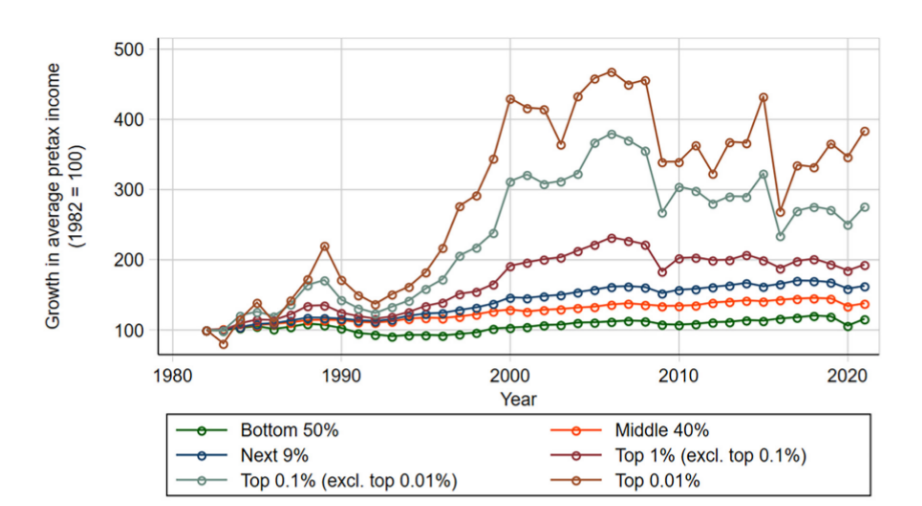



Events For Leaders in
Science, Tech, Innovation, and Policy
Discuss and learn from those in the know at our virtual and in-person events.
See Upcoming Events
You have 0 free articles remaining.
Don't miss out - start your free trial today.
Start your FREE trial Already a member? Log in
By using this website, you agree to our use of cookies. We use cookies to provide you with a great experience and to help our website run effectively in accordance with our Privacy Policy and Terms of Service.