The National Angel Capital Organization (NACO) unveiled its largest cohort of “Moonshot Ventures” in NACO’s history, with 27 innovative companies representing eight provinces and territories.
The 2026 NACO Moonshot cohort is NACO’s premier, annual platform to identify and showcase high-potential, “investment-ready” seed-stage and Series A startups. The platform was launched in 2023.
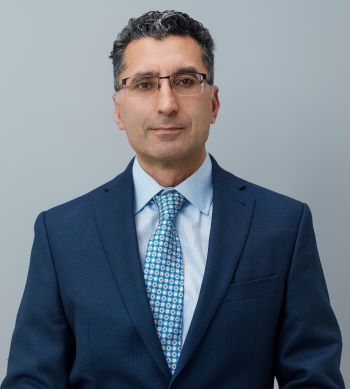
"Canada's most ambitious founders are no longer waiting for markets to come to them, they are building toward AI and defence sovereignty, energy security and the country's quantum industry,” Claudio Rojas (phot at right), CEO of NACO, said in an email to Research Money.
Twenty-five of the 27 Moonshots ventures are actively raising capital, he said. “NACO's role is to make sure that capital, and the strategic networks that fuel our founders, finds these companies before they are forced to look elsewhere."
The Moonshot cohort represents 10 sectors across the 27 companies, which collectively have raised more than $140 million to date. Approximately 41 percent of the cohort is women-led.
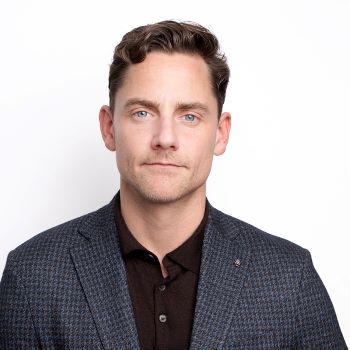
“This is truly a national cohort,” said Calvin Henderson (photo at right), vice-president, industrial relations, at NACO. “The fact that high-growth ventures are emerging across the entirety of the country is a strong signal of the innovative potential of Canada.”
The 27 startups were selected from nearly 100 nominations, in a process that engaged NACO's national member network, angel groups, incubators, accelerators and early-stage funds operating in their local communities.
Ontario has 14 ventures in the Moonshot cohort, followed by Quebec (three), Alberta (three), British Columbia (two), Nova Scotia (two), and one each Manitoba, Prince Edward Island, and Yukon. P.E.I. and Yukon are in the Moonshot cohort for the first time,
Henderson said the 2026 cohort arrives as four national priorities for Canada have converged.
First is the federal government's first-ever defense industrial strategy, which has placed domestic deep tech capability at the center of national priorities.
Second is the $900-million National Quantum Strategy, aimed at actively building Canada's sovereign quantum ecosystem.
Third is the $750-million committed to venture capital support in Budget 2025 that addresses early growth stage funding gaps identified across the ecosystem.
The fourth national priority is the ongoing Canada-U.S. trade environment, which has sharpened focus on domestic commercialization and cross-border capital flows.
What stands out about the 2026 Moonshot cohort is the diversity of high-growth companies across a wide range of sectors, Henderson noted.
The health tech and biotech sectors lead with seven ventures; clean tech has five; artificial intelligence with four; and advanced robotics, and Internet of Things and hardware with four more. Defence and dual-use technology leads has two ventures. And for the first time in the Moonshot cohort program’s history, there is a quantum venture.
Rounding out the cohort, there is one venture each in sport tech; consumer packaged goods and retail; fintech; and automotive and transportation.
“Broadly, the cohort aligns with national priorities on health, climate, sovereign AI, defence and dual-use technologies, quantum, and industrial commercialization,” Henderson said.
“When we talk about Canadian innovation meeting the moment, this is what that looks like in practice,” he added.
Moonshot startups are encountering similar challenges and opportunities
Despite the Moonshot cohort’s diversity, the company’s founders and CEOs, in responding to Research Money’s questions during a NACO webinar, shared a lot in common when it comes to opportunities and challenges encountered by Canadian startups.
The opportunities include the federal government’s new focus on building out defence supply chains, support from federal innovation programs, federal policy on electrification, and support from Canada’s network of accelerators.
The challenges include raising early-stage funding and venture capital at the commercialization stage, lack of procurement – especially by government as the “first customer,” – adoption of their innovation technologies within Canada, and finding international customers.
Canada has done a good job at providing early-stage funding, but it’s difficult to find sufficient venture capital once a company starts going into a commercial launch, said Dr. Abubaker Khalifa (photo at right), co-founder and chief operating officer of Ontario-based Moonrise Medical, which has developed ultra-miniaturized endoscopic imaging for use inside blood vessels and other neuroanatomy.
Having an investment vehicle that can lead add-on investment “is really critical” at that stage, he said. “It’s taking sometimes a lot longer to raise that money because you're trying to find the lead investor.”
So having investment vehicles, whether it's via partnerships with some of the Canadian VCs, or directly via an investment vehicle by the Canadian government, will help accelerate the process, Khalifa said.
Also, for innovative medical technologies developed in Canada, it takes a long time for something new to be used by Canadian patients, because of the procurement process by hospitals and health care systems across the country, he said.
Moonrise Medical ended up licensing the original IP from the U.S. to Canada, and building on further IP in Canada.
Khalifa, who’s an ICU doctor, said “it’s always a little bit saddening to me to see a lot of the Canadian technologies are not here in Canada. They actually first go to the U.S. and then come back to us later on.”
Khalifa said he hopes to see the BDC’s recently launched life sciences fund and other funds “really recognize the importance of supporting med-tech companies pre-FDA (U.S. Food and Drug Administration) that are pre-revenue by nature to help excel and move forward in that direction.”
More government and hospital support for procuring innovative medical devices would help early-stage startups to pilot their technologies in Canadian hospital, and secure contracts within the Canadian ecosystem, he said.
An amputation happens every 30 seconds globally and 40 percent of the people having amputations don’t know they have a disease that can be treated, Khalifa noted.
The real gap in funding for startups getting from the pilot technology to commercial deployment, said Heather Ward (photo at right), president and co-founder of Ontario-based Hyperion Global Energy. The company offers carbon recycling technology that captures waste industrial emissions and transforms them into high-value mineral commodities.
American investors see a lot of Canadian companies going to the U.S. to access the private capital available south of the border, she said.
“We have a great support system with accelerators across Canada,” she added.
“But I think cash is really king when you're scaling a company. So getting more cash in hands of founders is very needed, especially in our stages of growth,” Ward said.
All of Hyperion’s investors are Canadian and the company has raised just over $4 million to date. The company had support from NACO and from the National Research Council’s Industrial Research Program.
Hyperion has built its system in Canada, along with its domestic supply chains and infrastructure. “We’ve been able to really leverage some of the assets that we have here in Canada,” Ward said.
Sabina Bruehlmann (photo at right), co-founder and CEO of Alberta-based Nimble Science, agreed, saying: “What we need to do is make sure that the financial win stays in Canada, which means that we need the investors to be Canadian investors, particularly at the early stages where you can get large pieces of the company.”
Nimble Science offers a precision medicine platform combining a novel home kit for endoscopy-quality intestinal sampling with multi-omic analysis, transforming gastrointestinal tract care from plate to bedside
Startups are supported really well by the Canadian government, including through the Scientific Research and Experimental Development tax credit program that helps attract foreign investors, Bruehlmann said.
Also, “we're able to easily bring in top tier data scientists from around the world and immigrate them easily into Canada, which is amazing. That fortifies us in the view of international investors.”
Nimble Science's cap table is full of funds from Japan, Southeast Asia, the U.S., and Europe., she said.
However, “We have a really hard time getting any Canadian investors to understand the opportunity and to take the risk,” she noted. “So I think the government needs to focus on incentives and education and programs to help those early-stage investments.”
Canadian companies often find initial success in other countries
Lark Meadow (photo at right), co-founder and CEO of Nova Scotia-based Aeon Blue, said his company was invited by the Canadian government to move here from the U.S.
“So instead of going to the United States, we actually left, which was probably one of the best decisions we ever could have made for our company is coming to Canada,” she said.
Aeon Blue makes jet fuel from seawater that can be a drop-in replacement for fossil fuel in any airplane.
The company spent about a year before coming to Canada creating relationships with all the non-dilutive funding support programs available in the country, Meadow said.
Canada needs to create a single-point organization with team that can shepherd a startup through that funding support ecosystem, which would save founders a lot of time finding the maze of different programs and establishing the relationships, she said.
It is difficult, especially for hard tech and deep tech, to access VC funding, which prefers to come in at the post-pilot stage, Meadow said.
“So being able to have an organization, the government, that could really assist with bringing a company through that process, and helping with all of those non-dilutive opportunities would definitely help,” she said.
She pointed to Emissions Reduction Alberta, through its Future Fuels Challenge, as one of the only organizations Aeon Blue has found that will provide significant capital for a clean fuels project at the commercialization stage.
Shirook Ali, founder and CEO of Ontario-based Ecosystems Informatics, said the company has faster traction globally, including in the U.S. and the Middle East, than from the public sector in Canada.
Ecosystems Informatics offers AI-powered environmental intelligence helping industry and cities detect emissions, reduce losses, ensure compliance and improve operational performance at scale.
There is a big gap in Canada in moving from ideation and minimum viable product to commercialization, she said.
The private sector and the public sector are used to doing things in a certain ways, “so they don’t really buy from companies like us that are small and have yet to become bigger companies.
So for a climate tech company, earning revenue even in the few hundreds thousands of dollar is crucial as they’re maturing, Ali said.
But Canadian investors are conservative, especially in investing in hardware components, she added. “For that piece, we need more government support. And that support needs to come over time. It needs to be consistent.”
“They can't support us for the first two years and then say, ‘Where's the revenue after that?’ So that's where we find the gap that suddenly we are left alone.”
Kevin Stadnyk (photo at right), is co-founder and CEO of Ontario-based Obruta Space Solutions, a defense and dual-use venture offering turnkey autonomous last-mile spacecraft navigation and self-driving for spacecraft.
Stadnyk said he has seen governments in other countries act as the first customer for many startups in aerospace and defense.
That's only something that we're now seeing [as] Canada transition towards and move down that direction,” with procurement being modernized and domestic technologies being prioritized within Canada, he said.
Major changes need to be made nationwide to help unlock later stage capital and keep companies in Canada, Stadnyk said. “I think a push for Canadian government backing at the earlier stages as a customer, and then supporting the capital markets to keep companies here and help them grow and thrive, will be extremely important in the coming years.”
Dan Lafferty (photo at right), is founder and CEO of Variablegrid, which offers adaptive power controllers for home electrification Rafferty said the federal government’s $5,000 rebate for consumers purchasing electrical vehicles, along with the government’s policy to green Canada’s electricity grid, “has been a huge bonus for us to stay in Canada.”
“There has been a lot of pressure from our investors to move over to the US, but we are actively staying in Canada, especially [with] the headwinds of electrification in the U.S.,” he said.
“Having that strong policy on EV, electrification and carbon credits and encouragement to continue to do the compliance carbon credits, which the federal government is doing, has been huge for Variable Grid in keeping us in Canada,” he added.
NACO’s 2026 Moon Shot Ventures
Health and biotech group:
Cleantech group:
AI group:
Advanced robotics, Internet of Things, and hardware group:
Other ventures spanning six sectors:
R$