
Canada’s social sector is a strategic asset for defence and resilience

By Rahim Rezaie, David Watters and Payal Arya
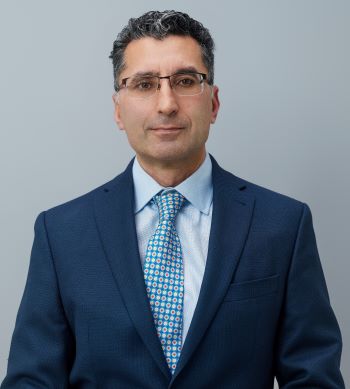
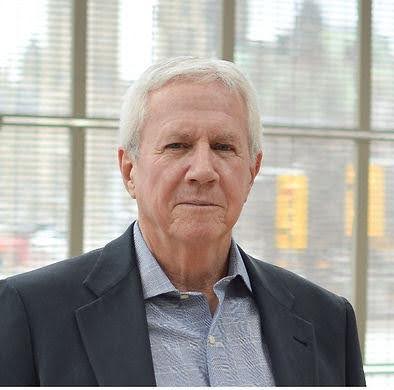
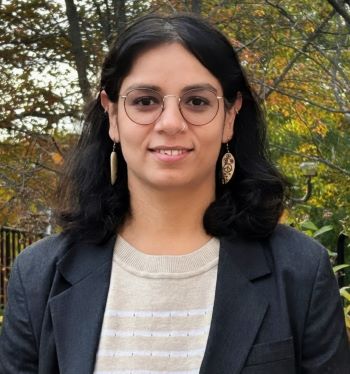
L to R above: Rahim Rezaie, PhD, is Executive Director; David B. Watters is President and Founder; and Payal Arya, PhD, is Health Strategy Analyst – all at the Ottawa-based Institute for Collaborative Innovation.
When Canadians hear the word “defence” most of us think of soldiers, ships, fighter jets and border security. These matter enormously. But the events of the last several years have shown that national security extends well beyond conventional military threats.
Many of today’s risks stem from global, environmental, geopolitical and socioeconomic dynamics. Wildfires, floods, misinformation, cyber disruption, social fragmentation, mental health pressures and supply-chain shocks can all weaken a country’s resilience.
Their impact can manifest as weakened communities and strained institutions long before conventional threats ever appear. In this context, Canada needs to re-think what national defence really means.
A safer Canada will depend on a whole-of-society approach, not military strength alone.
Fortunately, Canada already has an often-overlooked national asset that could help advance that vision: thousands of community-anchored organizations (CAOs) operating in cities, towns, rural areas and remote regions across the country.
These charities, non-profits, co-operatives and Indigenous-led organizations are deeply embedded in the daily life of communities. They help people in emergencies and offer a variety of services to vulnerable populations. They understand community vulnerabilities deeply because addressing them is at the core of what they do.
CAOs are not a marginal part of Canadian society. According to a recent profile developed by the Institute for Collaborative Innovation (ICI Canada), using data from Statistics Canada, among the 120,000 non-profit organizations in Canada are more than 35,000 CAOs across four key domains: social services, development and housing, culture and arts, and the environment. Together, they employ more than 661,000 people.
Canadians cast a strong vote of confidence for their non-profit CAOs by donating 1.2 billion volunteer hours annually, equivalent to another 630,000 full-time workers.
While Canada’s Defence Industrial Strategy recognizes the importance of collaboration among government, industry, academia and Indigenous communities, it overlooks the social sector.
In an age of complex and overlapping national and global risks, community resilience is a core national security capability.
When fires displace families, when false information spreads online, when newcomers struggle to integrate, when military families need support, when northern and Indigenous communities face climate-related disruption, or when local trust in institutions frays, CAOs are often among the first to respond and the last to leave. They provide skills, information, and last-mile reach that federal institutions often cannot achieve on their own.
CAOs can convene local actors, build social cohesion and spot emerging pressures early. In doing so, they often serve as resilience hubs, volunteer coordinators and trusted channels for locally grounded information.
Mobilizing Canada’s social sector for defence and resilience
That is why ICI Canada is undertaking a new effort to explore how Canada’s Armed Forces (CAF) and the Department of National Defence (DND) can better work with this part of the social sector.
With support from a DND grant, ICI Canada is launching a project focused on mobilizing Canada’s social sector for defence and resilience.
The work will map CAOs with relevant capabilities in select communities where the CAF have a significant presence; examine international whole-of-society and total defence models from countries such as Norway, Sweden, Finland and others; gauge perspectives from defence and Indigenous leaders and social sector actors; and convene workshops to identify practical partnership models.
This work matters because Canada needs a civil-military collaboration framework suited for its own geography, governance, and social structures, along with Indigenous perspectives.
The purpose of this work is not to militarize the non-profit sector or to shift core defence responsibilities onto community organizations. Rather, it is to recognize the reality that security today depends not only on military readiness, but also on community resilience.
Communities that are well informed and connected are better able to absorb shocks and respond to crises. A whole-of-society approach is needed to proactively monitor and mitigate risks, and to respond to emergencies when they occur.
Our work will help to identify where partnerships between the CAF and CAOs can strengthen emergency management, support military families and veterans, counter misinformation, improve northern resilience and reinforce local capacities in times of crisis.
Canada talks often about defending sovereignty and keeping Canadians safe, and rightly so. But if we are serious about a whole-of-society approach to defence, then we must recognize the important role that the social sector can play in strengthening that effort.
Communities are not just places to be protected. They are an essential part of how Canada prepares for and responds to global challenges.
Our work intends to make visible the invisible; by revealing that one of Canada’s most important defence assets is hiding in plain sight.
R$
| Organizations: | |
| People: | |
| Topics: |



Events For Leaders in
Science, Tech, Innovation, and Policy
Discuss and learn from those in the know at our virtual and in-person events.
See Upcoming Events
You have 0 free articles remaining.
Don't miss out - start your free trial today.
Start your FREE trial Already a member? Log in
By using this website, you agree to our use of cookies. We use cookies to provide you with a great experience and to help our website run effectively in accordance with our Privacy Policy and Terms of Service.