
Canada’s push to expand nuclear power is too costly and will delay reducing emissions and the use of fossil fuels

Editor’s note: This is the fourth story in a series of Research Money stories that is examining the benefits and risks of Canada’s nuclear power expansion. The first story was published on March 18; the second story on March 25, 2026; and the third story on April 15, 2026. Our stories include the perspectives of both nuclear power proponents as well as those who think nuclear is not the option Canada needs.
Canada’s expansion of nuclear power makes no sense economically, will delay reducing the use of fossil fuels using cheaper energy technologies, and will increase the risk of nuclear proliferation, say some energy and environmental experts in academe.
However, if the enormous construction costs can be overcome, then it makes sense to invest in nuclear in the long run because it has some advantages, such as a significantly smaller footprint compared with other energy sources, they said during an Energy vs Environment podcast.
 If Canada wants to both expand nuclear power and also reduce the use of fossil fuels and emissions to help prevent global warming and climate change impacts, “it's going to be expensive, it's going to be inconvenient, and it's going to be actually really difficult to do both,” said Jason Donev (photo at right), professor (teaching) of energy science and physics at the University of Calgary.
Nuclear power capacity needs to increase by a factor of three to make a serious contribution to greening the electricity grid, which needs to happen, he said. “But I think there's a lot of distance between the conversations that are happening now and actual reactors getting built and being put on the grid.”
.png) Canadian-born David Keith (photo at left), professor and founding faculty director of the Climate Systems Engineering Initiative at the University of Chicago, described the huge cost of nuclear power as “frankly, a joke. A fair way to summarize it is, in the Western world at least, we just do not know how to build reactors at a [reasonable] cost.”
Canadian-born David Keith (photo at left), professor and founding faculty director of the Climate Systems Engineering Initiative at the University of Chicago, described the huge cost of nuclear power as “frankly, a joke. A fair way to summarize it is, in the Western world at least, we just do not know how to build reactors at a [reasonable] cost.”
Studies that looked at the costs of all the U.S. nuclear reactor fleet found that when reactors began being built in the 1960s, the cost was around $2,500 per kilowatt in current dollars. By the late 1960s, construction costs for new U.S. nuclear reactors had dropped to less than $1,000 kilowatt.
“But we've completely forgotten how to do that,” Keith said. “The actual cost of the [current nuclear reactor] completions in the Western world are well over $10,000 per kilowatt, “which is just a joke and nobody can really say clearly what fix would be needed to change that.”
According to a 2017 study, led by Jonathan Koomey at Stanford University and published in Energy Policy, “all data paint a consistent picture: the investment risk of nuclear power is significant, costs almost always increased over time in the modern era, and cost overruns and lengthened construction times need to be considered carefully by investors and policy makers alike.”
Ontario Power Generation, backed by the Ontario government, has started construction on what would be the G7’s and the world’s first grid-connected, commercial small modular nuclear reactors (SMRs), at the Darlington New Nuclear Project Site.
The cost of the four 300-megawatt GE Hitachi BWRX-300 reactors is forecast to be $20.9 billion, with the initial reactor expected to cost about $7.7 billion. This means the other three reactors would have to cost much lower than the first – an average of $4.4 billion each – to achieve the $20.9-billion projected cost.
Donev said a lot of the cost overruns on Canada’s nuclear reactors have been political, including in Ontario when an anti-nuclear provincial NDP government during the 1980s halted reactor construction, leaving proponents still paying interest on the original loans and driving up costs.
But recent refurbishments at the existing Darlington nuclear power reactors were accomplished ahead of schedule and under budget, he noted.
Nevertheless, given the recent history of cost overruns and project delays, he added, “I am almost willing to guarantee” that the first SMR being built at the Darlington site “will go over budget.”
Proponents argue that “learning curve” will make nuclear reactors cheaper
The Ontario government, Ontario Power Generation and the nuclear industry argue that SMRs will become cheaper with each successive nuclear reactor built, because of lessons learned from the previously built SMRs.
But Keith pointed out that small modular reactors isn’t a new idea; nuclear engineers have talked for years about the concept.
“The fact is the SMRs that are actually coming to market are basically variants of existing light water reactors and it's not at all obvious that they will be cheaper,” he said.
“Indeed, the people who I trust think that they will not be cheaper, but I think we don't know until it actually happens.”
 Sara Hastings-Simon (photo at right), associate professor in the Faculty of Science at the University of Calgary, said the “whole magic of the learning curve” and believing that the resulting cost reduction for new nuclear reactors will be similar to that seen with solar power “is just completely false.”
She pointed to a 2020 study, published in Joule, led by MIT professor Jessika Trancick, which identified that nuclear power construction costs in the U.S. rose over 50 years due to a failure in learning-by-doing., where subsequent plants often cost more than initial ones.
Hastings-Simon said her biggest concern about nuclear power, along with significant costs that require government subsidies, is that nuclear energy is being touted by some as a “technocratic solution” to keep producing fossil fuels and global-warming emissions.
Nuclear power only delays and takes money away from other energy technologies, such as solar and wind power and energy storage, that are less expensive and faster to deploy, she said. “I think it's potentially harmful in how it [new nuclear power] is slowing or being used by some again as an element of climate [action] delay.”
The federal government has spent about $4.5 billion supporting nuclear power, Hastings-Simon noted. That money is comparable to the cost of building a new electricity transmission line between Alberta and British Columbia, which would enable Alberta to use clean hydro from B.C.
Hastings-Simon said she would be less concerned if governments were investing in new nuclear along with more solar, wind and energy storage.
But in oil-rich Alberta, the provincial government is actively exploring nuclear energy while having imposed a temporary moratorium on renewable energy projects, followed by significant restrictions on renewables that don’t apply to the oil and gas industry.
A report from the Pembina Institute clean energy think tank found that 53 wind and solar projects were cancelled following the announcement of the moratorium, representing over 8,600 megawatts of potential capacity.
At the same time, Danielle Smith's United Conservative Party government wants to boost oil production, including from Alberta’s oilsands. There’s even talk about using SMRs to help reduce carbon emissions in the oilsands.
However, given that Alberta has an open, competitive and deregulated electricity market rather than a market controlled by a public utility, attracting investment to build nuclear reactors that are more expensive than renewables would be a hard sell, the podcast panelists pointed out.
Nuclear does not do well in that kind of market,” Donev said. “Nuclear wants to get a very, very definite, ‘This is how much we are going to get paid,’ so they can take the risk of prices going up and down off the table,” he said.
Hastings-Simon said that given the cheaper prices of solar and wind power, the falling costs of energy storage batteries, and the potential for new electricity transmission lines, these are the technologies where “the state should be focusing the bulk of its funds.”
What about the nuclear waste problem and potential for nuclear accidents?
Many opponents of nuclear power are concerned about its production of highly radioactive nuclear waste and the potential for accidents.
Donev said the 31 countries in the world that have nuclear power, including Canada, “are at some stage going to dig a deep hole in a stable geologic formation and put our waste there permanently,” in their own countries.
Canada has identified a site in northwest Ontario for a Deep Geological Repository, a project expected to cost $26 billion where the country’s highly radioactive waste will be stored deep underground.
Keith said he doesn’t see the nuclear waste problem as a serious concern, although he pointed out that the U.S. has managed nuclear waste “in a way that was just terrible technically and politically.” The U.S. also still hasn’t approved a deep geological repository site for its nuclear waste.
But Canada and Sweden (which also is working on a deep geological repository) both seem to have pathways for nuclear waste storage that seem reasonable, Keith said.
“I think that basically nuclear waste has become a football by people who for other reasons don't want nuclear power and want to block it that way,” he said.
However, Keith said he does consider the risk of nuclear proliferation, with countries using weapons-grade plutonium to build nuclear weapons, to be a serious concern. “In a world where you really grow nuclear power a lot, there's no easy way that you don't make access to materials easier.”
India copied the design of a Canadian research reactor to start building its atomic bombs. And Iran is working on enriching uranium, although the country denies it’s for making nuclear weapons.
As for nuclear accidents, Donev noted that Canada had an accident with its NRX CANDU reactor (which produced nuclear material for medical and scientific applications) at Chalk River, Ont., in 1952, when there was a power excursion and partial loss of coolant in the reactor, which resulted in significant damage to the reactor core and reactor building.
Future U.S. president Jimmy Carter, then a U.S. Navy officer in Schenectady, New York, was part of a team of 26 men, including 13 U.S. Navy volunteers, involved in the hazardous cleanup at Chalk River.
Nuclear reactor accidents at Three Mile Island, Chernobyl and Fukushima capture the media’s attention and result in increased opposition to nuclear power, Donev said.
The immediate death toll from the 1986 Chernobyl disaster was about 30 to 50 people, including workers killed in the initial explosion and firefighters who died of acute radiation syndrome shortly after. Estimates of long-term deaths from cancer range from 4,000 to over 16,000, or higher depending on the model used.
But Donev pointed out that a more deadly nuclear accident than Three Mile Island in Pennsylvania and Fukushima in Japan occurred in 1961 at the SL-1 experimental reactor near Idaho Falls, which spread radioactive contamination over the northwestern U.S. and southwestern Canada.
Another deadly accident happened in 1957, when a fire at the Windscale reactor in the U.K burned for three days and released radioactive fallout that spread across the U.K. and the rest of Europe.
Nevertheless, the panelists noted that nuclear energy operations have resulted in less than one percent of the deaths per terrawatt-hour of power that have occurred from coal industry operations, whose death rate is nearly 100 times higher.
“Mushroom cloud” of interest in building more nuclear power
Despite the huge costs of nuclear energy and other problems with the technology, almost 40 countries – including Canada – have committed to tripling their nuclear power by 2050.
“What we are seeing at the moment is huge increase, a ‘mushroom cloud’ if you will, of interest in nuclear power as an option,” Donev said. “And we are starting to see action.”
China, with its centrally planned command economy and cheap labour, is planning to build more nuclear reactors within the next 20 to 25 years than now exist in the world combined.
But in the West, and unlike with solar, wind or hydro power, building a new nuclear reactor requires a huge lead time, “and then you have to go through several elections before nuclear power is actually getting put on the grid,” Donev said.
The actual construction is not what's different compared with China, he said. “What's different is duty to consult [with affected Indigenous communities]. What's different is public consultation, the regulatory framework, the impact assessment.”
“That's where you're throwing five to 10 years [extra] on a Canadian project that China is able to do far more quickly,” he added.
“One of the Achille’s heels of nuclear is absolutely it takes a long time,” Donev said. “The time value of money makes it not make sense. There's no cheap way to do it.”
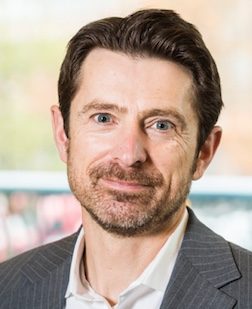 Podcast moderator Ed Whittingham (photo at right), a clean energy policy/finance professional and former executive director of the Pembina Institute clean energy think tank, summed up the “knocks” against nuclear power: It “is capital intensive; alternatives are cheaper; the waste remains an “intractable problem;” it requires state- or nation-level backstopping of insurance due to the liability risk; and it can lead to or feed the proliferation of nuclear weapons.
Donev said he is fond of saying that people on the political left don't trust big business, and people on the political right don't trust big government. “And one of the problems with nuclear is you need both big business and you need big government for nuclear to work.”
There is an emotional response to nuclear energy from the standpoint of ,“It’s central, it's controlled by people I don't trust,” he added.
“Nuclear has, in its history – as do a lot of other industries – but nuclear specifically has in its history reasons to fundamentally distrust nuclear,” Donev said.
He pointed to the uranium mines in Africa, particularly from the 1940s to the 1980s, that were “really, really atrocious” in exposing Indigenous people to severe health risks, with radiation safety measures completely neglected.
“Nuclear has a lot of history to answer for,” he said, pointing out that “being efficient can very much be the enemy of doing what's right.”
The Ontario government, in backing new nuclear reactors, is “making the very calculated risk” that if the new SMRs at Darlington can be built on budget and on time, then Ontario will have a trained, highly skilled workforce to build more SMRs, Donev said.
“If they're wrong and they can't get this right, then I don't know that nuclear does have much of a future. So there's an awful lot riding on this.”
R$
| Organizations: | |
| People: | |
| Topics: |




Events For Leaders in
Science, Tech, Innovation, and Policy
Discuss and learn from those in the know at our virtual and in-person events.
See Upcoming Events
You have 0 free articles remaining.
Don't miss out - start your free trial today.
Start your FREE trial Already a member? Log in
By using this website, you agree to our use of cookies. We use cookies to provide you with a great experience and to help our website run effectively in accordance with our Privacy Policy and Terms of Service.