
Canada has the research “spark” – now it needs to create the life sciences economic engine

Creating a life sciences economic engine in Canada will take more Canadian investment and access to low-cost capital, anchor companies, talent at the business leadership level – and above all, a bold vision of what the sector wants to be.
That was the consensus of experts during a panel session at Research Money’s 25th annual conference, “Acting on Health: Reimagining Canada’s Promise,” in Ottawa.
The good news, they said, is that world-class research gives Canada a strong life sciences foundation, the sector has momentum and government support, is building potential anchor companies, and has an opportunity – given the shifting geopolitical landscape – to become a global competitor.
.png) There’s a growing sense of optimism in the life sciences sector, said panel moderator Lakshmi Krishnan (photo at right), vice-president research of life sciences at National Research Council Canada.
There’s a growing sense of optimism in the life sciences sector, said panel moderator Lakshmi Krishnan (photo at right), vice-president research of life sciences at National Research Council Canada.
“We do have companies that are doing well, that are growing in Canada,” she said.
“We're also globally at that moment where the shifts in supply chains, the increased attention to health security, and the advances in biologics and data-driven drug development are all creating opportunities so that we as a country can align our policies, our capital and talent to maximize the economic benefits that we can have from this sector,” Krishnan said.
 Gordon McCauley (photo at left), vice-chair of adMare Bioinnovations, said: “We only need one thing, and that's ambition, because we have all of the component parts and we can build these kinds of [anchor] companies here.”
Canada is the only advanced pharmaceutical market in the world without a research-based life sciences anchor company.
But the country previously had anchor companies, such as BioChem Pharma in Montreal and QLT in Vancouver, that helped create strong life sciences ecosystems in those cities, McCauley said.
However, about 80 percent of investment in Canada’s life sciences sector currently comes from outside of the country, he noted. This means that of the $4.5 billion spent every year in the sector, “the economic output of that happens primarily in the United States.”
McCauley said when he looks at Canadian companies’ exit strategies and some of the recent exits, “it actually pains me to see that we even did not get the payback into Canada for all of the work and investments we did, because most of that big buyout is being harnessed by others outside who are investors.”
Only about six percent of the investment that goes into life sciences companies in Canada comes from Canadian institutional investors, he said.
“It doesn't make any sense at all, and it's in particular surprising at this moment in time because if you look at the last 10 years, the life sciences sector from a venture [capital] perspective has returned better than any other category or sector. It has had the majority of the biggest exits,” he said.
McCauley said in his view, the United States is ceding the life sciences industry to China, which ran more novel clinical trials than the U.S. did last year.
The Donald Trump administration has implemented aggressive policies that critics and scientific organizations characterize as a broad assault on the life sciences. Key actions include sweeping federal funding cuts to the National Institutes of Health and the National Science Foundation, political control over research grants, strict censorship directives, and mass firings and layoffs that have disrupted biomedical and public health research.
“It presents an opportunity for an economy like Canada's with all of the ingredients we have, the trajectory that we're on, to play an outsized global role if we decide we want to do it,” McCauley said.
Company founders need the will and the sector needs a vision
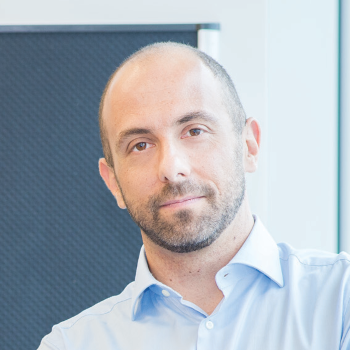 Along with more capital, experienced talent and greater funding for large clinical trials, Canadian founders also need the will to build globally competitive life sciences companies, said clinician scientist Max Paganelli (photo at right), co-founder and CEO of Montreal-based Morphocell Technologies. The preclinical regenerative medicine company is focused on developing and commercializing cell therapies and engineered tissues aimed at treating severe organ deficiencies.
“It's the will, the courage and the resilience to build a company that's fully integrated and that aims to go vertical, which is tough, which is not easy to do,” he said.
Morphocell deliberately selected Canadian capital for its $50-million Series A funding round, which has 90-percent Canadian capital in the round, Paganelli said.
“We selected capital with this kind of vision, so the vision of going vertical . . . these are not investors that want to cash out in three years. These are investors that want to create an idea, an anchor company.”
 Tiffany Chiu (photo at right), vice-president of communications at Vancouver-based biotech firm AbCellera, a spinout from the University of British Columbia, said the company was able, during the COVID-19 pandemic, to use its technology to identify a therapeutic antibody for the virus.
However, that work was driven by investment from the U.S. Department of Defence’s program for pandemic response, which meant that AbCellera’s technology, which helped develop a treatment with partner Eli Lilly, was used to treat patients in U.S. clinical trials – not Canadians.
Nevertheless, AbCellera went on to launch an initial public offering in December 2020 worth US$555 million, the largest biotech IPO in Canadian history at that time.
Today, AbCellera has built 300,000 square feet of lab facilities and 130,000 square feet of manufacturing facilities in Vancouver and also has offices in Montreal and Sydney, Australia. The company now has over 500 employees, and is developing its own pipeline of therapeutics and conducting clinical trials in Canada.
“We’re in a position now where we can control our own fate,” Chiu said. “The biotech market has been brutal, but we’re able to proceed and develop therapies.”
Yet AbCellera, with a market cap that fluctuates between $1 billion and $2 billion a year, is still far from being an anchor company, which typically has a market cap of $20 billion annually.
“If you look at what has been happening over the last 40 years, there are only about six or seven companies that meet this criteria in the world,” Chiu said. They include BioNTech in Germany, Regneron Pharmaceuticals in New York, Argenx in the Netherlands, and Gilead Sciences in California.
One thing Canada’s life sciences sector could be doing better is defining what it wants the landscape to look like, she said.
“Once we do that and say, hey, we want global pharmaceutical companies – some of them to be from Canada and others to just be visiting – then we can say, well, what does that ecosystem look like and what do we need to do so that those companies can proceed?”
It will take a biotech startup at least 10 years to even get close to commercializing its intellectual property, Chiu noted.
Other countries have created IP policy that allows that timeline to be an advantage, she said.
Canada could better align its tax policies on patents, to enable Canadian companies to keep their IP and operations in Canada, she added.
Canada needs to find ways to give its life sciences companies better access to low-cost capital, so they can transition through the 10- to 20-year journey to commercialization, Chiu said. “And then also to be able to protect their IP so that when they actually reach that point, they can and do want to stay here in Canada.”
“I think if we had an anchor company strategy that helped identify what we're trying to build and then be very purposeful about putting into place those pieces, I think that could go a long way to solving a lot of the challenges,” Chiu said.
Canada has strong leaders in the life sciences sector and is growing potential anchor firms
McCauley said AdMare BioInnovations has identified compelling technologies and helped start and grow 39 life sciences companies in Canada that have attracted US$2.6 billion in capital.
The companies employ 1,000 people and have provided $150 million in equity returns to AdMare, which continues to invest in the life sciences ecosystems.
Canada’s life sciences sector is actually in “much better shape” than it was 10 years ago or even five years ago, in terms of the scope of prospective anchor companies, McCauley said. Canada has done good work on protecting intellectual property and helping to increase access to venture capital, he added.
However, universities, research institutions and hospitals “should stop trying to pretend they’re investors” and instead partner with investors, he said.
“The reality is we leave on the table in Canada about a billion and a half dollars investment,” based on what Canada’s life sciences sector wants to achieve in capital and life sciences, given its size compared with the U.S., McCauley said.
He said Canada needs more investment managers created through the federal government’s Venture Capital Catalyst Initiative and its various streams, which co-invest with private sector investors in venture capital funds.
“I would encourage more kinds of company creation activity because at the end of the day, you want those investors to be investing in Canadian companies,” he said.
Venture capital invests in people, not technology, McCauley noted. “You can have A-level technology and a C-level team, and it will fail. You can have D-level technology and an A-level team, and it will succeed. It’s about people.”
Also, the one feature common to every biotech anchor company is aspirational leadership, he said. “It’s kind of the essence of the entrepreneurial behaviour. You decide that you want to do it, and then you figure out how you need to change things like IP policy and attract other capital.”
AbCellera has that kind of leadership, as does STEMCELL Technologies and Aspect Biosystems in Vancouver, and Apotex Health Corp. in Toronto, McCauley said.
AbCellera’s Chiu agreed, saying that firms aspiring to be anchor companies “have to have the kind of leadership that is almost dogmatic about succeeding. And I mean that in a way of not just committing to a path and sticking to it blindly. I mean being ruthless about if this is not working, you stop and you do something else, like immediately.”
Krishnan pointed out that there’s still a lot of bureaucracy in Canada’s innovation ecosystem, especially in federal institutions where there’s a tendency “that we need to satisfy and sprinkle [funding] around.”
Canada has many layers of innovation programs and has a hard time picking and betting on winners because that entails a fundamental assumption that you may fail, “and we have a hard time with that,” she said.
Paganelli said when MorphoCell was fundraising in 2019, all the U.S. investors were saying that if only the company was in Boston, they would have already have invested.
“Now they are saying the opposite: ‘Oh, it’s so great that you are in Montreal. You are in Canada,’” he said.
Quebec is “extremely favourable for entrepreneurship,” including support from the Quebec government and the existing ecosystem, he added.
Canada’s life sector needs to acknowledge the good things it has and build on the rest, Paganelli said. “Because it’s not so much worse [in Canada] than it is in the U.S., especially now.”
“I think our struggle is really trying to create the critical mass and the ecosystem that will allow us to attract talent and to retain talent,” he said.
Also, he added: “It's really willing to do it and then put in all the effort we want and then try to not get scared of the thousand doors, closed doors we're going to find on our way. I think it's more important than any capital discussion, any policy discussion – it’s really wanting to do it.”
Chiu agreed that in some ways there is a real advantage to being a Canadian company. AbCellera was created because of research and IP at the University of British Columbia, and the company for years recruited at least two-thirds of its workforce from UBC.
“There’s a lot of folks that left 20 years ago because there were no opportunities, and they want to come home. And they have come home, and we have a whole bunch of them in our shop,” she said.
“We know Canadians have what it takes. We just need to put our teeth into it and really work toward, again, that [shared] goal,” Chiu said.
R$




Events For Leaders in
Science, Tech, Innovation, and Policy
Discuss and learn from those in the know at our virtual and in-person events.
See Upcoming Events
You have 0 free articles remaining.
Don't miss out - start your free trial today.
Start your FREE trial Already a member? Log in
By using this website, you agree to our use of cookies. We use cookies to provide you with a great experience and to help our website run effectively in accordance with our Privacy Policy and Terms of Service.