
Resistance is futile, or is it? Why society impedes technological change

P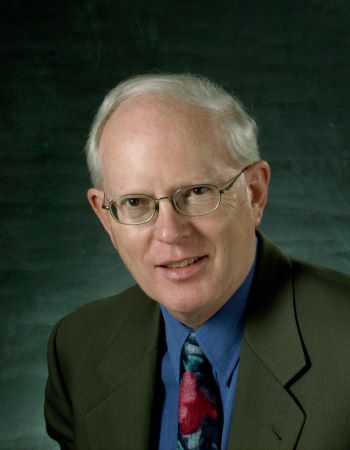 eter Josty is Executive Director of The Centre for Innovation Studies based in Calgary.
The role new technologies have played in improving our quality of life and standard of living in the last few hundred years is well recognized. What is not so well recognized is the active resistance to adopting new technologies that took place, that slowed down or in some case completely stopped adoption of new technology.
Historical examples
Luddites: This is probably the best-known example, where workers in the textile industry in Britain actively opposed the adoption of automated weaving machinery when they were first introduced in the early 1800s. The new machinery eventually came into widespread use.
Japanese firearms: The Tokugawa shogunate severely restricted firearm production and ownership after 1603. This was to maintain the dominance of the large number of samurai, whose identity and power were based on martial prowess, and tied to the sword.
Printing press: The Ottoman empire banned the printing press from printing in Arabic script from the 15th to the 18th centuries. Religious authorities and scribes feared it would spread heresy. The ban delayed the spread of printed books in the Islamic world by centuries compared to Europe and delayed economic development.
Automobiles: In the late 19th century, early “horseless carriages” were criticized as dangerous, noisy and smelly, with rural residents sometimes sabotaging cars or creating laws that forced them to drive at walking speeds.
In two of these four examples, a powerful elite group was able to prevent use of a technology, sometimes for hundreds of years. In the third example it was a groundswell of affected workers.
Current examples
Montreal protocol: In 1987, a worldwide treaty banned certain chemicals – mostly chlorofluorocarbons (CFCs) (that were depleting the ozone later in the upper atmosphere. It is considered one of the most successful treaties in history because it achieved universal ratification and has led to a significant recovery of the ozone layer.
CFCs were used as coolants in refrigerators and air conditioners, aerosol spray propellants, solvents for cleaning electronics, and blowing agents for foams.
Human cloning: Most countries – including Germany, France, and Canada – have outright bans on reproductive human cloning, because of ethical, religious and social concerns about human identity, personhood and potential abuse.
Genetically modified organisms: France has banned the cultivation of genetically modified crops because of strong public opposition, environmental concerns (like biodiversity loss and gene flow to wild plants), and a desire to protect its traditional, high-quality food system from industrialized agriculture.
Nations with strict bans on GMOs including Russia, Peru, Venezuela, Belize, Bhutan, Algeria, and Madagascar.
DDT: The pesticide DDT is effectively banned or restricted in more than 38 countries, although the Stockholm Convention (2001) permits restricted, temporary usage specifically for controlling disease vectors (like mosquitoes).
DDT was banned primarily due to its severe environmental persistence, accumulation in the food chain and threats to wildlife, particularly thinning eggshells in bird populations.
In each of these examples, bans were enacted with wide public support.
The big picture
American and Israeli economic historian Joel Mokyr, who shared the 2025 Nobel Memorial Prize in Economics, has written extensively about resistance to technological change. He commented: “Throughout history technological progress has run into a powerful foe: the purposeful self-interested resistance to new technology . . . technological progress in society is by and large a temporary and vulnerable process, with many powerful enemies.”
However, being skeptical about new things is not a bad idea as it can protect against damaging ideas (think of devastating birth defects caused by Thalidomide on fetuses in the womb). Mokyr points out that most new technological developments are accepted (or not) by the free market without raising any public issues.
There was not an outcry when Kodak went bankrupt because it failed to adapt to digital photography, or when Blockbuster Video went bankrupt because of competition from streaming services. That was seen as the marketplace in action.
There are often winners and losers when new technology is introduced. There are often a small group of highly motivated losers wanting to maintain their position, and a larger group of potential winners. The situation with Canada Post is a good example, where email is well on the way to replacing hand delivery of mail.
Unintended consequences
Sometimes a new technology has consequences that take time to be fully understood. For example, tetra-ethyl lead added to gasoline was regarded as an excellent solution to the” knock” problems with early automobile engines. It was only later that the effect of lead poisoning led to its banning.
Similarly, phosphate was regarded as an excellent additive to washing powder. It was later that it was realized that it caused algal blooms in lakes and rivers that killed fish that led to its banning.
Unions and tariffs
Mokyr commented that two big influences that resist new technologies are unions and tariffs. From a historical perspective, he noted that the weak guilds (unions then) in Britain could not prevent adoption of the new technologies that drove the Industrial Revolution.
In Canada, it wasn’t possible until recently to buy inexpensive Chinese electric vehicles as they are blocked with high tariffs.
Following a trade agreement earlier this year between Canada and China, the 100-percent tariff was replaced by a 6.1-percent duty, with a quota of up to 49,000 Chinese-made EVs allowed per year.
Another example is China-based Huawei and ZTE 5G technology, which as of 2022 Canada has officially banned because of national security concerns.
Conclusion
Resistance to technological change, according to Mokyr, is widespread and comes mainly from two places. First the beneficiaries of the status quo, and second, from intellectuals who for one reason or another are fearful of technology.
However, being skeptical of a new technology is not a bad idea until its full scope and implications are known. Artificial intelligence and robotaxis are currently being scrutinized in that way.
Too much resistance to new technologies results in stagnation. Looking at who is resisting a new technology will give a good idea if it is a group that would lose if the new technology was adopted or if there is opposition based on as assessment of the impact of the technology (which may or may not turn out to be true).
R$
| Organizations: | |
| People: | |
| Topics: |




Events For Leaders in
Science, Tech, Innovation, and Policy
Discuss and learn from those in the know at our virtual and in-person events.
See Upcoming Events
You have 0 free articles remaining.
Don't miss out - start your free trial today.
Start your FREE trial Already a member? Log in
By using this website, you agree to our use of cookies. We use cookies to provide you with a great experience and to help our website run effectively in accordance with our Privacy Policy and Terms of Service.