
The relevance of “irrelevant” research

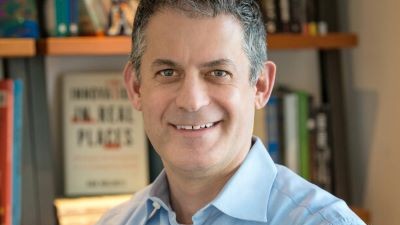
 Ron Freedman is the CEO of Research Infosource Inc.
The Canadian Taxpayers Federation report highlighting so-called “irrelevant” research in the social sciences and humanities is still reverberating. Let me relate a tale about such research.
Some years ago, in 2008, at a time when Canadian forces were actively involved in Afghanistan I had travelled to Ottawa. I was waiting for my bag to come off the plane when I ran into the then-head of Defence Research and Development Canada, a thoughtful man who I had got to know through previous consulting assignments.
We chatted about this and that and at one point he asked what I was doing in town. I explained that I was working on a project for the Social Sciences and Humanities Research Council (SSHRC) – that later turned into a report titled the Economic Role and Influence of the Social Sciences and Humanities: A Conjecture.
He told me something that morning that has stayed with me for nearly two decades.
“Our greatest challenge in Afghanistan,” he said, “is understanding tribal cultures.”
In other words, how to understand internal Afghani politics, kinship systems, alliances, customs, trust-building and so forth. He didn’t talk about arms and munitions, battle strategy, counterinsurgency and other facets of militaria. His chief concern was understanding tribal cultures. That was the key to success.
Now, think back to the early 2000s, before my Afghanistan example. Imagine that a bright young graduate student had approached SSHRC – or better yet the Canadian Taxpayers Federation (CTF) – to request a grant to support his or her PhD thesis on “Understanding Afghani Tribal Cultures.” I don’t know what a SSHRC peer review committee would have said about that request, but I’m pretty sure what the CTF would have said. Irrelevant.
That’s the thing about research. It’s hard to know in advance what might or might not turn out to be relevant.
Research on obscure microorganisms found in soils that ultimately led to antibiotics such as Penicillin, Streptomycin, Vancomycin and Teixobactin that we know have saved millions of lives. Research on Helicobacter pylori (H. pylori), which was ultimately (and against huge resistance in the medical community) proven to be a critical factor in causing ulcers.
So many important scientific breakthroughs have come from basic research, let alone serendipity or accidental discovery and not from a search for targeted applications.
In fact, we know that most published research, not only in the social science and humanities but also in the natural sciences, engineering and health sciences lies dormant, never or seldom to be cited again, let alone applied.
What’s more important is building humankind’s store of knowledge so that at some time in the future, when and if that knowledge is needed, it is there. Hardly a wasteful activity.
In that regard, scientific research can be thought of as a form of “societal insurance.” And like any insurance, the purchaser is glad to have it and hopes never to use it. It costs money but is a small price to pay for protection.
The point is to fund research of high quality
If that’s too negative a perspective, then think of research as the basis for future growth and prosperity, even if it takes time to recognize and exploit the opportunities.
I would say to the CTF and others, the point is not whether research is relevant – that will always be hard to know in advance – but whether it is of high quality. And therein lies a problem with funded research of all types. Much of it is what I would term third-rate.
Obviously, in an ideal world we want to fund only first-rate research.
I would argue that to have first-rate research, we must be prepared to err on the side of uncertainty and fund a degree of second-rate research, because it can be hard to differentiate in advance between the two, and just to be sure that enough first-rate research qualifies for support.
But too often we’re funding third-rate research, with sloppy or ill-defined premises, obvious and biased assumptions or predispositions, inadequate methods or simply based on the researcher’s record.
Yes, I know, easier said than done. But that is the real challenge for peer review committees – not taxpayer associations – to weed out the third-rate research. Weed out the third-rate and what is left will be second-rate or better. Don’t fund third-rate research just because the budget hasn’t run out.
Having said that, there is a special case of research proposal that needs to be accommodated, what I call That-Will-Never-Work (TWNW) research. Research that “every expert agrees” will never work.
The history of science and technology is replete with examples of TWNW research that has changed the world. And grant review committees need to remain open to funding projects that push known boundaries and that might never work. In a way, that is what the U.S. Defense Advanced Research Project Agency does. It exploits the boundary between high-risk and TWNW research.
So, a word to the Canadian Taxpayers Federation. Fund irrelevant research? Darn right. It might turn out to be the key to our future.
R$
| Organizations: | |
| People: | |
| Topics: |



Events For Leaders in
Science, Tech, Innovation, and Policy
Discuss and learn from those in the know at our virtual and in-person events.
See Upcoming Events
You have 0 free articles remaining.
Don't miss out - start your free trial today.
Start your FREE trial Already a member? Log in
By using this website, you agree to our use of cookies. We use cookies to provide you with a great experience and to help our website run effectively in accordance with our Privacy Policy and Terms of Service.