
National organic growth strategy and new development fund are required to boost Canada’s organic products

[Editor’s note: Research Money will be highlighting news stories, reports and op-eds about agriculture and agri-food leading up to our annual conference, Food for Thought: Catalyzing Agri-Food Solutions in an Uncertain World, April 21-22, 2027, at the National Arts Centre in Ottawa].
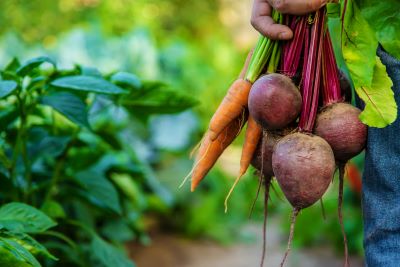 Canada needs a national organic growth strategy to strengthen domestic food production and processing capacity, agricultural resilience and competitiveness in rapidly growing organic markets, say three industry associations.
This fall’s federal government’s budget 2026 also should establish an organic market development fund to bolster domestic processing capacity, support new and expanded markets for domestically-produced organic products, and improve trade competitiveness, the associations said in a pre-budget submission.
 The associations are the Canada Organic Trade Association, Canadian Organic Growers, and the Organic Federation of Canada. Tia Loftsgard (photo at right) is the executive director of the Canada Organic Trade Association.
Organic agriculture “represents a strategic opportunity to help Canada mitigate long-term risks while advancing economic growth, trade diversification, climate resilience, food security and rural development objectives,” they said.
Organic agriculture can increase farm profitability, boost and diversify trade, reduce greenhouse gas emissions, protect biodiversity and soil health, and strengthen rural economies, while creating opportunities for new entrants, according to their submission.
Canada’s agriculture and agri-food sector is operating in an increasingly uncertain environment shaped by climate pressures, geopolitical instability, rising input costs, trade volatility, supply chain disruptions and difficult generational renewal, the associations pointed out.
“Strengthening resilience, competitiveness and domestic value-added production and processing is therefore becoming a critical economic priority for Canada. At the same time, agri-food is a significant national asset and must be supported as such.”
Organic farmers are leaders in innovation, advancing practices that strengthen resilience, environmental performance and local food access, the associations said.
Organic practices and systems also reduce dependence on external inputs (crucially, when external input shocks are increasing in frequency and severity), improve adaptive capacity to climate and market disruptions, and support diversified production systems, while enabling producers to leverage these benefits into access to differentiated domestic and export markets.
Valued at more than $11.88 billion in 2025, Canada’s organic sector is now a significant part of the national agricultural economy, the associations noted. Canada is the 5th-largest organic market worldwide, within a growing global market valued at more than $230 billion.
Organic products are federally regulated, verified through third-party audits, and internationally recognized through nine organic trade equivalency arrangements covering 35 countries. However, despite strong and growing demand, Canada continues to underinvest in its organic sector relative to competitor jurisdictions such as the United States and the European Union, which are scaling strategic investments in resilient domestic food production, supply chains and organic market development, the associations said.
As a result, Canada increasingly relies on imports to meet nearly 80 percent of domestic organic demand, “missing opportunities for domestic production, processing, export growth and rural development.”
This growing competitiveness gap limits Canadian farmers’ and businesses’ ability to participate in rapidly growing global markets, they said.
“Strategic federal investment is needed now to reduce long-term risks within the agriculture sector and position Canada to capture growing domestic and global organic market opportunities during a critical period of market and supply chain restructuring,” the associations said.
“Canada must close the opportunity gap and expand the economic, resilience and market opportunities associated with organic agriculture.”
Organic sector lacks a coherent national strategy or federal policy framework
Canada’s organic market grew from under $2 billion to over $11 billion in the past decade, yet the sector continues to operate without a coherent national strategy or federal policy framework, restricting its ability to meet current demand and capture further growth, the associations said.
In contrast, competitor jurisdictions such as the U.S. and the EU have implemented organic legislation, dedicated action plans and targeted investments to increase adoption, competitiveness and market growth.
The EU has established a target of managing 25 percent of agricultural land organically by 2030, while the U.S. launched a major Organic Transition Initiative in 2022.
Canada currently invests substantially less in organic agriculture on a per-acre basis than both jurisdictions, the associations noted.
A national organic growth strategy would help strengthen domestic production and food sovereignty, unlock private investment, expand processing and value-added capacity, improve trade competitiveness, support market diversification and increase resilience across the agri-food system, they said.
The strategy should include measurable targets, interdepartmental coordination and actions focused on market development, domestic production, supply chain capacity and regulatory alignment.
The three associations also recommended that the federal government provide complete and permanent funding to ensure the continuity of the mandatory five-year review of the Canadian Organic Standards, including re-housing of the standards review within a stable, long-term governance framework, and ongoing interpretation, training and amendments.
The associations recommended Ottawa provide $1.5 million every five years, including $1 million for the review and $100,000 per year for interpretation and training.
In addition, comprehensive organic data is essential to support on-farm decision-making, capital investment, market development, trade expansion, evidence-based policymaking and fraud prevention.
However, Canada lacks publicly accessible data on basic organic production, market and trade indicators, the associations said.
Comparable data is readily available for conventional crops and organic sectors in competitor jurisdictions.
Although organic data is collected across federal departments including Agriculture and Agri-Food Canada, the Canadian Food Inspection Agency, and Statistics Canada, it is not coordinated or publicly accessible in a way that supports market development and investment, they said.
The House of Commons Committee on Agriculture and Agri-Food recommended in a December 2025 report that the Government of Canada publish organic agriculture and agri-food related import and export sale statistics at the Canadian level.
For example, the U.S., the destination for most of Canada’s organic exports and the source of much of Canada’s organic imports, ensures streamlined data collection and dissemination through a public data portal. The U.S. also publishes comprehensive organic market reports including production, price and retail statistics.
“As competitors increasingly advance integrated agricultural data systems, Canada risks falling behind without coordinated organic data infrastructure,” the associations said.
They recommended that the federal government establish a coordinated Organic Data Strategy, with funding up to $2 million, to modernize data collection and sharing across departments while improving efficiency, reducing duplication, strengthening organic integrity, market access and export competitiveness.
Challenges include limited processing capacity, supply chain bottlenecks and underinvestment in market development
Canada’s organic sector is constrained by limited processing capacity, supply chain bottlenecks and underinvestment in market development.
Strategic investment is increasingly necessary as competitor jurisdictions intensify efforts to strengthen domestic food manufacturing capacity, diversify trade relationships and secure resilient supply chains, the associations said.
The U.S. has invested US$85 million in market development under its $300-million Organic Transition Initiative, while the EU Commission has created a dedicated organic promotion fund of € 23.4 million.
Previous investments in the Canadian organic sector through AgriMarketing programming have demonstrated strong returns on investment, generating $40 for every $1 of funding, demonstrating export growth potential, the associations noted.
However, current funding is limited in scope and scale, limiting the sector’s potential, they said.
There is also an opportunity to diversify exports beyond the U.S. Canada is already the top G7 exporter of organic products to Europe (outside the United Kingdom), but there remains significant room for growth as the European organic market is projected to more than double over the next decade.
The U.S. organic market is poised for similar growth in that period, while the Indo-Pacific organic market, where Canada holds three organic equivalency arrangements, is projected to double by 2029.
Targeted investment in organic processing and market development would strengthen supply chains, reduce import dependence, enhance the “Made-in-Canada” organic brand and expand trade opportunities for more Canadian producers and agri-food businesses, the associations said.
They recommended that the federal government provide $9 million per year to establish an Organic Market Development Fund to strengthen domestic processing capacity, support new and expanded markets for domestically-produced organic products, and improve trade competitiveness and diversification opportunities for Canadian organic producers and businesses.
R$
| Organizations: | |
| People: | |
| Topics: |




Events For Leaders in
Science, Tech, Innovation, and Policy
Discuss and learn from those in the know at our virtual and in-person events.
See Upcoming Events
You have 0 free articles remaining.
Don't miss out - start your free trial today.
Start your FREE trial Already a member? Log in
By using this website, you agree to our use of cookies. We use cookies to provide you with a great experience and to help our website run effectively in accordance with our Privacy Policy and Terms of Service.