
Canada needs more investment in early-stage startups and to build an investment community “ecosystem”

NOTE: See also “Canada’s startup ecosystems are hemorrhaging value and growth due to structural funding gaps”
Canada needs more investment in early-stage startups and to build an investment community “ecosystem”
Canada needs to invest more in early-stage technology startups to boost productivity and ensure the country’s long-term prosperity, investors and entrepreneurs said during a National Angel Capital Organization (NACO) online roundtable.
 “This discussion is not about early-stage capital for tech companies. It is much larger than that – it is about prosperity for the future,” said Janet Bannister (photo at right), founder and managing partners of Toronto-based Staircase Ventures. She has been investing in pre-seed and seed stage companies in Canada the past 12 years.
“One of the reasons why Canada's falling behind in terms of our productivity is because our economy is very heavily weighted towards natural resources and not strong enough – fully weighted – towards technology,” she said.
“We need to fix that and we need to fix that at the first stage . . . you can't graduate ‘university students’ if you've got a broken ‘primary school.’”
When Canadian startups that can’t find capital move to the U.S., they typically don’t come back, Bannister said. “And they create jobs, they create wealth and they are powering the American economy rather than the Canadian economy.”
The early-stage capital invested in the U.S. gets returned to those early investors and the startup founders, she added.
Canada was on that capital reinvestment “flywheel” until about 2014 to 2016, she said. “And unfortunately over the last few years that rhetoric has changed.”
“And it feels like that flywheel is actually going backwards and we need to very quickly get it going forwards again, because, as I said, the flywheel goes the other way as well. It's our problem to solve that,” Bannister said.
 Emilie Boutros (photo at right), managing partner at Montreal-based TandemLanch venture firm, said whether it’s angels or a group of angels or early-stage venture capital firms investing, Canadians need to take more risks if the country wants to have more early-stage companies growing in deeptech.
It is a huge challenge for startup founders to raise the first round of capital, she said.
When a founder is building a deeptech company or trying to commercialize intellectual property from universities, often the first round of capital is needed when the product isn’t ready and there’s little investment traction, Boutros said.
“So there's that gap where the company is not exactly ready for the institutional investors or doesn't have everything that's required to meet the KPI's (key performance indicators) that the investment community is asking for.”
Another challenge is finding a lead investor in Canada, where many investors prefer co-investing with other investors, Boutros said. But to do that, Canada requires knowledgeable investors who are domain specialists who can do the due diligence on startups and have the personality to attract other investors, she added.
“So a lot of founders need to raise small caps, small amounts of convertible notes. And they end up fundraising for years instead of actually building the business. It also creates the lack of velocity and why founders are going to go to other ecosystems where they can raise their rounds more rapidly.”
Boutros also noted that significant public funding is invested in universities, which she added produce a lot of great intellectual property and researchers. “But we need to get better at commercializing it and it comes with [developing and supporting] better founders," which eventually will build successful technology companies in Canada and help like the whole ecosystem,” she said.
 Rachel Zimmer (photo at right), co-founder and CEO of Toronto-based venture studio Simple Ventures, pointed out that venture capital is a great model for building some companies, but it's not the only path to build.
“I think we need to be really thoughtful about how about helping founders with many different paths that could be some forms of different types of funding [such as] a venture studio-type model. I think having more options is a huge need in our market,” she said.
A lot of the success stories in the U.S. involve taking the best and brightest startups out of university and having them “cohabitate,” providing them with early-stage investment, mentorship, community network support, business support and other supports, Zimmer said.
Many people believe that “patient capital” means slow capital, but that’s incorrect, she said. “Patient capital is all about discipline and building a good, capital-efficient business that has good unit economics, and making sure you're capitalizing the business and a thoughtful methodical way, and making sure we have the funding structure and capital pipelines that allow for that. We need more [of that] across the country.”
Investment as a “team sport”
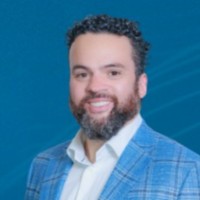
Solon Angel (photo at right), founder and chief development officer at Mindbridge/Remitian, said Canadians value caring, including caring about their neighbors and communities, and the power of community.
“I think angel investors need to go back at networking in person, in real life,” he said.
Angel said he was about to move back to Silicon Valley to start his company, when an angel investor in Canada said, “Don’t do that, we can help you.”
“I needed to hear that at that moment,” Angel said. The investor offered Solon a cheque over coffee. Angel ended up staying in Canada and created over 100 jobs in a company now valued at $200 million.
Do not underestimate the positive power you have of saying, ‘Hey, you can do it here and we got you,’” Solon said.
 Ian Lane (photo at right), executive director of Northern Ontario Angels, said he sees the importance of community connection and collaboration in his work in northern Ontario, which has often experienced out-migration and brain drain to other parts of Canada.
Investors with Northern Ontario Angels want a return on their investment, but they also appreciate that their investment is enriching and building northern Ontario communities, Lane said. “I think that's a really distinct and appreciative feature of Northern Ontario Angels – that that the investments are going to be making a difference within our host communities.”
Northern Ontario Angels has mobilized more than $200 million for those communities, which include some remote fly-in/fly-out communities – more angel capital than any other regional ecosystem or angle network in North America.
Lane said his angel organization works with some supportive partners, including the federal regional development agency FedNor, the Greater Sudbury Development Corporation, and others. Angel investing is “a team sport” that needs partners, he said.
That collaboration enables Northern Ontario Angels to stack their angel investments and quickly get to early-stage support for startups.
Lane said Northern Ontario Angels gets to spend a lot of time with its investors through training and education, and with its founders through its long-term partnership with the regional development agency and other partners. That allows the angel organization to use several different methodologies to make the connections between investors and founders happen at an earlier stage.
“So that when our when our founders are going to seek the capital, we’ve primed them on what to expect. We prime them on the investors that they are going in front of. We prime the investors to make sure that there's a harmony or efficiency in that capital-raise process,” he said.
“There’s a civic undercurrent. There's that community-driven ethos to bringing people together,” Lane added.
 Randall Howard (photo at right), general partner at the Adrenaline Fund, which is part of the Archangel Network of Funds, said Canadian investors are seeing a lot more cross-Canada collaboration. “We are working together as angels and angel funds and across the country in smaller communities, in larger communities everywhere.”
Howard said he doesn’t see Canadians’ reputation for being risk-adverse in the entrepreneurs he works with who are building “moon-shots.” However, he added that “sometimes the traditional financing people sort of suck the air out of the room.”
Canada’s investment community needs to work together as an ecosystem
Canada’s poor productivity performance is not going to be fixed by the country’s mega-corporations, Howard said. “That's going to be fixed by collectively all of us that are reinventing how we do things and now across the range of sectors.”
Investing in tech startups takes a very different skill set than investing in traditional software-as-a-service startups, he noted.
He started out working in institutional capital, but then got heavily involved in the angel investment ecosystem, including a group of people founding Golden Triangle Angel Net, now one of the top angel groups in the country doing 40 to 60 deals a year.
“What we realized in that exercise is that we realized we had to work together as an ecosystem,” he said.
The Archangel Network of Funds consist of four funds targeted to the early seed and pre-seed funding stages. After five years, the Archangel Network done 130 investments into 80 different companies. The Adrenaline Fund has invested in 50 of those 80 companies.
“The cool thing is that that capital structure is a fund is very catalytic to the other forms of angel organization,” Howard said. “Whether its individual angels, whether it's angels and angel groups, we all work together. They're not separate entities.
“ And by working together it's very synergistic. And then secondly, working together across Canada.”
For example, British Columbia a 30-percent agnel tax credit that creates both structural and cost-basis differences for investors in other provinces trying to co-invest in B.C. companies – essentially creating a barrier for investment.
 Claudio Rojas (photo at right), CEO of the National Angel Capital Association, said Canada lacks a high-speed national “railway system” for capital mobility, to bring together not only angel networks, but venture studies, working fund managers, emerging funds and special purpose vehicles to support early-stage startups and the entire capital pipeline.
“We’re much stronger as a collective force,” he said. “There’s a lot of discussion around the nation of builders that we are, and the nation of builders that we need to be, but we need to be much more intentional with how we fuel that nation of builders, how we fuel those builders.”
“And the fuel of course is capital and it needs to be end-to-end capital across the country,” Rojas said.”
“No matter who you are, no matter where you're located as a founder, it's important that you have access to all these other points of capital around the country – and of course that's where the growth is from a national level.”
R$
| Organizations: | |
| People: | |
| Topics: |



Events For Leaders in
Science, Tech, Innovation, and Policy
Discuss and learn from those in the know at our virtual and in-person events.
See Upcoming Events
You have 0 free articles remaining.
Don't miss out - start your free trial today.
Start your FREE trial Already a member? Log in
By using this website, you agree to our use of cookies. We use cookies to provide you with a great experience and to help our website run effectively in accordance with our Privacy Policy and Terms of Service.