
Purpose-driven innovation: Putting civil society at the centre of Canada’s innovation ecosystem

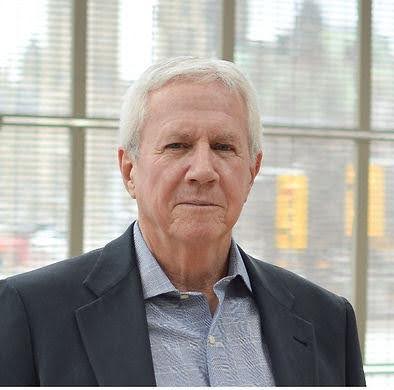 David B. Watters is President and Founder of the Ottawa-based Institute for Collaborative Innovation.
We have been warned!
“Put simply, Canada is facing a period of unprecedented challenges with a weak hand: declining productivity and erosion of our standard of living arising in large measure from the steady worsening of our innovation performance.”
This warning was issued in November 2025 by Ilse Treurnicht, Chair of the Council of Canadian Academies Expert Panel report on The State of Science, Technology, and Innovation in Canada 2025.
The 228-page report confirms that “Canada is an innovation laggard on multiple fronts” and, as a result, recommends: “What is urgently needed is nothing less than a coordinated and wide-ranging overhaul of innovation-oriented policy by all of Canada’s governments.”
This is a stark diagnosis from the first group of international experts to examine Canada’s deteriorating performance in science, technology and innovation (STI) since 2018. So what is to be done?
Fortunately the report offers hope and a proposed new destination to guide the direction of such an urgent and comprehensive review of our STI policies and programs.
That new destination is provided in the panel’s insight that the purpose of the STI ecosystem is to serve society, by explicitly placing “civil society” at the centre of the ecosystem (see schema and discussion of the STI ecosystem on page 7 of the report).
As the report notes, “This could signal the emergence of a new conceptual framework for understanding STI and its relationship with society.”
But what is civil society, and what could it mean as a destination to guide innovation policy? Civil society refers to organizations that are not created by governments or by businesses, but instead are independent organizations (and frequently voluntary) that serve the public in their communities across the country. They provide community services that meet citizens needs for development and housing, social services, culture and arts, and the environment.
In Canada, Statistics Canada has identified more than 35,000 of these nonprofit social purpose corporations across the country, employing over 661,000 Canadians, and engaging an even larger number of volunteers to serve citizens in their communities.
Implications of putting civil society at the centre of an STI ecosystem
The implications may be profound and suggest the following:
- the purpose of science is not just to produce academic papers and citations, but to use new knowledge from research to meet the needs of citizens in their communities.
- the purpose of technology is not just to produce new things, but to use these new tools to meet the needs of citizens in their communities.
- the purpose of innovation is not just to produce new goods, services or production processes, but to use these new innovations to better meet the needs of citizens in their communities.
This linking of upstream science, technology and innovation activity (the supply side) to downstream impact from the use and consumption by citizens in their communities (the demand side), gives purpose and meaning to government investments in these activities – and a way to assess performance among competing investment choices.
It also suggests that we need to clarify the core needs of citizens for:
- Affordability (housing, food, etc.).
- Accessibility (health care, education, employment, transportation, social services).
- Sustainability (environment, energy use, etc.).
- Community safety, and national security.
- Social cohesion and equity.
So the test is simple: do government-supported upstream investments in science, technology and innovation activity actually produce measurable downstream improvements in the everyday lives of citizens in response to their core needs as outlined above?
And can governments, businesses and academic institutions show Canadians the evidence that their activities produce these improvements?
ISED should lead the next steps
The door has been opened in Canada (note the Council of Canadian Academies report was requested by Industry Minister Mélanie Joly’s Innovation, Science and Innovation Canada department) to redesign and restructure our science, technology and innovation ecosystem by focusing its outputs on improving the lives of citizens in their communities.
One way to support this is to organize and include an ongoing citizen perspective and voice in the design, development and implementation of all STI programs.
But who will lead this effort? Who will join it? And what is the next step?
This consultation should be led by Industry, Science and Economic Development Canada (ISED) since this federal department requested the analysis, and this analysis concluded that “what is urgently needed” is a “wide-ranging overhaul of innovation-oriented policy by all of Canada’s governments.”
ISED is also uniquely positioned because of its historical mandate, to coordinate inputs from the 13 federal science-based departments and agencies in this consultation, and to engage with provincial and academic counterparts.
The next step for ISED would be to deepen its understanding of the activities and services provided by Canada’s 35,000 non-profit corporations whose 661,000 employees work daily in communities across the country (note that the initial data for this will come from Statistics Canada).
On this basis, ISED can decide whether existing mechanisms such as the Regional Development Agencies or the Federation of Canadian Municipalities would be appropriate for its consultation process, or whether a new consultation mechanism may be needed.
In conclusion, it is Canadian citizens, as taxpayers in these communities, who fund federal and provincial upstream science, technology and innovation activity, and therefore they should be the ultimate downstream beneficiaries of this activity.
As a result, in any redesign, restructuring or “overhaul” of the STI ecosystem, their inclusion in a national consultation is essential.
R$
| Organizations: | |
| People: | |
| Topics: |



Events For Leaders in
Science, Tech, Innovation, and Policy
Discuss and learn from those in the know at our virtual and in-person events.
See Upcoming Events
You have 0 free articles remaining.
Don't miss out - start your free trial today.
Start your FREE trial Already a member? Log in
By using this website, you agree to our use of cookies. We use cookies to provide you with a great experience and to help our website run effectively in accordance with our Privacy Policy and Terms of Service.