
Is GDP still the best way to measure economic progress?

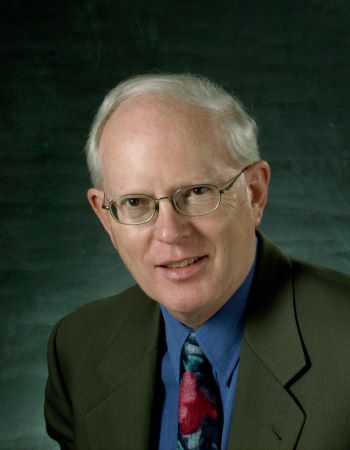 Peter Josty is Executive Director of The Centre for Innovation Studies based in Calgary.
GDP – Gross Domestic Product – is perhaps the most widely quoted economic statistic. It is a measure of all the final goods and services produced in an economy. Yet it’s widely recognized as a poor measure of progress. Here is what the experts say:
- “GDP is a poor way of assessing the health of our economies and we urgently need to find a new measure,” said International Monetary Fund head Christine Lagarde, Nobel Prize-winning economist Joseph Stiglitz, and MIT professor Erik Brynjolfsson speaking at the World Economic Forum.
- “GDP is outdated and it is a distorting lens for policymakers, hampering their ability to tackle slow productivity growth and living standards,” said Diane Coyle, a leading British economist in her book, The Measure of Progress – Counting What Really Matters.
- “GDP in the US has gone up every year except 2009, but most Americans are worse off than they were a third of a century ago,” said Joseph Stiglitz.
- “Per Capita GDP is a Deeply Flawed Measure of Economic Performance and Living Standards”– The Centre for Future Work.
- "GDP measures everything, except that which makes life worthwhile.” – Senator Robert Kennedy.
What is wrong with GDP?
GDP was developed in the 1930s, almost 100 years ago, as a tool to help manage through the Great Depression. The world economy has changed drastically since then. Some of the main criticisms of the GDP are:
- It does not include unpaid work such as domestic tasks, childcare or volunteering.
- It doesn’t account for income inequality. For instance, while the U.S. GDP is higher than the Canadian GDP per capita, the median income in the U.S. is lower than the median income in Canada, so a sizable proportion of Americans are worse off than Canadians.
- It does not account for the environmental effects of economic activity.
- It does not account for health, education or well-being.
- It doesn’t account for sustainability of economic growth.
GDP’s quirks
Measuring the economy is not like measuring a ton of steel or a kilowatt of electricity. It is a constructed measure combining all sorts of different measures into one number.
Technically, it is defined as GDP = C + I + G + (X − M), where C is spending on consumption, I is investment, G is government spending, X is exports and M is imports.
GDP numbers are intended to be comparable internationally and the statistical framework is managed by a group of international agencies, including the World Bank, International Monetary Fund, and the Organisation for Economic Development and Co-operation, and are updated periodically.
Some of the consumption is not intuitive. For example, owner occupiers do not pay rent, so to make their “consumption” comparable to renters, GDP includes an imputed or estimated rent for owner occupiers. It reflects the theoretical rent that homeowners would pay if they were renting their own homes.
This non-cash component is now 8.5 percent of GDP in Canada, more than twice the contribution of the oil and gas sector and it has been rising in recent years as housing costs and rents have increased.
According to a recent report, over the past year, imputed rent from owner-occupied housing accounted for 12.5 percent of real GDP growth.
A declining GDP is not always a bad thing. For example, technological progress often reduces costs. Computers have become much cheaper in recent years, and the contribution to GDP of a single computer has reduced, despite the fact it has increased significantly in quality and usefulness.
Working from home reduces GDP, and you do not pay commuting and parking costs.
If you hold a meeting on Zoom rather than face-to-face it reduces GDP as you do not pay travel or accommodation costs.
If you eat a meal at a restaurant, it increases GDP compared to making a meal at home, although costs of the ingredients you buy are included in GDP.
Tax havens
If you look at tables of GDP per capita, the top countries are always places like Monaco, Liechtenstein, Luxembourg, and Bermuda. These places are tax havens, which receive inflows of profits from global companies lured by low corporate taxes and lax banking rules.
Those inflows boost GDP per capita (with profits credited to local subsidiaries of those global firms), but have little impact on work, production or living standards.
“Real” GDP and GDP growth rate
Most of the time you see GDP statistics they are “real” GDP, that is, adjusted for inflation.
However, the process of adjusting GDP for inflation is highly technical and prone to many controversies. Different products change their prices at different rates.
One issue is whether consumers can substitute cheaper products for more expensive ones. One example is, “If one variety of apple goes up in price while another falls, do people switch to avoid a price rise?”
Another issue is quality. If you compare a car made in 2000 with one made in 2025 the quality today is much higher, so the price alone doesn’t tell the whole story.
There have been claims that inflation was lower than measured. The consequence is that GDP growth has been higher than measured.
A variety of other measures have been proposed to measure economic progress. These include the Human Development Index, the Better Planet Index, the Genuine Progress Indicator, and many others.
There is a loose working group of several international organizations working on “Beyond GDP.”
Conclusion
GDP is a flawed measure, but it continues to be used as no better alternative has appeared and gained traction. The more you look into GDP, the less robust it looks.
No one is suggesting that we drop GDP, as it is too entrenched. The best approach would be to complement GDP with other measures that reflect a broader view of well-being. In the meantime, we should maintain a prudent scepticism about GDP.
| Organizations: | |
| People: | |
| Topics: |


Events For Leaders in
Science, Tech, Innovation, and Policy
Discuss and learn from those in the know at our virtual and in-person events.
See Upcoming Events
You have 0 free articles remaining.
Don't miss out - start your free trial today.
Start your FREE trial Already a member? Log in
By using this website, you agree to our use of cookies. We use cookies to provide you with a great experience and to help our website run effectively in accordance with our Privacy Policy and Terms of Service.