
“We’re cooked:” Regulation won’t save the digital generation, but building public digital infrastructure will

 This the second op-ed in Research Money's ongoing “Youth Voices" series, where our weekly Voices op-eds will regularly present the perspectives of young professionals and youth. The first Youth Voices op-ed was published on March 4, 2026. Please send your op-ed submissions to Mark Lowey, managing editor, at: mark@researchmoneyinc.com
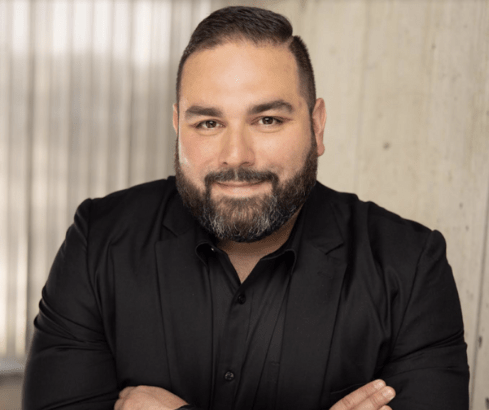
Max Peacock is a Digital Strategist at the Institute for Collaborative Innovation and an MA Candidate (Technology Governance and Sustainability) at Tallinn University of Technology in Estonia.
I was born in 2001. I grew up playing Flash games on our family computer and swinging a controller at a Nintendo Wii. I am part of the "native digital generation."
I got my first iPod Touch in sixth grade, allowing me to start using social media apps like Instagram, Vine, Skype, and Ask.fm. I have now spent more than half of my life on these platforms – using them every day, multiple times a day.
Now, my peers and I have grown up. We are struggling to afford to move out of our parents' homes, struggling to find our first stable jobs, and struggling to find meaning in an increasingly destabilized world.
It can feel like an everlasting hangover from the COVID-19 pandemic. The years we spent isolated in front of screens made us painfully aware of the interconnectedness of our world, but they also left us feeling like passive consumers rather than active participants in society.
“We're cooked” is common slang among Gen Z. It means we're done for. It captures a vibe of collective exhaustion. Our brains feel fried. We are polarized, anxious and often broke. Our answer is usually to joke about it in a sort of collective nihilism that thrives in social media comment sections.
Some of us blame "late-stage capitalism" for this predicament. We feel the economic crunch of affordability and wealth concentration. But while we debate the economic system, we often overlook the specific machinery that powers it: extractive technology.
This technology (social media platforms, search engines, AI chatbots, video games) is the "invisible architecture" of our lives, but it is built on a predatory business model: engagement farming. It is designed to extract value from us – our data, our attention, our mental peace – just as older industries extracted natural resources.
It has been called surveillance capitalism, the attention economy, and technofeudalism. Our information ecology is driven by profit made through extraction, advertising and rent-seeking. It has eroded our humanity and our collective intelligence.
The data backs up what my generation feels. A 2025 U-Report Canada poll found that nearly one-third of young Canadians identify anxiety and sleep loss as direct consequences of their screen time.
Research from Mental Health Research Canada shows that for youth aged 16-24, negative online experiences are linked to higher rates of psychological distress, with cybervictimization associated with a threefold increase in suicidal ideation. These are social outcomes of an information ecology designed to extract.
It's not just our brains that are suffering; it's our democracy. Algorithms that monetize engagement have amplified "affective polarization" – where we don't just disagree with the
other side, we intensely dislike them.
Meanwhile, the wealth generated by this system is siphoned upwards. In 2024 alone, billionaire wealth increased by $2 trillion globally, while poverty remained stagnant.
In the last five years, governments around the world have woken up to this crisis. But their instinct is to play defense: They are trying to crack down on youth access to protect us from "online harms."
Take Australia, which recently implemented a ban on social media for anyone under 16.
Or look at Nepal, which banned TikTok entirely in late 2023 and then blocked 26 social media platforms in the fall of 2024. The result? It didn't create harmony; it sparked mass protests led by Gen Z, who felt their primary avenue for connection and economic opportunity had been severed.
These are blunt instruments. While well-intentioned, bans and regulations like Canada's Digital Services Tax are band-aid solutions. They try to put guardrails on a broken model, but don't fix the fundamental misalignment between public value and private profit.
The answer isn’t banning the “bad stuff,” it’s building better public digital tools
Banning the "bad stuff" doesn't automatically create the "good stuff." Youth are going to use digital tools – we depend on them. The answer isn't to take them away; it is to build better ones.
We need to stop merely regulating Big Tech and start building public digital infrastructure. We need to imagine new kinds of platforms with new social experiences, new business models and new governance.
We can look to Taiwan for inspiration. They have incorporated non-profit forms of social media into their public consultation processes to make their democracy more responsive.
Taiwan uses Polis, a "bridging system" that helps citizens find common ground. Instead of an engagement-based ranking system that shows me what makes me angry (to keep me scrolling), Polis can be used to highlight what disparate groups agree on. It's open-source, pro-social and not-for-profit.
We can also look to Estonia. They have developed digital public infrastructure that both public and private organizations can layer on top of. Their X-Road system is a secure data "highway" that allows for streamlined services, while their e-ID system gives citizens a secure set of keys to their own identity.
An Estonian e-ID allows someone to pick up their prescription, but it could also be used by a new social media platform to verify its users without needing to harvest their data. This is what digital sovereignty can look like: infrastructure that empowers the citizen, not the platform.
Some of these ideas are already taking root in decentralized "Web3" platforms like Bluesky, which allows users to move their social graphs inter-operably across different apps. It also offers algorithmic choice, giving users control over what they see.
Of course, a government e-ID or a consensus tool is not a direct substitute for the dopamine rush of TikTok. But maybe that isn't what my generation is truly hungry for, either. We might not even know what is "wantable" until it is built and placed in front of us.
Canada has a unique opportunity to be a leader here. We can be the country that builds digital commons – technology designed for the public good. There is a massive solution space that is currently unexplored because we are too busy trying to tax and block Silicon Valley giants.
So, how do we move from a zero-sum game of extraction to a positive-sum game of public utility? It requires a mobilization of our entire innovation ecosystem.
For governments, the mandate is to shift from defence to offense. Regulation is necessary, but insufficient. We need investment in the “rails” of a digital society – funding the open protocols and interoperable standards that allow public-interest technology to scale. We need a “digital public works” mindset that views digital infrastructure as essential as roads or libraries.
For universities and innovators, the task is to research the technical standards and governance models that make a democratic internet possible. We need to learn from historic and international examples to explore the solution space of open infrastructure and prove that we can build systems that optimize for consensus and user choice, rather than just engagement.
And for my generation, we have a choice. We do not have to keep supplying raw materials to companies that view us as products to be extracted from. Fear of missing out keeps us locked in, but if we make the choice to shift to better platforms together, as they emerge, no one misses out.
We can demand digital spaces that treat us as citizens, not users. That world is possible.
The internet feels broken, but it is not finished. The good news is that we are not starting from zero. The blueprints – and much of the infrastructure – for a better digital world already exist.
We don’t need to invent a new world from scratch, we just need the political will to move into the one that is quietly emerging.
R$
| Organizations: | |
| People: | |
| Topics: |



Events For Leaders in
Science, Tech, Innovation, and Policy
Discuss and learn from those in the know at our virtual and in-person events.
See Upcoming Events
You have 0 free articles remaining.
Don't miss out - start your free trial today.
Start your FREE trial Already a member? Log in
By using this website, you agree to our use of cookies. We use cookies to provide you with a great experience and to help our website run effectively in accordance with our Privacy Policy and Terms of Service.