
The need to build governance rails for AI and neurotechnology

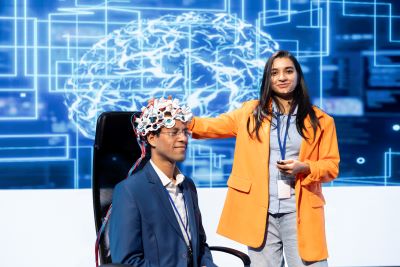 York University and the Centre for International Governance (CIGI) have partnered to build new governance frameworks for AI and neurotechnology.
York’s program, Connected Minds: Neural and Machine Systems for a Healthy, Just Society, and the Waterloo, Ont.-based independent think tank CIGI launched a 16-month pilot partnership aimed at building governance for two fields whose regulatory frameworks in Canada have struggled to keep pace with the underlying science.
The initiative combines Connected Minds' interdisciplinary research base with CIGI's applied policy expertise. The goal is a coordinated, multi-level engagement model linking three layers of governance at once: United Nations standard-setting, Canadian legislative processes, and applied regulatory guidance for industry.
"Intelligent technologies, including artificial intelligence and neurotechnologies, are transforming society at an unprecedented pace, making it more important than ever that public policy is informed by rigorous, interdisciplinary research," said Shayna Rosenbaum, scientific director of the Connected Minds program and a cognitive neuroscientist and clinical neuroscientist in the Department of Psychology at York University.
Three outcomes anchor the pilot:
- A replicable governance framework that could be extended to other emerging technology domains beyond AI and neurotech.
- Positioning Canada as a global leader in the responsible governance of these technologies.
- Concrete policy outputs and communication tools aimed at legislators, regulators and industry decision-makers.
Aaron Shull, research director for digitalization, security and democracy at CIGI, framed the stakes in rights-based terms: "Privacy is a fundamental human right," he said. “Canada has an opportunity and a responsibility to lead globally in creating and shaping safeguards needed to protect human rights and strengthen public trust in emerging technologies.”
Connected Minds itself is a large bet on that idea. Led by York U in partnership with Queen's University, the program is supported by $318 million in funding, including $105.7 million from the Canada First Research Excellence Fund.
Connected Minds brings together more than 300 scholars across neuroscience, law, social science, the arts and AI, along with over 90 external partners.
Why the timing matters
The announcement comes amid growing warnings that Canada's policy response to neurotechnology has been slow and fragmented.
Brain-computer interfaces, EEG (electroencephalography) wearables and other consumer neurotech devices are already being marketed for workplace monitoring, education and gaming – collecting data on attention, fatigue and emotional state.
Yet neural data in Canada is currently treated only as a subset of biometric data under the Personal Information Protection and Electronic Documents Act, with no dedicated legal category or consent regime of its own.
Other jurisdictions have moved further: Chile amended its constitution in 2021 to protect neural data and mental integrity, while California and Colorado have updated their privacy statutes to explicitly cover it.
UNESCO has also circulated a draft recommendation on the ethics of neurotechnology that Canada has yet to formally adopt.
A 2024 audit by the NeuroRights Foundation, titled "Safeguarding Brain Data," reviewed the privacy policies of 30 consumer neurotech companies and found that only one placed meaningful limits on sharing data with third parties, while fewer than half of the companies let users delete their own data or encrypted it.
Subsequent coverage of the same audit put the figure even higher, reporting that 29 of the 30 companies reviewed appeared to have unrestricted access to users' neural data.
Legal scholars, including the University of Ottawa's Jennifer Chandler, have pointed to findings like these as evidence that even imperfect neural signals are still being collected, stored and potentially misused.
The Office of the Privacy Commissioner opened consultations on biometric technologies in 2023, and Health Canada has backed ethics-guidance work with researchers such as Judy Illes of Neuroethics Canada. But without a firmer legal framework, critics have argued such efforts risk producing a patchwork of voluntary guidance rather than enforceable protections.
The Connected Minds-CIGI pilot is designed to address that gap directly – by building the connective tissue between university research, domestic legislation and international standards, rather than leaving each track to develop in isolation.
Without coordinated action, individuals, businesses and governments face growing legal and ethical uncertainty, eroded public trust, and a decline in privacy.
See also: Neurotechnology is here but Canada lacks policy and a regulatory framework to manage it
R$
| Organizations: | |
| People: | |
| Topics: |



.jpg)
Events For Leaders in
Science, Tech, Innovation, and Policy
Discuss and learn from those in the know at our virtual and in-person events.
See Upcoming Events
You have 0 free articles remaining.
Don't miss out - start your free trial today.
Start your FREE trial Already a member? Log in
By using this website, you agree to our use of cookies. We use cookies to provide you with a great experience and to help our website run effectively in accordance with our Privacy Policy and Terms of Service.